
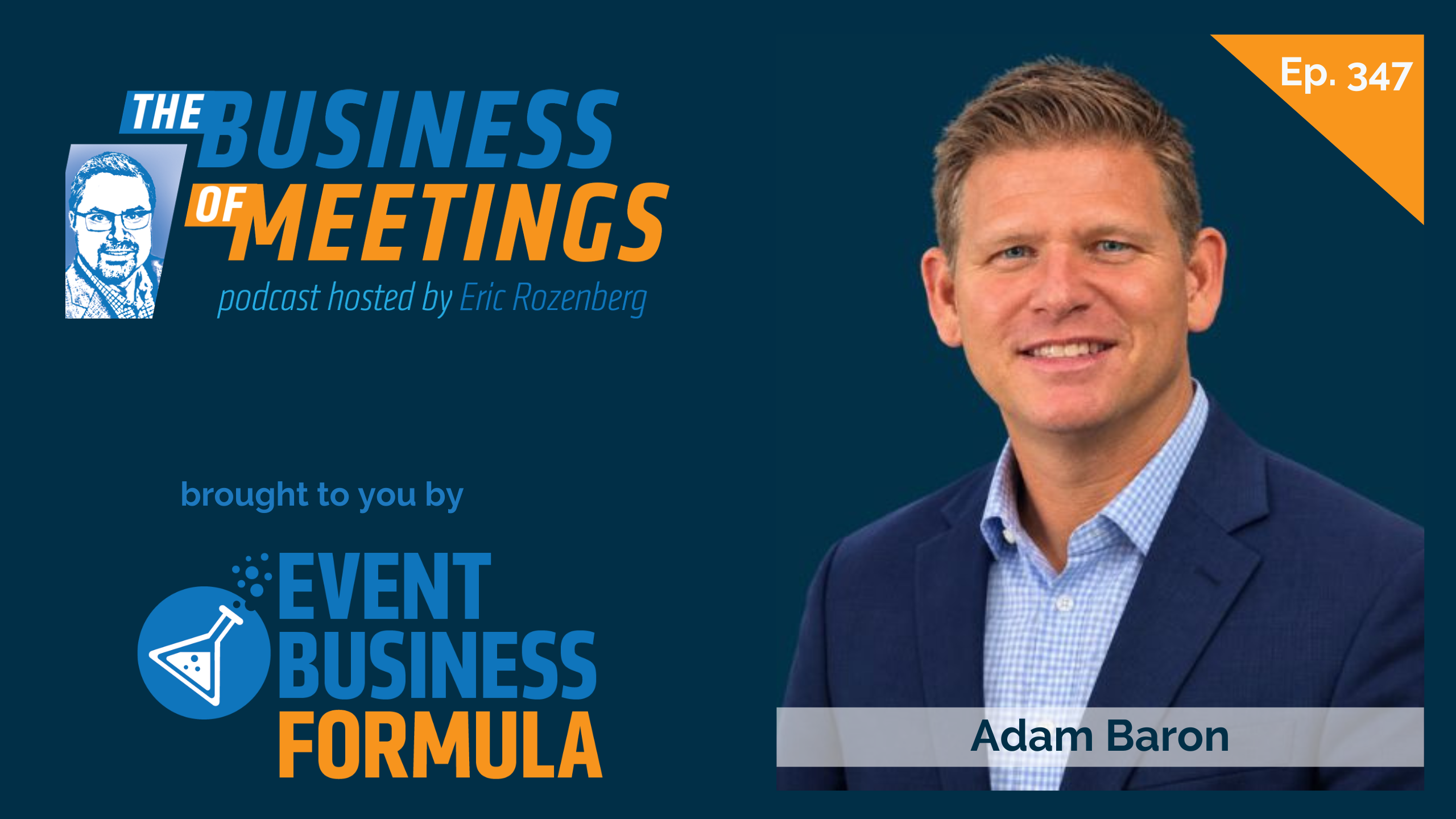
We’re delighted to welcome Adam Baron, the Executive Director of the Delray Beach Open, as today’s guest.
Adam works alongside his brother and father to organize the Delray Beach Open, a professional tennis event that has become an important part of the South Florida community.
The Delray Beach Open will celebrate its 35th anniversary in February 2027. Stay tuned to learn what it takes to run a professional tennis tournament, attract top players, manage unexpected challenges, and create an event that brings economic benefits to the local community.
Adam’s Journey
Adam grew up playing competitive tennis in South Florida. He played at Florida State University before going to law school. After 15 years of practicing law, he returned to work with his brother and father to organize the tennis event his father started 35 years ago.
Attracting Top Players
Player recruitment depends on the tennis calendar, competing tournaments, and players’ schedules. The team targets specific players, works with their agents on appearance fees, and tries to sign them early so marketing can begin well in advance.
Attendees
The Delray Beach Open attracts around 50,000 to 60,000 or more attendees annually. The challenge is to attract new people beyond tennis fans and stand out among the many events competing for attention in South Florida.
The Team
The core Delray Beach Open team has just five people, supported by around 350 volunteers and 60 to 70 ball persons, security, drivers, hotels, media, and operations teams. Planning covers everything from player transportation and accommodation to vendors, seating, electricity, food, marketing, and ticket sales.
Planning for the Unexpected
Even the best planning cannot prevent every problem. When new LED boards made 59 courtside seats too low, Adam sourced replacement chairs from several Lowe’s locations just hours before matches began. Other challenges have included player injuries, hurricanes, and freezing weather.
Players and Agents
Good communication and an understanding of personalities are essential. Players need space and downtime, particularly around matches, while the agents help coordinate appearances and other commitments. The aim is to make the experience as easy as possible for the players.
New Ideas
New ideas need to be practical, not just appealing. Before adding an event or activation, consider the cost, the people required, the available bandwidth, and whether it is truly worth doing.
Food and Wine Series
The Food and Wine series has grown from one event, Game Set Pour, into a program of luncheons and themed evenings, including Burgers, Bourbon and Brew and Tacos, Tequila and Tennis. Working with more than 40 restaurants has attracted people who come for the food and drink and discover professional tennis along the way.
Economic Impact
Televised in more than 180 countries, the tournament helps put Delray Beach on the map worldwide. Visitors support local hotels and restaurants, while more than 100 marketing partners and sponsors add to the event’s success. The tournament has been based in Delray Beach since 1999.
Growing
The Legends event adds another attraction to opening weekend, and further ideas include a possible celebrity event or expanding the Food and Wine series. However, growth must preserve the intimate feel, where spectators can watch players up close and enjoy the city’s restaurants, bars, and beaches.
Pickleball and Paddle
Pickleball has opened racket sports to a wider range of people, allowing players of different ages and abilities to enjoy the game and get exercise together. Adam sees room for tennis, pickleball and paddle to thrive alongside one another. He also stresses the importance of being careful when starting a new sport, particularly if you’re not used to the movements involved.
The Future of Professional Tennis
Advances in television, streaming, AI, and on-court technology, including electronic line calling and instant replay, are changing how professional tennis is played and managed. LED boards also create new marketing and advertising opportunities. As the sport evolves, the focus is on embracing new technology, keeping the tournament moving forward, and ensuring everyone has a safe, enjoyable experience.
Bio:
Adam Baron is the Executive Director of the Delray Beach Open, an ATP Tour professional tennis tournament in South Florida celebrating its 35th anniversary in 2027. A former collegiate tennis player, Adam attended Florida State University on a tennis scholarship, where he was a varsity letterman, before earning his Juris Doctor from Nova Southeastern University in 2000. He went on to practice law for more than a decade, concentrating on insurance defense litigation, before transitioning full-time into the sports industry. Today, Adam oversees all aspects of the Delray Beach Open and has helped continue its evolution from a professional tennis tournament into a complete sports, entertainment, hospitality, and culinary experience.
Connect with Eric Rozenberg
On LinkedIn
Listen to The Business of Meetings podcast
Subscribe to The Business of Meetings newsletter
Connect with Adam Baron
On LinkedIn
Listen on: Apple Podcasts · Spotify · YouTube
“You can have a lot of ideas, but man, you got to implement it.” (Adam Baron)
Adam Baron
Full transcript of episode 347 of The Business of Meetings podcast, Eric Rozenberg with Adam Baron. Lightly edited for readability.
Eric Rozenberg: Hello and welcome to a new episode of the Business of Meetings podcast. Today I’m extremely happy to speak with a legend here in South Florida, but not only in South Florida, in the tennis world. Usually people are recovering attorneys, but he’s a recovering tennis player who is now a recovering attorney. He’s leading the Delray Beach Open, which is going to celebrate its 35th edition in February. Ladies and gentlemen, Adam Baron. Adam, thank you so much for taking the time to speak with me today between all the travels that you have.
Adam Baron: I appreciate it. Thanks, Eric. I know we went back and forth with some dates and so forth, so I’m glad we were able to make it happen, and I’m glad to be here today. Thank you.
Eric Rozenberg: Wonderful. So, why don’t you tell us a little bit about your journey and how you get to do what you’re doing today? Obviously, tennis is central to all of this.
Adam Baron: Yeah. Yeah, it’s a good question. And I mean, our family, it’s a family event, so we’re probably the last family to own and run a professional tennis event like this. But yeah, I mean, back in the day, my brother and I played tennis growing up. My brother just started when he was 10 years old and just picked up a racket and was amazing. And of course, he’s my older brother, so I got to follow in his footsteps. So, we both just played tennis growing up in South Florida, tennis mecca down here, and played junior. He was number one in the world in juniors and then went pro. I was number two in the nation. It’s not number one, but I still was pretty good.
Then took me to college, played at Florida State, letterman up there, and then ended up going to law school. Went away from the family business a little, from tennis, and went to law school. Started my own path, and then after 15 years of law practicing, family kept saying, “Come on, when are you coming back with us?” So, and then, fast forward many years later, and here I am, working with the family, working with my brother and my father, and putting on this tennis event.
So, it’s just lucky that we have this relationship where we work together and we all get along, and it’s just great. I mean, we love what we do. We work hard. Yeah. And that was the short of it, I guess you could say. A lot of things happened in between, but now here we are. Fast forward, and my father started the event 35 years ago. I cannot believe it’s 35th anniversary in 2027, and here we are.
Eric Rozenberg: Did you play doubles with your brother?
Adam Baron: We played a little doubles at some times. He was far, I guess, excelled greater than me. So, he played up. So, when he was like 14, he played in the 16 and unders, and I was still in the 12 and under. So, we only played a couple times together.
It was actually funny. I would tell him like, “Ivan, why don’t we, I’ll be the crazy brother. I’ll grow my hair long, and then you be like,” because he’s very calm and very, boom, very focused, “and we can have this thing.” And he’s like, “Yeah, that’s not for me.” And I’m like, “This could be our thing.” I mean, obviously I was just joking, but no, we played a little doubles, and we would win, and it was fun playing with him.
Eric Rozenberg: Yeah, that’s awesome. I remember back then in Belgium, the high school exams finished at the end of June in Belgium. So guess what, thanks to that, we’re supposed to study, but I was watching Roland Garros every day. I was very passionate and playing as well. Unfortunately, not anymore. But you study law, you came back, there’s so many contracts, I’m sure, going through organizing a tournament. Is it very helpful, or everything was already set? What was the experience there?
Adam Baron: Yeah, definitely the law plays a big role in certain things, in dealing with either agents or looking at contracts, especially if it’s a big sponsor or a city contract or something that you have to look at, whether it’s insurance or specific needs. There’s a lot of rules and standards that you have to abide by with the tour. And obviously, we’re here in Delray, so we work with the city very closely. So there’s a lot of ordinances, a lot of things that you have to look at. So it definitely plays a big role into what I do.
I’m not the lawyer of the company, if you will, but I will look at the drafts and so forth. And then if it needs to go to the next step, we have lawyers in place that do that. But yeah, it definitely helps with me being able to look at certain things. I draft the sponsorships. I’ll help out, and if there ever a need to add that little twang, if you will, of legal jargon, I’ll add that in there.
I don’t like to create my sponsorships or my documents like a lawyer, where there’s 30 pages of nonsense in there. You look at all these documents, “Please sign here.” I would venture some of those things that are in there, the language, the lawyers don’t even know what it means. It’s just in there just because. But I like to draft it short and sweet, to the point. You get this, this is what we provide. So there’s no gray area. It just says it like it is. That’s it. Yeah.
Eric Rozenberg: And as all my lawyer friends would say, it depends.
Adam Baron: It always depends. Yes. Yeah. It’s definitely, it’s funny. I still have a bunch of friends that still practice law and everything, and I enjoyed practicing law. I really don’t practice anymore. I still have my degree. I still have my license. But they’re like, “You got out. Yeah, you got out.” And I’m like, “Well, if I didn’t have this, I’d still be practicing law. I’d still be very happy. I enjoyed practicing law.” But it’s definitely different. We get to create things, and it’s something different. I thank my lucky stars every day of what we do and appreciate it. I do not take it for granted by any means. Yeah, just like anything, you can’t get complacent. You got to just keep pushing forward, trying to get better and better every day. That’s what we do.
Eric Rozenberg: Yeah. And people outside the meetings and events industry don’t realize the economic impact that our industry has. And I’m sure there’s no exception with the Delray Beach Open for the city of Delray, but probably also all the cities around here in South Florida. But how do you make sure that you have all those top players coming, attracting people, with all the different tournaments that are going on in the world? How do you manage to have those players, and how do players accept or decide to attend one tournament instead of another?
Adam Baron: Well, every year is different. It really is. You got to look at the calendar, look at the schedule. I mean, during our event, there’s a couple other events around the world that are going on at the same time. So, certain players, you start looking at, okay, who do you really want to target? You get those five or six players that you really want to go after, and then somebody says no, or they’re playing a different event, or let’s say it’s in Dubai, there’s another event that’s going on in Dubai. So, some players that live out there that are going to be in Dubai, or some players that are going to be in Rio that play on the clay court. So, you could sort of guesstimate who you’re looking for, who you’re targeting, to try and sign players early. We pretty much have our field set for the top guys this year, and then anybody else that falls into place is just a win for us.
So yeah, and then we deal with the agents, talk to them about signing them up, appearance fees, so forth and so on. Try to get them ahead of time. This way we can start marketing them now. Pretty much, we’re starting to release our players. We just released Taylor Fritz a couple weeks ago. We have a couple players we’re going to be releasing this week, and then a couple more players in the next week or two. And then we’re happy, very happy.
And then the fact that the Americans are starting to do very well now, we have five or six Americans in the top 20 in the world, that is great. The American event, that definitely helps us. And most of those guys live here. They have places down here in South Florida and train down here. So, we’ve known them for years, and it’s just amazing what’s going on in tennis right now.
Eric Rozenberg: That’s awesome. And then you have 50,000 attendees, if I’m not mistaken, that are…
Adam Baron: Yeah. 50 to 55, sometimes 60,000-plus people attending each year annually, and hopefully next year even more. It’s just every year it’s just getting more and more. Over the years, we’ve just transformed from a tennis event into an event. You just got to keep reinventing the wheel and, like I said, not getting complacent. Okay, what can we do differently? The tennis people are coming, but how do we attract that new crop of people? What do we need to do to make us a true event? I mean, there’s so many things going on down here in South Florida, a lot of competition, a lot of different events. People can’t go to every single thing. So, how do we make ourselves different to attract more people?
Eric Rozenberg: It’s huge. I mean, in terms of organization, it’s not just watching the game. You have the traffic, you have people have to sleep, all the teams that are coming and everything. How big is the team during the year, and how big is the team when it comes to a few weeks before the open?
Adam Baron: For a tournament like ours, we probably have a big team. We got five people. Yeah. And people are like, “What, five? That’s it?” Like, “Yeah, that’s it.” I mean, we wear many hats. Everyone wears a lot of hats. But during the tournament, we have about 350 volunteers. We have another 60, 70 ball kids, ball persons. We have security, the hotels, the drivers. I mean, the media, the TV crew, the video, I mean, the social media. I mean, we bring everyone in operations. So, there’s so many moving parts.
People have no clue. Everyone asks me the question, “Oh, what do you do the rest of the year?” I’m like, “This. You have no idea.” Down to every single plug. You have 30 vendors, you have all these parties, you have all these events, you have every single player coming in. How are they getting here, where are they landing, where are they staying, how are they eating, the food on site, set up, the tents going up. I can just keep going on and on. When are the cars arriving? When are the fences being built? Do we have enough plugs? Do we have enough cable ramps? Are the seats okay? When are you selling seats? Marketing. How are you starting to market?
I mean, sorry to bore you with all this, but when I start talking about the list, my heart starts a little. My wife always makes fun of me because every year I’m like, “There’s just too much to do.” She’s like, “You’ll get it done.” I go, “I know, I know we will.” But every year it’s more and more and more. But listen, it’s what we do, and like I said, we take a lot of pride into it. So it’s great. Just got to make sure that everything is covered, and plan B, plan C, plan D. There’s always variables. There’s always something that happens that you’re not thinking about, and then you just, okay, add that to the list of things I didn’t know could possibly happen for next year, and it will take care of it.
Eric Rozenberg: So, like what, for instance?
Adam Baron: Oh my God. I’m trying to think of something that happened. That’s actually, I call it chairgate. Okay. This was probably, was it last year or two years ago, and you would never think of anything like this ever happening. We have seats on court. So we have, we call them the best seats in the house, and they’re right on court, and they were like sort of lounge chairs with really nice chairs. And our LED vendor came in and said, “Oh my God,” he shows up the day before the tournament starts, “I have brand new boards. They’re state-of-the-art, right on court.” We’re like, “Okay, great.” He sets them up. Well, they’re a foot higher than the old boards, so all the seats that we have are too low, so you can’t see.
So, we’re like, these are, they’re all sold for the whole tournament. These are 59 seats that we have in place. And I’m like, “You didn’t tell us this before.” And he’s like, “Well…” Why would he think about that they’re higher? Okay. I need new chairs. Where am I getting chairs that are comfortable, that are high? Now we got to get like bench. And I mean, literally, I’m calling every single rental company, and they don’t have the chairs that you want. I mean, you’re talking people sitting in a sporting event in the sun for three, four hours. They can’t just be a bar stool. Right.
So, literally, I called every vendor, every venue, and then finally found one venue that’s like, “Yeah, we have the chairs, but they’re in our stadium. I can’t give them to you.” So, I’m like, “Okay, there goes that.” And stop me if I’m boring you with this story, but literally, I wake up the first day of the tournament. Now, it’s Friday morning. Matches start at five o’clock that night. I’m like, “My God, let me go to Lowe’s.” I looked online. I go to Lowe’s. Probably shouldn’t be promoting Lowe’s, but whatever. I go to Lowe’s and I walk in. I go to the patio section and I see this chair. It’s raised, and I’m like, that’s it. I sit in it. I’m like, “Oh my God, this is so comfortable.” It’s a chair for an outdoor kitchen bar, but it’s like perfect. It’s lightweight.
I scream, “Excuse me. Get over here to the manager. I need 59 of them. I need 60 of these chairs now.” He’s like, “Excuse me? What are you…” Let me see. So, he’s like, “Okay.” So, meanwhile, I call my transportation. I’m like, “Okay, I need you to pick up 15 chairs up in West Palm at the Lowe’s up there. I need you to pick 20 chairs up at this Boca.” So, it was funny. So, I had all these chairs come in, set them up, put the stickers on it for the seating. Boom. Perfect. And now we have perfect chairs. Everything right on time, three minutes before deadline. It was like nothing ever happened. Right.
Eric Rozenberg: In 20 years of organizing projects in over 50 countries, I’ve never ever had one project that was executed 100% the way it was planned. It was crazy. And then I remember the 1998 FIFA World Cup final in Paris. And we had the semi-final, the final, and in between we had the concert of the Three Tenors under the Eiffel Tower, which was phenomenal. But long story short, I had to find a police escort for the day of the final to cross Paris, counter traffic. So, it’s just insane. So I’m sure 50,000 people in Delray, not at the same time, but still…
Adam Baron: Yeah, there’s a lot of coordination with the first responders, with the hospital, with the hotels, with everything.
Eric Rozenberg: So from one year to the other, what is another crazy story that you can share?
Adam Baron: Oh gosh. I mean, we’ve had a few instances of things that happened that you just have to pivot. I mean, one year we had the finals. It was going to be a great final between two top-ranked players, top 10 in the world, and literally an hour before the match, one of the players came in and said, “I pulled my hamstring last night. I cannot go on court.” Oh, shoot. That is… I’m like, why is he walking in our office right now? So that is a, whoa, what do we do? And we had to step back. People are still buying tickets to get in. We’re like, okay, what do we do? So we figured it out. But…
Eric Rozenberg: What did you do?
Adam Baron: I mean, we had to let everyone know, okay, post something on, okay, the match is going to be cancelled. We had the doubles match, so we didn’t really have to do anything, but we came up with something for everyone for next year. They were able to get tickets for next year, any session they wanted to come back for. And it worked. It went well, and then we had like an exhibition go on. But the doubles match already took place, so that essentially is a session. But yeah, that was one of the issues.
Another thing, long time ago, the tournament was, I’m trying to remember if it was November or October, this was many years ago, hurricane, a week before, knocked everything down. Now we couldn’t get, I mean, it was state of emergency, and we still had to put the event on. Water emergency. I mean, just trying to get water. I mean, same things like that. So a bunch of things were torn down, the outlets, the electricity. I mean, but the show must go on. You just can’t, yeah, cancel, unfortunately.
So certain things happen like that. I mean, there’s other instances of, I mean, the typical, player gets injured first match. You’re marketing a specific player, your number one seed, and then he gets injured the week before, and you can’t do anything about that. There’s things that happen that you, bad weather, a cold front come. One year we had a cold front. It was, for two nights, it was 40 degrees. For two nights, it’s like 30 mph winds. What do you do? I’m seeing people in the stands saying, “Why are they here?” But I want them here. It was freezing. I mean, but we still got to play. Show must go on. So, there’s things that happen. You plan for the best. You plan for the worst, hope for the best, basically.
Eric Rozenberg: And I had the volcano in Iceland erupting one year.
Adam Baron: Oh my God.
Eric Rozenberg: I had five programs the following week. So of course, I got the whole team on board during the weekend, trying negotiating. We had an incentive to Vietnam. I called my local partner, and on Monday morning, going to the client, and we decided to postpone at no cost for the client. The airports were closed. I mean, it was just insane. But to your point, you make it work.
Now, the toughest thing for me has always been, whether it’s running a business or dealing with clients, is dealing with personalities. But in your case, I mean, you must be dealing with some divas. I mean, people that sound so nice and wonderful on TV, and they or their agent are just, I’m not going to use a bad word, but you know what I mean.
Adam Baron: It’s funny, I get that a lot. The questions, okay, the one question, okay, who’s the worst person to deal with? Of course I’m not answering that question. Of course not, all your years, who was the biggest, whatever. And I’m like, I’m not telling you that. But to be completely honest, most, I’d say 99% of all the people, the agents, the players, are great to work with. Everyone’s got their own personality. I mean, if they’re about to go on court to play, you’re not bothering the player. Certain things, if they just lost a tough match, you’re not going up to them and talking to them. Yeah. There’s a time and place. It’s a professional event. They’re here to play, to compete.
So, but everyone honestly is wonderful to work with, and as long as the communication is there. If there’s certain things that they agreed to, a clinic or a meeting on site, I always try to reach out to their agent or themselves, whoever it is, because we know a lot of the players personally, being from down here. We run a lot of junior tennis events, so a lot of these players have come up from the junior ranks. So we’ve known them for years, since they were little to now, and we’ve been doing this. So we know them on a personal basis. So we can talk to them, but we still go through their agent when we need to and just tell them, “Hey, this is the run of show. This is when they’re going to be,” and we coordinate it, and you pivot.
Some players always show up late. Some players are early. “It’s okay. It’s an hour,” but they, 30 minutes, they want to get out of there. You can sort of read the room with it. And sometimes it’s just like you got to just take it by the chin and be like, “Hey, this is what it is. You’re doing it.” That’s it. But they know it’s not their first rodeo. They know what to do. Most of them, they do it all the time. So they’re professionals.
But yeah, the crop of players now, they like to be out there. They have their fans with the social media. They want people to know them. They want to get recognized, and they know their drill. It’s a long year tour. It’s not easy. They’re traveling place to place, and we try to make it as easy as possible for them, not ask too much of them, give them their own space, their downtime, and just try to make their experience a good experience here. And so, like I said, a lot of the players that play have places down here, so it’s comfortable. They get to stay in their own beds. They get to stay in their own homes or their rental homes or wherever. So it’s nice versus staying in another hotel. So yeah.
Eric Rozenberg: How do you innovate from one year to another, especially in this 35th edition now?
Adam Baron: Throw a lot of stuff at the wall, basically. Sometimes stuff sticks, sometimes stuff smells. But we’ve done a lot of stuff that didn’t really work, and we’ve done a lot of stuff that was like, that was great. It’s always those little things sometimes that make a big impact. And you always have to, what I’ve learned very quickly is you can have a lot of ideas, but man, you got to implement it. There’s so many things going on that people have no idea about, just behind the scenes. I mean, any little teeny thing you add to the event, whether it’s another luncheon or another activation or something, now you got to do it. Okay, what is it going to take? Do you have the bandwidth? Do you have the people to run it? Is it going to be worthwhile? I mean, you could do a lot of things, but how does that make us better? Why would we do that? What is the cost of something like that?
So, but yeah, I mean, we try to, one thing we’ve done, not to toot my own horn, but one of my babies I’m really proud of is the food and wine series. So, one of the things we pivoted, just because I love food and wine. I love, well, not wine. I’m not really a drinker, but I love food and that whole atmosphere. And I’m not reinventing the wheel. I didn’t create food and wine. I mean, you have them all over the place, but how do you attract that new crop of people? The tennis people are coming, and several years ago, I’m like, how can we attract the new fan base, the new people, the people that like to eat and drink and enjoy themselves and come out to an event and spend some money and have a good night, and not the tennis people? Yeah, the tennis people are there, but why would you go to a tennis event if you can care less about tennis? Why would you go to a golf event if you don’t care about golf, or F1, or anything, an equestrian event?
So, I started with the one event, the Game, Set, Pour, and there’s so many restaurants here that want to work with us, that we want to work with, and what a reflection of downtown Delray and Palm Beach. They have so many great places, and we want to showcase these restaurants and go to these restaurants, eat there. So, it’s been a really good partnership with a lot of our liquor brands and the restaurants. We deal with over 40-plus restaurants for all these events. And now that one event, it’s turned into, every year I’ve created a new event. And now there’s an event every night, every day, as part of the whole Delray Beach Open Food & Wine Series. So now it’s its own series: on-site luncheons during the day, sampling, special events at night. Burgers, Bourbon and Brew; Tacos, Tequila and Tennis; Italian night, Serve & Savor. We work with the chamber for Chamber Bash, networking event one night.
So it’s been great, really fun. It’s given us another avenue as well to highlight and feature downtown, Palm Beach, work with restaurants, work with new partners, and give something for people that we didn’t have before. They come on site, go to the tent, eat and drink, taste some great food, have some good drinks, and then go watch some tennis. And if they’re not tennis people, introduce them to tennis.
And you know what’s interesting? I’ve seen some people that had no idea I had anything to do with this. They’re like, “Why are you here?” And I’m like, “Why are you here?” And they’re like, “Well, I like burgers and I like bourbon, and I saw the bourbon burger night, and I came out, and it happened to be at a tennis event, and I started watching some tennis. I was like, wow, these guys are really good. And this is pretty cool. And I’ve never been to a professional event. You see it on TV, it’s great. But when you watch these guys hitting 140 mph serves, best tennis players and athletes in the world, up close and personal, pretty cool. The atmosphere at night, the court, and it’s just a fun night. Oh, that was a fun night. There’s something different.” So I think I just…
Eric Rozenberg: Yeah, listening to you, I want to come back to one of the topics we briefly touched on earlier on, is the economic impact of the tour. Not only is it putting Delray on the map, with TVs and the marketing and everything, but the number of vendors and partners that are involved in it, the city of Delray, obviously it’s a great marketing for us here. What is it that you, is there a way you’re measuring the impact, the economic impact of the tournament on not only the city but also on South Florida?
Adam Baron: Yeah, I mean, that’s what we do. We market the city. I mean, yeah, we’re a professional event, but we have over 100-plus partners, basically, marketing partners, sponsorships, some great partners, and that’s what helps us drive this to be so successful. And the city of Delray has been, we’ve been here since ‘99, so 27 years, I believe, in Delray Beach. Since the event started, we started in Coral Springs and moved to Delray. We saw the writing on the wall, and then what Delray has turned into since we’ve been here, it’s just night and day. I mean, it’s amazing what’s happening in Delray, and we feel we play a big part in that, just putting it on the map worldwide.
I mean, you look at different events, different continents and cities and states, countries that have an event like ours all around the world, and we’re televised in over 180 countries worldwide, driving people coming to Delray, coming to South Florida, coming to Palm Beach, eating, staying in the hotels, going to the restaurants, and making it a destination, basically. And that’s how we measure it. I mean, try to a hotel during the tournament. Good luck. Delray, try, see the rates. You can see how packed the restaurants are. It’s fun. I mean, the vibe is amazing. The vibe is, it’s pumping. It’s really, really neat to see what has happened since we’ve come here. And fast forward 35 years now into it, the city’s a great partner. We love Delray, and it’s just amazing walking downtown and walking down the Avenue and seeing what it’s become for the last several years.
Eric Rozenberg: Yeah. Right. What is one thing that you always dreamed of doing with the tournament? What one crazy idea that is, “I hope one day I can do that”? What is it?
Adam Baron: I don’t know if I want to say, because if it doesn’t happen, then, I mean, I don’t know. That’s a good question. I don’t know. There’s nothing really that’s like, “I wish we can do this.” It’s more of how can we elevate it more? We started about 10, 15 years ago, we added the legends event opening weekend, and that’s been great too. So we have some of the legends, like this year we have Andy Roddick coming, and the Bryan Brothers, and Tommy Haas. So that’s been great. Adding another piece to the puzzle. So that’s something as far as elevating the event. We had the ATP 250. Okay, after we elevate, okay, let’s start the legends event, McEnroe and Lendl and all those guys, and they played. Yeah, all those guys played over the years, and a fun opening weekend. And maybe create a celebrity event, where celebrities come out and play opening weekend and do something and play with the legends.
So, yeah, I don’t know. Maybe a barbecue event. I don’t know. Or something, or increasing the food and wine series. We limit it to the one tent, but everyone’s like, “Why don’t you have two tents?” I’m like, “Okay, slow down. Slow down.” I like that, too. We sell out every year, and it’s nice. And it’s that intimate feel. We know. We like keeping it intimate on a big scale. It’s what people love about, in my opinion, I get that all the time, is it’s easy to get in. You’re right there up close watching these players. There’s not a bad seat in the house. “I don’t have to worry about sitting 500 feet in the air in the where I can’t see. I got binoculars.” And then they go downtown. Yeah. We want them to eat and drink on site, but go downtown. Enjoy what the city has to offer. Yeah. Leave here, go walk. There’s tons of bars, restaurants, and… Yeah. It’s literally walking there, downtown. Amazing.
So that’s what people ask us all the time. I’ll give them restaurant recommendations, hotel recommendations, so forth and so on. Right downtown, the beach. I mean, so we have a little of everything. It’s a nice little mecca we have down here.
Eric Rozenberg: Love it. As a kid, as I told you at the beginning, watching Roland Garros, and then when I was a teenager, coming here and moving to South Florida and realizing that all the games I watched with Chris Evert and Martina Navratilova, that actually they’re here. It’s amazing.
Adam Baron: They all live down here. Yeah, I know. Yeah.
Eric Rozenberg: And Adam, last question for today. No, the two last questions, but one that, I have friends that are crazy about padel, pickleball. I, myself at this stage more playing pickleball in a few years than playing tennis all my life. People saying, “Oh, it’s the next new sport.” How is it in terms of tennis attendance, and tennis compared to padel and pickleball?
Adam Baron: You’re the first person to ask me that question. I’m joking. All my doctor friends, the neurologists, orthopedics, their practices are booming because of pickleball. The amount of people getting injured. But no, listen, anything to get people off the couch is great. I mean, pickleball has been really great for people that can’t play tennis anymore or are afraid to play tennis. And the good thing, there’s good and bad. And the good thing about pickleball is really anybody can play, in my opinion. You can get on a court with four players. You can have an 80-year-old, a 10-year-old, a professional tennis player or a professional pickleball, and they can play and get some exercise out of it. And it’s good. And everyone’s looking for the next big thing.
I love playing padel. I play pickleball. It’s not my thing. I’ll play. I enjoy it. Padel, it was fun. I love it. It’s a great exercise. They’re both great exercises. And now, like, pickleball took off and every place was opening up, and now, yeah, sort of coming back down to earth a little, but still, I mean, it’s amazing, all this money going to these sports, and now padel looks like the next big thing. But tennis, in my opinion, will always be the mecca. Just because it is. And I mean, tennis is booming right now, but listen, there’s enough space for everybody. You have those purists of, “Oh, get the pickleball players off the court. This is a tennis court,” and going back and forth. It’s like, why can’t we all get along? I mean, you’re not taking my job away from me. It’s something for everyone. You’re talking two different sports. So I think it’s great. I mean, if somebody can do something and make a business out of it and be successful, then go for it, by all means.
But yeah, I mean, pickleball, it’s funny. You hear people, I played pickleball, and like two times I played, I hurt myself, because you think you go out there, you’re not stretching, I’m hitting really hard, and next thing you know, I’m like, I can’t move my shoulder. “Oh my God, my shoulder is killing me.” And I call my doctor. I text him. Don’t laugh. He goes, “Let me guess. You play pickleball yesterday?” I’m like, “Yes, my shoulder.” He’s like, “Oh, get some PT, some therapy.” But yeah, it’s just like anything. If you’re moving and you’re not used to moving, you got to really be careful.
Eric Rozenberg: Yeah, I know.
Adam Baron: But no, I mean, I think there’s enough room for everybody. It’s great, and I wish everyone the best, and good luck. That’s absolutely what I can say. Yeah. Yeah.
Eric Rozenberg: Great. Adam, my last question for today. When we meet in one year’s time at the 36th edition…
Adam Baron: Yes.
Eric Rozenberg: …with a bottle of champagne in Delray, what are we going to celebrate?
Adam Baron: Another year, another successful year. There’s so many things that are happening with the tour right now. But just everything with the TV, with streaming. I mean, there’s so many things in place. With AI, I mean, who knows what’s going to happen, what that’s going to do with the transforming, all these new rules. I mean, just the five-year time of, all LED, all instant replay. That’s changed the game big time. You don’t have an umpire. We used to have to bring in 40, 50 umpires to do the line calls, put them up in a hotel. Now we set up the electronic line calling. So where’s the game going in the future? Now there’s VR. You can do video replay. So many new standards of everything. So it’s okay, where’s that going?
The LED, when they built the stadium, nobody ever thought about LED boards around where you can do all this marketing and advertising and everything. It was. Now it’s all these graphics and fun stuff. So many things you can do. And where are the rackets going? New technology with the rackets, the stringing, the players getting bigger, stronger, faster. It’s just amazing. Every year it goes faster and faster and faster. So where are we going to be? That’s a good question. Hopefully everything’s going well, and just keep going on the up trajectory and make sure everyone’s happy and safe and sound. And yeah, that’s what we’re here for, to make sure everyone’s happy and enjoy themselves and have a good time.
Eric Rozenberg: Wonderful. Adam, thank you very much. Congratulations on the 35th edition, and I look forward to seeing you in one of the restaurants very soon.
Adam Baron: Thanks, Eric. Appreciate it. I’ll see you soon. Thank you.
Eric Rozenberg: Thank you for tuning in to the Business of Meetings podcast. I hope you found today’s episode valuable. If you enjoyed the show, the most important thing you can do is leave a review and share it with your colleagues. It really helps spread the word. I truly appreciate your support. And if you’re ready to take your business to the next level, don’t forget to visit eventbusinessformula.com to learn more about how we are helping event business owners like you. Thanks again for listening, and I’ll see you next time.