
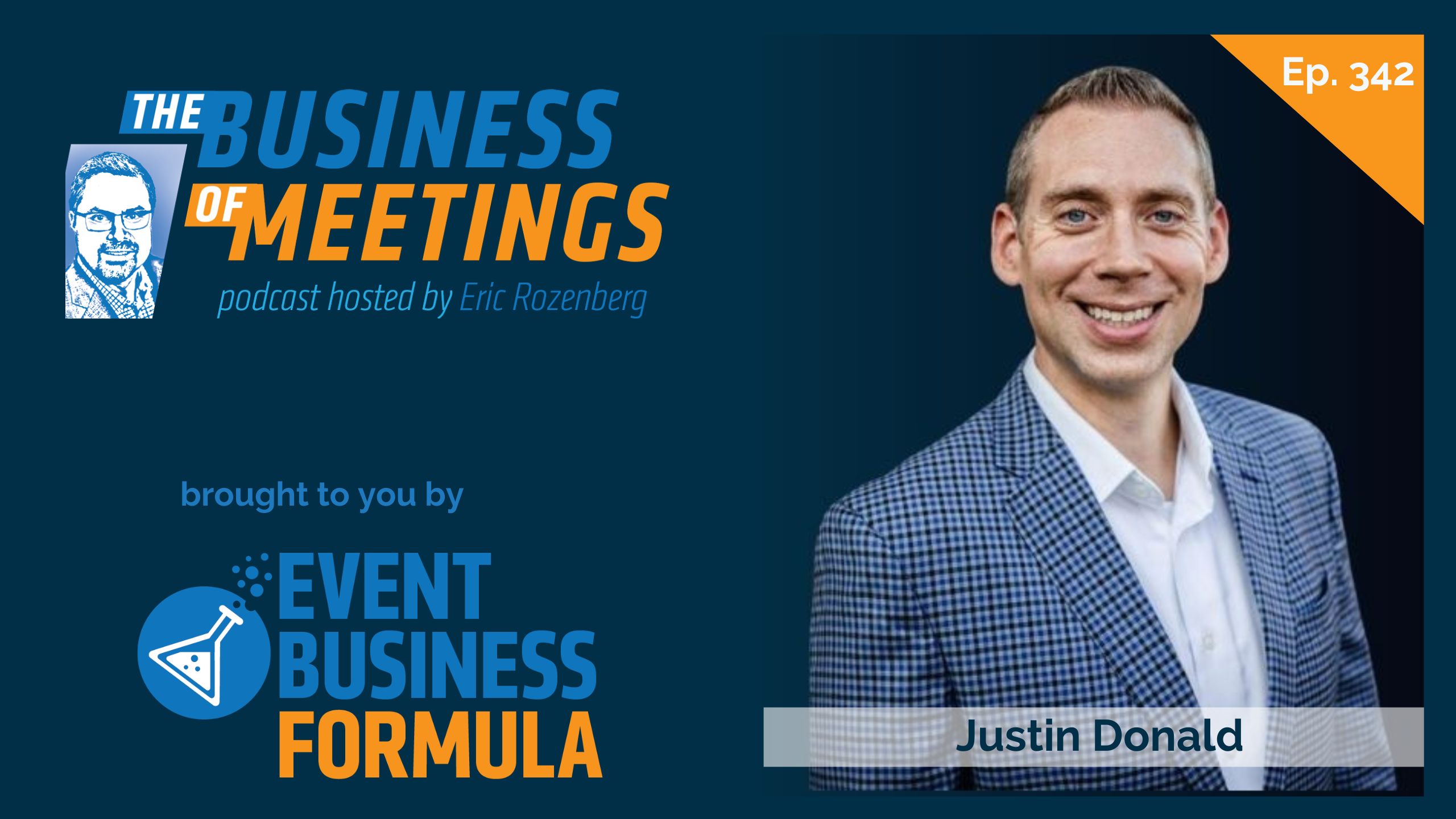
Today, we’re delighted to welcome Justin Donald, the founder of Lifestyle Investor and author of The Lifestyle Investor, as our guest!
Justin has built a mastermind community where people come together to talk about investments, have fun, and enjoy life together. Stay tuned to hear about his fascinating entrepreneurial journey, learn more about the financial side of running a business, and find out how to save, invest, and project so you can decide whether to retire early or keep on doing the work you love.
Justin’s Journey
Justin grew up in a middle-class family and paid for his own university education through various business ventures. In seventh grade, he started a small sales business selling newspaper and coupon book subscriptions, and by his senior year, he was recruiting and teaching others to do the same. He then joined Cutco, where he developed his sales skills and learned to handle rejection. He eventually built a large organization, and as his business grew, he realized that he was working long hours and that, even with a systematized business, too much still depended on him. So he started looking for a way to buy assets that could produce income without requiring his time, which led him into cash-flowing real estate, starting with mobile home parks. Over time, he invested in different types of real estate and cash-flowing businesses. He eventually created Lifestyle Investor to share the investment, tax strategy, estate planning, and other things he wished he had learned earlier.
Build a Business That Doesn’t Depend on You
It’s hard to build a business you can step away from when everything relies on you. So systematize your business, hire the right people, and have someone who can step in when needed.
Buy Back Your Time
If most of your net worth is tied up in your business, it means you’re overconcentrated. Instead, put some of your money into cash flow-producing assets. That cash flow can initially cover your car payment or utilities and eventually grow large enough to cover your whole lifestyle.
Financial Freedom
Financial freedom is not just about reaching a particular net worth. It’s about knowing what it costs you to live and creating enough passive income to cover it. Once you can cover all your expenses, you own your time. Then you can choose whether to continue with the work you’re doing or retire early.
Put Your Surplus to Work
Once your lifestyle is covered, you can decide whether to spend your surplus income on improving your lifestyle or put it toward investments, wealth creation, and making an impact where it’s needed.
Know Your Numbers
Regularly reviewing your financial dashboard can give entrepreneurs clarity and confidence, helping them feel more in control.
Hire Well
Don’t keep people who do not fit the business culture or aren’t doing a good job. Take the time to hire really good people, but avoid bloating the business by hiring more people than you actually need.
Get Some Help
You don’t have to figure everything out alone; books, mentors, and peer groups can help entrepreneurs feel empowered and supported as they grow.
Tax Code
Understanding the tax code can help you take advantage of deductions and credits for activities the government wants to encourage, including business, small business, agriculture, housing, and energy.
AI
AI is here to stay, so the better you understand it, the more opportunities you will likely have to grow or protect your business or start another business that could be more lucrative than your current one. If you invest in early-stage AI companies, Justin suggests using your surplus income and keeping the allocation limited because it is not yet clear which companies will succeed.
Bio:
Justin Donald, called the “Warren Buffett of Lifestyle Investing,” is the #1 bestselling author of The Lifestyle Investor: The 10 Commandments of Cash Flow Investing for Passive Income and Financial Freedom.
As founder of The Lifestyle Investor, he specializes in low-risk cash flow investing, simplifying complex financial strategies, and structuring deals.
A seasoned investor and entrepreneur, Justin has served as an SXSW investor judge and spoken at notable venues like Texas Ranger Stadium. Through his Lifestyle Investor Mastermind, podcast, and consulting program, Justin coaches entrepreneurs and executives to “create wealth without creating a job.”
Connect with Eric Rozenberg
Listen to The Business of Meetings podcast
Subscribe to The Business of Meetings newsletter
Connect with Justin Donald
Listen on: Apple Podcasts · Spotify · YouTube
“Now I don’t have to work. I get to work.”
Justin Donald
Full transcript of episode 342 of The Business of Meetings podcast, Eric Rozenberg with Justin Donald. Lightly edited for readability.
Eric Rozenberg: Hello and welcome to new episode of the Business of Meetings podcast. And with all the people I’m working with, we’re always talking about the financial. And quite frankly, for business owners, the financial aspect is not necessarily the most exciting part or the part that we are looking at the first, which is for sure a big mistake, because at the end of the day, why do we do what we do? It’s also to provide for our families.
Now, I couldn’t dream of a better person than my guest today to speak about the financial aspect, to speak about how can you have the savings to basically don’t need to work before retirement, but doing it for the pleasure of doing what you do, but also looking at the type of investment, what do you do in your life, how do you project that. He is the poster child of walking the talk. He’s got a community mastermind of people coming to talk about investment but also having fun with each other, because the guy loves life as well, which is phenomenal.
Ladies and gentlemen, I am extremely happy to speak today with the founder of The Lifestyle Investor, wrote that book, the one and only Justin Donald. Justin, thank you so much for speaking with me today.
Justin Donald: Well, thanks for having me on the show, Eric. It’s good to reconnect. And when I think about a guy that loves life, loves living it to the fullest, that’s you as well. I mean, every time we’ve gotten together, I just feel like you have a great time, and the energy and aura around you is so positive and so uplifting. So I just can’t wait to hang.
Eric Rozenberg: That’s wonderful. Thank you so much. The first thing that I want to ask you, it’s because you worked many, many years at Cutco. You’re starting to do that when you were in college. As far as I know, you’re not what people call in America a trust fund baby. So you had to develop the things yourself. Tell us a little bit about your journey. How do you start working, and when you start really thinking about, yeah, I should enjoy life but also plan for the future?
Justin Donald: Yeah, great question. I think I’m the opposite of a trust fund baby. My parents really both have had middle class jobs for most of their careers. Didn’t really have the ability to put me through college. So I’m actually really lucky and thankful that I had a couple of jobs that really helped me pay for my way at the University of Illinois. So I’m thrilled to have gone there. It was not a cheap school. It was about 15,000 a year, 15,000 to 19,000 a year, depending on the year, depending on room and board, depending on a number of different things. But I was able to graduate debt-free because of the money I had saved from a business that I had started.
It was a sales and basically like a newspaper and coupon book selling company, where I did it as a rep seventh grade through my junior year, and then my senior year I took people out, I taught them how to do it, and I made a commission on each of the sales that they had. So that small business generated some great cash, and then shortly thereafter I started working with Cutco, which helped me pay for each of the years after that first year of college.
And I can’t even imagine having it any other way. I mean, I was able to work as hard as I wanted to work to earn what I needed to earn. I figured out how to get good at sales, even though I at the beginning was not very good at sales, at least in the coupon book, newspaper subscription days. Okay, with Cutco, it was an easier product to sell, and I had, what, six years of sales skills at that point in time, because I’d gone door-to-door and faced the worst rejection out there, which is really character building. But you learn to not take things personally. You learn to handle objections. You learn so much. You learn confidence. You learn to just reset at every new sale.
So yeah, I feel very blessed to have kind of cut my teeth on early days of Cutco and finding great mentors and building sales skills, building teams. I actually was able to kind of move from sales rep to manager, and I built out a very large organization under the umbrella of Cutco, where we recruited about 4,000 people a year in our territory to sell the product, and our team managed and trained them.
Eric Rozenberg: Amazing. And indirectly, we know each other thanks to the late John Ruhlin, who obviously you knew very well. John brought me into MMT, and that’s where I believe we met the first time.
Justin Donald: Yeah. Mastermind Talks for it all. And it was really cool. Jayson Gaignard had a nice tribute to John Ruhlin. I mean, John was, easily call him one of my three closest friends. We did so much together. I knew John since we were 18 years old. So a very tragic loss. But we stay very close with and in touch with his family. So we just spent a weekend over Labor Day in St. Louis and hung out with the Ruhlin family and all the girls. It was wonderful seeing them, and they’re doing great.
Eric Rozenberg: That’s wonderful. It’s great to hear. Thanks for sharing that. And you working with Cutco, you’re very successful. You have X number of years now in sales. What is the moment when you say, you know what, I’m not going to spend my life working for somebody else, and I’m going to shift to the financial aspect? Or I’m sure it didn’t happen overnight.
Justin Donald: Yeah. It’s interesting because there were two different shifts that happened for me under the banner of Cutco. And Cutco, technically, I had my own business. So my company was contracted by Cutco to do recruiting and sales and the whole nine yards. We didn’t do fulfillment, and there’s a lot of back office that was built in. So my business didn’t have 100% start to finish the responsibilities, but it was definitely my own company, and it was the first big company that I was able to start and build an infrastructure in.
And so kind of like that first epiphany was, wow, I’m working a lot, and it’s hard for me to hand over responsibilities to other people, and who would I hand them over to? How do I know someone’s qualified? What if they don’t do as good of a job as I can do? Like, that was the first one. It’s like, actually I need to build a systematized business. I need to be able to plug people in and plug them out. Someone leaves or someone gets let go, I need to have the next person up that can do the job. And so the first thing was like, all right, how do I do that? And I was able to build that. And I was able to figure out how to hire great talent, hire the right person for the right role. All that I mainly did through trial and error. And then I got good at personality assessments, and that really, I was able to leverage that to get even better.
And then the second epiphany was, I was willing to work hard and put in long and crazy hours, sometimes on the weekends and often during peak season on the weekends. But I remember distinctly one Friday night when I was still at work, and my friends were texting and seeing if I was coming out. I lived in Chicago at that time, and everyone’s going out, and I’m not. I got to get up early Saturday, and I’m still at the office. It’s like 10:30 p.m., and I know I’m going to be back there by 6 a.m. And I just remember thinking, in this season it’s okay. I’m happy to grind and do what I need to do to get ahead, but when I get married and when I have a family, this is not going to be my life. I will be in a better situation. I’ll be in a better position, and I won’t have to sacrifice weekends or evenings or the time that I want to spend with them.
And so that epiphany allowed me to realize that certain businesses, no matter how systematized you can get them, they’re still going to fall back on that leader. There’s still a certain amount that that person’s going to have to put in. And I decided instead of building a business that was probably always going to rely on me to a certain degree, I could lessen it and lessen it and lessen it. And I got to the point that I could take two, three weeks off at a time. I think maybe even I did it three and a half weeks at one point. It just was always going to revolve around me, because I was the talent scout and no one else in our organization had that. And I just figured out I’m going to have to buy assets. I either need to buy another business where I can really remove me, or I need to buy assets that produce income. And so that was my pivot into buying cash flowing real estate.
Eric Rozenberg: Is that something that you kind of thought of it on your own, or it’s conversation with other people, other entrepreneurs that open your eyes to that?
Justin Donald: Well, I would say most everything I’m going to say, in quotes, I’ve come up with or that I’ve done is because of a conversation with someone else or because of a book that I read or because of a podcast. I mean, back then podcasts were not a thing, but I was going to the library and checking out books, and I was reading summaries of different books in different areas, and I was doing these one-on-ones. Every week I would meet with someone that I thought had an edge in some area of life or business that I wanted to like get better at. And so I was doing these weekly meetings that I ended up doing for over 20 years, once a week, thousands of hours. I mean, the compounding effect of that for what I learned was second to none. So I think of like peer group and mentorship and how important those were.
So I ended up getting into mobile home parks first. I mean, I’ve done every type of real estate at this point, and at the beginning it was like, what real estate rentals do I do? Do I do industrial? Do I do multifamily? Do I do storage units? Like, what do I do? And so I found smart people in all these different areas and all these different asset classes. But the guy that I found, I had a good friend that started getting into mobile home park investing, Tim. And then I befriended the guy who ended up being my longtime mentor and the largest private owner of mobile home parks, Frank. And the rest is history.
Eric Rozenberg: Amazing. So you have those principle of looking for cash flow business. Real estate, only real estate? Even if the business is generating a lot of cash flow, you’re not looking to anything else?
Justin Donald: Well, real estate to start. So we started mobile home parks, and we still have, I mean, we kept all of those parks, and they created a ton of cash flow. So the first park I bought replaced my wife’s income. So she retired. She was a teacher. We bought her time back. The second park I bought covered our survival income. The third park I bought covered our lifestyle income. And then every park from there was just surplus income. We had more money every month to then be able to put towards something else. So that’s 15 to 20 years ago. We still own all of that today. It still cash flows, and it’s just been a great investment.
But with all the surplus income, we kind of funneled it into two different directions. Number one is investing in more assets, and mainly like cash flowing assets. And number two is impact or philanthropic work for things and causes that we believe in, things that are near and dear to us as a family or to our faith. So that’s kind of been the story. So it started in mobile home parks, and then we did some industrial, and then we did some self-storage. Then we did some multifamily, we did some land, some retail, some office. I mean, you name it, we’ve probably done it.
Eric Rozenberg: Okay.
Justin Donald: Did some single family homes. Actually, single family homes were early on. That was the second one I got into. You can make an argument it was first, but I can tell you some of the stories there. So then we started buying businesses that cash flowed, or bought businesses that we thought could cash flow. And some of these were like small mom and pop businesses. Then we did some franchises. Didn’t like the franchises as much. Didn’t like the control. So went back to small mom and pop. Then started another company, and that took off. We ended up raising money for that one. It’s a single family home maintenance company. So it services the largest institutional owners of single family home rentals, called Stellar. And that company has done very well and likely will have an exit, I would imagine, next year. But I am no longer active in that company, but I spent many years building that kind of from the ground up and more of an executive position.
Eric Rozenberg: Got it. And when you start your mastermind group of people that you’re bringing together, and if I’m not mistaken, you have an extremely high percentage of renewal year after year. I think you told me about 77% or something like that.
Justin Donald: Yeah, we generally are in the 70 to 80% renewal, even on a high ticket product, which is really impressive. But I would say, I mean, Lifestyle Investor started as a passion project. I mean, this was me sharing all the stuff that I wish that I had learned earlier. It was all the things I was looking into. I was looking into investing, so I wanted to find the best deals. I was looking into tax strategies, so I wanted to find the best strategies. I was looking to make sure that my estate planning was top-notch. I was looking to find the best educators in the world, and then just some cool people to travel with. And so it kind of all came together.
And so this is seven years ago, and it was a total like passion project, not trying to make any money. And then all of a sudden, we were doing so well. My friends were like, “Hey, man, you got to start charging for this.” But I didn’t want to charge like most people. Like, they said, “Hey, take a carry.” But I really felt like that would create an inherent bias. If I could make money on other people’s money, then there’s a bias for me then recommending deals or recommending people do things. And so I said, “All right, I’m just going to do a membership, annual membership fee, and then the only way I make money on these deals is I put my own money in.” And that’s the cleanest way to do it. And so we’ve done that for 7 years. We’ve got a killer track record. It’s been good run.
And the goal is basically to democratize what single family offices are doing for their billionaire clients, in a way that we can utilize those same tools, strategies, and playbooks. You don’t have to be a billionaire to get the same type of asset allocation, to get the deals that they have, to get the terms that they have. We can aggregate our funds collectively and negotiate some pretty killer preferred returns, and we can find kind of world-class or best-in-class in every category for our people, for our members. And so it’s been a really fun ride and a really cool story how I started this, because I didn’t need to make money. Now it happens to actually be one of our more profitable businesses, and it’s where I want to spend all my time, because the people are so great. We had a no jerks policy. So high criteria to get in, and I don’t care how much money you make. If you’re not a good person, if you’re a jerk in any way, you’re just not getting in.
Eric Rozenberg: I love it. No AO policy. It’s perfect.
Justin Donald: That’s right. That’s right.
Eric Rozenberg: Justin, take us back to small business owner who’s listening to you today, at the beginning of your first investment. He or she is in the meetings and event industries, traveling all the time, dealing with all the stress of the industry, building a team, a business. It’s fine, and managed to get some funds at the end of the year. It’s the surplus. What is the first thing that you advise that person to do?
Justin Donald: Well, I think it’s important, first of all, I don’t advise. I’m not an adviser. I educate. I like to teach. I like to share the things that I’ve done. But I do think that it is really important that people are not overconcentrated. Generally, if you’re an entrepreneur and you have your own business, you are overconcentrated in your net worth being the value of your business. So then most entrepreneurs then pour all of their profits back into their business. So now we’re already saying, hey, only 4% of businesses make it beyond 5 years. Hopefully yours is one of them. And then you’re putting all your money back in it. And then maybe they have a little reserve that they put in the stock market. And that’s just not the way the wealthiest people invest. They put enough capital in their primary business, but they’re allocating into other things.
I mean, if you look across at single family office data, and this is the billionaire class, you’re going to notice that only 15 to 30% of their entire net worth is in the stock market. They’ve got over 50% in alternative investments. So when I say that, it’s private equity, private businesses, private credit or private debt, and real estate, among a few other things, but those are the primary. Venture capital, you could throw that in there, a subcategory of private equity, but each of those has a different category. And I think most people, they’re overconcentrated in their business or they’re overconcentrated in the stock market. Employees tend to lean more like, hey, anything extra I can get, I pour it into the stock market, because they don’t often have a business, and then business owners pour it into their business. And I just think it’s probably a little overdone.
So for me, when I first started, I said, I need cash flow. Like, how am I going to buy my time back? I only buy my time back if I can cover my expenses. So I want to invest in safe things and assets that are going to appreciate over time, but I need to be in assets, because I don’t just want to be in like bonds or things like that, because as monetary supply expands, so do asset values. So I want to capture that. As more money is being printed, I want the value of the assets that I’m investing in to go up, but then I want them to cash flow so I get some utility today.
So I think the thing I would share is find a way to invest some of your money into other things that produce cash flow, other assets that produce cash flow, that can start buying your time back. Maybe it’s just at first your car payment or your utilities, or in time maybe it adds up and it’s your rent or your mortgage, and then from there it just keeps growing and growing, and eventually you’re really able to cover all your costs. But I think if that’s a focus, most people, they focus on net worth. But that’s just not like as tangible. There’s not as much utility as in this number. I would much rather people focus on what does it cost me to live? What does it cost me to survive? And what does it cost me to live my current lifestyle? Two different numbers on a monthly basis. And how do I create passive income that covers each of them?
Eric Rozenberg: Very nice. There was one of the Shark Tank people, I think it was… What’s the name of the Mr Nice Guy? He pretends he’s Mr. Nice Guy. He’s not nice at all.
Justin Donald: Oh, Mr. Wonderful.
Eric Rozenberg: Yeah, Mr. Wonderful. Mr. Wonderful. Yeah, brilliant guy, by the way. But he, I think he was saying that you need to reach, obviously that’s a lot for a lot of people, but they reached 5 million in cash and put them in T-bonds before investing in anything else, and live off the interest of that. What do you think of that?
Justin Donald: So what you’ll see in the family office data is that usually 5 to 10% of someone’s net worth goes into fixed income, and another 5 to 10% of their net worth goes into cash. So let’s call that bonds, whole life, and annuity, but very few people do that, and then like treasuries. Okay. So I would say most people have 10 to 20% of their net worth there. I often talk about like, hey, have six months to a year in emergency funds that are totally liquid, that you can get to, so that you can live your life, right? I’ve heard people have as much as 50% of their net worth in these products.
Now keep in mind these products, you’re going to lose to inflation. So you get cash flow today, but you’re going to lose to inflation. Right now it’s paying what, 3 and a half to 4%, something like that. You can get double or triple that in private equity or in private credit or in real estate. And so I think there’s a portion that should go in there, but I don’t even want that to be overconcentrated, right? So I’m just trying to allocate the way the wealthiest people in the world are doing it and have done it for centuries, because their playbook works. And so I don’t want to overallocate to anything, the stock market, to treasuries, to anything. So I think it’s important to have an allocation where your money is liquid and you’re getting some sort of a return. But keep in mind the dollar was debased last year. It lost 10% of its value, right? This according to our own government numbers. So if you’re in treasuries paying you 3.5% and you’re losing 10% on that money, you’re actually at a net negative, even though you got some utility on it today.
Eric Rozenberg: Got it. I know one of your passion is to talk about reaching financial freedom before retirement. How do people, because everybody’s different. Your number and my number might be completely different. How do people have to calculate the number where they are going to really reach financial freedom?
Justin Donald: Well, I think most people are using the old playbook, which is, when I get to 5 million in net worth, or 1 million or 10 million or 50 million or 100 million. But I think that does a disservice. I mean, the number is, what does it cost you to live your life, and how do you get there in passive income? So I had financial freedom before I was ever a millionaire. I think that’s really important. I owned my time and could do whatever I wanted, and I didn’t even have a million dollars of net worth. So to me, that’s the more important number. And then as my passive income has grown, my net worth has also grown as a byproduct of it, right? So that to me makes the most sense.
And then I think figuring out a plan that works to get there. Everyone’s number is different. What it costs you to live is different than it cost me to live. What it costs me to live today is different than what it was 10 years ago versus 20 years ago. So I just think you got to get really clear with what your number is, and then start making headway towards that. But I think for anyone, like the moment I bought my time back, it was one of the most liberating feelings and experiences that I’ve ever had.
Now, that feeling didn’t last. It was one of those where it was like really cool to achieve, and then it’s like, okay, what’s next? On to the next thing. And by the way, net worth is kind of like that, too, right? Or the new car that you got that you love, and then, okay, now new nicer car’s out, I don’t love it as much, right? Or you hit a million dollars and you’re like, it’s going to feel like this. You hit 5 million, you hit 10 million. Everyone has this idea of what it’s going to feel like, and then you do it and you’re like, “Oh, that was it.” And so I don’t think we should get so wrapped up in that. I would get more wrapped up in owning your time, owning your ability to live life, buy your spouse’s time back, buy your own time back.
Because once I had that, everything changed. Now I don’t have to work. I get to work. And it’s a way different proposition to get to work, because what do I want to spend time doing, and what do I not want to spend time doing, and what do I want to hire other people to do? What do I want to outsource? You become less afraid of testing things and outsourcing things and trial and error, because you don’t need the money to get by. You make better business decisions. It’s just all around a much better way to live, in my opinion.
Eric Rozenberg: Totally, totally. Again, going back to the business owner in the meetings and event industry, and in any industry, by the way, but let’s say you have a certain surplus at the end of the year. How do you use that to, I don’t know, buy your office space, buy an additional real estate? What is the percentage that successful people use, and especially when you have the fluctuation in interest rate?
Justin Donald: Yeah. So I made a decision very early on that with my surplus income, one of two things was going to happen. One, my lifestyle was going to increase. So I’m going to spend more money on different things, and I’m going to use some of my surplus for that. Or two, it could go towards investment and creating more wealth, and impact strategies, things that make the world a better place. Sometimes they can be investments, sometimes they’re complete donations. And I decided my life’s good. I can wait. I don’t want for anything, but I don’t need to just like spend twice as much money, but I think it’d be really cool to double down.
So I worked really hard early in my career to save 20%. I got it up to 30%. I got it up to 40%. And in my last probably five to seven, maybe eight years, I was saving 50% of my income that I was earning, and that was going towards investments, and I was just doubling down. I was investing more and more. So the big thing that I wanted to share is, most of my life I was trying to save 20, 25%. Well, my surplus income, I could now reinvest 100% of it. 100% could now go to wealth creation and impact. That’s a big number. Like, that’s a big compounding thing. So at the end of the year, that’s what I would look at for people. Do you need to consume more, or can you just double down and compound your wealth more? And for me, that was the decision we made. We did that for many years. It compounded over those years and has turned into a really good thing for our family.
Eric Rozenberg: And you recommend, not recommend, I know you cannot give advice, but you educate people. What is the minimum or maximum? Let’s say you want to buy a house. You buy it cash? You wait to have enough cash, or you said you need to be able to put 20% or 30%, or it has to represent X% of your revenue? What is the advice for business owners who maybe never thought about that?
Justin Donald: Yeah, homes are a really interesting thing. You’ve got some people that think they’re liabilities. You have some people that think they’re assets.
Eric Rozenberg: Interesting.
Justin Donald: I think that, I mean, today, based on interest rates, you can make a very good argument that renting the home that you want to live in versus buying the home that you want to live in, like, it’s almost an even comparison. Like, there are pros and cons on both sides. So I don’t think it’s just like clear-cut that you buy. I think over the long haul, that’s been good. I’ve made a good return on the places that I bought. But it’s also city specific, town specific, zip code specific, timing specific. So it’s hard to say. What I would say is, across America, those that have bought homes, probably after like all expenses, after hazards or things that break or stuff that happens, and insurance and taxes, you’re probably only making one and a half to 2% of a return on your money. Okay? So it’s not like homes are this amazing investment, even though a lot of people, they look, it’s their only investment. And I think they should reconsider.
I had a friend that was debating, do I buy a home or do I buy this mobile home park? Real good friend of mine. And I kind of said, here are the pros and cons to a home. Here are the pros and cons to a mobile home park. If I were to redo it again, I would probably just go buy the mobile home park. He did, and he says today it was one of the best decisions he ever made, because he bought a cash flowing asset before he ever bought a home. So I’m not saying home ownership is bad. It’s just more expensive.
You ask specifically, what do you do? Save up and pay for it in cash? Well, I can tell you, you will get a better deal from the bank if you buy it in cash and then refinance it into a mortgage, right? You’ll for sure get a better deal doing that. But if you really want to own, like my wife, we have rented and we have owned, and I can tell you my wife prefers to own. She feels like it’s hers. She feels like she can design it the way that she wants to. But she’s been very patient in seasons of renting. She likes owning. So from an emotional standpoint, like, that’s a good thing. So that weighs into my decision making, right? Like, it is probably better for our family to own than to rent.
Eric Rozenberg: And you’re talking to somebody who’s born in Belgium, and there’s a saying in Belgium, I’m translating literally, that the Belgian people have a brick in the belly. Everybody wants to own their own house.
Justin Donald: Yeah.
Eric Rozenberg: They’re looking into that. I hear you, what you said about the mistake that entrepreneurs make in reinvesting everything in their business. It’s like putting all the eggs in the same basket. What are the other mistakes that you see business owners doing?
Justin Donald: A lot of business owners don’t know their numbers. I think that’s dangerous. I think there should be some dashboard that entrepreneurs look at. I mean, depending on the business, there were some dashboards I would look at every day, at a minimum every week. Even in our real estate, I’ve got a dashboard, and it’s updated weekly with numbers across our whole portfolio. But I get this thing, and it is so valuable for me, because I can analyze the business. Numbers allow me to know what’s good, what’s not good, what tweaks can we make, like in real time. And so I think knowing the numbers, and I think if you don’t know the numbers, like, you’re not going to be able to move and grow your business the way that you want to.
I would say number two is hanging on to people too long that are not a cultural fit or not doing a good job. I do think you want to fire fast and hire the right people. Spend the time that it takes to hire really good people. So that is a common mistake that I see. I think sometimes there’s a lot of, like, people overhire. There’s a lot of fat. It’s a bloated business. And so I think it’s important to understand what your outcomes are. I really think that having a lot of roles that are kind of eat what you kill are important, or maybe it’s a small base plus eat what you kill, because now you’re incentivizing a behavior that makes sense, and you’re attracting the person that’s likely to thrive in that environment, and then that’s pointed to that growth direction. I mean, I could go on and on, and I’ve made all the mistakes in the book, right? I’m not here saying like I figured it all out. I’m saying I made every one of these mistakes and I paid for it, and here are the lessons I learned so you don’t have to, right?
Eric Rozenberg: There’s also a lot of baby boomers looking at selling their business. As somebody who’s buying businesses, what are you looking for?
Justin Donald: Well, I love baby boomers selling businesses. I’ve bought a lot of baby boomer businesses, and I bought a lot of baby boomer real estate. One of my favorite things that I can get is a handwritten ledger. I love when I get those, because it tells me they have probably very few SOPs, but no digital process of running the business. So there’s just so much opportunity there, and often the numbers are wrong. Often they’re just hand calculating it, or they got a calculator but they have fat fingers and they hit the wrong numbers. So to me, there’s just so much, like, margin for error in that. I love it. So that’s huge for me.
I love meeting people that are like, “Hey, my kids don’t want the business. I didn’t want to necessarily just shut it down, but I thought about it and then I was, maybe I could get something for it,” because they’re not trying to max out the dollars. They just want it to go to the right person and make a fair amount of money. That is a good, like, that’s a win to me. And then I like buying in recession resilient industries, and there are a lot of them, like home services. I mean, you could go on and on, but I’m a huge fan. I love this space.
Millennials are going to inherit, the studies say, anywhere from 76 trillion to $105 trillion over the next 15 to 20 years from baby boomers. That’s a lot of money. And I think if you want, like, I study a lot of data for the investments that I make. I want to know the trends. I want to know what isn’t mainstream yet but will likely become mainstream. And so I study a lot of the millennial data, because they’re going to control the money. And I want to know how they like to shop and how they like to vacation and how they like to work and what they like to do. And that to me informs a very smart future investment that I think not enough people are paying attention to. But baby boomers are going to sell a bunch of businesses, and many others are going to buy them or inherit them. And so you can kind of follow the numbers, and I think it’s going to lead to something pretty special.
Eric Rozenberg: Justin, I see books behind you. I love books as well. Besides, of course, The Lifestyle Investor by you, and one that I would throw in the mix, Simple Numbers 2.0 from Greg Crabtree, what are three other books that you recommend to business owners to read so that they start knowing their financials?
Justin Donald: Well, Cashflow Quadrant, to me, is, I mean, one of the most impactful, pivotal books I’ve ever read. And that helped me understand the difference in the way that employees and self-employed earn money and are taxed on their money versus investors and business owners, and really what a business owner is versus a self-employed person. I thought I was a business owner, but really I was self-employed and I was fooling myself. My business owned me. I didn’t own my business, right? And I had a nice wake-up call reading that book. So that was huge for me. And I mean, I went on to read everything else that Robert Kiyosaki wrote. That book, though, it really opened my eyes, and it showed me where I wanted and needed to go. So like, that would be like the single most important book for me.
I’m going to throw an interesting one out there. It’s kind of not what you asked, but I’m going to throw this out there because I feel like it ties into like the world that we’re heading into. So this is not a financial book, but The Almanack of Naval Ravikant is probably the most impactful book I’ve read in the last five plus years, because it is shaping where we are headed and what is going to make money. So maybe this isn’t like a financial, this is not like for financials in your business, but it’s like, there’s so much in there that can set up your financial future in or outside of your business, or even starting a business or pivoting a business into areas, industries, places that are growing like gangbusters, right?
Tax-Free Wealth I thought was absolutely incredible. If you have not read that, you are tipping the government. You’re not just paying taxes, you are generously tipping the government. So I think it’s important to know how to use the tax code the way that it was intended. The government wants to partner with you for the things that they need, right? Business, small business, agriculture, housing, energy. We could go on and on, but they incentivize behaviors in those four plus categories. So all you got to do is figure out what the government wants, do those things, and you get deductions or credits based on it. And so using the playbook of taxes to your advantage, I think that can actually be more beneficial than almost anything else someone does in the world of managing their business.
Eric Rozenberg: Awesome. Justin, as usual, I would listen to you for hours now with the podcast. Let me ask you two last question. The first one, how do people get in touch with you? Where can they read? What, obviously, besides the book, The Lifestyle Investor?
Justin Donald: Yeah, the best place is just lifestyleinvestor.com. We’ve got all kinds of content there, from my book to my podcast, both by the same name, Lifestyle Investor. I’ve got blogs. I’ve got a new newsletter called the Lifestyle Investor Lens. It’s like real up-to-date information happening now, real time, that I’m really proud of. That thing has taken off. We’ve got master classes, we’ve got masterminds, we’ve got everything there. So that would be the place that I would go.
And in fact, what I’d love to do for anyone in your audience, if you’re listening to this, since Eric and I are friends, we normally do these strategy sessions with people that are trying to figure out how do I get from point A to point B, and they’re 500 bucks. I would like to give that to your audience for free. So if they go to lifestyleinvestor.com/consultation, they can get a call with someone on our team that can help them figure out their next move, whatever it may look like. Everyone’s situation’s a little different, but this will be free. This is on the house.
Eric Rozenberg: Thank you. My last question for today, I cannot not ask it. Where, if anywhere, where in the AI world are you investing?
Justin Donald: Well, I’ve been a pretty early adopter of AI. I’ve been an early investor in AI. I was investing in AI about a decade ago, when people didn’t even know what it was. So these are some of the trends and cutting edge stuff. Like, I love this space. I invested in Anthropic, OpenAI, Cohere, Perplexity, you name it. I mean, we could keep going. I mean, basically all of your big models. Oh, xAI. I mean, all your big models I have at some point been able to invest in, as well as smaller things, as well as businesses that I think could be primed to be purchased by some of the bigger ones. So yeah, I think it’s awesome.
I think at the valuations that we’re at today, it’s a lot harder to make money. It’ll be interesting to see what happens. It’ll be interesting to see if there is in fact an AI bubble or if that is not a thing. But AI is here to stay. There’s no doubt about it. We’re now starting to see like the letters and people talking about slowing it down. It doesn’t matter. AI is here to stay. The future is AI. I think the more you embrace it, the more you have an opportunity to grow your business and like protect your business. I think the better you understand it, the more opportunities you’re going to have to even start other businesses that could be even more lucrative than your current business today.
And I think if you really understand and can get the opportunity to invest, these are great areas. I mean, these are still early stage companies. I would still, I mean, early stage usually is just about 1% of someone’s net worth. And I don’t even like investing in high-risk stuff unless it’s coming from my surplus income. So it’s coming from cash flow. And then the later stages, more the venture side of things, that’s anywhere from 4 to 10%. So basically, I’m saying don’t bet the farm, because we don’t know which ones are going to make it, which ones are going to fail, but it’s here to stay. You just need to figure out who the leaders are going to end up being. Get to know the functionality. Understand it for your life. Understand it for your business. Understand it for future businesses. And as you learn it and you feel compelled, begin to invest in it.
Eric Rozenberg: Wonderful. Justin, thank you so much, and I look forward to seeing you soon in person.
Justin Donald: Thank you. Me, too. Talk soon, Eric.
Eric Rozenberg: Thank you for tuning in to the Business of Meetings podcast. I hope you found today’s episode valuable. If you enjoy the show, the most important thing you can do is leave a review and share it with your colleagues. It really helps spread the word. I truly appreciate your support. And if you’re ready to take your business to the next level, don’t forget to visit eventbusinessformula.com to learn more about how we are helping event business owners like you. Thanks again for listening, and I’ll see you next time.