
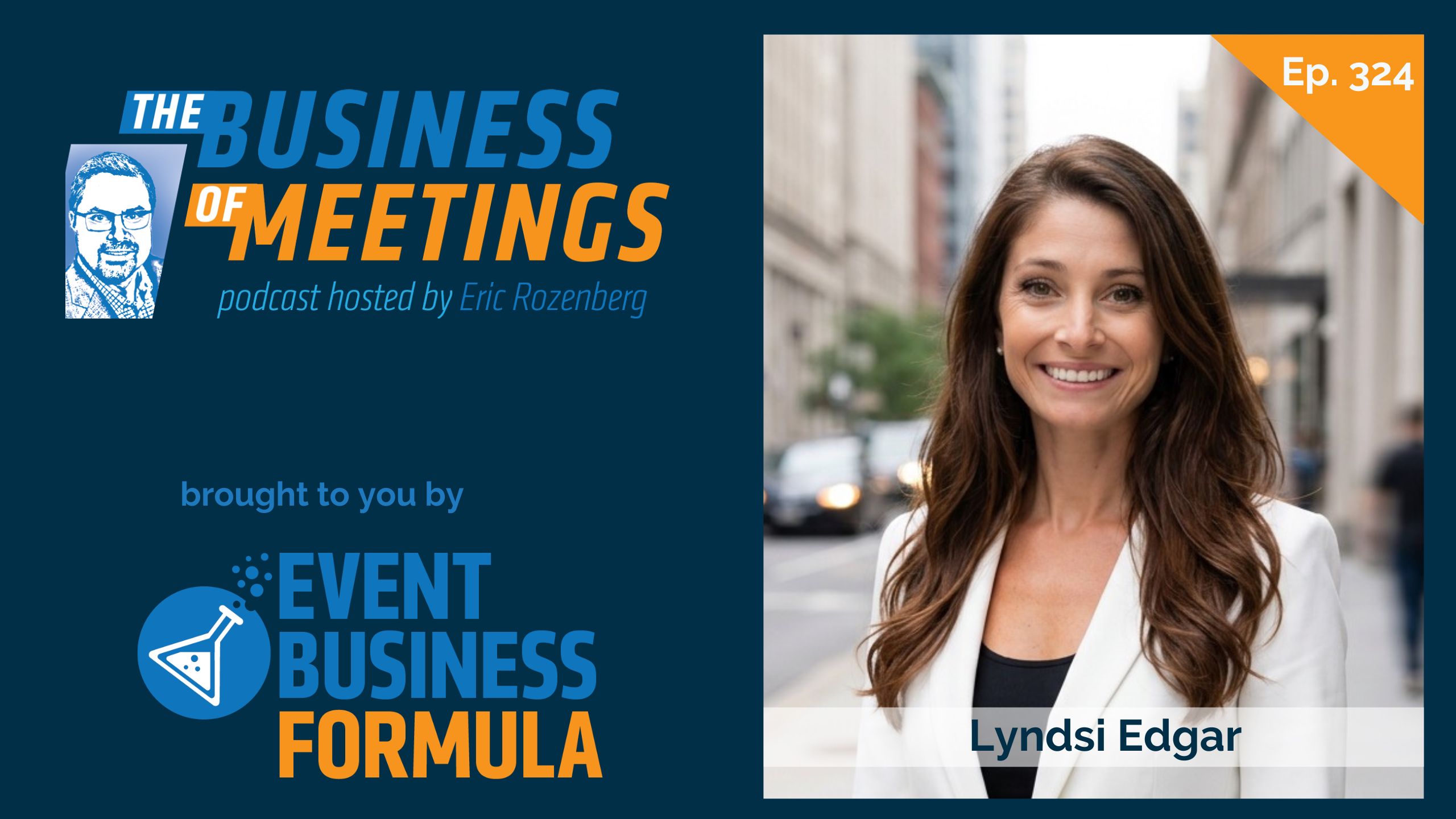
Today, we are delighted to welcome Lyndsi Edgar, the Founder and CEO of eLuminate Marketing.
Lyndsi talks to Eric about entrepreneurship, content marketing, LinkedIn, automation, AI, and staying top of mind with clients and prospects. She also shares how she built eLuminate Marketing, the lessons she learned while growing the agency, and the systems, processes, and mindset shifts that helped her scale the business.
Stay tuned for more!
Lyndsi’s Journey
Lyndsi studied marketing and then worked for various marketing agencies. While working in digital marketing and social media, she noticed that small business owners were unable to access authentic, high-quality content that looked like Fortune 500 marketing without the Fortune 500 price tag. So, she launched eLuminate Marketing to help local businesses grow through authentic content. She initially gave herself six months to find clients before deciding whether to continue, and 12 years later, her agency continues to thrive and grow.
Networking
Lyndsi found her first clients through networking, nonprofit work, and being involved on boards in her community. Most of her business development happened face-to-face before eventually evolving into online lead generation.
Processes
Lyndsi explains that it’s essential to create processes before hiring. You need clear onboarding systems, communication standards, and documented procedures for employees to understand what they need to do without constantly relying on you. Today, AI tools make it far easier to record workflows, generate transcripts, and create standard operating procedures.
Who to Hire
Lyndsi recommends hiring people for areas that are not your strengths and work you do not enjoy. Her first hires were to do her accounting and graphic design. Hiring in those areas allowed her to focus on growth and strategy.
About five or six years ago, Lyndsi began focusing on LinkedIn, and it eventually became the number one lead source for eLuminate Marketing. Although many people dismiss LinkedIn as it’s full of bots and AI-generated content, she believes there are still opportunities for businesses that create authentic, value-added content focused on the specific needs and problems of their ideal clientele.
Strong Content
Instead of talking about your accomplishments, it’s important to create content that provides solutions and value. Lyndsi recommends building one large piece of long-form content around a single topic each month, then turning it into multiple smaller pieces of micro content throughout the month.
Content Ideas
Another strategy Lyndsi uses is creating content around frequently asked questions. She looks at what people are typing into Google and AI tools. She ensures her content addresses those questions directly, as that helps her create practical, searchable content that aligns with what potential clients are already looking for.
Balancing Personal and Professional Content
On LinkedIn, you should focus mainly on value-add professional content, with only a small percentage dedicated to personal content.
AI
Lyndsi understands that AI can support research, editing, messaging, and content workflows. Still, it cannot replace the knowledge, stories, systems, and operating methods her agency has developed through years of experience. She believes those stories, insights, and years of knowledge are what elevate content beyond generic AI-generated material. AI can assist the process, but it cannot replace human wisdom and experience.
Staying Top of Mind
Consumption drives conversion. The more people consume your content, the more likely they are to work with you. Consistent posting, emails, display ads, and remarketing all help move people through the funnel faster.
Defining Your Ideal Client
Before creating content, Lyndsi recommends narrowing down your ideal clients. eLuminate Marketing focuses on professional service firms, particularly law firms, commercial real estate, and wealth management firms. Her content speaks directly to those industries, so the right people are more likely to stop, read, and engage.
Automation and CRM Systems
Lyndsi uses automation tools and workflows in HubSpot to stay in front of leads and clients without manually handling every interaction. Different industries and stages of the funnel receive different emails, content, and ads. She recommends that small business owners implement a CRM system instead of relying on spreadsheets.
Tracking Metrics and Dashboards
Over the last several years, Lyndsi’s agency has been using dashboards to monitor sales, email marketing, and overall business performance. She reviews metrics regularly with her sales team to identify where adjustments and optimizations are needed rather than relying on her gut instinct.
The Importance of a Growth Mindset
Lyndsi believes one of the most important skills for business owners is maintaining a growth mindset. As technology, AI, the economy, and client expectations constantly evolve, businesses cannot remain locked into old ways of operating.
Flexibility
One of Lyndsi’s priorities is to create flexibility for her family. Her long-term vision is to build a business that can continue to operate smoothly while she spends extended time traveling outdoors with her family in an RV.
Bio: Lyndsi Edgar
Lyndsi Edgar is the founder of eLuminate Marketing, a digital marketing agency specializing in professional services firms.
With 15+ years in digital marketing, she helps law firms, CRE brokers, and consultancies grow beyond referrals through her proprietary framework, The eLuminate Effect.
Her work has been featured in Forbes, HuffPost, and Forbes Woman.
Connect with Eric Rozenberg
On LinkedIn
Listen to The Business of Meetings podcast
Subscribe to The Business of Meetings newsletter
Connect with Lyndsi Edgar
eLuminate MarketingOn LinkedIn
Listen on: Apple Podcasts · Spotify · YouTube
“Consistency on value-add content is where you’re going to win on LinkedIn.”
Lyndsi Edgar
Eric: Hello and welcome to a new episode of the Business of Meetings podcast. Today we’re going to talk about marketing. We’re going to talk about LinkedIn. We’re going to talk about how to stay top of mind, and we’re going to talk about entrepreneurship, owning your own business, with the queen of marketing, Lyndsi Edgar, founder and CEO of eLuminate Marketing. Lyndsi, I’m so glad to have you on the podcast this morning.
Lyndsi: Thank you, Eric. I’m very happy to be here.
Eric: That’s wonderful. But first thing first, let’s talk about your journey. What is Lyndsi’s journey? And then how did you get to do what you do today and have your own business?
Lyndsi: Of course. I actually never thought I was going to own my own agency. I went to school for marketing. I worked for agencies. And then I decided, after working for an agency, I think I could do this on my own. And so I decided to do that. And I told myself, okay, I’ll give myself six months, and if I pick up a couple of clients in that time, I’ll keep at it. And if not, I’ll find another job. Well, fast forward, it’ll be 12 years actually this month.
Eric: Wow.
Lyndsi: I obviously picked up those two clients and then some, and I didn’t turn back, and so now I’m here, and it was honestly one of the best decisions I’ve ever made.
Eric: That’s awesome. Take us back for a few minutes to that moment where you basically decide to start your own business, or was there an external event that happened? When was the moment when you say”I’m going to do this”? And also, how did you find those two first clients?
Lyndsi: Of course, great question. So I had noticed at the time, so when I was working within digital marketing and social media 12 years ago, there was really a gap in the market for small business owners’ digital marketing. We were on social media and we were seeing these massive Fortune 500 companies doing social media and having great, authentic content, but then you go to the small business owner, and that same appeal, that great graphics, great content, it wasn’t there. There was a gap. And so I thought to myself, why couldn’t a small business owner have the look of a Fortune 500 social media presence without the Fortune 500 price? And so that was really the catalyst to starting eLuminate Marketing, to create authentic, quality content for the local businesses in my area to help them grow. That is really how we started, and that was the focus.
How I got the two clients started was with networking. I did a lot of networking prior to starting eLuminate Marketing. I was a member on boards. I did a lot of nonprofit work. And so I think that was really the beginning of bringing on clients, it was more face-to-face, and then over time it did evolve into bringing in leads online, but at the beginning it was a lot of networking.
Eric: That’s wonderful. When you start your business, you’re going from a large structure where you have a lot of people around you, and then you end up, and I’ve been there, you’re on your own. In the morning, you see the potential client, the head of the company, and in the afternoon you’re at the supermarket because there’s no more soap in the bathroom. What is the feeling? And were you in an environment that was very supportive, or people that said”Oh, you shouldn’t do that, it’s too risky”?
Lyndsi: Yeah, I was very lucky that all of my friends and family were extremely supportive in this endeavor. Both my parents thought”Why not? You have the drive, do it.” My husband also. And so I remember it was right before Memorial Day weekend when I decided, okay, I’m going to do this, I’m going to create my own agency. And that entire weekend I spent putting a plan together, a business plan and processes. And I don’t think I left the room for the entire weekend. And so that Monday, or that Tuesday, because it was Memorial Day weekend, I was ready to go. I already had some meetings set. I mean, I hit the ground running because I was just so excited to do something that I was so passionate about and do it in the way I wanted to do it.
Eric: 12 years means that you’ve been through different crises too. Take us through a moment where maybe you were wondering, and I’ve been there several times, I think all entrepreneurs have”Why did I do that? Why?” And what happened afterwards?
Lyndsi: Yeah, you know, there is certainly, at the beginning, I had started the business in my early 20s, so you don’t know what you don’t know. And there was certainly more of a roller coaster at the beginning of my agency, where clients would come and then they would go, and clients would come and they would go, and I had a really hard time riding that coaster. I’m somebody who likes more of the even keel, I don’t like the ups and downs. And I also had my hands in everything within the agency. I attended every meeting. I went to every single thing. And as I grew, that became an impossible task. And so there were times when I would wake up in the morning and go”Man, it would be a lot easier if I just worked for somebody else, got a salary, clocked out at 5:00, and called it a day.” And I had those thoughts, I had those thoughts quite often at the beginning. But I think I knew how much I loved what I did, and I knew that I could continue to grow this, and so I just stuck at it no matter what. But I definitely had those thoughts, like”Oh, I would look over at friends of mine who had that salary, that paycheck that would just come in every 15th and 30th” and go”Man, that must be nice. That must be really nice to have that.” But then, years later, when we got more of a steady stream and things weren’t as roller coaster, now I go”Okay, this is why I worked hard and had those difficult times.”
Eric: That’s awesome. I love Winston Churchill, as we said”When you’re going through hell, keep walking.”
Lyndsi: Yeah. Yeah. Just keep going.
Eric: When I started my first business, and gosh, in September it’s going to be 30 years, believe it or not.
Lyndsi: That’s amazing. Congratulations.
Eric: Thank you. It’s another century. But when I started my first business, it was a corporate event agency, and my two first clients were Johnson & Johnson and Café de Colombia. Not a small first client to bring on.
Lyndsi: That’s pretty impressive.
Eric: But I was saying”These are my clients, this is my brand, nobody’s going to do it better.” And for two years I was like”Okay, the project is over, I need another project. Oh great, I have another project. Nobody’s going to touch my client.” And running around like that, almost running like a chicken with no head, until finally I started to structure things. I started to hire people. So how would you advise somebody who has their business, they may be a solopreneur, they just started, what is the first thing that they should be doing, and who is the first hire that they should be making?
Lyndsi: Yeah, great question. That was something that I unfortunately had learned very late in the game of my agency. I was still very much involved in the day-to-day for quite some time before I finally could take a step back and let it run on its own. So I would say the number one thing is to have processes in place. Making sure that: this is how we onboard a client, this is how we communicate with a client, this is how we do things around here. And nowadays you can record that and show that, and then use AI to make a transcript and then use AI to create a standard operating procedure. It is so much easier now than it was 12 years ago. But have that in place first, and then hire somebody and teach them this process, so then they’re not relying on you.
I think the main reason why eLuminate Marketing has grown the way it has is because I have an incredible team. They work hard, they do amazing work, I don’t have to be in the day-to-day. And because of that, I could see beyond the horizon and think about what are other ways to make eLuminate better, or how do I bring on other clients. And so, hiring those people, but don’t just hire people just to hire them. Have a process in place to make sure they know what you’re expecting of them, they know what they should be doing. Because I’ve seen that before with a lot of business owners, where”Okay, I just need to hire someone” but then it doesn’t work out because that person didn’t get good enough structure and feedback. So have the processes in place first, and then make that hire.
In regards to who to hire, I think it varies based off of your business, but look at the things that you love to do and what your strengths are, and maybe stick with that. And then the areas where it’s not your strengths and you don’t love to do it, hire out. So for me, my first two hires, one was accounting. I would spend my Saturdays reconciling, and I’d be sitting at the kitchen table cursing up a storm because I couldn’t reconcile, I couldn’t find, and I was like”I need to hire an accountant” because that is obviously not a strong suit of mine. I hated spending my Saturdays doing it. And so that was a very quick hire for me. And then the second person I hired was for graphic design. I could do it, but I wasn’t as good at it, and it took me a lot longer, whereas a graphic designer could go in and, boom, boom, boom, boom, boom, and make this beautiful graphic that would have taken me hours to do. So those were two areas where there were weaknesses of mine, I needed to outsource that to be more cognizant and time-efficient.
Eric: That’s awesome. That’s the mindset shift of hiring somebody who maybe is going to do 80% at least of what you do, sometimes better. It allows you, as you just mentioned, to focus your time on thinking about how you grow the company and what’s working. So you also mentioned to me, when we were preparing this, that you like to talk about content marketing and about LinkedIn. I love LinkedIn. What I’m very frustrated with now is that it seems to be the same structure with AI behind it, where you have to use the emoji, and then you have to have a call to action, and it’s almost like the AI is writing something and then another AI is responding to something, and we’re losing, it’s just a bunch of bots talking to each other. It’s like that old joke: you connect the two computers, let them talk, and then you go and play golf. So what’s your take on content marketing and LinkedIn, and more importantly, what’s your take on authenticity and how to differentiate yourself in a crowded market?
Lyndsi: Of course. So content marketing and LinkedIn marketing, those are our specialties at Illuminate, and truthfully, about five, six years ago, I really started to lean in on LinkedIn, and now LinkedIn is our number one lead source, where I close the majority of my clients. So I get a lot of people who come to me and say, “Oh, well, LinkedIn is just a bunch of bots, and people just trying to sell yourself.” And I don’t disagree, there is that. But if you get through that muck, there is so much opportunity on LinkedIn. And how to make LinkedIn work for you: number one is to be authentic and to be real, because now, with AI, as everybody’s using that term “AI slop”, there is so much out there. So for the people that go the extra mile and create content that, first, highlights who’s their ideal clientele, who’s their super consumer, and what keeps their super consumer up at night, what are they thinking about at 2 a.m. that’s the content that you need to think about and put together. Provide value. Don’t come out of the gates like, “Look at me, I won this, I got this client, look at how awesome I am.” And yes, there is a place for that, there’s a place to showcase your team and your credibility, but the majority of that content needs to be value-add. Give, give, give. And so consistently providing content that gives and provides value is going to increase your thought leadership, it’s going to increase the amount of people who see you, which in turn, when they need your services, you’re going to be the first one that they think of. So consistency on value-add content is where you’re going to win on LinkedIn.
Eric: Interesting. And how do you find the topics from one week to another? Is it okay to come back and speak about the same topic after a while, or do you absolutely need to find a new subject each time? And linked to that as well, I hate when people are posting. They expect to show their entire private life. I mean, I’m okay to speak a little bit about myself, although I hate it, but this thing about showing everything in your life, is it me, or is it the way that people should be doing it?
Lyndsi: To answer your first question, on how we come up with topics, there are really two ways we do that. Bucket one: we will, this is for both our clients and myself, come up with one main topic that month. Maybe it’s remarketing, that’s the big topic, and we’ll create a very long-form piece of content or article that includes everything about remarketing, best practices, templates, frequently asked questions, etc. And then, from that long-form content, we then create micro content from it. So it’s one piece of long-form content, and then a bunch of small content throughout the entire month. That’s typically a best practice of ours.
Another thing that we like to do, and this is really great for AI, is think about frequently asked questions, what are people typing into Google and AI, and making sure that we’re addressing those questions. So that’s another area of the type of content we’re creating. Those are really the two methods of how we develop content each month.
In regards to showcasing your private life, it all goes back to, once again, providing value. So I’m not opposed to showcasing that stuff once in a while, because I want people to see that I’m more than just Lyndsi, owner of eLuminate Marketing, I’m also a mom, I also like to go hiking and camping, and that’s a little bit part of me, and I will showcase that from time to time just to give a little bit more of who I am. But at the end of the day, my goal on LinkedIn is to give back, to showcase my knowledge, provide help to other individuals. If they hire me, great. But if I’m still providing value and they don’t hire me, but it helps their business at the end of the day, that’s also great too. So I think when somebody sits down to come up with content, go back to: what is your super consumer worried about, what are their problems, and then how can you provide them solutions.
Eric: I have a lot of friends that, and I admire them for what they’re doing, but a baby’s born, they link it to the business. Somebody’s dying, they link it to the business. The kids graduate, they link it to the business. If you want to be creative, you can always link it to the business. What do people want when they go on LinkedIn? And for instance, in your case, you say that you’re getting a lot of deals from LinkedIn, how much personal content versus purely professional content are you posting?
Lyndsi: I would say 90% of the content I’m creating is professional, value-add content; 5 to 10% would be maybe personal. And truthfully, I think I’d rather see the personal stuff than the AI slop with the generic templates.
Eric: So if you had to choose between one or the other,
Lyndsi: I think I’d go for the personal content. I do see people tying in personal content with business in some ways, and I don’t mind that either, where it’s, you know, lessons learned as a parent and how being a parent has helped them be a better business owner, etc. So people have found creative ways to do that too.
Eric: Fair enough. Now, you’re using a lot of AI to automate processes. Are you concerned that, in your own line of business, you could somehow be replaced by AI? Or are you shifting your strategy or the type of service you’re offering?
Lyndsi: So, of course, I think when AI came about and we all started using it, and I would put in a prompt for ChatGPT, I remember at the time my heart stopped. I thought, “This is the beginning of the end, might as well enjoy eLuminate while I can.” And then I’ve started to learn, over time, that yes, there are going to be some pieces of what we do that will be replaced. But what cannot be replaced is our system and how we operate. AI cannot replace the knowledge that we’ve built over the 15 years that I’ve been doing this, and our system for onboarding a client, creating content, and then lead magnets, and LinkedIn engagement, and bringing in leads for our clients. We call it “the eLuminate Effect,” and it is our proven system for our clients that AI cannot replicate. I mean, talk to me in maybe 50 years, it might be able to, but at this time, AI cannot replicate that knowledge and that authenticity and that system. And so while I’m leaning heavily into AI tools, and learning about how to be more visible with AI with my own agency, I’ve really strayed away from those fearful thoughts of “AI is going to take over Illuminate,” and rather, let me even narrow in more on my operating system and optimize that as best as possible, so I know it’s a proven method for my clients that, no matter what AI does, they’re going to want to continue working with me because they’re seeing the results.
Eric: Interesting. I concur with that, and in the meantime, I stay very much alert, because I think what’s going to make the difference is when you can insert the human element into it.
Lyndsi: Yep.
Eric: In our industry, in the meetings and events industry, I’m very optimistic about the future, because I believe the more people use AI, the more they will want to come in person.
Lyndsi: Yes.
Eric: And you’re not going to replace the conversation at the water cooler, at the break at the conference, with a Zoom or with AI, nothing like that. But how do I change the way I operate, so I know something that is really important for you is to stay top of mind with your current clients, of course, but also with former clients and with your own network.
Lyndsi: Absolutely.
Eric: How do you do that? And do you segment between only people you know professionally, or family, friends? How do you organize that?
Lyndsi: Yeah, so I 100% agree with you in regards to that human element, we’re social creatures. I know AI is a great tool, but at the end of the day, we like to work with people, we want to socialize with people, so that’s not going to get replaced. In most of my workshops, I’ll mention AI and content creation, and AI is great with research, coming up with topics, we use it all the time. And we also use AI to help us craft messaging or edit videos. But what AI cannot replace is the knowledge and the wisdom and the stories that our clients have garnered over the years. I have clients that have been doing commercial real estate for 30-plus years, there is a lot of stories and knowledge in that brain that we want to extract and showcase, that AI cannot do. And so that’s what makes our content elevated from”Hey, let’s just use an AI bot to create social media content.” It will show. And so it’s so important to make sure that you use your wisdom with AI to create strong content.
In regards to top-of-mind material, as we both know, consumption drives conversion. The more that somebody consumes of your content, the more likely they’re going to work with you. And I heard that from a certain Charles Gaudet, yes, the wise team over at Predictable Profits, which is how we know each other. The more that somebody consumes, the more likely they’re going to work with you. And the stats now are showing that somebody has to see you up to 36 times before they move forward. I used to say this stat, about five, maybe ten years ago, it was like 7 to 10 times, and then it got to 10 to 20 times, and now it’s about 36 times before somebody wants to move forward with you. So if you’re only posting once a week on LinkedIn, then it’s going to take a lot of touches before they decide to call you. And so, if you’re posting on LinkedIn daily, if you’re sending emails out, if you’re doing display ads and remarketing, you’re going to hit these people from a variety of points, and you’ll move them along the funnel a lot quicker. So it’s so important that you’re consistently creating value-add content in front of your network, so then they see you multiple times, you’re growing that credibility, you’re growing that trust, so that they’re going to choose you over somebody else.
Eric: Wow, 36 times, it’s a lot. There’s a lot of noise out there. So how do you cut above? That’s why it went from to 36,
Lyndsi: Now there’s just, there’s so many more places for somebody to see you.
Eric: So how do you cut above that noise?
Lyndsi: Well, one, identifying that ideal clientele, who is your super consumer? Don’t try to be everything to everyone, because that message is going to fall on deaf ears. So narrowing down who’s your ideal clientele, for us, our ideal clientele are professional service firms with a heavy focus on law firms, commercial real estate, and wealth management. That’s typically where we fall. And so my content speaks heavily to lawyers, speaks heavily to commercial real estate, to those professional service firms, and so they’re more likely to stop and read my content because I’m speaking directly to them. So before you even start creating content, take a step back and think about: who is my ideal clientele, and what do they want to see? That’s a good starting point to create that top-of-funnel content.
Eric: Awesome. And I was just thinking, you know, those who have a meetings and events agency or are in the industry, obviously we all start with word of mouth and your personal network. But then the game is to be able to systematize, like you said, be able to hire people that can sell for you, and obviously make sure that you continue to deliver well. How do you keep in touch and stay top of mind with all the people that you are meeting, whether they are prospects, clients, past clients, and also your own personal network? Do you do specific actions or specific content, or do you just send a newsletter? What do you do to stay top of mind?
Lyndsi: Yeah, so fortunately there’s so many automations now that I can get in front of these individuals without me personally having to put it all together. I’m a big fan of HubSpot. So individuals, based off of where they are in the funnel, are in workflows, what they’re getting emails from me. So they might be in a lead workflow and getting a certain type of email, or they’re a lawyer and getting a certain type of email, they’re commercial real estate and getting a certain type of email. So we have different workflows based off of where they are in the funnel, as well as what industry they’re in. We also have different types of LinkedIn posts, so I make sure that when we’re developing LinkedIn posts, I’m rotating between my different ideal clientele. We will occasionally boost these posts or put ads to these posts to that specific clientele. I’m making sure to do display advertising, so anybody who goes to my website and leaves, I have high-intent individuals, so those who may have gone to multiple pages on my website, or certain pages on my website, are going to see a certain type of ad versus maybe somebody who just went to one of my blogs or just to my homepage and that’s it, they’re going to see a certain type of ad. But all of this stuff is happening behind the scenes without me having to do anything, it’s all automated. Do I go in and check and see how the numbers are doing and make optimizations? Of course. But now there’s so many tools out there that you don’t have to physically be doing this every day, you can allow these automations to work for you.
Eric: That’s awesome. So again, talking about small business owners, I’m hearing you: you need to have your strategy, you need to first define your ideal client, your super consumer, making sure that you have the automation in place. That means having your own CRM, picking one, and I highly recommend having a CRM in place no matter how small you are.
Lyndsi: I think a lot of smaller business owners think”Well, I could just use Excel for now” and I was one of them. I used Excel for the longest time, and then I thought, you know, it’s easy for somebody to fall through the cracks if you’re going to use Excel. Now there’s so many other CRMs you can use.
Eric: Absolutely. And quite frankly, it’s easy. I always say to people”I don’t have a CRM.” Okay, you know what, you pick your favorite AI tool, whether it’s Claude, Gemini, ChatGPT, Grok, and say”Okay, this is my business, this is my website, this is the type of client I’m reaching out to, this is the number of projects I want to have per year, this is my budget, find me the top three CRMs I should be looking at.” I’m sure there are plenty of CRM systems that can fall within that budget.
Lyndsi: Absolutely.
Eric: And the last thing you said, which I think is really important, I want to highlight, is to define what you want to be measuring and how often you’re going to be measuring. Even if it’s automated, you need to analyze that data.
Lyndsi: Yes, yes. So that was something that was also a more recent development with my agency. I always assumed I was too small to be putting together metric dashboards, I was like”Well, that’s for much bigger companies, multi-million-dollar companies” and I couldn’t be more wrong. So the past, I would say, three years, we’ve had metric dashboards showcasing how our sales are doing, how our email marketing is doing, how the business overall is doing, and on a weekly basis I’ll meet with my sales team and look at the numbers and say”Are we tracking, or where can we optimize and dial up a little bit?” It’s so important to go off of those numbers instead of gut, you can’t just go off of gut, you have to look at your numbers and say”Okay, this is not doing well, how do I fix this number, what do I need to do?” And it can be a little bit overwhelming, so I would say start small and create a dashboard with just some numbers. My metric dashboard has changed, I mean, we’ve had at least a thousand variations of it, where there’s one version, then we’ve added more, but then we’ve gotten rid of some and added other ones. So you keep reiterating, but make it so it works for you.
Eric: Absolutely, and that’s what it is, managing a business, and that’s the stuff I love, truthfully.
Lyndsi: I, that’s what I get excited about too, to sit at my desk in the morning.
Eric: Good for you. How many years would you say it took you to really have a system in place, with all the dashboards and the meeting rhythm and the organization?
Lyndsi: I would say it took about six, seven years to finally go “I need to make some changes” which is very slow, very slow. But you don’t know what you don’t know. I had hired some great business coaches and mentors that showed me the way, which is also something that I would consider, as well, as a business owner, it goes back to, you don’t know what you don’t know. So utilize AI, utilize a business coach or a mentor to show you the things that you might not see within your own agency. So I would say I was able to get out of the day-to-day weeds of my agency after maybe four or five years, but the actual system is a fairly recent thing, where we finally have a process from not knowing who we are to closing a client.
Eric: I obviously, and I’m totally biased there, but I love what you say about coaches, and especially if you’re in the meetings and events industry, you should definitely reach out to us and work with Eric Ai. But in all seriousness, whoever you are, whatever you do, if the top athletes have coaches, everybody. It’s a mindset of being willing to learn and never stop learning..
Lyndsi: As a business owner, in order to survive, I think one of the most important skills is a growth mindset. You can’t say “This is how we do things around here” and that’s it, because it’s going to change. My agency looks a whole lot different than it did 12 years ago because of technology, because of how things are changing, the economy, you have to have a growth mindset.
Eric: Lyndsi, time flies when talking like this.
Lyndsi: Oh, I can’t believe it, it did fly. I could keep going.
Eric: I could as well. I really love listening to you, and it’s awesome what you’re sharing, so thank you for that. I still have two questions for today, if it’s okay?
Lyndsi: Yes.
Eric: The first one, how do people get in touch with you?
Lyndsi: So, of course, LinkedIn, since we spoke of it, I’m Lyndsi Edgar, or Lyndsi Stafford Edgar. You can find me on LinkedIn, my name is spelled a little different, so you’ll see it in the podcast notes. And you can also visit my website, eluminatemarketing.com. Those would be my two best places to get a hold of me.
Eric: Wonderful. And my last question, in one year, when we meet with a bottle of champagne, what are we going to celebrate?
Lyndsi: Oh, I love that. Okay, so I think one of the main reasons I love this business that I built for myself is, yes, we all love that financial, trying to hit certain financials, but what really drives me is time flexibility. I’m a mom of two young boys, and one of my non-negotiables is to get my boys from the bus stop at 2:30 every day. So I pause work from 2:30 to about dinner time to spend time with my family. So a year from now, I am going to be meeting you on my RV, with my family, with a bottle of champagne, to celebrate that I’m taking a month off with my family while my agency runs and takes care of its clients, and everything’s working well, and I can just enjoy being with my family in the outdoors. That’s what we’re celebrating.
Eric: Love it. And if you go out west, I can share with you the itinerary that I did with my family on an RV a few years ago.
Lyndsi: Right now the North Carolina loop, but yeah, now we’re getting a new RV, so we’ll be making our way out west, I’m sure, very soon.
Eric: Nice. And I’ve seen people actually traveling and working, because now you have Starlink and you can work from anywhere.
Lyndsi: Yep, and I do that. So every summer my family goes and travels for five, six weeks. My boys will go to local camps in the area, and I’ll work, and then they’ll come home from camp and we enjoy hiking and being around the fire and all that. So I do that, and it’s a great way to kind of slow down a little bit. My office is like a picnic bench in a state park, and my view is a stream, and it makes me so happy.
Eric: That’s wonderful. Lyndsi Edgar, thank you so much for sharing all your knowledge today.
Lyndsi: This was a lot of fun. So I appreciate it.
Eric: Thank you for tuning in to the Business of Meetings podcast. I hope you found today’s episode valuable. If you enjoyed the show, the most important thing you can do is leave a review and share it with your colleagues, it really helps spread the word, I truly appreciate your support. And if you’re ready to take your business to the next level, don’t forget to visit eventbusinessformula.com to learn more about how we are helping event business owners like you. Thanks again for listening, and I’ll see you next.