
Real resilience is forged when the stakes are high- under pressure, in uncertainty, and when there’s no margin for error.
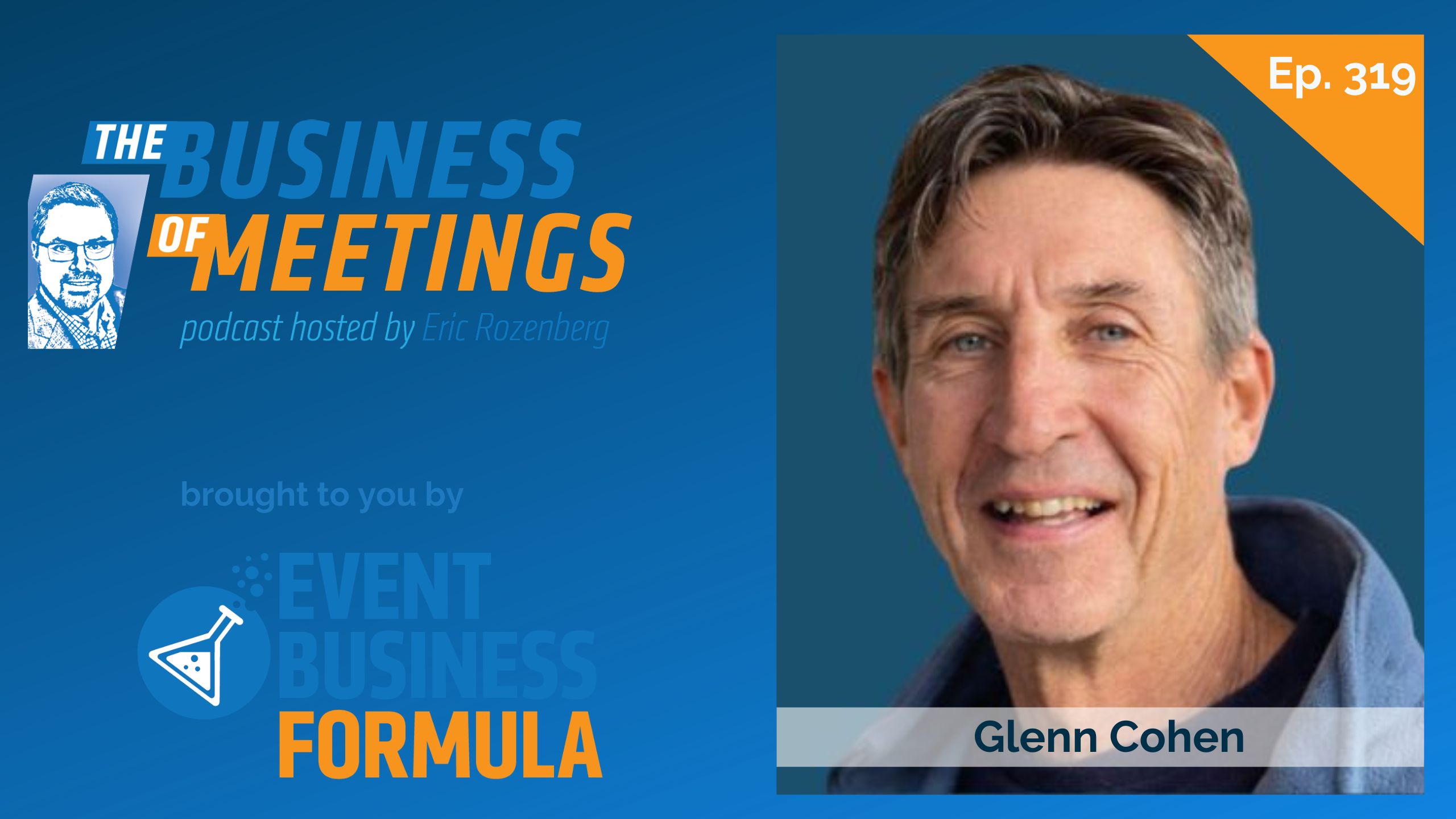
Today, we’re excited to have Glenn Cohen, former head of psychology for the Mossad, joining us for the first part of a two-part series. With years spent in some of the most extreme environments imaginable, Glenn brings a rare understanding of how people think, react, and perform when it matters most.
In this episode, he breaks down his elite program for executives, clarifying what it truly takes to build mental strength and how those lessons translate to business owners and leaders. He also shares powerful, previously unspoken insights into what happens to the human mind under extreme pressure, and what enables some people to recover and come back stronger.
Glenn’s Journey
Glenn was born in New York City to a Swedish mother and an American father who died when he was six. After his father’s death, he cut off his emotions and became “the Ice Man.” His mother raised two children alone and, keeping her promise to provide a proper Jewish education, they returned to New York.
Glenn’s original plan to pursue basketball at Brandeis University changed after a year in Israel during the first Lebanon War, which led him to join the IDF. Against all odds, he became an Air Force pilot and served as a search-and-rescue helicopter pilot, saving lives under fire. He was later recruited by the Mossad, where he spent 25 years and became the Chief psychologist for operational personnel. After retiring, he developed an elite executive program and currently works with corporate teams and executives.
Resilience
Anyone can become an elite operator and perform on the highest level by learning Glenn’s Elite Method. It starts with having one adult believe in you and combining that with real effort. That creates a sense of responsibility and pushes you to do everything possible to succeed. Hard work and commitment make all the difference!
Belief and Effort
Being seen as a person rather than just a number changes everything. When someone believes in you, it motivates you to work harder and stay committed. Putting in extra hours and effort is essential, especially when you need to prove that what you have always believed is true.
Emotional “Armor”
Resilience comes down to managing the thickness of your emotional “armor”- how much you shut down or stay open under pressure. If your armor is too thick, you disconnect from your emotions, making you not aware enough of danger or other people. If it is too thin, you become overly sensitive, anxious, and easily overwhelmed. The goal is to find the right balance so you can stay aware, responsive, and in control in different situations.
Emotional Release
After intense situations, there has to be a discharge of built-up emotional and physical tension. Holding everything in causes the tension to get stuck, while releasing it allows the body and mind to reset and continue functioning. A short release, such as a “power cry”, helps you restore your energy and enables you to keep performing at a high level.
Leadership
Leadership is not always inherent. It can be learned. For many leaders, internal pressure feels like an existential threat. Pressure, however, is not just about the external situation. It’s about how it is perceived. Strong leadership comes from managing your emotional world, not just focusing on execution.
The Elite Method Framework
Everything begins with the emotional world. The E Factor explains that emotions drive execution. However, most decisions are not made rationally. They are made psychologically and emotionally. So, execution is the final step, not the starting point.
Emotional Intelligence
Your performance improves when you understand what is going on inside you and around you. Leaders need to recognize their emotional needs and respond to them. That awareness allows for better connection, influence, and execution.
Tunnel Vision
In chaos, most people default to tunnel vision, focusing only on what is directly in front of them. That makes it hard to see the full picture. Effective leadership requires stepping back, thinking broadly, and working with others.
Balancing Mission and Humanity
High-pressure situations require both execution and sensitivity. It is not enough to focus only on the mission. You also need to take care of people and give them a soft landing.
Leadership Influence and Responsibility
Everything you do as a leader has an impact. What you say, how you act, and how you show up will influence others. Understanding that requires responsibility, but also gives you the ability to shape your environment and culture.
Bias and Human Behavior
People look for what they expect to find. Once there is a bias, they tend to interpret everything in ways that support it. That is generally influenced by others and by authority, making it easy for people to believe whatever fits their view.
Post-Traumatic Growth
Extreme situations not only lead to trauma but can also lead to growth. When people believe they can handle extreme situations, they find a way to move forward and grow from it.
BIO: Glenn Cohen
Hostage Debrief team leader and former Mossad Chief Psychologist.
Born and raised in NYC, he moved to Israel after high school and served for over 30 years as an air force pilot, Mossad officer, special forces psychologist, and IDF hostage negotiator.
Since retiring with the equivalent rank of Colonel, Glenn trains top business and military brass with the five “E.L.I.T.E.” keys to resilience and peak performance, which he pioneered during his Mossad tenure.
Glenn Cohen immigrated to Israel from the United States and gave up a scholarship as a college basketball player in order to enlist in the IDF during the 1982 Lebanon War. Against all odds, he managed to fulfill his dream, and despite a 90% attrition rate, he graduated from the prestigious Israel Air Force Academy and received his wings as a pilot.
After serving for 7 years as a helicopter pilot in the Lebanon war zone, Glenn was recruited into the Mossad and served for over 25 years in various positions, reaching the equivalent rank of colonel as Chief psychologist. In this capacity, he was responsible for selecting and training the elite operatives to believe that there is no such thing as mission impossible.
Glenn accompanied and advised commanders from the cutting-edge units of the defense establishment – Mossad, Shin Bet, “Yamam” SWAT teams, in all matters related to resilience and peak performance under extreme conditions. Based on thousands of hours of mentoring combatants and commanders from the most elite units of the defense establishment, Glenn developed the ELITE method for leadership and team building.
Since he retired from the Mossad in 2015, Glenn has shared the ELITE method, mentoring and training CEOs and their teams from leading organizations around the world, enabling them to reach their full potential and execute like an ELITE team.
Since October 7th, Glenn served for over five months in emergency reserve duty in the IDF Hostage Negotiation Unit, where he was designated to be the first mental health professional to meet the released hostages upon their return to Israel. Subsequently, he wrote the protocol for recovering the returned hostages and led a team of psychologists who debriefed the 168 hostages upon their release.
Connect with Eric Rozenberg
On LinkedIn
Listen to The Business of Meetings podcast
Subscribe to The Business of Meetings newsletter
Connect with Glenn Cohen
On his website
Listen on: Apple Podcasts · Spotify · YouTube
“That is the secret to resilience. Not too thick, not too thin.”
Glenn Cohen
Full transcript of episode 319 of The Business of Meetings podcast, Eric Rozenberg with Glenn Cohen. Lightly edited for readability.
Eric Rozenberg: Most people talk about resilience like it’s a buzzword. Take a walk, get some sleep, manage your stress. That’s not resilience. That’s maintenance. Real resilience gets built when the stakes are high. When there’s pressure, uncertainty, and no room for error.
That’s exactly what we’re getting into today. I’m joined by Glenn Cohen, former head of psychology for the Mossad, who has spent years operating in some of the most extreme environments you can imagine, and more importantly, understanding how people think, react, and perform under those conditions. We talked about his elite program for executives, what it really takes to build mental strength and how those lessons apply directly to business owners and leaders. And yes, we also touch on some of the very real, very difficult insights never shared before from debriefing hostages returning to Israel. Not for shock value, but because it reveals something most people never see: what happens to the human mind under extreme pressure and what allows some people to come back from it.
This conversation is too important and too dense to rush. So we’ve split it into two parts. In part one, we focus on the foundations: how resilience is built, how elite performers are trained, and what you can start applying immediately in your business and your life. In part two, we’ll go deeper into leadership under pressure, decision making in uncertainty, and the lessons that only come from operating at the highest level. This is part one of my conversation with Glenn Cohen.
Hello and welcome to a new episode of the Business of Meetings podcast. Today it’s a very special day. First of all because I have an amazing guest that you’re going to discover in a few seconds and second because the first time that I’m doing this recording live. I’ve done over 320 episodes. It has always been on Zoom. So Glenn, you’re the first that I had the opportunity to interview in person. So, good morning.
Glenn Cohen: Good morning. I’m happy to be your guinea pig anytime.
Eric Rozenberg: Thank you. And when we met at the conference and then you said, “Yeah, I’ll be happy to do the podcast.” And you say, “We can do in person.” I was like, “Okay, let’s do it.” And so, here we are. You are the former Mossad chief psychologist and one of the very rare former Mossad individuals who has been authorized to speak. You mentioned about life in the Mossad and you say our reality exceeds your imagination after October 7. You served in emergency reserve duty with the IDF hostage negotiation unit as hostage debrief team leader and you and your team have been the first mental health professionals to meet each of the 168 freed alive hostages upon their return to Israel. You have a firsthand behind-the-scenes perspective on this historical chapter of the hostage crisis. So, we’re going to talk about it today. We’re going to talk about the fascinating lessons that you’ve learned and very surprising lessons as far as I’m concerned. We’re going to talk about resilience. We’re going to talk about post-traumatic growth and what anyone listening, whether they’re business owner or an executive in any organization, can learn and apply in their life. We’re also going to talk about your elite program which you developed based on your experience and maybe you’ll give us a first preview of the book that you are writing about post-traumatic growth and how people in the world can use it.
And so for context we are recording this on Sunday the 5th of April 2026 because the world is changing so fast. I’d rather mention that. Glenn Cohen, thank you so much for taking the time to speak with me today.
Glenn Cohen: It’s my pleasure, Eric. Any meeting with you is always enlightening and fun, and I’m looking forward to having this conversation.
Eric Rozenberg: I should show that to my wife and daughters for sure. Let me start by the first question I always like to ask my guest. What is your journey?
Glenn Cohen: Yeah. Well, my journey, I’m 61 years old now. But it feels just like yesterday that I started off in New York City, born and raised to a Swedish mother and a father who was American, a son of a prominent rabbi. Unfortunately, my father died at the age of six and then my mother was left alone with two little children and so she was a lioness who took care of us and she ended up promising that we would get a proper Jewish education, and a very prominent Jewish day school in New York City by the name of Ramaz took us in with financial aid but it was basically for free.
And so I got a nice head start thanks to Ramaz High School. And I’d never been to Israel. I had planned to play basketball at Brandeis University. I had a scholarship there. I was a good basketball player. My nickname was the Iceman because I hit eight for eight foul shots in a championship game. And they’re like, “Wow, this guy, he’s got ice in his veins.” And that was my story because that Iceman was actually born at the age of six when my father died. I just completely cut off my emotions and said I don’t need anybody. I’m not going to be vulnerable. And so that continued till the end of high school and I came to Israel for a one-year program before going to Brandeis to play basketball. But that one year changed my life because it was 1982 and it was the first Lebanon war. I saw people my age fighting for the country of Israel and for me to go play basketball and drink beer didn’t make sense. And I said, “Okay, I’m gonna stay in Israel and join the IDF and also be part of that effort to be willing to risk my life also to protect the state of Israel.” And pretty much the rest is history. Since then, I ended up miraculously against all odds becoming an Air Force pilot. Also, thanks to somebody who helped me out, a doctor who allowed me into flight school, even though I didn’t really have the profile, it’s sort of like getting into Harvard with a 2.0 GPA. He allowed me in really. And became a search and rescue helicopter pilot for 7 years, saving many lives in Lebanon and in Israel, sometimes under fire, sometimes not. And those seven years were incredible. And after that, I was recruited to the Mossad. And I spent 25 years in the Mossad and became the clinical psychologist of the operational operators and I finished about 10 years ago, retired as the chief psychologist of the operational operators about 10 years ago and since then I’ve been working with corporate teams and executive coaching with the Elite Method which I actually prepared and developed during those 25 years working with the Mossad and elite units. That’s where I’m at now.
Eric Rozenberg: Wow. Well, we’re going to talk about it in a few minutes. But I was just thinking, I remember you shared that story before that your mom after the passing of your dad took you back to Sweden, realized that you will not have the Jewish education that she promised your late father that you will get and went back to New York. So that action of an amazing woman 30 years later is having a huge impact. It’s amazing.
Glenn Cohen: It’s a huge impact. And not only that, but that’s also, I’ll give a sneak preview to the Elite Method. It’s E-L-I-T-E. The I in the middle is integrity. And if there’s one example and role model of integrity, that’s my mother, keeping a word to somebody who’s not alive and to bring us back to the jungle of New York City to give us a proper Jewish education and to keep that promise to someone who’s not alive. That’s integrity.
Eric Rozenberg: Yes. Absolutely. Amazing. So when you’re talking about your time in the army, you graduated from the Israeli Air Force Academy despite a 90% washout rate, but a lot of people that are, I mean everybody’s applying is very driven, I would imagine. So what separate the 10% who make it and is it something that can be deliberately built or is it something that you either have or you don’t have?
Glenn Cohen: Well, in general the beauty of the Elite Method that I work with, it’s not about hearing how those amazing people in the Mossad or the Air Force do it and saying, “Wow, they’re amazing.” It’s learning the method and understanding that anybody can do this and anybody can become an elite operator and perform on the highest level. You can learn it. And so the same thing in the 90% that didn’t make it as opposed to the 10. From my experience, I can say why I was in the 10% that did make it because just like I said about my life story about people being there for me and having these guardian angels and that doctor who allowed me into flight school despite having the equivalent of a 2.0 GPA. I had a 64 profile out of 97 and 65 is the cutoff to be combat. So, officially by the books, I wasn’t allowed to get in. But he decided to see me as a person, not as a number. And he believed in me and he believed that I could do it. So, I remember saying to myself, this is 40 years ago. I remember saying to myself, if this doctor believes in me, then I can do it, even though the chances are 90% are not going to make it, but having that knowledge that this person believes in me, I’m going to do everything possible to prove him right.
And so I think it’s a really important thing. There was a famous rabbi called Rabbi Shlomo Carlebach who said all a child needs is one adult to believe in him or her. And it’s a beautiful, perfect statement because that’s all you need to succeed in life. Somebody, one adult. Doesn’t necessarily have to be your mother or father. I was lucky that my mother did, and this doctor, but anyone, a teacher, a mentor, a boss, a friend, a neighbor, a parent, if you have that one person as a child, that will determine your positive healthy development. And so I had that as a child and that’s the secret of my emotional stability and all the success later in life. And specifically here in flight school to get through that I knew this doctor said you’ve got the right stuff. You can do it. I said, damn, I’m going to do it. And I stayed up. So the second thing is not just having someone believe in me but working really hard. And I was staying up even though I had a language barrier because everything was in Hebrew and I was a new immigrant and my Hebrew wasn’t so great and I wasn’t so great at physics and aerodynamics and all that stuff. But I was up, the lights out were at 11:00 p.m. and I would be with my flashlight up until like 2 a.m. in the morning like studying and going through everything and working twice as hard as everybody else because I said I got to prove this guy right because he believed in me. And so I think those are two things that I can definitely say make the difference between whether you’re going to succeed or not.
Eric Rozenberg: That’s amazing. Nobody does it alone, right?
Glenn Cohen: Exactly.
Eric Rozenberg: Fantastic. So you also said you were helping evacuate wounded soldier under fire in Lebanon before becoming a psychologist. So how did flying in a combat zone completely change your understanding of human psychology in a way quite frankly that no academic training could do?
Glenn Cohen: Yeah. Well, I flew as the Iceman. Remember, the Iceman was born at the age of six. Completely cut off my emotions. And it served me as a kid who just lost his father. And that’s what I needed to do. And to have that thick armor, nobody can hurt me. I’m not going to be vulnerable. That was a story I told myself. And I believed it and it served me. I continue with that also as an Air Force pilot. Disconnected from my emotions. You got a mission, just focus on the mission. Fly into Lebanon to evacuate a wounded soldier. Or I once came in to evacuate a pregnant Lebanese woman, a night where there was a thunderstorm and they said, “This is extremely dangerous.” But we said, “No, this is a humanitarian mission. We need to save the woman and her fetus because she had appendicitis.” And we flew in and I was okay. Clouds, rain, lightning, thunder. We couldn’t see. There was no visibility until about 50 ft off the ground. We saw the ground and then there was a rooftop there and we just landed on this rooftop and my pulse was maybe 50 because I said, I’ve got this mission, got to do it. And so that served me well or being under fire and not getting too afraid that you would abort the mission. So that thickness of the armor that I developed as a kid as a reaction to that trauma, that thickness served me well.
But if your armor is too thick, then you become too insensitive and you’re not aware enough of threats. And so even as a pilot, there became a point where I wasn’t good enough because sometimes I wasn’t afraid enough. And I was told by instructors and commanders I was too cool in the cockpit. And sometimes I wouldn’t be aware enough of danger. And so it’s really tricky. And so when I teach people how to work with that, I tell them, you need to work with the thickness of your armor. Some people’s armor is too thick like I just described. And then I’m not aware enough or sensitive enough to the either dangers. I mean, if we take it to the, let’s say the corporate world and your armor can be too thick and you’re not aware of the people around you and their emotions. And if you’re leading people and leading an event or whatever it is, if you’re not stressed about it, that’s good. But you might be too insensitive and not notice that other people are stressed. And that’s not good as a leader. So those people, people like I was or people have too thick of an armor, they have to peel some layers of the armor as opposed to other people who their armor is too thin. They’re too sensitive. It’s like, you just touch them and they get upset and anxious and worried. They need to work on thickening their armor so that they can deal better and cope with traumatic or difficult situations. So that’s what I learned mainly about the, I call it the thickness of the armor. That is the secret to resilience. Not too thick, not too thin. And everybody needs to know where they are. And it’s not a steady thing throughout your life. It could be different times, but that’s really important to be aware of it and to work with it.
Eric Rozenberg: It make me think of a personal story. I was one day at gunpoint in Brussels and in the moment I was very calm which apparently scared the people that were trying to take the car. It was a carjacking. And then they start running, and then when I arrive at the police station, then I came in, I sit down, and I start shaking uncomfortably. And so you would have asked me before what would you do in this situation? I had no clue.
Glenn Cohen: Yeah. Well, that actually is an example of our nervous system. What happens, that’s your amygdala, your primitive brain from the savannah, when you have the antelope when he meets the predator, the lion in the savannah. He’s got fight, flight, freeze. And what happens is if the animal manages to flight and to run away from the predator, what they do is afterwards they lie down in the field and they shake uncontrollably. Exactly what you did. And that is called discharge. And it’s actually discharging that built up energy and fear that was inside, but you didn’t allow yourself to let it out because that was what you needed to do. But it’s really good that you let it out because people who end up keeping everything inside, it gets stuck there and then they get stuck in the trauma and they develop PTSD afterwards. So it’s great that you did that.
Eric Rozenberg: Got it. So back when you are flying this rescue mission for this pregnant woman and you land on the rooftop and afterwards you have no discharge.
Glenn Cohen: No, you can’t discharge there and not on the rooftop because you still have to take off and fly back. But then when you land at the hospital and let them off, you have a certain amount of relief, but then you’re still flying a machine with a rotating wing, tail rotor, and so much can go wrong. So you have to fly back to your home base and then you discharge when you get back home and you’re safe and sound.
Eric Rozenberg: Yeah, that’s an amazing example also for me of leadership. But we talk about leadership and they said yeah there’s leadership and there’s leadership when you lead people through existential threat, when the cost of failure is human life. What specifically breaks down in conventional leaders when the stakes become life and death and can that capability be trained in peacetime?
Glenn Cohen: Yeah. Well, like I said, everything can be trained and taught and it’s not like there are people who were born leaders and that’s it and nobody else can be a leader. I myself am not a natural leader. I wasn’t born a natural leader. I was always introverted and my first leadership role was to be, I was chosen to be the captain of the varsity basketball team in high school and it wasn’t because I was a good leader. It was because I was a good ball player. I was the tallest guy and I was the high scorer. So they gave me that position and so I grew into it. Even though playing a championship basketball game is not existential, it has the same type of qualities when you feel like your ego is on the line and everything is riding on that and thousands of people are counting on you and scrutinizing everything you do. So I think it doesn’t necessarily have to be an existential threat. It’s all in our minds. The external reality is so much less relevant compared to the way we perceive it. So an existential threat for one person is not the same as the other. Wartime, okay, that’s clear to you. But there are many CEOs who are leading a company of hundreds, thousands of people and they get into a situation where they are near bankruptcy and they realize there’s so much on the line. For them that’s existential. Yeah, that’s an existential threat and they feel like everything is on their shoulders and if they make a mistake here, so many people are going to pay the price, they’re going to lose their jobs. Your reputation is at stake. So for some people that’s worse than war because it’s their internal war and it’s not just their livelihood, it’s their whole life and their reputation. So all of these things can be taught and the most important thing we can go into it in more detail is not just to think about how I execute under pressure but how I actually lead up to the execution via my emotional world and how I harness my emotional world to the execution.
Eric Rozenberg: I’m very interesting with that because what you just described for me is the perfect definition of entrepreneurship. You wonder if you’re going to be able to pay the salaries of everybody at the end of the month. You wonder what the rest of the world’s going to say. You wonder what your family is going to be doing if you don’t succeed. You might be close to having to close the company. So help us understand in terms of emotion how could an entrepreneur manage that situation.
Glenn Cohen: Yeah. Well, the idea is, in the Elite Method we say E-L-I-T-E. The last E is the execution. And so the execution of an army, the Israeli Defense Force, is to protect the state of Israel. Execution of an event planner is to plan the best event possible. The execution of another company is to develop technology to help starving people in Africa. Whatever that execution is, it doesn’t matter. The point is that most people will be tempted to go directly to the execution and think that it’s all about execution. Now, what I teach in the Elite Method is that there are a few steps that you need to do before the execution. And the first and most important step and most important key is the first E of the Elite, which is the emotional world or your EQ. And that the emotions affecting the execution. I call that the E factor. And that is the key to realize that everything, everything goes through our emotions.
I just had a conversation with an engineer yesterday and he was asking me, so I don’t understand like what, it just makes sense that everything should be like that. Why don’t people do it? I said, dude, and the truth is I didn’t know he was an engineer. We were having a casual conversation at this convention hall and I didn’t know his profession, but from the way he is talking. I said, “You’re an engineer, right?” I said, “Yeah, how’d you know?” I said, “Because you are thinking so rationally and you assume that everyone thinks and operates rationally, but that is the biggest psychological misunderstanding of the world, that we all tend to assume that others see the world and feel the world, experience the world like we do. So if you are very rational then you think, okay, things are going to be rational, okay, let’s just execute, what’s the problem? But it doesn’t work like that.”
Nobel Prize laureates prove that in their books, as far as Kahneman talked about, Think Fast, Think Slow, and showing how decisions are made. Decisions are not made rationally. The vast majority of the world does not make decisions rationally. We make decisions based on so many sensors that we actually absorb which affect us psychologically and the vast majority of decisions are made psychologically and emotionally whether you’re aware of it or not. So the idea of the E factor is to work on your emotional intelligence and to raise your awareness of what’s going on inside you. What is motivating you? What is attracting you to something? What is turning you off from something? What’s the gas and what are the brakes? And to be aware of that and to be aware of what your surroundings are feeling, whether it’s your employees, your teammates, your boss or your competitors. If you develop that awareness, then you are a few steps ahead of the game. And that is one important aspect of the EQ that has a big impact on our execution via the emotional world. And to realize that and to approach people and to try to see, okay, what are their needs? What are their psychological, emotional needs? And it could be whether it’s in a boardroom meeting, in a negotiation with your peers or with your teammates or with your kid trying to convince them to take a bath. It’s all about identifying their needs, their emotional needs, addressing them, and then that will lead to peak performance and execution. So that’s really the core of the method.
Eric Rozenberg: That’s awesome. That’s a great lesson for any entrepreneur, not only but especially in this context here of the podcast and what I do. But you remind me of Jack Welch when he was the head of GE, a journalist asked him, “Mr. Welch, with all your responsibilities, how can you sleep at night?” And his answer was, “I sleep like a baby. I wake up every three hours and start screaming.” Right?
Glenn Cohen: If you’re already mentioning Jack Welch, I have to say that you might wonder like what can an executive do to really make a change and what he needs to do? And I would say Jack Welch had an amazing attitude. He said a leader needs to know that everything you do and say, everything has an impact. And as a role model, whether it’s what you say, how you say, how you’re dressed, you walk down the corridor and you have to be aware of that, that people look at you and you have a huge responsibility. I mean, people can get stressed by that but to realize not only the responsibility but the impact that you have. Every word you say has so much more of an impact than somebody else and so that gives you an incredible way and ability to actually make an impact and influence the company and the culture.
Eric Rozenberg: Yeah. And responsibility completely. Yeah. I want to touch now, and not more than touch, but it’s a difficult topic for I would say any human being, and what happened on October 7th, and as I said in the introduction you and your team, the team that you led, were the first mental health professional to meet the 168 hostages that were coming back. Tell us first what was the first moment like stepping off or watching the helicopter? What did you see in those first few seconds that you were not prepared for?
Glenn Cohen: Well, first of all, just for accuracy, the very first hostages who were released, they were released on October 20th, 2023, 13 days into the war, not by a deal. And these two hostages were released. And I was sent as a clinical psychologist in my IDF reserve unit, the IDF hostage negotiation unit. I was sent to meet them together with an intelligence officer in order to meet them and to find out also more information about the other hostages left behind. And so this is before there’s any protocol or any organized mechanism. There’s complete chaos. 13 days into the war. There are still 55 people missing. Over 1,200 were murdered. 251 were taken into captivity. Many were wounded. Many and many were still unaccounted for. And so I’m just describing this to understand the chaos. Okay. And so meeting the hostages, there’s still like the sense around is like an existential war. So meeting the hostages there wasn’t really any organized mechanism. And so why am I describing that? Because what I saw when I came there which surprised me was that it was very difficult for anyone to really see the complete picture and I think this is an important lesson for leaders in not just wartime but any time of chaos. It could be the COVID pandemic. It could be any other time of chaos or if the market is chaotic. And so many of us as leaders have to deal with chaotic situations. And what happens there is that there’s a tendency to see black or white or to have tunnel vision when you’re under pressure and when there’s chaos and then you do what you know to do best and you stick to that and it’s very hard to see the full picture.
So what happened there was that the military was busy fighting for their lives. The intelligence officer, he wanted to get intelligence and there wasn’t that much thought put to, okay, let’s take care of the hostages and arrange things, everything that people saw later on on TV that it was such a smooth like red carpet with kid gloves and everything that the hostages received, rightfully so. The first meeting there was none of that. I arrived at this small tiny army outpost just across the border. And I get there and it was all hush hush top secret. Nobody in the base knew that we were there to meet these two hostages. And I asked the person in charge, okay, so where are you planning to meet them? And he showed me the room. It was literally a storage room. With like a lot of junk that was piled up. And I was like, “What?” They said, “Yeah, that’s the only room that we found.” Like it was just, it was like the hierarchy of, we were like in survival mode. So like as long, we were just, they were thinking just have them come across the border and everything else will be okay. Like there wasn’t time to really think the other things that they would need. So that’s what actually was surprising for me and I felt very lucky to be able to see things in a more balanced way. Okay, we have two missions here. We have an intelligence mission which is really important but we can’t forget that the other mission which is not less important and even more important is to give them a soft landing. And so, I insisted that we shift from the storage room to a room that was a bit nicer and had a flag and some refreshments and so that, and everybody was in combat mode. All the soldiers were wearing masks because everything was top secret and I said to them, you need to take off the masks when you actually come into contact with the hostages and let’s do things in a calmer way and so that was the shocking thing for me in the beginning but it’s a lesson I think that I learned from the 7th of October, from war, that when we’re under stress and chaos, we have tunnel vision and we have to work really hard to think broader picture and cooperate with other people because there is different organizations. There’s the intelligence, there is the operational side, there is the medical side. And so we have to remember, think broad picture, cooperate with other people, think of what their needs are also. And that’s why, and not just to focus on what’s important to me. Because cooperating with others and thinking big picture, it doesn’t come naturally when you’re, it takes a lot of self-awareness to be able to do that.
Eric Rozenberg: Yeah. So what about the children?
Glenn Cohen: Yeah. So this is already, all right. So the second stage, let’s say a month later in November they released 105 mothers and children, that was very emotional for everybody and to see the helicopter coming into the hospital, even though I’ve seen many helicopters landing, I’ve landed helicopters myself, but even there it was very, everybody was crying just to see, like, oh my god, here they are. The children are coming back, being released, and then they come into the hospital ward and you see them running to meet their parents who were waiting for them and their family members and so that emotional reunion was really something I’ll never forget. But there were also some very difficult things afterwards to hear the stories also from the children and to hear how they were also abused and so for me that was, I remember one of the moments I had which was one of the toughest moments was during that time when we heard from one of the young girls who described how she was abused sexually and so that was very hard to deal with. And we had to make sure to, and we’re also in the middle of trying to get intelligence and she starts speaking about this. So, we had to handle it in a very delicate and sensitive way and called in the hospital staff, the social workers, to make sure that they’re also together with us on this to make sure that she’s okay and to calm her down and to give her the choice whether she wants to continue or not. And so there are many moments like that where we really had to be in operational mode to do the mission, but at the same time be so sensitive. And so I think that’s also, at the end of the day that’s what I’m talking about, the Elite Method, the E factor, the execution, but the emotional side, the idea is to have that balance and so there were many moments like that. Most of the time I had to be very focused and I had a lot of responsibility on my shoulders but every once in a while, you had mentioned your discharge, every once in a while I would allow myself a discharge and because for example after hearing that story of this young girl after we took care of it and she was back on track, I found myself in the hospital corridor, all of a sudden I felt the tears just welling up and I started crying. There I was in the middle of the hospital corridor and I stepped into a closet, like a medical supplies closet, and let it out, and not just the importance of this is a story about the importance of discharge and what I call, I call it a power cry which is I suggest to many people under stress. It’s like a power nap, it’s a short rest but it gives you, restores your energy to go on further. And the same thing emotionally, not to keep everything in. Once in a while, allow yourself a power cry, a short burst of letting it out. And then it gives you a lot of strength to keep going and absorb other things. And not only that, but I also saw one of the directors of the hospital walking by and I said, “Come here. Come here. It’s an emotional moment. Please join me.” And the director was gracious enough to come in and share the moment with me and give me a hug and so also I felt that helped me get through it. So it’s all about the balance.
Eric Rozenberg: Now I live in the bokeh bubble where there’s only first world problems and even though it’s not even that, but I watch the video and I read the article and for two years it’s been affecting me a lot, like many Jews and many people around the world. I was planning to ask a question later on but as you mentioned this young lady, let me ask you the question right now. The evidence of systematic sexual violence against Israeli women on October 7 was documented, undeniable, and largely ignored by the major feminist organization of the world, by human rights organization, by academics, and by what I call the so-called social justice fighters and self-described progressive, many of whom build their identity around protecting the vulnerable.
And you spend a career studying human behavior at its most extreme and understanding how people process moral injury. And for me, this is it’s hypocrisy. And is this hypocrisy from the reaction, of the lack of reaction, of the world? Is it only hypocrisy? Is it cognitive dissonance or something more calculated? What is the psychological mechanism that allow someone to selectively apply their principle, and what I call the selective indignation and the silence of the world, and I’ve personally been always very vocal to defend the LGBTQ rights, the women’s right, the African-American right, any minority. I and most of the Jewish people have always been there and it seems like nobody’s there and again we have to count on our own, alone.
Glenn Cohen: Yeah. Well, I would say there are a couple of explanations to that. One is that what you seek is what you find. And if you have a thesis, then you’re going to do everything possible to prove yourself right and you won’t allow the facts in the field to be considered as facts. You will conveniently find what you’re seeking. And so once you have a bias, then you’re just going to look to prove yourself right. And so there is an anti-Israel bias. There is a lot of anti-Semitism that’s been around unfortunately for thousands of years. And we see it raising its ugly head since the 7th of October. And it’s completely, it’s a bias. It’s hypocrisy. We see it not just after October 7th, but we see it now recently with the events in Iran. All those people protesting against the so-called genocide in Gaza, were they when the Iranian regime was slaughtering thousands and thousands of their own people? I mean there’s no other explanation for it. So it’s completely a bias and they just will not, they’ll conveniently avoid or come up with an explanation. “Oh, that is a false testimony. Oh, it’s AI.” Even if they’re shown footage, they’ll come up with some excuse to explain to themselves why they’re right. So that’s one part of it.
The other, I think, is also that people as far as ethics, people are also influenced by other people and Milgram has a famous experiment regarding obedience. Stanford students who were good people, ethical people with moral values. They were convinced as part of this research study to actually inflict pain and electricity, with electricity to electrocute their fellow students because there was somebody in a white coat and with authority explaining to them that this is important and so they did it and that was groundbreaking to understand how we are so easily influenced. So I think that’s the second part of the explanation. So there’s so many people around the world who they’ve been influenced by the education that they received, whether it’s from at home or from the media or even if we take it to the Gazans. I feel so bad for the Gazan population for many reason. They’re suffering terribly throughout this war. A lot of it is because they have been indoctrinated by the Hamas and they’ve been forced to hide Hamas harbor, Hamas terrorists and weapons under their children’s baby cribs and so they’re not to blame. They’ve just been indoctrinated. And so many people have, it’s very easy to influence people. If you can influence a Stanford student then it’s very easy to influence others. So I’d say the two things, one you’re influenced and then once you have that bias you have, in order so you don’t have that cognitive dissonance and in order for you to feel right about what you’re doing and saying, you will do everything possible to convince yourself that I’m right and I’m going to find what I seek. What you seek is what you find. I see it all over the place. Also, by the way, in Israel, it also goes the other way. And if you think that you’re not capable of coping with something so bad, like the 7th of October and like captivity, then that is going to have a big impact on you. But if you believe that you can cope and you have resilience then that is what you’re going to find and you’ll find the way to cope.
Eric Rozenberg: Yeah. I must say that I always been in awe of the Israeli people which I consider the most resilient people in the world and just a personal example, my cousin is living there now. He was like, “Oh yeah, I have to leave you, we’re going back to the shelter.” It’s like the resilience there is just phenomenal. But just to finish on that point about what you seek, what you want, and the selective indignation, no later than this week, I was watching The Dave Rubin Report when a journalist was asking somebody was demonstrating, “Isn’t that homophobic to call the Strait of Hormuz the Strait of Hormuz instead of the Gays of Hormuz?” and that woman just like, “Oh yes, it’s probably the government.” Like how people can be stupid. Anyway, I just want to go back to what you’re saying about the briefing 168 hostages you’ve been now speaking about and apparently going to also have a book about it, about the concept of the post-traumatic growth, and the first time I heard you saying this I thought post-traumatic growth is not necessarily the word I would have used in post-traumatic. So can you elaborate on that?
Glenn Cohen: Sure. I think it’s really amazing because the concept, the term post-traumatic growth, PTG, was developed by two researchers, Tedeschi and Calhoun, from North Carolina about 30 years ago. But what’s amazing is that it hasn’t really infiltrated enough into our psyche and for us to really buy into that. And so I feel like I have a mission to help continue their work and their message to convince people that trauma is traumatic. Yes. But it doesn’t necessarily have to lead to PTSD, to post-traumatic stress disorder. It is also possible to grow from trauma and that is called PTG. So it doesn’t have to be PTSD, it can be PTG.
Eric Rozenberg: This is the end of part one. And if there is one thing to take away from this first part, it’s this. Resilience is not something you turn on when things go wrong. It’s something you built deliberately long before you need it. Most business owners wait until they’re under pressure to figure out how to handle it. That’s why they break or worse, they survive, but at a cost that slows down their business, their decision making, and their leadership. What Glenn shared today gives you a different path. One where resilience is engineered, not improvised. But this is just the foundation because building resilience is one thing. Leading and making the right decisions when everything is on the line, that’s something else entirely.
In part two, we’ll go there. We get into how elite performers make decisions under extreme pressure, how they manage uncertainty when there are no clear answers, and what most leaders get wrong when the stakes are high. If you think pressure is part of your world and if you’re building a business it is, then you don’t want to miss what’s coming next. I’ll see you next week for part two of my conversation with Glenn Cohen. Thank you for tuning in to the Business of Meetings podcast. I hope you found today’s episode valuable. If you enjoyed the show, the most important thing you can do is leave a review and share it with your colleagues. It really helps spread the word. I truly appreciate your support. And if you’re ready to take your business to the next level, don’t forget to visit eventbusinessformula.com to learn more about how we are helping event business owners like you. Thanks again for listening and I’ll see you next time.