
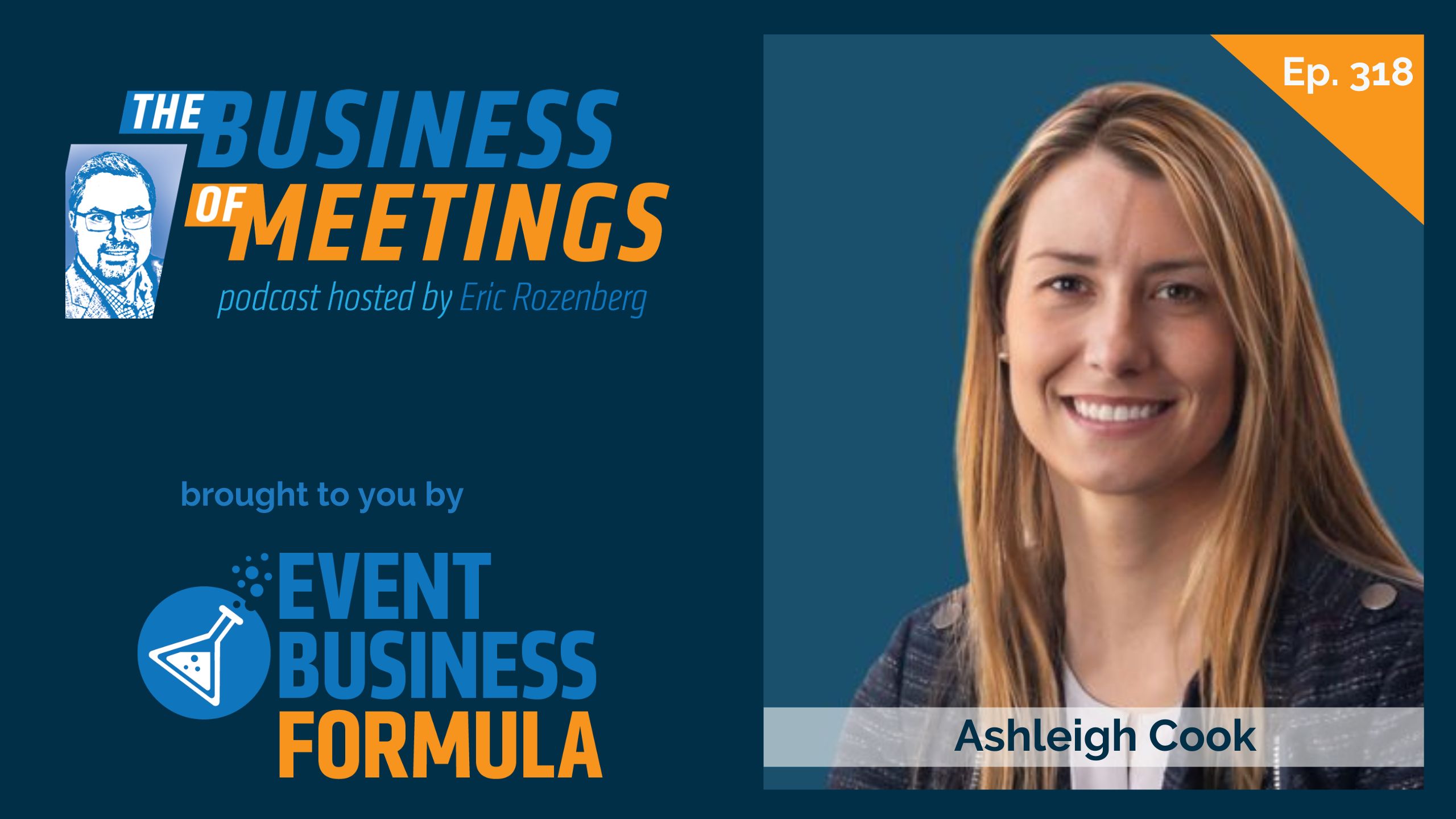
We are delighted to welcome Ashleigh Cook, the Chief Marketing Officer of RainFocus, as today’s guest.
In this episode, Ashleigh focuses on strategy, data, AI, and the aspects of events that must change. Stay tuned to learn how, with the right strategy and data foundation, events can truly become impactful drivers of business growth.
Ashleigh’s Journey
Ashleigh began her career in the research and advisory space at companies such as Gartner and Forrester, where she managed marketing programs and consistently tracked events that drove the strongest growth. She joined RainFocus in 2020, during the pandemic, inspired by its focus on data and personalization. There, she saw firsthand how virtual events expanded reach and accessibility, and how hybrid experiences strengthened engagement. Today, she collaborates with leading brands to develop event strategies that enhance business outcomes.
Events
Ashleigh believes that events are one of the most effective ways to bring teams together around the customer experience. They help attract new customers, deepen relationships, and build loyalty. She points out that conversion rates from events are consistently strong, making them a powerful channel when used intentionally.
Formatting Events
The format of an event should always reflect its goal—virtual works well for reaching wider audiences and delivering content at scale. In-person is more impactful for connection and relationship-building. Hybrid offers flexibility, while roadshows are becoming more common to meet audiences where they are.
Clear Intent
A key message from Ashleigh is to avoid running events just because they happen each year. She encourages organizations to be clear about what they are trying to achieve, and then design the event around that goal.
Beyond Attendance
Ashleigh explains that event registrations and attendance only tell part of the story. What really matters is how people engage at events, the sessions they attend, who they meet, and how actively they participate throughout the event.
Data
Ashleigh emphasizes the importance of event data after the event ends. Teams should focus on follow-up, understanding attendee interests, and tracking how those interactions turn into opportunities, accelerated deals, and long-term relationships.
Data Strategy
Data should be intentional. Instead of simply collecting information habitually, organizations should consider how they will use it across the entire customer journey, from registration to post-event engagement.
Personalization
With the right data, events can become far more personalized. Attendees can be guided toward sessions, content, and experiences that match their interests, making their time more valuable and increasing engagement.
AI
AI helps teams save time and work more efficiently. It supports recommendations, workflows, and analyzing feedback, allowing teams to focus less on logistics and more on creating better experiences.
The Human Element
While AI is powerful, Ashleigh is clear that it cannot replace human connection. The real value of events lies in relationship building, trust, and in-person interactions.
An Ongoing Journey
Ashleigh encourages people to think beyond one single event. Events should connect to a broader journey, where each interaction builds on the last and helps teams engage more meaningfully over time.
Events Are Growing
More organizations are investing in events because they offer a real connection in an increasingly digital world. Events cut through the noise and create lasting impact.
Learning and Staying Relevant
Keeping up with new tools and trends does not have to be overwhelming. Ashleigh recommends learning from peers, joining professional communities, and experimenting with new technologies to build confidence and improve results.
Authenticity Matters
Authenticity matters. As more content becomes automated, people are becoming more adept at spotting what feels real. Lasting connections and strong brands come from genuine, human interaction.
BIO: Ashleigh Cook, Chief Marketing Officer at RainFocus
Ashleigh is an accomplished marketing executive with deep expertise in sales, marketing, and product best practices and technology. She is driven by a passion for helping high-growth companies establish and scale marketing functions to deliver an exceptional customer experience that aligns with rapidly changing expectations and technology advancements.
Before RainFocus, Ashleigh led marketing teams spanning GTM strategy, demand generation, ABM, client marketing, and operations at SiriusDecisions and Forrester. Ashleigh holds her BSBA in Marketing from the University of Richmond. Outside of work, she enjoys spending time with family, golfing with her husband, being active with her dog, and traveling.
Connect with Eric Rozenberg
Listen to The Business of Meetings podcast
Subscribe to The Business of Meetings newsletter
Connect with Ashleigh Cook
On LinkedIn
Listen on: Apple Podcasts · Spotify · YouTube
“AI cannot replace the human connection that you have at events.” (Ashleigh Cook)
Ashleigh Cook
Full transcript of episode 318 of The Business of Meetings podcast, Eric Rozenberg with Ashleigh Cook. Lightly edited for readability.
Eric: Hello and welcome to The Business of Meetings podcast. I’m your host, Eric Rozenberg.
Over the years, I’ve had the privilege of helping businesses in the meetings and events industry grow and succeed. And I’m excited to share that experience with you. If you feel alone and overwhelmed, and if you’re looking to take your business to the next level, improve your strategy and sales, and connect with like-minded professionals, you are in the right place. I invite you to visit eventbusinessformula.com and join our community of event business owners dedicated to exponential growth.
Now let’s dive into today’s episode. Hello and welcome to a new episode of The Business of Meetings podcast. And today I’m excited to speak with the chief marketing officer of an amazing company. But the reason I am so excited is because she is talking about strategy. She’s talking about data. She’s talking about AI and everything that goes in an event. And that’s, I believe, I always believe that is the most important thing that is too many times overlook by business owners and by professional in our industry. Ladies and gentlemen, please welcome the one and only Ashleigh Cook, who’s the chief marketing officer of RainFocus. Ashleigh, good morning.
Ashleigh: Good morning, Eric. Thank you so much for having me today.
Eric: I’m so happy you’re taking the time and you’re extremely busy. I’m really looking forward to this conversation for the reason I just mentioned. But before that, I would love to know what is your journey and how did you get to join our industry.
Ashleigh: Sure. So, events has always been an exciting place for me in terms of where I found my passion. Prior to joining RainFocus in 2020, I was mostly in the research and advisory space working for companies like Gartner, SiriusDecisions, and Forrester. And through my work there running marketing programs, I always saw that organizations that truly accelerated their growth were driven and really leaning into a key channel, and that was events. They were using events in a very strategic way across their organization to unify that across teams and really leverage them to not only attract new customers but also use it as an engagement mechanism for their existing customers to further those relationships and really build loyalty.
So I always found throughout my experience in terms of looking at what organizations were doing that were really driving that growth, as well as seeing internally within the programs teams that I was running, events by far were the most effective channel for organizations to really rally around the customer experience, the customer journey, and ensuring that that’s a positive one. I think we all see the conversion rates are incredibly impactful coming out of events, and that’s one thing that just really spurred my passion around that. And when I had a great opportunity to come to RainFocus here back 6 years ago, actually at the height of the pandemic, no less, I saw RainFocus working with many leading brands across the world to really deliver and power those experiences in a more impactful, smarter way, truly anchored around the data and personalization that enables organizations to truly use that, and accelerate folks in their customer journey. So I was driven by the mission of RainFocus from there, and yeah, that brought me here. And I’m in an incredible spot where we’re able to work with many world-class organizations to enable those event experiences to improve business outcomes for their own brands.
Eric: That’s awesome. I actually remember having my first incentive trip survey, impact survey, with Sunny Music, where we were comparing what they were doing, what the market was doing, and what’s in their client, those who are going on incentive trip or not. And to your point, it’s extremely efficient, which always makes me wonder why when there’s an economic crisis companies cut that first, which makes no sense in terms of business. But I want to ask a personal question. From what you say, six years ago you changing, so going from Forrester, Gartner, there, all those very well-known name, and obviously RainFocus is an amazing company, but the pandemic, you changing company and you going into a company that is working in the event space, what are people around you, your family or friends, are telling you at that moment?
Ashleigh: Well, they were really excited for me initially, and then when I joined, I think that’s when things got to be a bit more serious. I think in the early stages it was, oh, let’s just wait and see. Events could come back. And when I joined, I’d say I was really inspired by just how differently RainFocus was looking at it. It wasn’t, hey, in-person events are going away. It is how do we continue to engage these audiences in a virtual fashion? And there were actually some incredible results early on, where there were some organizations that may have had 30,000 that were registered for their in-person event that was coming up, and by the time the event actually took place they had 130,000 virtual folks that were tuning in. I’d say engagement was incredibly high early on in terms of it made these event experiences more broadly accessible to audiences that may have not otherwise been able to get on a plane and join in person. So I’d say there were a lot of positives that emerged early on in terms of just making the events more accessible, the education, the consumption, more brand awareness for them. But yes, it was definitely a tricky early days on those. But again, was just really encouraged by the relationships that RainFocus was brokering with clients, ensuring that we were supporting them throughout the challenges that they were having.
Event marketers and event teams by nature are incredibly, incredibly resilient. They are always planning for the unexpected and willing to pivot as needed. I think that particular time really, really forced us all to be even more resilient, and we emerged stronger coming out of it just based on the community, the experiences that we were able to create together, and ultimately that improved results in terms of broader brand awareness and eventually better engagement as we return to hybrid formats.
Eric: Right. And to your point, I think that people in our industry is probably the most resilient in mankind and woman, I don’t know how you call it now, but the fact that you have to always pivot and face new things, from a volcano exploding in Iceland to shutdown of the world to now AI, and I know we’re going to talk about it in a minute. But what you’ve seen going from 30,000 plans to 130,000 with hybrids, are you still doing kind of mix of both or are you separating? You do some only online and some in person, and in terms of data and what you’re measuring, do you see any difference or you use it for specific needs of the company?
Ashleigh: Yeah, so it’s interesting. So we have benchmark data. So we benchmark all of our clients, and we’re able to benchmark that based on a series of data points. So it could be the tier of event. So if it’s tier 1, 5,000 and above, tier 2, 2,000 to 5,000, or under 1,000, which would be tier 3. And we benchmark that across the mechanism, so whether it is virtual, hybrid, or if it’s in-person delivery. And I think what it comes down to, what we found just based on our clients, it really depends on their intended goal for that event. And that’s when it comes back to the strategy that they are looking to achieve. Hybrid is, it kind of gives you a better balance of both, if you will. But we have found that, hey, if your goal is broader brand awareness for a big product launch that you’re doing, yes, virtual may be exactly it in terms of the mechanism to provide the education, the content that your users or your audiences need to learn more about that. And then we have found that when it comes to connection or meetings, the most impactful channel is going to be in person, because that’s where the engagement, connection is more important than the content perhaps in some cases. So I think it comes down to, again, just the strategy, the organizations, and the intended goals. And that’s always important to keep in mind as they’re framing or deciding what those delivery formats are.
We’ve also seen some more, especially now, more popups around. Folks aren’t necessarily going towards the larger flagship conference. We are seeing many bring it as a road show, so more of a decentralized event that’s distributed globally so that they can engage folks in their respective hubs or locations and really cultivate those connections, as well as blending some of that content. So that’s another just change that we’re seeing across the base in terms of how they are trying to engage and interact with those audiences. And part of that I think is driven just based on AI and many organizations and their brands, the need to get out in front of their customers as well as their prospects to showcase some of that latest innovation. I think we all know traditionally folks would wait for that annual conference to have a big splash on that, and no longer is that viable. We need to really bring the message and engage the audience throughout, because if you’re not, your competition is.
Eric: Absolutely. And when I had my cooperative agency, I was many times, and my clients were all Fortune 500 company, but I was very surprised on a regular basis when I would ask a sales director, why do you do sales, and the answer I was getting was, oh, we do it every year. Like, I don’t get it. How do you even justify the investment? How do you relate that to your board? So, what are your recommendation in terms of KPIs, what clients should be measuring when they’re running events, and what business owners and small business owners who own an event business should look at in terms of what they should be measuring and how often.
Ashleigh: Yeah, I think the big ones is looking beyond some of the vanity metrics that organizations are measuring. And oftentimes I think the vanity metrics are just some of the leading indicators for that in terms of, hey, did we fill the registrations that we were intending? Do we have the right hotel bookings? Because there’s obviously a cost from a nutrition standpoint, what teams are guaranteeing around food and beverage. So there’s some of those more vanity metrics around registration and attendees. But what we are seeing some of the most innovative and advanced organizations pivoting to is how many activities are taking place across the event based on the folks that we are engaging. So buying group members, how many sessions are they attending? How many meetings are they attending? Demos, how many of those are they checking out? Exhibitor booths, how engaged are they throughout the event?
And that’s all great within the event, but then it comes to the post-event follow-up. So what do you do with that information? We are seeing organizations that are farthest along. They are tracking things like how many connects did we have after the event based on the attendees that had joined. How many times did we follow up with resources and artifacts that are relevant to that individual based on what we were able to learn about them over the course of the event. These folks are spending, in many cases, three, four days with you, and there’s an immense amount of intent data that can be gathered around the topics and the key drivers that are most important. And we’re also finding that it’s not just the individual. It is across, many business decisions are made in a buying group or a committee that is oftentimes somewhere between 10 and 20 members. So when you have groups coming on site, what can you triangulate about what’s most important to them at their organization?
So we have seen just tracking the conversion rates in terms of the connects after the event, and then we are tracking that with many organizations to the number of qualified opportunities that are generated as a result of the event, number of opportunities that are accelerated. So those that have progressed positively as a result of the event, and then ultimately closed one. And some of the more sophisticated brands are tracking the velocity and the conversion rates from stage to stage as part of that, because we know that depending on the goal of the event, it does greatly improve and speed up just the time in terms of what it takes throughout the sales cycle. So it accelerates that path for many buyers.
And then we have seen as well retention metrics. So tracking, hey, here are all of the customers that came to the event, as a result of that, who did we retain over the course of the year, and looking at the percentage increase or the correlation of that to retention within your brand. We find that oftentimes customers that may not attend our conference, or some of our clients as well, those are the clients that are typically at churn risk or have early warning signs of not potentially not renewing down the path. Whereas those that are coming on site and investing the time, those are your advocates that you’re continuing to nurture.
Eric: That’s fascinating. I remember attending Frankfurt part. It was Frank Orlando for Sapphire Now with SAP. Yeah, and asking question about how they are leveraging the events afterwards. And to your point, one of the thing they were measuring is the sales velocity and the churn rate based on the fact that the clients were attending or not, which is really fascinating. But what I love on your LinkedIn, you said elevate events. Yeah, to accelerate growth. My challenge to a lot of business owners in our industry is that they are too focused on ligitimacy, how many people coming, do you have any vegetarian, okay, which are obviously very important, but it comes after this instead of what are you trying to achieve, what is your strategy, who are your competitors. With all the data you have, are you advising your client? And I’m really interested in where, when in the chain are you involved, because a lot of people complaining that they don’t have a seat at the table, that they’re just there to execute. So tell us a little bit about how you involve, at which stage in the process, and the type of data that resonate with the client.
Ashleigh: Sure. So when we partner with our clients, it’s usually from the start of preparing to launch things like registration. And I think some of the key elements that we found that are critical to setting things up for success up front is coming up with the overarching data strategy. Right? So when you’re going through registration, what are the fields that we are going to capture on our particular attendees, and how, not just capturing those fields because we’ve always captured them and then calling it, hey, this is, we’re just going to do things the way we’ve always done it, but thinking through holistically on how are we actually going to use this data throughout the customer journey for those audiences. So how will you use it at registration? Okay, what is the on-site experience going to become based on the data that we are triggering, and then how will that correlate to what we find after the event?
So have seen some incredible organizations that are also using, they’re capturing topics of interest as well as products that audiences are currently using, and then being able to correlate that to, did they attend new sessions throughout the event that may represent product interest in another category that could be a cross-sell or an upsell to some degree. So that is incredibly sophisticated in terms of, hey, how many new products were we able to add and drive from an opportunity perspective based on what we’re seeing in those parameters. But yeah, I would say data strategy is core to really framing that upfront that fuels the personalization, and I know we’ll get to it in a little bit, but that’s where AI can support a lot of things at scale there. But that has been just the key as organizations are thinking about it holistically on how the data is going to be used. Not just for, hey, this is a great event, we’re going to finish it up and send a CSV file out to folks. How do we integrate that data in real time to the sales and marketing tech stacks so that it can be activated in real time, be more impactful, and increase those conversion rates?
Eric: Wow, that’s fascinating. And the example you gave about going to a session, if somebody’s going to another session, that might be a signal they’re looking for something else. Wow. So you’re basically involved throughout the year, not only to prepare the event but with all the strategy and all the different touch point that they have with the customers.
Ashleigh: Yeah, exactly. So many of the organizations that we work with, and actually the majority, are running a series of events, their entire event portfolio, with a company like RainFocus. So in many organizations we’re running the larger flagship work conference for them, all the way down to the smaller seminars, meetings, webinars that are taking place throughout the year. So when we are framing up that strategy with our clients, we’re not just looking at it as a one-off, one and done. We’re thinking about how are we going to use this data throughout the entire event landscape, or event continuum, with those audiences in the organization, so that we continue to make smarter and better engagements at every touch point throughout the journey.
So examples of that may be individuals that are attending a specific road show or a webinar on a certain topic that could ultimately curate the recommendations that we have for those individuals that are coming to the larger flagship conference with three, four, or 500 sessions. How do you make it easier for them to digest and it more personalized for them to maximize their time out of the office and the time that they’re investing in your brand? So we’ve seen that one as being really critical there.
Eric: And how are you now using the whole AI in terms of your processes? And can you tell us a little bit more about how people should look at it, because I know there’s a lot of hype, there’s a lot of fear, but there’s also a lot of opportunity, to be much more efficient, much more precise.
Ashleigh: Certainly. So I completely agree, and if you look at it perhaps two years ago, I think the overall direction there was, hey, this is just hype. At the very best it’s used for content writing. And there were actually a couple of studies that we’ve done with the Event Leaders Exchange, as well as some data that we have on our own, where early on, about a year and a half, two years ago, content and copywriting was the primary use case in about, I think, 65 to 70% of folks. That was really being most impactful for those brands. But we have seen just AI transform, and I think it often takes just some early adopters to show some of the wins and successes early on.
So here at RainFocus, we launched RainFocus Nexus, which is our AI framework, which is really built on a system of record with a context layer knowing everything about an individual and how they’ve engaged throughout the event programs that they’ve participated in. And on top of it, we have overlaid specific agents as an example. So I’ll give you a couple of examples. We have a configuration agent that enables organizations to create tasks and build their workflows much quicker than they have historically. And it’s based on all of the data that we have in house, based on how the majority of organizations build it, based on the intended goal, the intended outcome.
And then we also have a concierge agent, which I think this is where it’s been key for individuals and organizations to really free up a lot of the time that their teams are spending on logistics and questions. So the concierge agent can provide recommendations based on an individual’s profile and their behavioral attributes to really fuel what should I do next within the event, or how can I interact, or what would be most applicable to me. We have seen some organizations, in one example they had those that had taken a recommendation were 30% more likely to show up to that session or meeting based on the virtue of the recommendation. So they were seeing a really positive sign in terms of overall engagement, which was incredible there. And then real-time just logistics questions, freeing up teammates that would otherwise be manning or staffing that to answer those questions. We’ve seen that be a great asset in terms of freeing up the time, recommendations.
And then there’s other areas where we’ve seen clients have great success when it comes to AI sentiment analysis. So post-event you get all of the survey feedback, and traditionally you’d have an intern or someone mine through all of the responses to get a gauge of, hey, how did the event resonate overall. AI sentiment analysis that we have in platform will provide just an overall view in terms of what are the recurring themes that we see throughout the survey feedback, what were the overall ratings, and it provides just a real-time view to organizers post-event. And we’ve also seen them use it in event as well to help them course correct and know where they need to adjust or tweak things to ensure that they can turn that experience positive in real time. So those are just a couple of examples in platform. I would say the recommendations piece, that far and away, when you can encourage a better turnout rate, better engagement in event, that is limitless potential there.
Eric: Absolutely. Now I’m just thinking I should have asked, am I speaking with Ashleigh or is it your avatar?
Ashleigh: You may never know.
Eric: Exactly. Which is why I’m convinced, and it’s a serious question, I’m convinced that the more people use AI, the more they will want to come in person. Yes. What do you think about that?
Ashleigh: We completely agree. AI, it is incredible in terms of its capacity and what it’s able to do. We find that it’s really good at taking over the how and the what, but it cannot replace the human judgment or the why. And AI cannot replace the human connection that you have at events. It can certainly help facilitate that. So matchmaking capabilities in terms of core attributes and traits of individuals, topic interests, and connecting them that way. But it is when you get on site and you see the handshakes and the connection that you’re able to build just based on the personality and the trust and the rapport that can be built in person. That’s an area that you just can’t replicate.
So we have definitely worked with our clients, and they’re seeing AI as an incredible opportunity to really free up their teammates and their team’s time to enable them more space to cultivate more of those connections on site, where that’s where business takes place and relationships are accelerated throughout that. But that’s my perspective. What do you think, Eric?
Eric: I can only agree with it. I’ve always been saying stop about only logistics, go to the strategy, go to the why. Companies are investing in business, and to your point on the how, what, but not the why. I’m also convinced that there’s a lot of opportunities, and I’m very excited with AI. I have my own Eric AI, which is based on everything I’ve done the last 30 years and what we see, whether it’s a CEO or a young graduate using it. It’s really fascinating. But my point is you need to go back to, first of all, what is the workflow? What are the different aspect of the processes, and before that, what are you trying to achieve? What does success look like? What are the goals? And only then can you use technology. Can you use the AI automate a lot of things? It always have to serve the same purpose, why is a company investing that. And to your point, I think what is even more important in the future than ever is to create those experiences where people, human beings, are coming together, achieving the goals of the company, achieving the goal of why they attending a conference, meeting. But that is not never going to go away. You cannot experience those things if you’re not in person. But on the other hand is what you do with all the technology, it has to serve the purpose. So, are you also seeing that with your client? Are you helping them with using the technology? But always, basically my question is, do you have to remind sometimes your client that, hold on, what is your goal, why you trying to achieve that, instead of going just at the pigeonhole of what we can automate?
Ashleigh: Yeah, you’re exactly right. That comes back to how we frame up from a data strategy perspective as well, in terms of, don’t collect all of these attributes or fields just because you’ve always done it that way. Think strategically about what you are actually going to do with it afterwards. And that’s very in line with how we’re approaching the AI strategy as well, because data and the personalization aspects are key to that as well in terms of what data are you going to trigger off of or automate at scale. What are you going to personalize? What are those workflows? How will it improve the experience that individuals are having throughout the event, while being very mindful and cautious that you are not replacing those elements of the event that have inherently made that a big splash or a memorable moment for them, replacing those with AI. You need to be mindful that you’re using it just in the right areas of the event to improve that experience and make events authentic and impactful, which is really driven by the human element.
Eric: When I was working with large organizations, I could really see two type of people when it comes to events. Those who are like, they’re the ambassador, they know it’s working, they have the data, they using it, wonderful. And then you have those who are just like, ah yeah, well, I’ll give it to him or to her and they’ll do it, and just like, we have to do it, whatever. Are you seeing a change in the mindset of those people, specifically the second category, when you come with all the data and when you explain what’s happening?
Ashleigh: Yeah, it’s interesting. And I think traditionally events operated in a bit more of a silo. I think with the pandemic, we saw more marketing operations teams and marketing teams get involved in terms of how are we able to activate this data in real time and use it and leverage it a bit more impactfully. And that’s a bit of what we’re seeing now as well, as more events are getting intertwined as not just being seen as an isolated touch point, but really being seen as part of the cohesive customer journey end to end. It doesn’t stop and start at the event. It is how does this also correlate or align to what we’re seeing in their buying behavior digitally, based on downloads that they have, how they’re engaging with your website, the types of calls that they’re having with your sales teams and product experts within the organization.
So I think it’s looking at it a bit more holistically, and AI, again, is just reshifting and shaping how folks are thinking about what the scope of what is possible today, because I think historically events teams are strapped and limited on time and bandwidth in terms of what they can feasibly achieve with the milestone-driven events that they are trying to run successfully for their audiences. And I think AI certainly opens up some opportunities for collaboration with other departments to help approach those at more scale. And so I think it’s definitely opened the eyes of, hey, we can do this. There are different ways to accomplish this and really continue to elevate and improve events.
And I think it’s been great just within our customer base. We are seeing many organizations have an AI ambassador as part of their events team, or a group that is really centered on AI innovation and looking strategically across the portfolio and how they can introduce that in the most meaningful ways, all in the spirit of elevating the customer experience but also improving the conversion rates and close rates and brand loyalty that they’re creating as a result of those experiences. So again, this is one of those where we’re seeing broader groups get involved, which is a great thing, because it means that it is tying more into the cohesive customer journey as opposed to an isolated touch point.
Eric: Absolutely. And that’s what you mentioned, the close rate, the won rate, the brand loyalty. That’s the language that everybody would understand. Now I think we all saw last year Mark Cuban tweeting about event professional is one of the job of the future, which is wonderful and which I totally concur with. What I’ve seen recently is a company like Anthropic, for those who don’t know yet, that they’re doing Claude and phone and everything, they are hiring for their event department, and the jobs they’re posting is like, wow, like between two and 300k to start with, which is kind of interesting. Do you agree that we’re going to have even more events in the future and so the companies won’t be able to organize everything themselves and we’ll have to outsource that? And if yes, how could a business owner prepare herself in terms of speaking the language of data and AI and strategy of their future client?
Ashleigh: Yeah, I think to support the quote that you have from Mark Cuban, we’ve also seen a couple of studies coming out of Gartner that’s indicating that CMOs by 2028 are going to shift 70% of their spend towards offline engagement, meaning events. So we’re also seeing that 70%,
Eric: 70%?
Ashleigh: 70, yes, that they will shift towards in-person experiences, because those are the key differentiators and creating those authentic touch points as part of the brand. We are seeing, even within our own client base, there is some accelerated hiring in many pockets just based on those organizations that are strategically leveraging events in a way that is outperforming other channels. I do think digital fatigue is certainly something that is real, as AI can replicate a lot of the content and personalize at scale. I think we’ve all seen the number of emails have increased dramatically, and the way to really cultivate the connections and see someone’s eyes and really have those connection points is going to be in person, where you can key off of just some of human behavior and the signals that they are able to give you, and cultivate and build those relationships.
So I think that is certainly one that is here today. Coming off of an event at Shop Talk last week, I saw it and was chatting with many folks there, and they said being at event is just so refreshing, because just being able to connect and learn from one another and not be at my desk being inundated with emails and content. And this is a way to cut through the noise and really go back to what is inherently human about us, and that is the need for connection with one another, and that’s really where relationships are formed and coming out of that. So I think that that’s certainly something that we’re seeing with the shift of spend towards events.
I agree with you. It will come down to bandwidth of existing teams, and I have gotten that from events teams of, hey, if spend is all shifting towards events, we’re not set up successfully today to be able to resource that, so need to look at some AI capabilities there of what are the logistics or the areas we can approach that at scale to really help from an administration standpoint, but really keep the special spark of what makes an event so special, and that is the human element that you are able to create with the creativity. Obviously data, AI can help fuel that at scale based on some of the data, the sentiment analysis that it can do for you, but really keeping the human in the driver’s seat of driving that creativity and architecting those experiences.
Eric: Awesome. Thank you. Now let’s say I’m a small business owners that has an agency or I’m an independent planner. I don’t have necessarily the resources that obviously you have. How can I best prepare myself? Where are the sources that I should read, that I should get information, so that I’m really speaking the language of the corporation and not just the logistical part?
Ashleigh: Yeah, there certainly, AI Institute has been a great resource in terms of, they offer some courses that can help upskill you and equip you. I’ve also noticed a great trend, depending on the folks that you follow on LinkedIn, where it’s become an area where folks are a lot more open in terms of sharing their strategies or their prompts or key things that have been successful to them. That has been an incredible resource for me just to see some of the ways that my peers and other folks in the industry are using AI to be successful. And then there are a series of, I’ve seen them posted on LinkedIn, there’s a series of groups. So find a like-minded group. So I join a coffee talk group on Fridays where it’s 200 CMOs that get together and talk about how they’re using AI or what their new prompts are, what they’re vibe coding. And it’s just great for inspiration. It is that pure network in that community that I would encourage folks to lean in on. It enables you to cut through the noise of what is truly going to be impactful for your business and certainly augment that with any courses that you can find. AI Institute’s one. I know LinkedIn offers some. Anthropic offers some as well, and just immerse yourself and learn and get up to speed.
And if you have those tools or any premium versions of it, I would just encourage you to get out there and begin experimenting. There’s a lot that you can learn as you go, and it’s like riding a bike, right? Once you get some early wins and you get some momentum on you, that’s where the potential really gets unlimited for you. And again, being encouraged and challenged by peers has been what I found to be a great one in terms of what are you doing, how am I using it, and it sparks new ideas and creativity on how you can leverage it to a greater capacity.
Eric: Interesting you say that, because no later than tomorrow I have a group of business owners that I’m doing exactly that with. Talking about LinkedIn, that’s one thing that I would recommend people, and then tell me what you think about it. I’m sick and tired of, I post something and then the comment is, “Oh, you’re absolutely right to say.” They repeat exactly what I say and then they ask a question and then you have the three hashtag, and it’s like, “Oh, come on. This is your bot who’s answering. I hate it.” When I’m commenting on LinkedIn, it’s me, okay? It’s the intelligence or the stupidity or it’s my side or my accent, whatever it is, but it’s me. I don’t get this automated answer because it’s so fake at the end of the day.
Ashleigh: I agree, and I think as humans we’re getting much better at being able to read through that and identify those. Right? So I think at some point, and I think LinkedIn is starting down the path a little bit in terms of the algorithms where they can kind of piece together what is AI generated and perhaps just downplay that a bit more. So I think that’s inherently, but think about just the, it comes down to the authentic voice that you have as a brand that you need to create out there, and it doesn’t help when folks are feeling like it is AI generated. What makes your brand special are the people behind it and the authentic connection that they’re able to create and the trust they’re able to create with the brand. And you’re exactly right. I think folks are just getting better at identifying those signals.
Eric: Wonderful. Ashleigh, I love this conversation. Obviously, it’s a podcast, and as I was saying before we started recording, this is not Joe Rogan. I cannot go for two, three hours, and you’re also very busy. But I really, really thank you. This is very fascinating conversation. I’m sure listener get a lot out of it. I just want to ask you two question before we leave today. The first one is how could people reach you?
Ashleigh: Yes, feel free to reach out to me on LinkedIn. So Ashleigh Cook, feel free to connect with me there, and then you can always come to rainfocus.com and feel free to reach out. Yeah.
Eric: Awesome. And my last question, when we meet a year from now with a bottle of champagne, what are we going to celebrate?
Ashleigh: I think we’re going to celebrate events continuing to be the most effective channel that organizations are able to see as a result of that. And we’re going to celebrate the organizations that are adopting it fully to unleash and harness the talents within their organization that enable them to really get to new levels. So looking at AI to reframe and automate some of the monotonous, tedious tasks that free up individuals to really reach their full potential, which is the creativity and the human connection that they’re able to create.
Eric: Ashleigh Cook from RainFocus, thank you very much.
Ashleigh: Thank you very much, Eric. Appreciate it.
Eric: Thank you for tuning in to The Business of Meetings podcast. I hope you found today’s episode valuable. If you enjoy the show, the most important thing you can do is leave a review and share it with your colleagues. It really helps spread the word. I truly appreciate your support. And if you’re ready to take your business to the next level, don’t forget to visit eventbusinessformula.com to learn more about how we are helping event business owners like you. Thanks again for listening and I’ll see you next time.