
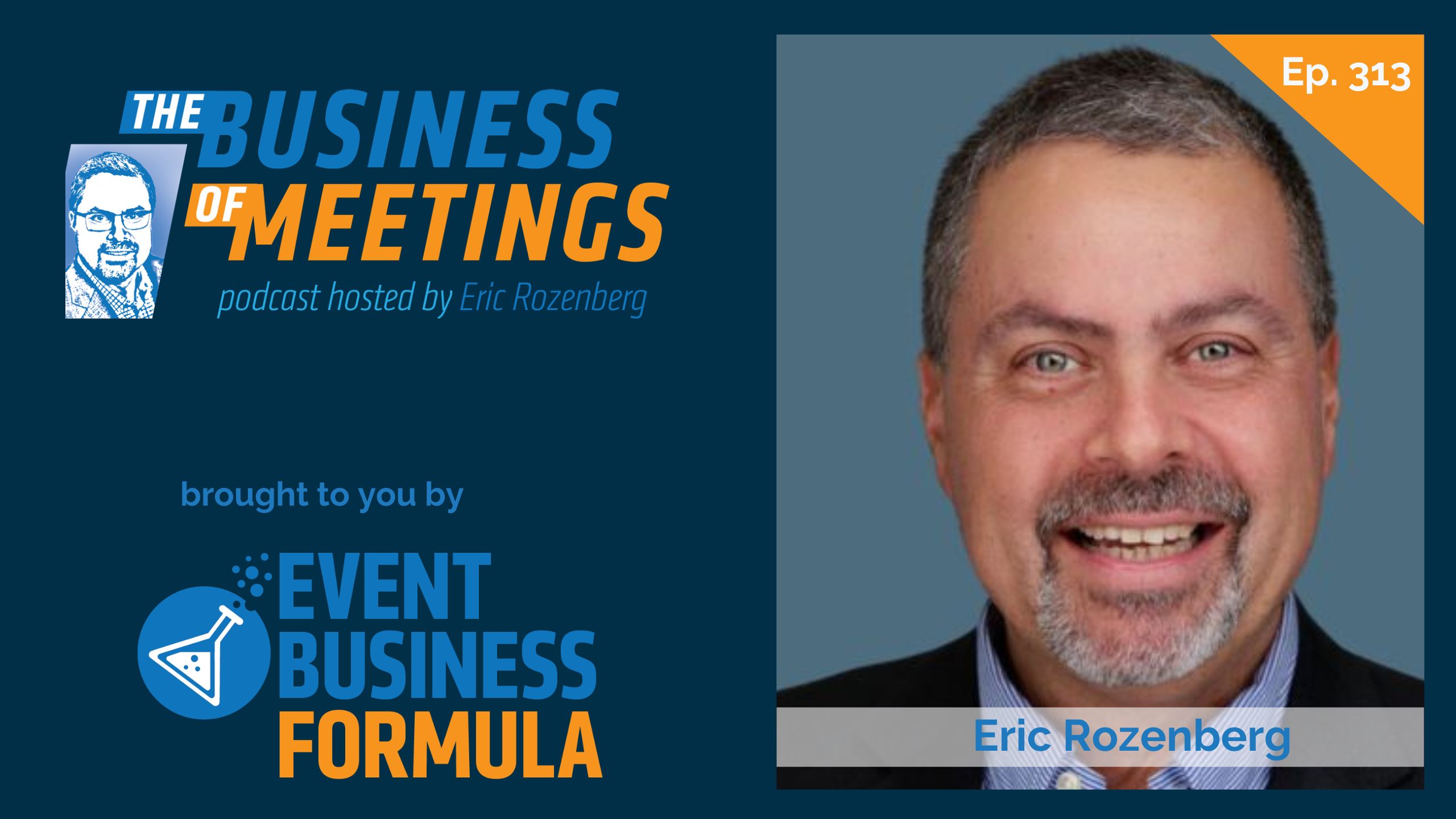
Today, Eric addresses the uncertainty we’re experiencing in the world.
Uncertainty has become the new normal, and our industry has shifted fundamentally with buyers being more cautious, procurement tighter than ever, and AI reshaping how we work. However, that uncertainty also provides opportunities.
Our Industry Has Changed Permanently
You must be cautious about every buying decision. Procurement teams are asking tougher questions. AI is transforming how work gets done. At the same time, as technology increases, so does the desire for real human connection. With many owners retiring and no clear successors in place, consolidation is creating space for those who are prepared. There is disruption, but there are also real opportunities.
A Fragile Business
If everything in your business relies on you, the business is vulnerable. Tough markets reveal when revenue is inconsistent, messaging is unclear, or too much income depends on one client. They also show when the owner has become the bottleneck. A business that can perform well only when conditions are easy is not well-structured. It is running on momentum. Building it as if you might sell it one day forces you to delegate, build stronger systems, and create long-term stability.
Clarity
Clarity is your competitive advantage. Uncertain times expose weak positioning, unclear offers, revenue concentration, and emotional decision-making. If you cannot quickly explain who you serve, the problem you solve, and why you’re different, you will struggle when budgets tighten.
Emotional Reactions Undermine Growth
When pressure rises, it’s easy to react. Panic marketing, heavy discounting, agreeing to everything, overworking, or avoiding financial reviews may feel productive, but they erode value. Operating in survival mode replaces strategy with short-term fixes. And hope, no matter how positive, is not a viable financial plan.
Five Non-Negotiables
Five areas deserve consistent attention: financial clarity, focused positioning, a predictable revenue engine, disciplined time management, and emotional control. Those are leadership fundamentals, and when they are strong, uncertainty becomes manageable.
Financial Clarity
Know your monthly break-even. Know your six-month runway. Understand your cash flow forecast and your pipeline. Review your KPIs weekly. You don’t have to prepare every report yourself, but you must understand the numbers. When you know where you stand, uncertainty loses much of its power.
Focused Positioning
Generalists struggle in tight markets. Be clear about who you serve, the problems you solve, and why your experience makes you the right choice. If you can explain your positioning confidently in 30 seconds, you’re already ahead. Clear positioning attracts the right clients and filters out the wrong ones.
A Predictable Revenue Engine
Referrals are valuable, but they are not enough for consistent growth. Track your indicators, your calls, meetings, proposals, conversion rates, and follow-ups. Put simple systems in place so the business does not rely solely on your personal energy. The less the day-to-day business operations depend on you, the more valuable and sustainable the business becomes.
Blocking Time
Block time for revenue-generating work. Block time for strategic thinking. Block time to review your numbers. Block time for team alignment and mentorship. If growth matters, it needs space in your calendar.
Calm Is Contagious
Your team and clients take their cues from you. When you remain calm and steady, they feel reassured. When you react emotionally, your instability spreads. Entrepreneurship will always have its highs and lows. Calm, steady leadership creates confidence in any situation.
A 30-Day Reset
Audit your financial runway. Clean your pipeline and assign realistic probabilities. Clarify your core offer in one sentence. Remove at least one low-margin distraction. Schedule weekly CEO time. Small, consistent structure creates meaningful momentum.
Conclusion
Uncertainty is a reality, and consolidation is accelerating. Those with structure, clarity, and discipline will benefit; those without them will struggle. Whether you run a solo business or lead a large team, processes, financial visibility, and calm leadership are essential. Focus on what you can control, build the structure, and keep moving forward.
Connect with Eric Rozenberg
On LinkedIn
Listen to The Business of Meetings podcast
Subscribe to The Business of Meetings newsletter
Listen on: Apple Podcasts · Spotify · YouTube
“Hope is not a cash management strategy.”
Eric Rozenberg
Full transcript of episode 313 of The Business of Meetings podcast, a solo episode with Eric Rozenberg. Lightly edited for readability.
Eric Rozenberg: Hello and welcome to the Business of Meetings podcast. I’m your host, Eric Rozenberg.
Over the years, I’ve had the privilege of helping businesses in the meetings and event industry grow and succeed, and I’m excited to share that experience with you. If you feel alone and overwhelmed, and if you’re looking to take your business to the next level, improve your strategy and sales, and connect with like-minded professionals, you are in the right place. I invite you to visit eventbusinessformula.com and join our community of event business owners dedicated to exponential growth. Now let’s dive into today’s episode.
Hello and welcome to a new episode of the Business of Meetings podcast. Today I want to address the current uncertainty in the world. When I say current, it’s almost like, since I’ve been working, I’ve heard the word uncertainty, but it doesn’t stop, for sure. I don’t think there is a “back to normal,” if there ever was. It’s evolving probably faster than ever, and for sure our industry is permanently changed. The buyers are more cautious. Procurement is tighter than ever. And of course AI is reshaping completely how we work. But in the meantime, I also believe that the more people will be using AI, the more they will want to come in person. So I see this uncertainty as an opportunity as well.
Another element is, for sure, consolidation is happening. There’s what we call the tsunami of baby boomers retiring. This is affecting our industry as well, and in other words, there’s also a lot of opportunities. Why? Because most of the people that have a business that haven’t sold, it’s probably too small to be sold to a private equity. The next generation doesn’t necessarily want to take over the business, and it’s weird to hear regularly some businesses that just stopped because there was nobody else to take them over. So there’s also room for consolidation over here.
But I think the bottom line is, if your business is depending on you, then your business is very fragile, and that’s also something that we can work on. If it works in good conditions, great. If it doesn’t work in tough conditions, I would say it’s probably you don’t have a business, you have momentum. There’s never too late to start doing the process of structuring it. What I say is, prepare your business to be sold even if you don’t want to sell it. That means delegating, that means structuring, that means reducing the uncertainty.
So what does uncertainty actually do? It’s exposing the flaws of the business. It’s exposing if you have a weak positioning, if you cannot clearly explain what you’re doing. It’s exposing if you have inconsistent revenue, because then if you lose one client, suddenly the business is in jeopardy, which means that that client was representing too much of your revenue. It also exposes the fact that you are the bottleneck as a business owner, and I know exactly what I’m talking about, because the first years of my first business, that’s who I was. I was the bottleneck. So I always try not to be that. Then there’s also the emotion that you have to deal with as a business owner. And I think also what is extremely important is the lack of financial clarity. If you don’t have your numbers straight, if you don’t know where you’re going, if you don’t know where your cash flow is, if you don’t know where your pipeline is, that is something that will definitely impact your business. And again, if you’re like me, especially when I started my first business, you’re probably going to say, “Yeah, all of the above.”
So most of the owners will react emotionally, because it’s our business, because it’s our life, it’s what we wanted to do. Some people can react and have strange behavior, like panic marketing, absolutely, going out in every direction without even thinking who your ideal client is. Discounting, which is worse, and I have a story I’m going to share with you in a minute about that. Saying yes to everything instead of trying to keep on your positioning, on what you do best, on the type of client and the business you want to have. And of course there is the overworking, where it’s our business, it’s our life, so we’re going to do everything that is possible in order to fight the situation, to reduce the uncertainty and to continue with the business. And the last point, which again is something that is very important that is affecting all of us, is avoiding the financial review. That is not running a business. That is survival mode, and survival mode kills strategy.
The example I want to share with you about discounting, or about having an idea of your numbers and what’s coming: I had a friend who was bidding for a very important insurance company when I had my cooperative agency in Belgium. I won’t say the name because I want to be nice, but the guy, the responsible of that company, knew that I would never bid for any of their projects. One day he asked me why I was not bidding, and I told him, “Because your game is to lower the fees of the agency and you’re getting a kick out of it. You don’t appreciate the work that’s being done. You’re changing every two years, and that’s not the type of clients that I want to be working with.” Well, he was not that happy, but he didn’t deny what I told him.
So, back to my friend. I heard that he won the business that year. I wanted to congratulate him, but I said, “I heard also that you reduced your fees to 3%, 4%.” He said, “Yes, that’s right.” One thing you have to know in context is that in Belgium at that time, it was 17.65% the norm. Don’t ask me how they got to that number, but that’s what it was. I looked at him and said, “Three, 4%? How could you even sustain your business with that?” His answer was, “I don’t care. My year is done.” I was completely flabbergasted. I said, “Okay, so what you’re telling me is next year, when they come back, you’re going to go back to the 17.65% because your business is not done, and you think they’re going to care?” Anyway, he was very happy, very proud of winning that. But unfortunately, a few years later, guess what? The company went belly up, which quite frankly is not surprising if you look at it that way, at numbers.
So don’t go into panic marketing. Don’t start discounting. Don’t say yes to everything. Try not to overwork, I know it’s not always easy. But most importantly, you need to have a great idea of your numbers.
So in uncertain times like today, you really need to focus on five things. One is financial clarity. That’s a non-negotiable. Two is to focus your positioning. Three is to build a predictable revenue engine. Four is to have a very strict way of managing your time and really focus on your priorities. And five is to have the emotional discipline, because it’s a roller coaster.
The financial clarity: you need to know your monthly break-even. If I ask you what is your six months runway, what is your cash flow forecast, what is the situation of your pipeline, you need to know those numbers. By knowing those numbers, that will considerably reduce the uncertainty. If not, you’re really guessing. And quite frankly, hope is not a cash management strategy. So you need to know those numbers. By the way, you don’t need to prepare the numbers yourself. You definitely try to outsource that to the right person and ask them what you want to see on a regular basis, whether it’s every two weeks, every month, but at least you are defining the numbers you want to be looking at. It’s not you who necessarily has to prepare that. So that’s for the financial clarity.
When it comes to focusing your positioning, if you are too general, the uncertainty in the market will not favor the generalist. You need to answer the question: who are you working for? What problem do you solve? Why should people work with you and not another person? If your answer is vague, then the budget will bypass you. So, for instance, let me give you an example. Who are you for? What problem do you solve? I help business owners in the meetings and event industry to grow their business and prepare it for sale even if they don’t want to sell it. Okay, that’s who I work for. That’s the problem I solve. And at the end of the day, why me? It’s because my experience of starting, growing, exiting multiple businesses in our industry is unique. I’ve done it before and I know what it takes. So that’s, in 30 seconds, how I look at my business and how I position myself and how I’m helping people. You need to answer those questions for you and for what you do. Who are you for? What problems do you solve? And why should people be working with you? That’s the focused positioning, and that will also lower the uncertainty.
My third point is about building a predictable revenue engine. It’s great to have referrals. That’s how most of us, including myself, started, and referrals are important, and you can have great testimonials as well, but it’s not enough. If you want to scale the business, you need more than referrals. You need to have a pipeline with different stages in the sales process. You need to know your leading indicators, and that’s a distinction I always make between leading indicator and lagging indicator. Basically, the leading indicator is what you’re going to be doing every day that is going to provide the results that you’re looking for. What is your conversion rate? How many calls? How many meetings? How many offers? How many conversions do you have? And also the follow-up system.
At the base, I’m not a lover of systems and process. That’s not in my character. But actually, I am a lover of process and system, because that’s how I build businesses, and there is no way that you can scale a business or that you can manage a business without being involved in it from morning till evening and doing everything yourself. There’s no way you can do that if you don’t have the processes. So you need to have the process. If not, you’re going to be busy from morning till evening until you burn out and there’s no business. Quite frankly, that’s the main danger. If the revenue depends only on your personality, your business is not scaled, and I would offer as well that it’s not safe. God forbid something happens to you, there’s nothing else. So in order to do that, you need to have the structure. You need to work on predictability and also transferability. In other words, if you wanted to transfer the business to someone, is that possible, or is the business too much depending on you? As I often say, the less you’re involved in your business, the higher the value. Let me repeat that. The less you are involved in the daily activities of your business, the higher the value of your business.
So I’ve spoken about financial clarity, the focused positioning, the predictable revenue engine. Now let’s talk about the time management and the emotional discipline. When you are uncertain, if you’re like me, when I’m uncertain, what do I do? I consume more content. I attend more webinars. I scroll more. I react more. Great. And what is the end result? Not much. It’s great to learn, and I’m really, as you say in English, a sucker for learning. I love reading books and I love attending webinars and masterminds, everything. Now the question is: what do I learn there that I apply, and systematically apply?
In order to do that, you need to block time. You need to have a very strict way of managing your time and be very, very, very hard on saying no to other things that are coming up. You need to block time for the revenue generating activities. If you’re telling me that growing your business is important, then sales is important. If I look at your calendar and I see that you don’t even have one hour block in your calendar to work on your business every day, don’t tell me that it’s important to grow your business, because it’s not happening. So you need to block time for that.
You need also to block time for strategic thinking, to work on your business, to think about where the world is going, where the industry is going, and what you can be doing, and thinking about the strategy an hour per week, two hours per week. I personally have blocked my Friday afternoons to think of that. Do I miss some Friday afternoons because there’s an urgency, because there’s a decline? Yes, but most of the time that’s when I’m doing the strategic thinking.
Then you need to make sure that everybody in your company is aligned with your vision. They understand it, they share it, they live it, they act upon it. That takes time and it’s an ongoing process. It’s never done, and we need to keep aligning the team, going back to the values, which is also why it’s important to define your culture and your values, but that’s for another conversation.
Then you need also to have time to review your numbers every week at least. You need to review your key performance indicators, your KPIs. I talked about it in a previous episode, but you have your dashboard, you have the main KPIs, you need to look at them and make decisions based on them. It’s nice to have the data, yeah, but if you don’t use it… So you need to block time to do that.
In order to do that, you also need to get a coach, to get a mentor, to be in the community, in the group that understands your needs, that are living the same challenges. Again, that’s one of the reasons why I’m so confident that the more people use AI, the more they want to come in person, because it’s not only for checking that people are real but also to exchange information. As human beings, we like to belong, we like to be part of a community. So you need to block time for all those activities: revenue generating activities, strategic thinking, team alignment, reviewing your numbers, and getting time for your coach and mentor. If you don’t have an hour per week, two hours per week to sit down with somebody who’s going to give you tough love, I would offer that you’re going to be on your own and you are not on the right pathway to growth.
So in summary for that, I would say that it’s not about business that is not control. You need to be very conscious, aware, as JLO Vanam would say. You need to be aware of how you’re spending your time and how you’re blocking your time.
Finally, it’s the emotional discipline, and this, quite frankly, is where most of us will fail. If you look at the way your team operates, if you look at the way your clients feel you, if you look at the way your partners are interacting with you, they see your state of emotional discipline. I’m not saying to hide your emotion, and I’m the last one who can talk about it, because what you see is what you get, and you can tell how I feel and what I think by just looking at me. But if you are reactive, if you are dramatic, if you’re fear driven, basically what you’re doing, you’re amplifying the instability. Quite frankly, if you cannot control your emotion and be calm in every situation, you probably shouldn’t be working in this industry. There’s always something happening. Calm is really a leadership skill. You need to learn that. That’s also how you can reassure the client.
I can give you plenty of situations. Just one example. One day I cancelled, maybe 30 minutes before they were going to leave the hotel to come for a dinner, I cancelled the dinner, and I told my client I’d find a solution in the next 45 minutes. Point being, we were in Tenerife. We were going to have an amazing dinner at the zoo, in the room with the window and the white tigers on the other side, and it had been raining, pouring rain, for the last four days in Tenerife. It never rains in Tenerife. Right. Then I went for the advancing and I saw on the roof there was a little bubble in the ceiling, which actually was water, and I didn’t want to have a dinner there and suddenly the roof would come down. So sometimes you have to take a hard decision, but then again, if you stay calm, your clients know you. That’s very important, and you basically convey that.
I’ll give you another example, then I’ll stop, because if not, I’m going to be speaking for three hours with quite war stories of running projects. We were chartering two planes for a client in two different cities, and I was with one of the planes, and there was a little piece that was broken, so they couldn’t start the engine, and we had to wait for two hours for this little piece to be brought from another airport. The local responsible, if you want, of my client, which was not the person I was working with, but he was just the local head of the project, if you want, guiding everyone that was going to the retreat in that plane, started screaming at me, because he wanted to show his colleagues that he was not happy. He was taking things in his hand. I looked at him and said, “Can I have a word, but not in front of everyone?” He said, “Sure.” Then we went apart and I said, “Listen, this piece of the engine, neither you nor me can do anything about it. This airline is part of the Star Alliance group, so quite frankly, it’s not that we’re looking with the cheapest airline, and they have rules as well for maintenance. Now, you can hate me, you can scream at me as much as you want. The only thing you’re going to do is to stress all of your colleagues. So what I suggest: stay calm. I’ll give you the information. You can hate me afterwards. You can fire me afterwards. But the experience of your critics for the next four days is basically depending on how you react in the next 15 minutes. That’s all I can tell you. I want to help you, but it’s your choice.” He calmed a little bit and everything was fine, and afterwards the retreat went very well.
I know that when somebody is not calm, telling them to keep calm is not helping. But in this situation, you explain the fact. The bottom line is the way you behave, the way you control yourself is how your client is going to react, and also it’s going to impact the entire experience of the participants. Anyway, I’m sure you’ve been in such situations, and quite frankly, if you cannot handle it, that’s probably not the right industry for you, but that’s another story. And it’s certainly not entrepreneurship, certainly not the right type of business for you, because it’s a roller coaster. You go from celebrating the highest win, and the next day the lowest low. That’s how it is.
So at the end of the day, what’s going to happen in the future is that if you don’t have the structure, you’re going to kill your business. There’s a lot of consolidation, and the uncertainty, I believe, is going to benefit those who are enjoying a minimum of structure. You might be an independent person, a one-person company, you might be a 100-employee company, it doesn’t make any difference for me. In terms of you need processes, you need structure, and if you don’t have that, then you don’t have a business. If you have that structure, then you’re going to be very well positioned in the following years. As I’ve said many times, you shouldn’t feel alone. That’s a major issue that we have, that we feel alone, overwhelmed for the right reason, but there’s a solution for it. The thing is, nobody’s coming. So we need to take that first step and get help in order to start structuring our business and growing it.
What I would suggest to you is to do something in the next month, the next 30 days. If you can focus on those five things in the next 30 days, I think you’re going to start getting that structure and reducing the uncertainty. Those five things: first, you need to have a good grasp on your numbers and look at your financial runway, your pipelines, your KPIs, your leading indicators. That’s the first thing. Second, you need to have a clean pipeline, and for each opportunity, define the probabilities. Don’t try to be nice to yourself. Don’t be too hard on yourself, but really focus on defining all the probabilities in the clean pipeline. The third thing that you need to do is to clarify your core offer in one sentence. You need to know exactly what problem you’re solving, for whom, how you’re doing it, and why people should be working with you afterwards. Clarify who you’re working with and for and what you’re offering. Number four, eliminate at least one low-margin program, which I would call a distraction. If you’ve been doing something for years that is very, very low margin, that is taking you a lot of time, eliminate that. Make room for what matters in your business. And fifth, and most importantly, I believe, and that’s a non-negotiable for me: schedule your weekly CEO time. That is something that you need to be doing.
If you look at it, the next 30 days: one, audit your financial runway. Two, clean your pipeline and define the probabilities. Three, clarify your core offer. Four, eliminate at least one low-margin distraction. And five, schedule your weekly CEO time. I promise you, you’re going to reduce the uncertainty and have a definite impact on your business.
At the end of the day, uncertainty is not something to survive. It’s something to deal with, something that we cannot control, but we can reduce, and to focus on things that we actually have an impact on. There’s also an opportunity, a lot of opportunity today with uncertainty, so there’s something to leverage. At the end of the day, the calm and structured operator, the one who’s disciplined, is going to win. And if you want to end with a little humor, I would quote one of my favorite leaders of all time, Winston Churchill, and he said, “When you go through hell, keep walking.” Thank you, and I will see you on the next episode.
Thank you for tuning in to the Business of Meetings podcast. I hope you found today’s episode valuable. If you enjoyed the show, the most important thing you can do is leave a review and share it with your colleagues. It really helps spread the word. I truly appreciate your support. And if you’re ready to take your business to the next level, don’t forget to visit eventbusinessformula.com to learn more about how we are helping event business owners like you. Thanks again for listening, and I’ll see you next time.