
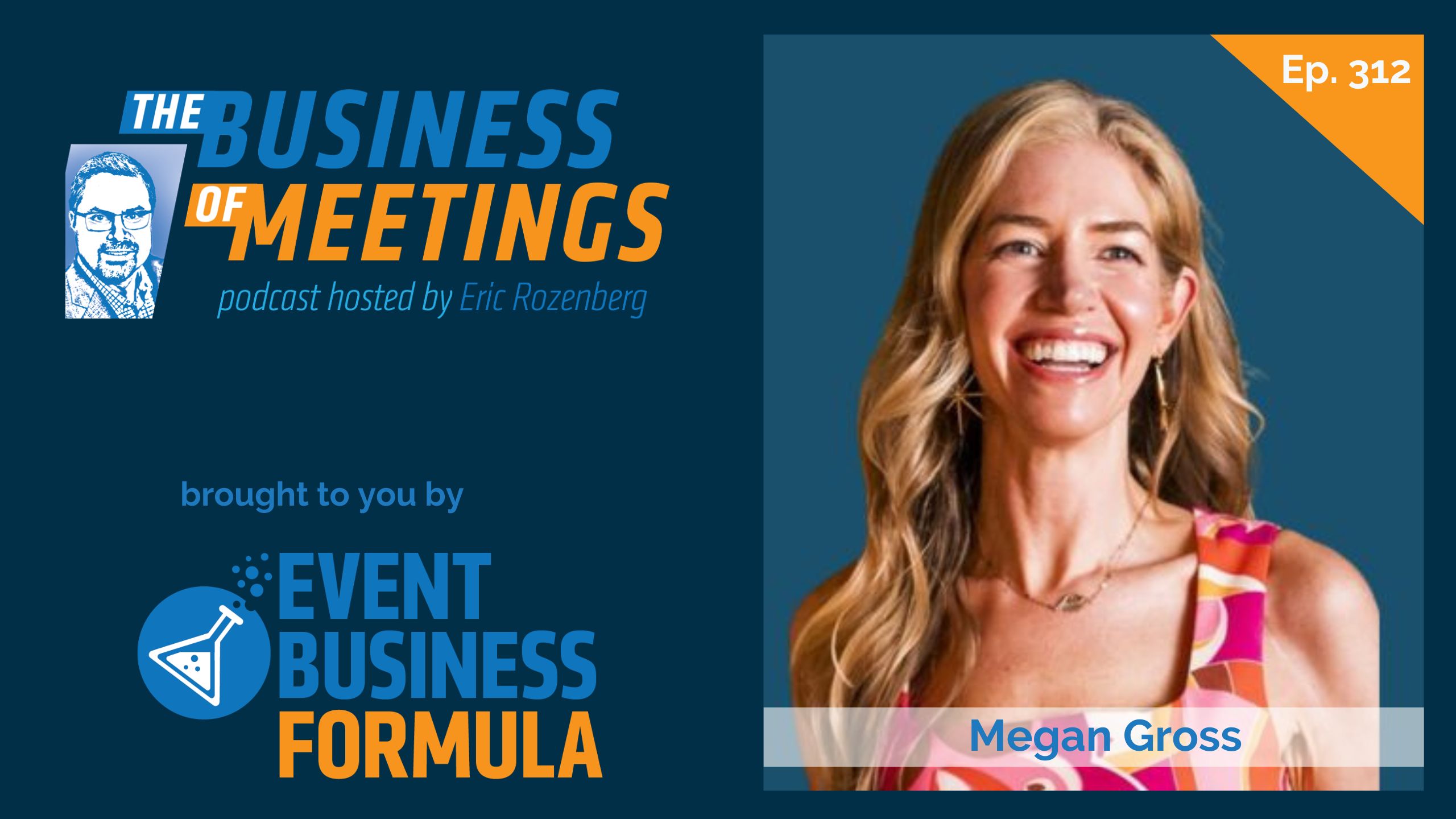
Today, we are excited to welcome entrepreneur Megan Gross, founder of The Bonsoir, a boutique events firm that curates high-touch small events to bring startups and investors together. Megan is currently based in the San Francisco Bay Area and is expanding into South Florida.
In this episode, she shares her journey, highlighting small, personalized events as the future of business relationships.
Megan’s Journey
After college, Megan moved to Las Vegas to work for nightclubs, restaurants, and a major pool party. Drawn by a lifelong dream to live in Paris, she worked at the exclusive club Matignon near the Champs-Élysées as a VIP host. Although it failed to unfold as planned, it redirected her to the Bay Area, where she immersed herself in the startup ecosystem. After working on a platform of extraordinary experiences and then at Mastercard, she launched The Bonsoir as a niche, designing intimate gatherings for founders and investors, blending hospitality and bold creativity.
Bold Risks
Megan believes in trusting her instincts and taking big risks, even without every detail in place. Her move to Paris and then into entrepreneurship were not calculated step-by-step strategies. They were decisions rooted in her conviction. Things did not always work out as expected, but each step redirected her toward something more aligned with her.
A Competitive Advantage
From the years she spent working at nightclubs, restaurants, and large-scale pool parties, Megan learned relationship skills that corporate settings seldom provide. Reading a room, remembering names, managing personalities, and creating the right energy are all directly applicable to business. As technology and automation grow, these human-centered skills become even more valuable in a digital-first world, where authentic connections truly stand out.
Building Without Traditional Frameworks
Launching her company without agency or corporate training forced Megan to create her own systems. Although it initially felt like a disadvantage, it allowed her to innovate beyond standard industry templates. She sources vendors from unexpected places, leverages global relationships, and builds unconventional events.
The Purpose–People–Process Framework
Connection can be engineered when purpose, people, and processes align. Purpose defines the specific goal of the gathering. People determine who must be in the room—and who should not. The process covers every touchpoint, from invitation wording to seating charts to follow-up. When those circles intersect, connections form intentionally rather than by accident.
The Gather Method
Megan’s GATHER method is an acronym for her six event strategy components: Guest List, Atmosphere, Timing, High Touch, End Game, and Relationships. The Guest List is the most critical decision. Atmosphere sets the emotional tone. Timing ensures real interaction, and High Touch keeps her experiences personal and intentional. The End Game clarifies measurable outcomes, and Relationships are Megan’s ultimate objective, with the event serving as the vehicle instead of the destination.
Why Smaller Is More Powerful
Megan believes intimacy drives impact. Her ideal event has fewer than 20 people, as that allows depth of conversation and meaningful follow-ups. Instead of a massive gathering, she recommends smaller, recurring events that build layered relationships over time. Scarcity and selectivity tend to elevate perceived value and strengthen engagement.
Scaling a High-Touch Business
Scaling micro-events presents unique challenges. Megan addressed this by productizing her dinner format, standardizing structure while keeping personalization intact. She built operational systems and hired leadership support, even when stepping away from production felt difficult. Delegation allowed her to grow without compromising on quality.
Why AI Increases the Demand for In-Person Events
As AI accelerates digital interaction, in-person gatherings become more valuable. When it becomes increasingly difficult to distinguish what is real online, physical presence can build trust. Technology may automate communication, but it cannot replicate a shared human experience.
BIO:
Megan Gross is the founder of The Bon Soir, a boutique events firm that brings together investors and startups through smart, high-touch events that build trust and accelerate deal flow.
Her training comes from running high-pressure nightclubs in Las Vegas. She later worked at a unicorn startup acquired by Mastercard, helped launch Mastercard’s global Priceless Experiences platform, led a global community dining initiative at Airbnb, and built The Bon Soir into a go-to event partner for venture firms.
She is based in the San Francisco Bay Area, hosts The Supper Club in San Francisco, curates private dinners for funds, and produces one of the largest events in the VC platform community.
Connect with Eric Rozenberg
On LinkedIn
Listen to The Business of Meetings podcast
Subscribe to The Business of Meetings newsletter
Connect with Megan Gross
On LinkedIn
Listen on: Apple Podcasts · Spotify · YouTube
“The event is just the vehicle to get you to this other goal.”
Megan Gross
Full transcript of episode 312 of The Business of Meetings podcast, Eric Rozenberg with Megan Gross. Lightly edited for readability.
Eric: Hello and welcome to the Business of Meetings Podcast. I’m your host, Eric Rozenberg. Over the years, I’ve had the privilege of helping businesses in the meetings and events industry grow and succeed, and I’m excited to share that experience with you. If you feel alone and overwhelmed, and if you’re looking to take your business to the next level, improve your strategy and sales, and connect with like-minded professionals, you are in the right place. I invite you to visit eventbusinessformula.com and join our community of event business owners dedicated to exponential growth. Now let’s dive into today’s episode.
Hello and welcome to a new episode of the Business of Meetings Podcast. Today I am delighted to speak with yet another entrepreneur in our industry. She founded a company called The Bon Soir, which is a boutique events firm, and she’s bringing investors and startups together with very high-touch small events. She’s based in the Bay Area in San Francisco, where all the tech is based. They’re now moving to South Florida as well, where I live. She’s hosting the supper club over there and bringing in small private dinners, funds, people investing. It’s a wonderful niche and we’re going to discover her journey. Ladies and gentlemen, please welcome Megan Gross. Megan, thank you so much for taking the time to speak with me today.
Megan: Thank you for having me. I’m excited for this conversation.
Eric: Me too. And I was reading your bio and the tech. They just announced that Palantir, after moving to Denver, was actually moving to Miami. So you’re going to be able to expand your business with your clients, I suppose.
Megan: Yes. I actually love Miami for another tech hub. I’ve done quite a few events out there, too. So it’s wonderful. Definitely coming.
Eric: Yeah. Now we’ve got to talk about it. As I always like to ask my guests, what is your journey and how did you join the meetings and events industry?
Megan: Yeah. So I bet this is very similar in your community, but it just happened. I didn’t look for it. My journey started because I wanted to party. I graduated college and I was like, I want to go have fun, and I moved to Vegas literally to go have fun, to party and to figure out what I wanted to do with my life. It was there that I started working in nightlife, in nightclubs. It was there that I would watch the marketing team. Those were who were programming the clubs and the restaurants and the pool parties, and they would be coming in with the celebrities and wining and dining them and then putting on these fantastic shows. I was like, “Oh my god, that’s a job. I want that job.” And I literally just started showing up to their department. I was like, “Hey, I will do anything. Put me to work.” I stuffed CDs. I blew up floaties. We didn’t even have a pump. I was just happy to be involved, and if you show up enough, they start giving you more responsibilities and tasks. That’s how I fell into my career of events. By the end of my four years in Vegas, I was running the programming of four nightclubs, two restaurants, and a pool. A very rowdy pool party.
Eric: Wow.
Megan: And it was my dream job, but I was also coming home at 4:00 a.m. It’s fun in your 20s, but then as I got later in my 20s, I was like, am I going to be the person in the club for the rest of my life? So I made the tough decision to leave all that and to follow another passion of mine, which was to live in Paris. Hence the name The Bon Soir. It came from that, in Paris. Although I did not speak French, which made getting a job quite difficult. I ended up getting a job, though. I got one working for an exclusive club that still is there today called Matignon.
Eric: What’s the name of the club?
Megan: It’s called Matignon.
Eric: Matignon. Okay.
Megan: Matignon. It’s super high-end. It’s very Bagotel style. It’s a restaurant and below is a boutique club, and they hired me as their VIP host, basically this American blonde girl in Paris. I would go around and welcome the guests as they came in and I would say “bonsoir,” and it’s this beautiful, elegant greeting that I think transfers into the work that I do. People would reply to me back in French and I would be like, that’s all I’ve got. So I did that for a while and then I realized, I don’t want to be in nightlife for the rest of my life. Why am I doing that in Paris after I left it in Vegas? So I moved, and it was also really difficult with my lack of French and visa. I was there illegally, so that was another issue. I moved to the Bay Area, which, I don’t know if you’re familiar with this, is also nicknamed the Paris of the West. I had no idea. I say that I’m chasing Paris and I have been here since. It’s been about 12 years I’ve been in the Bay Area.
When I first moved here, no one knew what to do with me. They were like, “You’ve worked with Italy. What do we do with you? That doesn’t translate to tech.” And I was like, “Yeah, but I can deal with high-profile kind of divas. How does that not translate to tech?”
Eric: Right.
Megan: Yeah. They did not appreciate that.
Eric: Truth hurts.
Megan: Truth hurts. I think it’s a bit different now because tech is more bullish here, and people are more, with AI, aggressive and bold with their moves. So I’ve been assimilating a bit easier with my brand and what I bring, which is this high touch that pushes the edges a bit. I ended up working for a startup here in the Bay Area, and we were a platform of extraordinary experiences. We did have a bit of a rap that we were Make-A-Wish for rich people, because our experiences were very high-end. It was $35,000 and you can go and meet the Rolling Stones. Very interestingly, it would be the same people over and over again meeting the Rolling Stones on their tour. Yeah.
But I love that job. I got to curate some really incredible things, not just celebrity stuff, very niche, exclusive wineries, pretty epic things. We got acquired by Mastercard, so I went on to Mastercard for their Priceless Cities platform. It was there that I realized I really do not fit in well in corporate. Shocking. But I lasted three years, and that was a good three years because it was over the pandemic. The pandemic hit everyone in the event industry quite hard. I did have that safety net with them because we moved virtual, and then as soon as things came back to life, I decided to venture off on my own and I created The Bon Soir. Because of my proximity to the startup hub, I started working with a lot of founders. Most of my friends are founders. Everybody’s building something here. Over the past couple of years, it’s been more on the investor side.
Eric: I’m listening to you. I’m fascinated because basically you’re doing what you want and what you like, which is awesome, and I think that many entrepreneurs can relate to that. But take me back to the moment when you say, “Okay, enough of the nightlife in Vegas. I’m going to Paris.” Not everyone would just say, “Oh, okay. I’m going to go and work in Paris.” So what triggered that? And what was going on in your mind at that moment in terms of entrepreneurship?
Megan: Yeah, I think this is a rare gift of mine, that I take really big risks and I think I do it in a kind of fearless way. I don’t have it all figured out. I’m just going to make the jump. And it seems irrational. My family is like, “Oh god, here she goes again.” But there’s something in my soul that is like, this is what you are destined to do and you will make it work. I think of my Paris story as, and I mean this lovingly to myself, a failed dream. I thought my dream was to live and create a life in Paris and I gave it my everything and it didn’t work out. So it’s a failed dream, but it then redirected me to the San Francisco Bay Area, which is where I’ve been for the past 12 years, and I found my niche and what I want to be doing as well.
Eric: I love the story about Paris. I’m not sure I would use the word failed dream. When you read those stories about people that are at the end of their life, the regrets that they can have, basically you gave it all. So you have no regrets. It didn’t work out the way you expected, but that to me is another thread of being an entrepreneur, because you never know what’s going to happen.
So I know a thing or two about nightclubs. I basically knew all the doormen of the main nightclub in Brussels by their first name. There’s a moment when I start my business, and one of my friends, who was one of the doormen, one day saw me. He said, “What happened to you? We don’t see you anymore. Do you have a girlfriend?” I said, “No, I just started my business. I don’t have time.” So how do you transition from basically working during the night to moving to San Francisco and now getting in every morning, you have to hustle, you have to go and look at the client? How was the transition?
Megan: Yeah, I think the transition came a bit with the phase of life, in my 20s and early 30s. It was more of wanting to be in the mix, and I’m okay with coming home past 2 and I just love the liveliness. Now it’s a bit more health conscious. I need to get up early. I need to talk to more clients. I need to come off a bit more professional, and sleep is so important to all of that. So I think those happen succinctly, but I am so grateful that I used to be very lively in my 20s and early 30s, because it really gave me the interpersonal skills that I use today. Just like you had said, you knew all the names of the doormen at the clubs. That’s something you don’t learn in corporate or business. Those are the skills that now, especially where AI is going and everything’s so digital, you’re not taught. That’s a soft skill, that’s a Wall Street skill, and I really lean into those types of skills now.
Eric: Very interesting, and I fully agree with you. I also worked at Club Med one summer, very hard, and you learn to smile all the time, to have a service-minded way of working. You go back to San Francisco, obviously all the tech and everything. Did you miss anything for your business besides the fact that you know how to relate to people, engage with people? Is there anything that in retrospect you said, “I wish I would have known this”? What are the skills that you were missing at that time?
Megan: Yeah. When I first launched my business, because I didn’t come from corporate or an agency, I had no idea what I was doing. I would have the clients and I’m like, I literally don’t know how to put this together for them, because I don’t really have the framework of how an agency takes it from conception and writing a proposal and how to price all of this. I knew how to do it, though, and so I did miss out on that. But actually, I now look back and I think that’s a gift, because I’ve been able to figure out how to do all that without these frameworks that maybe would have put me a bit more in a box. A good example is when I get vendors, I’m getting vendors from my network that are from the wildest ways. They’re not coming from the venue, because that’s not maybe my style. The set designer for a large event I did in Miami, I met her in Madrid 12 years ago and now she’s in Miami doing interior design and she designs yachts, and that’s who did the stage design for a VC summit that I put on. So it was a hindrance at first, but I pushed through that and now I see it as a strength.
Eric: That’s amazing. You’re talking about how you don’t fit in the box, and in parallel to that, I think we both agree that you don’t grow a business, you don’t manage a business, if you don’t have a minimum of systems, of processes, frameworks. I know you have two frameworks that you love to use and I was reading about it. I thought that’s really interesting. Do you mind taking us briefly into each of them?
Megan: Yes. And I do agree with you. I think frameworks and systems are of the utmost importance, especially in events, and as I’ve matured, that I’ve able to come up and look back and connect these dots. A simple framework that I talk about a lot, because I think it’s easier to grasp, is the purpose, the people, and the process. Like a Venn diagram, you think of the three different circles, and where they interconnect is how connection is engineered. I use this framework when I develop all events.
Purpose: what’s the goal? Why are we getting together? This is actually where I see a lot of people miss. For example, in the Bay Area, they’re like, “We’re going to do a founders and funders dinner.” Well, a founders and funders in what? What’s the vertical? Because if I’m an investor in SaaS, is it going to be of interest that I have a bunch of creative founders? Probably not, and so the goal is missed. So the purpose is very important to have very specific and nitty-gritty.
The next circle is the people, and this is the number one thing to get right in an event. Who is going to be in that room in order to drive that purpose, and who isn’t? I’m a big no plus-ones, no friends and family. Everybody has a purpose for being there, and if they do not fit, then they are not welcome. I mean that lovingly to those that are there and showing up. I think it was Obama’s aunt who said, if everyone’s family, no one’s family. It’s that same thought behind it: it needs to be specific.
And then the process, and these are all the details that go into building the event. The venue is also very important. You know this, and I just talked about the seating chart. If you’re having a dinner, no matter what, you should always have a seating chart. It’s not just exclusive to weddings, because it really does change the dynamics of the conversations and how people connect, and it doesn’t leave things to chance. The invitation process: how are you reaching out to people prior to the event? Are you spamming them with a blast, “Come to this,” or are you writing something personal and thoughtful that really sets the tone as people are going into this event? And then all the way to afterwards, how are you following up? Is it again personal, or are you just saying, “Thanks for coming, see you at the next one”? Really putting some thought into all the little details that build. They’re added touch points and they build up and they compound, and this is how we connect. So the intersection of those three different circles, purpose, people, process, that’s connection, and it can be engineered if you follow this framework.
Eric: Absolutely. I love it. I will always say to people I work with, and that’s how we differentiated ourselves when I had my corporate event agency, go and try to understand the industry that your client is in. Go and try to understand what they’re trying to achieve. To your point, who’s coming, and also how they’re using the face-to-face event in their overall strategy and the execution of it.
Megan: Yes, 100%. And to that point, I think people look at events as the outcome, like that’s what we’re going for, but it’s actually part of this other mission. The event is just the vehicle to get you to this other goal. When you think of it more as the holistic journey versus checking the box, you get the full effect out of an event.
Eric: Yeah, absolutely. And there’s another framework that you like. It’s the GATHER method.
Megan: Yes. Yes. When I have more time, I bring this one up. GATHER is an acronym: Guests, Atmosphere, Timing, High touch, Endgame, and Relationships. Guests, we talked about that. That’s the people. It’s literally the most important part of an event, who’s going to be in that room. Atmosphere, of course, is the venue or the space, and I really encourage people to invest in that. Don’t be cheap here. It really pays off when you have a beautiful space that when you walk in, you’re like, “Wow,” versus an office with bad lighting where you’re trying to save money and getting trays of food from Costco. It sets a tone and it will change how people interact.
Timing, I think, is a subtle thing that makes a big difference. With dinners, it’s how you’re going to pace out the courses to allow people to have that white space to connect in between. It’s very important for content format. What I see a lot is people overprogramming their events. You have back-to-back speakers and content and all these things, and people want to also meet people, and you’re not leaving the white space in between. So timing is very effective for allowing people to connect when it’s done in that thoughtful way.
High touch, I mean, everything I do is high touch. I think you appreciate that too. I’m actually quite low tech, which is interesting because I’m in the high-tech world. But I keep it really simple, low tech, because they should only be focused on relationships. And relationships, you can’t really leverage tech. Maybe you can one day, but I see it taking away. So I’m pretty low tech and high touch.
Endgame. That goes back to the goal, which I explained earlier. And then relationships, that’s what we’re here for. That’s the ultimate goal, to build relationships, and the event is the strategy to get you there.
Eric: And to your point, the high touch, the relationship part, that is something that people will always buy from people, whatever the technology now. You’re talking about, and I can visualize, the type of event that you’re mentioning, and also the relationship part, the conversation part, to have a high-touch event. What is the ideal size? Because can you do a high-touch event with a thousand people in the room?
Megan: Yes, this is a good question. So, no, I think my perfect event is under 20 people. I suggest doing smaller events and more of them, so, series. My favorite format, and what I’m known for, are my supper series or my dinner series. I love a dinner under 20 because you’ll have a pretty deep relationship with maybe less than half, but you’ll still get an opportunity to meet everyone to some degree. And for the ones that you don’t have that deep of a relationship with, you might have another opportunity at the next event. And so micro events, I’m sure you’re seeing the shift in this market. It used to be big and massive, and I come from big and massive Vegas nightclubs, mega clubs and festivals, and we used to love that. But I think people really want highly curated, highly personalized, and you just can’t do that at scale. A good analogy that I have is look at the Navy SEALs. Navy SEALs are 1% of the Navy. It’s small, and because of its smallness, it’s special. They are this unique segment. All of the Navy is obviously important, but small is special. So to keep the events in that kind of container, I think, mimics the same strategy.
Eric: Interesting. I’m listening to you. I agree with everything you said. I actually have a friend, Jayson Gaignard, who wrote this book, Mastermind Dinners, that goes exactly into what you’re describing. The question I have now for you, the entrepreneur, the business owner of The Bon Soir: how do you scale your business and how do you make sure that the business doesn’t only depend on you and that you can grow it?
Megan: Oh my gosh, this has been the hardest part of my business this past year. It’s funny, I keep thinking about this a lot. Getting off the ground is hard, but figuring out how to scale is really hard, and it’s really hard when you’re doing micro events too, because the profit margin is in the larger events. But I have developed a way to productize my dinner series. I know the format that works the best because I’ve done it a hundred times. The more that I can productize that, put it in almost a package but have it personalized to the guest and the outcome, it is in a way a system that I’ve developed from doing these again and again. It keeps that consistency and that allows me to scale. And this past year I have finally hired, I not only have an EA and event coordinator, I have a lead event operations person, and stepping away from the production has been the hardest for me.
Eric: That was my next question.
Megan: Yes. It’s breaking my heart to step away from that. But in order for me to run this business and make it grow, it’s a tradeoff.
Eric: So kudos to you. I remember the first two years of my corporate event agency, and I had a major client and it was like, “Those are my clients. Nobody’s going to touch it. Nobody does it better. They’re not going to stay if it’s not me.” Which, of course, is all BS at the end of the day. The only thing is that you’re driving 150 miles an hour into a wall because you’re going to burn out. And then you realize, hiring people, as long as you maintain the relationship with the client and you put the processes in place and you make sure that you train the people, that is exactly how you start scaling your business. So congrats to you. I can clearly feel what’s going on in the mind and in the guts when for the first time it’s not necessarily you in front of the client.
Megan: Yeah. It’s heartbreaking almost. Yeah. It’s scary. But now, and it’s having to retrain them to reach out to the new team that’s supporting. But now I’ve gotten to the point where they love my event leads so much, and I’m not going to be doing this one event next year because it’s just not the direction I’m going with my business. And they’re like, “Well, congratulations.” She’s even better at operations than I am. I’m actually not great at operations. I’m logistics. It’s hard for my brain to wrap around. She’s excellent and she loves it, and that comes off to the client, too.
Eric: Absolutely. Congratulations on that. I’d like to end our conversation today with one question that I’m really curious about. Why do I say this? You’re working in the Bay Area and Miami and other cities, but with tech companies. So everybody’s like AI, AI, AI. I have my own opinion on that, but do you think that AI is going to replace in-person events?
Megan: Oh, no. If anything, it’s driving the importance of in-person more, because with AI we’re having a hard time seeing what’s real and what’s not real. So I think the pendulum will swing. As we’re moving things more automated, more scale, more AI, there will be a swing to the opposite, which is slow, small, in person, high touch, low tech. So I actually think it will drive the other direction, and I’m curious what you think.
Eric: Now that you’ve asked, I am 150% convinced that the more people will use AI, the more they will want to come in person. One, for the reason you mentioned, is this real, is it a real person, and negotiation, seeing the people. And second, the human species needs the community part, needs to come in person. We’ve seen it during the pandemic, and so I’m actually quite excited with the AI. Please do use AI and then come in person.
Megan: Yeah. Oh my god. It’s funny. We sometimes implement rules at the dinner table where you can’t say the word AI, and we will have AI founders there and it’s super hard. It usually gets broken about five times.
Eric: You should have some sort of pot in the middle. Every time you say the AI word, you put 100 bucks in there.
Megan: Oh, I like that. It’ll have to be Venmo because nobody has cash anymore.
Eric: That’s true. That’s true. What was I thinking? Wonderful. Megan, my two last questions for today. The first one, how can people get in touch with you?
Megan: Oh, I post a lot on LinkedIn. My handle on LinkedIn is Curate with Megan, M-E-G-A-N. And then my website is thebonsoir.com, T H E B O N S O I R dot com. Those are the best resources to get in touch, and I post some spicy things on LinkedIn, so if people are there, I encourage that.
Eric: Wonderful. And my last question is, when we meet in a year from now with a bottle of champagne, what are we going to celebrate?
Megan: We’re going to celebrate… I think events have always been this side thing for people and businesses. It’s part of a larger campaign. And I think as we shift in this direction with AI, there’s going to be more and more appreciation for really well-thought-out, curated events, and they’re just going to shine and we’re going to celebrate that, because I’m just super excited about events having bigger moments in the next year.
Eric: Love it. Megan Gross, The Bon Soir. Thank you so much, and I look forward to seeing you in person one day in the future.
Megan: Thank you, Eric. This was such a great conversation. I appreciate this.
Eric: Thank you for tuning in to the Business of Meetings Podcast. I hope you found today’s episode valuable. If you enjoyed the show, the most important thing you can do is leave a review and share it with your colleagues. It really helps spread the word. I truly appreciate your support. And if you’re ready to take your business to the next level, don’t forget to visit eventbusinessformula.com to learn more about how we are helping event business owners like you. Thanks again for listening and I’ll see you next time.