
Two years ago, the Hoosiers of Indiana University were losing every game. Then, in January this year, something remarkable happened – they became the 2025–26 College Football Playoff National Champions!
Eric has been inspired by this incredible transformation, guided by Coach Cignetti’s leadership. What stood out for him was the total absence of hype, excuses, or a victim mentality. Instead, Coach Cignetti relies on three pillars: standards, preparation, and accountability—the very principles that drive success for any business owner, and yet, they are often the things we neglect.
So, inspired by the Hoosiers’ journey, Eric shares five ideas today- not to challenge you, but to inspire you and get you thinking.
The Anti-Excuse Philosophy
Winners don’t explain—they execute. Slow markets, price-sensitive clients, societal shifts, and global events will always exist and cannot be controlled. What you can control is how you react to them. When finding excuses becomes a habit, the excuse itself starts to function as the business model. So, instead, focus on moving forward, facing reality, and finding new opportunities.
Standards Are Not Aspirations
Standards are practical, not theoretical. They are evident in the business’s day-to-day operations. They define what “good” means, how fast you respond, what quality looks like, which clients you accept, and how disciplined you are financially. Values only matter if they are lived and enforced. So, if you’re tolerating average behavior, you are actively training your business to lose.
Preparation Beats Motivation
Preparation matters more than motivation. High performers rely on repetition, fundamentals, and systems rather than waiting for inspiration. Reviewing the basics, using checklists, and showing up consistently will reduce stress and improve your ability to react when the unexpected happens. Readiness comes from preparation, not from waiting for perfect conditions. Confidence is built through daily repetition, not excitement.
Culture Is What You Allow
A business’s culture is defined by what you allow, who you promote, and the behavior you either allow or ignore. Allowing toxic behavior, even once, sets a standard. Culture is also reflected in boundaries, pricing, calendars, and the willingness to say no. If a business feels chaotic, it is because chaos is being allowed and rewarded.
The Scoreboard Never Lies
Results tell the truth. Your revenue and margins matter, but so does your energy, health, client quality, and sanity. Being busy is not the same as winning. The market does not reward effort. It rewards outcomes. So, if the scoreboard says you’re losing, it is time to change how you’re playing the game.
Bio: Eric Rozenberg
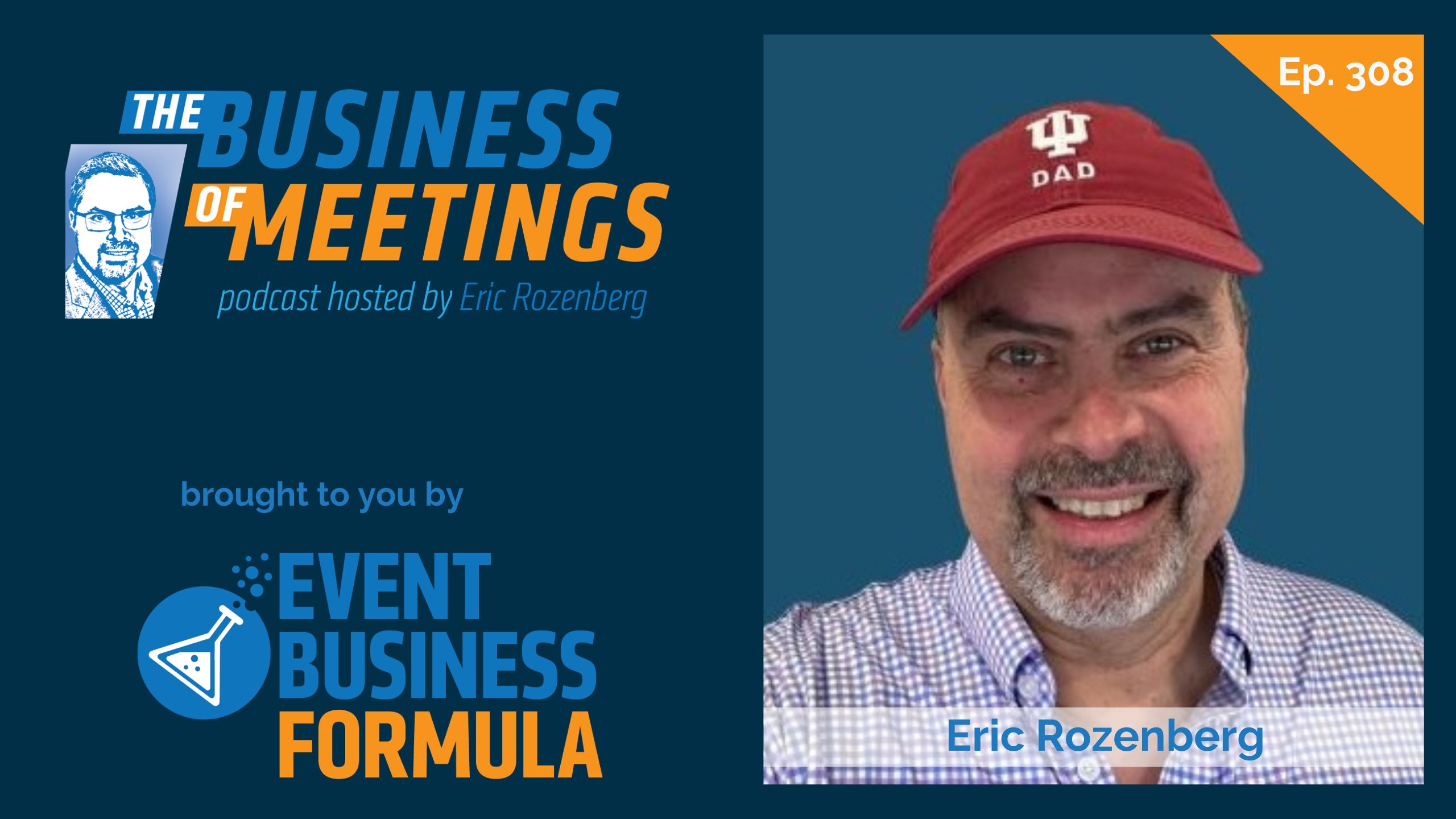
Eric Rozenberg is a business coach and the founder of Event Business Formula, the only platform exclusively designed to help business owners in the meetings and events industry grow and scale sustainably. He has guided thousands of entrepreneurs to improve operations, gain clarity, and achieve lasting results.
Before launching his coaching business, Eric spent over 20 years producing award-winning events—sales meetings, incentive trips, and conferences—for Fortune 500 companies in more than 50 countries.
He hosts The Business of Meetings, the industry’s first and largest podcast focused on business ownership, featuring over 250 episodes with top leaders and experts.
Eric made history as the first European to serve as Chairman of the International Board of MPI (Meetings Professionals International).
He is also the author of two books: Meeting at C-Level, endorsed by 20 influential industry leaders, and Before It’s Too Late, a powerful memoir about grit, family, and his journey to America.
Eric lives in South Florida and enjoys pickleball, tennis, and Krav Maga.
Connect with Eric Rozenberg
On LinkedIn
Listen to The Business of Meetings podcast
Subscribe to The Business of Meetings newsletter
Listen on: Apple Podcasts · Spotify · YouTube
“Winners, they don’t explain, they execute.”
Eric Rozenberg
Full transcript of episode 308 of The Business of Meetings podcast, a solo episode with Eric Rozenberg. Lightly edited for readability.
Eric Rozenberg: Hello and welcome to the Business of Meetings podcast. I’m your host, Eric Rozenberg. Over the years, I’ve had the privilege of helping businesses in the meetings and events industry grow and succeed, and I’m excited to share that experience with you. If you feel alone and overwhelmed, and if you’re looking to take your business to the next level, improve your strategy and sales, and connect with like-minded professionals, you are in the right place. I invite you to visit eventbusinessformula.com and join our community of event business owners dedicated to exponential growth.
Now, let’s dive into today’s episode. Do you know what happened on Sunday, 19 of January this year? The Hoosiers of Indiana University became national champion. I know I’m not completely objective, not objective at all, because one of my daughter is studying there, as you can see for those watching on YouTube, and I told her that we bought ticket for the final and that she was on her own for the tuition. No, of course we watch TV. I’m not going to pay $5,000 for one ticket, for sure, but it was phenomenal to watch. But not only that, a true American story. Two years ago they were losing everything, and now they’re national champion.
But what really struck me is that I’ve been watching Coach Cignetti and what happened with him, and what struck me really is that there’s no hype, there’s no excuse, and there’s no victim language ever. Just standards, preparation, and accountability. Standard, preparation, and accountability. Does it sound familiar? Those are the three also element that would make any and every business owner successful, but that’s also what we are most of the time lacking.
So today on this episode I just want to mention five ideas to make you think, that is definitely not a motivational speech. I’m not that type of “wah wah is wonderful,” but I’m more down to earth, as you know, and especially those working with me know exactly that. It’s what I call tough love. But five ideas that I believe could help you, and being inspired by this amazing journey of the Hoosiers.
First, it’s the anti-excuse philosophy, and that to me is something that you can tell if someone as a business owner is always looking for excuse, or always going forward facing the unexpected, and quite frankly to be working in this industry. You have to love somehow the unexpected, that’s when we get in full gear and we get in motion and probably are the best in what we do. But winners, they don’t explain, they execute. They’re not trying to look for excuse. I know it sounds very smart sometimes to find the excuse, but that’s not the point. There is no excuse. Yes, the market can be slow. Yes, the clients are price sensitive. Yes, there is a change in society. Yes, there are challenge that we have, whether it’s in the world geopolitics, volcano exploding in Iceland, as I remember, those are things that happen that we cannot control. What we can control is the way we react to that. And for me, if you have the mentality of always looking for an excuse, basically finding the excuse becoming almost your business model. It’s never my fault, there’s always someone else responsibility. No way. As I say to my kids, there is no extra credit in real life. And it’s really the mentality of don’t look for excuse, and really always move forward and finding the opportunities. As I always said, good thing, bad thing, you never know, I just facing the reality.
The second idea I want to share with you, that’s standards. It’s not something that you aspire. Standard, this is extremely practical, is how you run your business. Ask yourself, what does good actually means for your business? What does success means for you? Do you have the standard operating procedures that are written down? Are they enforced? Do you know about the values? Are you managing with your values, or is just nice words? As I remember, having a client getting the beautiful values on the wall and absolutely not living by them. So what are your values and what are your standards, which is extremely important? What is the response time? What quality means? What type of client are you almost selecting and refusing to work with and looking to work with? What is the financial discipline that you have? And what is the team and the culture that you’re putting in the team? And for me, it’s really that, as the saying goes, if you tolerate average, basically you’re actively training your business to lose.
The third idea I want to share with you, and that’s inspired by Coach Cignetti, preparation beats the motivation. And we have so many example, there’s a story about Kobe Bryant speaking with someone at 4:00 in the morning, and the person asking, “Oh, you’re going to train?” “I’m just coming back from training.” It’s the preparation, it’s always repeating. Remember, the conference, was able to speak with someone from Portugal who was the world champion in karate, and he was coming to this conference for the sixth, seventh time. It’s all almost always the same content. And I asked him, “Why are you coming back? All this material.” And he said, “When I’m preparing for the world champion in karate, I always block three months before the championship. And you know what I do the first month of those three months? I review the basics.” So, it’s really the preparation, reviewing everything and not taking anything for granted. When you fly, you have those checklist that you have to do. It’s better for your life to do that. And that’s the same thing. You need to be able to have those preparation whether you like it or not. You have to come and be motivated even and especially the days when you’re not. You need to have system. You need to show up with those system even if you don’t like it, because at the end of the day, if you prepare, first of all, you’re going to be less stressed, and you’re going to be able to react more rapidly and more efficiently when, not if, when something unexpected happen. And the true professional in our industry, they don’t wait to be ready. They go, they prepare, they’re ready to take the unexpected, and they’re not waiting for everything to be absolutely perfect before moving on. Done is better than perfect. What does that mean for you? Preparation in your business, the sales playbook, the pricing strategy, the pricing rules, the visibility that you need to have on your cash flow, and the cadence at which to you are reviewing the objective, your weekly meeting, your daily huddle. That is extremely important, as one of my friend always said, confidence doesn’t come from hype, it comes from reps, and we need to do the reps every day.
The fourth idea I want to share with you is that the culture is really what you allow. If you have somebody in your team that is extremely toxic, even if this person is the best salesperson, you need to have a conversation. Two strikes and out, because if you allow a certain behavior even once, it is going to become standard. And so the culture in itself is not what you put on the wall. It’s not what you put on your website. It is really what you are living every day. It’s who you’re promoting. It’s what you’re tolerating. And also it’s confronting the [unclear] facts, and not being afraid to, again, going back to the values and the culture, and making sure that everybody buys in. That’s how you create a great culture. That’s how you create a great company. And at the end of the day, everything you do, especially as a solopreneur, becomes your culture. Your calendar is your culture. What do you allow? When do you say no to something? Your pricing in your culture. Do you accept to work for nothing? Do you accept to show up just because somebody is promising you maybe in the future some visibility? And do you have as your culture the fact that not only you value what you’re doing, but you also value to work with people who value what you’re doing? And at the end of the day, your boundaries are your culture, and that is extremely important. If your business feels chaotic, it’s because chaos is being rewarded. So once again, culture is what you allow.
And the last idea I want to share with you, the scoreboard never lies. You can tell whatever you want. You can say the beautiful story, at the end of the day, the scoreboard never lies. What is the scoreboard for you? Revenue. But not only revenue. Margin. The scoreboard is your health, your wellness, your energy. And trust me, I know something about it. Your scoreboard is also the type of clients, the quality of the clients that you have, and your personal sanity. Those are all the element of your scoreboard. So are you winning? Are you progressing? Or you just busy? Are you building a business? Or are you surviving one business? And would you draft yourself as the next CEO, as the next quarterback, as the next Fernando Mendoza of your own business? Because the scoreboard doesn’t care how hard you try, and neither does the market.
And on that note, I have a picture in my office. It’s actually a picture of Gary Vee, Gary Vaynerchuk. And I know for some people the f-word, it’s too much in his sentence. I personally don’t care, and it’s part of his personality. But why am I talking about him now? It’s because when I say that the scoreboard doesn’t care how hard you try and neither does the market. I have this picture of him that says nobody gives a f about your feelings. The scoreboard doesn’t care how hard you try. That’s just the results, and the scoreboard never lies.
So before I conclude, let me repeat those five ideas. First, the anti-excuse philosophy. Second, the standards are not aspirations. Third, preparation beats motivation. Four, culture is what you allow. And five, the scoreboard never.
So if somehow you are a little upset with the way I’m saying it, or you feel uncomfortable, you know what? I’ve reached my goal. And having a business is the most exciting journey, and it’s tough. There’s not always ups, and downs are not always there. As one of my friends said, at the end it will be fine, and if it’s not fine, it’s not the end. But you need to be setting up your own standard. You need to avoid having excuses. And also, more importantly, you need to be done with the way you’re doing business if you’re not happy. And if you’re done running your business on hope and adrenaline, which is great for a moment, but if you’re done running a business on hope and adrenaline, you know where to find me. I love helping people. I’ve been there. I’ve started several businesses in our industry. I have now also my own AI, Eric AI, where I’m supporting people 24/7 in almost 80 languages. So, please don’t hesitate. Even if you want to have a conversation, we don’t need to be working together. I’m always happy to help. Reach out to me. Don’t hesitate. Okay?
I hope this was helpful. I hope that you get also a kick out of it. And at the end of the day, as my daughter would say, I will conclude by saying, Hoosiers! Thank you for tuning in to the Business of Meetings podcast. I hope you found today’s episode valuable. If you enjoyed the show, the most important thing you can do is leave a review and share it with your colleagues. It really helps spread the word. I truly appreciate your support. And if you’re ready to take your business to the next level, don’t forget to visit eventbusinessformula.com to learn more about how we are helping event business owners like you. Thanks again for listening, and I’ll see you next time.