
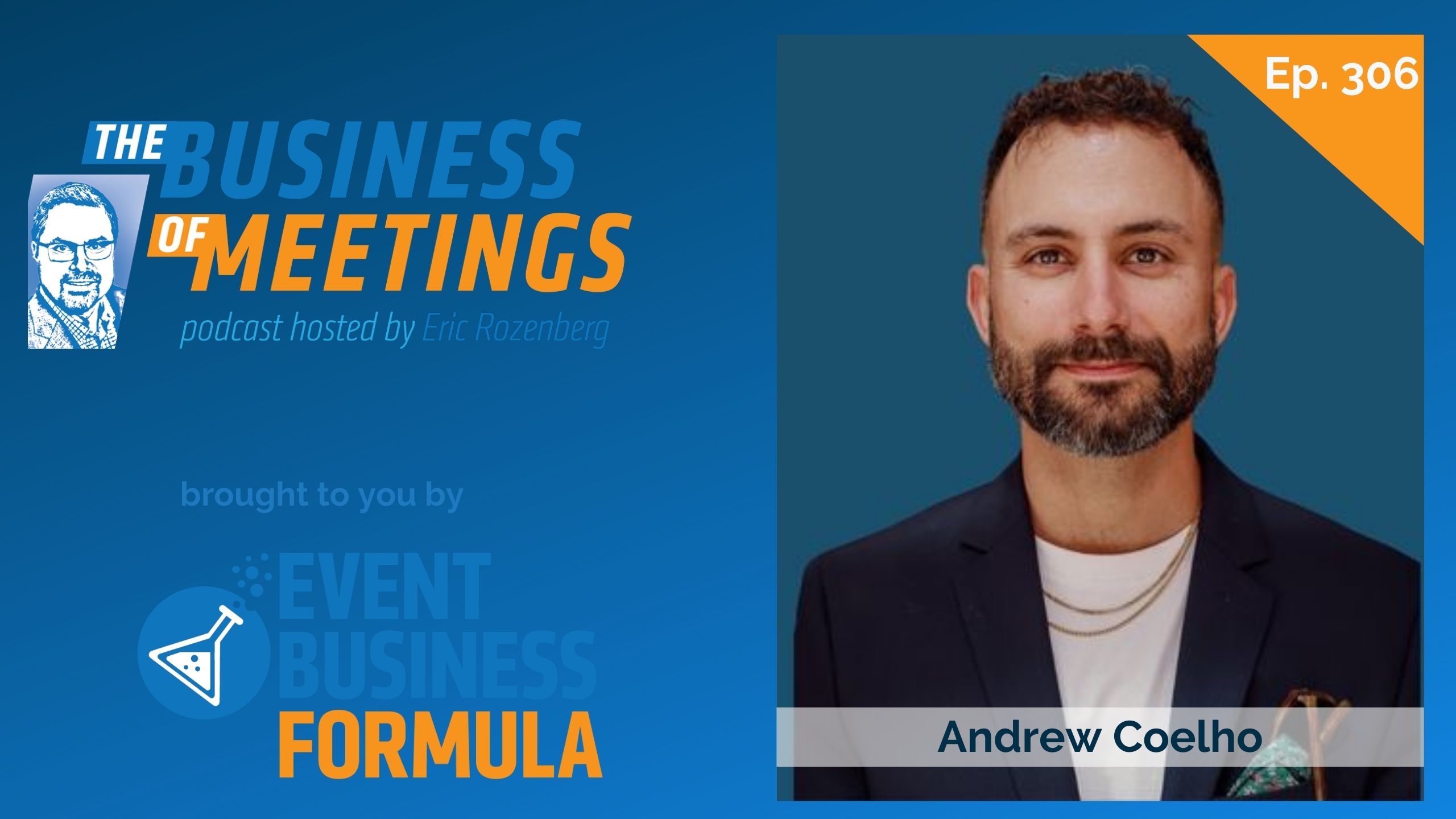
We are delighted to welcome another incredible entrepreneur from our industry today. Andrew Coehlo, co-founder of Monte & Coe, joins us to share the fantastic story of his journey into corporate gifting.Stay tuned to hear about Andrew’s entrepreneurial journey, his experiences, and the insight he has to share.
Andrew’s Journey into Entrepreneurship
After beginning his career in corporate finance, Andrew realized the environment did not suit his creative nature. Bureaucracy, resistance to change, and working in isolation drained his energy. And then, a confidence issue with an unattractive gym bag sparked the idea that eventually became Monty & Coe. With his wife’s support and inspired by entrepreneurs around him, Andrew left the corporate world at 30 to focus on his business.
High-quality Corporate Products
The brand began with the singular purpose of creating products that make people feel confident and proud. Early designs were rough, but the intent was genuine. They committed to excellent craftsmanship, using only high-quality, authentic, natural, and sustainable materials.
Crowdfunding
In 2015, the company launched a crowdfunding campaign, raising $80,000 while Andrew was still employed. The campaign validated both the product and people’s willingness to buy premium goods online. It also taught their team how to market, sell, and distribute directly to customers.
Shifting to Corporate Gifting
Corporate interest emerged organically as companies began requesting gifts for executives and teams. Although he was initially hesitant, Andrew recognized how impersonal, generic, and disconnected from effort or achievement most corporate gifting felt. So his brand pivoted toward elevating corporate gifting into something meaningful and memorable.
Turning Gifting Into an Experience
The business evolved from selling products to selling experiences, focusing on personalization, choice, and emotional impact. They made gifting less about logos and more about how recipients felt, aligning perfectly with the brand’s original mission of confidence and appreciation.
Taking the Leap
Andrew eventually left his corporate job. His decision was not impulsive as it was backed by savings, planning, and lifestyle adjustments.
Entrepreneurship
Entrepreneurship brought constant pressure for Andrew, even during the company’s strongest years. Cash flow scares, late payments, and the responsibility of supporting a growing team created intense stress. His role as a founder became more about solving new problems every single day.
Why Cash Flow and Margins Matter More Than Revenue
Revenue alone does not sustain a business. Cash flow determines whether you survive, and margins determine how sustainably you can grow. Examining businesses across various industries, Andrew saw that smaller, higher-margin companies often outperform larger, volume-driven ones. Adopting systems like Profit First brought structure and discipline to his money management.
Community and Long-Term Perspective
The events and incentives industry proved far more supportive and relationship-driven than Andrew expected. Rather than being cutthroat, people were open, generous, and willing to collaborate. The company’s long-term success was built on a foundation of trust, consistent service, and a commitment to delivering quality rather than chasing quick wins.
Bio:
Andrew Coelho is the co-founder of Monte & Coe, a luxury accessories brand redefining what corporate gifting can be. After years in the corporate world receiving forgettable, logo-first gifts, Andrew began questioning why gifting at scale felt so impersonal, wasteful, and disconnected from the people it was meant to recognize.
What started as a side hustle became a full-time pursuit after Andrew famously resigned from his corporate role on his honeymoon in Tokyo. Since then, he has focused on applying direct-to-consumer standards, craftsmanship, and intentional design to an industry that often prioritizes convenience and budget over meaning.
Andrew believes that gifting is not about products, but about moments, memories, and respect. His work challenges leaders to rethink how appreciation shows up in their organizations, shifting gifting from a transactional expense to a strategic signal of values.
Through Monte & Coe, Andrew helps companies move beyond generic swag and toward gifting experiences that people actually keep, use, and remember. His perspective sits at the intersection of brand, leadership, and human connection, making him a sought-after voice on modern workplace culture, thoughtful design, and the hidden impact of well-executed small decisions.
Connect with Eric Rozenberg
On LinkedIn
Listen to The Business of Meetings podcast
Subscribe to The Business of Meetings newsletter
Connect with Andrew Coehlo
On LinkedIn
Listen on: Apple Podcasts · Spotify · YouTube
“If you don’t like solving problems, don’t become an entrepreneur, basically.”
Andrew Coelho
Full transcript of episode 306 of The Business of Meetings podcast, Eric Rozenberg with Andrew Coelho. Lightly edited for readability.
Eric: Hello and welcome to the Business of Meetings Podcast. I’m your host, Eric Rozenberg. Over the years, I’ve had the privilege of helping businesses in the meetings and events industry grow and succeed. And I’m excited to share that experience with you. If you feel alone and overwhelmed, and if you’re looking to take your business to the next level, improve your strategy and sales, and connect with like-minded professionals, you are in the right place. I invite you to visit eventbusinessformula.com and join our community of event business owners dedicated to exponential growth. Now let’s dive into today’s episode.
Hello and welcome to a new episode of the Business of Meetings Podcast, and today I’m delighted to speak with yet another amazing entrepreneur in our industry, Andrew Coelho from Monte & Coe. Amazing story. We’re going to talk about people. We’re going to talk about gift. We’re going to talk about experiences, everything that we’re trying to do. Andrew, thank you so much for being here today.
Andrew: Thanks for having me, Eric. I appreciate the opportunity and the invite and yeah, all those things you mentioned, I’m excited to chat about. They’re near and dear to me. So, yeah, super pumped to be here.
Eric: That’s wonderful, man. And we were laughing because we had a bloop at the beginning. I cannot even pronounce the name of my podcast, so I have to restart everything.
Andrew: So yeah, if you ever start a show called How to Do a Podcast 101, that’s like the first clip, like, know the title.
Eric: [laughter] Exactly. You would think after 5 years and more than 300 episode that I would be able to, but no.
Andrew: I say the same thing about Zoom, and I was still on mute before and couldn’t figure it out. So, here we are.
Eric: Great. Now, in full disclosure, we know each other thanks to your wife, who saved my dog.
Andrew: Yeah, my wife, she’s a dog rescuer. We’ve rescued two dogs of our own, and she tends to have this knack for attracting animals and dogs and, yeah, we’re down in Florida. I remember the day like it was yesterday. Simba is a beautiful dog, and I think the first thing she actually said was, “Can we keep it?” And I was like, “Absolutely not. We’re going to find who this belongs to, ’cause we have two and it’s enough.” So lucky for you, we had two and you got Simba back.
Eric: No, that was wonderful. And small world, that’s when you were starting already your business. But we’re going to get to that. But first thing first, tell us a little bit about your journey and how did you get to our industry?
Andrew: Yeah. Well, where do I start? I mean, I like to say my story is not that interesting, but it’s also interesting in some ways. I come from the corporate world. I did the typical thing. Went to school, came out, got a corporate job, and really entrepreneurship for me, it wasn’t what I was looking for. It was kind of the byproduct of me being frustrated with corporate. I’m naturally a creative person. I hate bureaucracy. I hate thinking in a vacuum. I hate giving people ideas and it’s just like they twitch at change. And I just slowly started to realize the space wasn’t for me. But I was there until 2017.
And while that was happening, working in finance, wearing a nice suit and tie, I was carrying this ugly bag around, this gym bag. In Canada, it’s GoodLife Fitness. It’s this ugly ass red nylon bag. In the US, it would be the equivalent of like a.. Okay. So now people can picture it. And I just wasn’t confident with this bag. I just wanted to look sharp. I wanted to feel more confident. I also wanted something quality. So, I brought this up to a friend of mine, Monte, and this is kind of the back of the napkin sort of situation where we’re at a bar, 23 years old. I kind of said, “Oh, I’m on the hunt for a bag. Can’t find one.” Blah, blah, blah. And he was like, “Oh, me, too.” Next thing you know, we’re going down a rabbit hole trying to figure out how to make one.
And long story short, we started sourcing. We bought leather from a local design shop here in Toronto and went on this journey of making a bag for ourselves, which looking back now is extremely ugly, but it was V1 of V many. And that was like the beginning of Monte & Coe. It started out of a pain point of confidence. It’s something we talk about in the business still. It’s how do we make people feel confident? How do we make people feel special? And it really brewed from that. And we made something that we were proud of with really high quality natural materials. If anyone goes on our website, you see that we use vegetable tan leather, which is a very natural way of making leather, and wool, which is also natural and sustainable. And that’s kind of like the two main raw materials that we use in our designs. And people just were attracted to it. They were like, “Wow, these are really nice bags,” even though they’re like nothing like they look now. People just thought it was cool.
And we started doing that. Launched the crowdfunding campaign in 2015, raised 80 grand. We were bootstrapped. We were like, “Okay, now we have a bag. How do we sell it? How do we distribute?” So, we did a crowdfunding campaign, launched the mini collection, and the goal was really, and I know this is getting to be a long-winded answer. I’ll button it up here shortly.
Eric: No, no, please, by all means. I love those stories.
Andrew: The goal really was, at the time, e-commerce was at its infancy. People were still not buying stuff online. People were still weird about it. And we were like, “Okay, like, let’s try to sell a really high-end bag that wasn’t three grand like Louis Vuitton and all these things. Like, let’s sell a really well-made quality bag with real materials, handmade in Canada. Let’s try to sell this thing online.” And so that’s what we did. That’s why we launched the campaign. We built a website. We did all that stuff. And just by default, we started advertising, getting PR, corporate people started reaching out to us saying, “Hey, can you help gift my executive team, and can you help gift my sales team at the holidays?” And that seed was planted, and then COVID happened. But that’s kind of how this all came to be. We came back after COVID, went to IMEX, launched experiences, the rest is sort of history, but that’s sort of the evolution of it.
It was really something that came out of like a want of mine and Monte’s at the time. We now have other partners in the business, but that goal still transcends into the corporate gifting side of it. We always thought, like, why is corporate gifting uncool? When I was in corporate, and this is part of the reason I hated being there, was like, you’d work your butt off, you’d hit all your targets, and they’d be like, “Cool. Here’s a notebook with a branded logo from our company.” It’s like, “Okay, cool. Like, thanks. Glad I worked so hard.”
And it’s something that when people started reaching out to us about corporate, at first we were like, “Oh, this is like icky. It’s not going to make the brand cool. Like, let’s not do it.” And then like a switch kind of went off and said, “Well, no. Like, if people feel that way when they buy something online and get a nice product and feel excited and confident, why aren’t we people doing that in corporate? Why can’t we make corporate cool? Why are people just gifted chargers and notebooks and Yeti mugs and all this stuff?” Like, let’s change this mindset of what is possible in this space.
And so we’ve been at it since, after COVID, 2022, we went to IMEX. Luckily, we’ve helped thousands of companies so far in the last 3, 4 years with their gifting. And I’m very blessed to be part of this industry. Honestly, one of my favorite parts of the business. I love the people in it. Nothing makes me happier than watching someone, like, get a gift, see their initials get put on it. Like, so yeah, that’s kind of the backstory, and I apologize to everyone for the long-winded answer.
Eric: No, absolutely. Actually, I would like to come back to two things you say. The first one is that you did a crowdfunding and raised 80,000. At that time, you still in corporate?
Andrew: Yeah.
Eric: So, because the reason I’m asking the question, maybe I should precise. There’s a lot of people today that are thinking of starting their own business or want to start their own business because they lost their job. What is it exactly? What’s going in your mind, and what are the milestone when you say, “Okay, if this is happening, then I’m doing it”?
Andrew: Yeah, it’s an interesting feeling that you have, because at first you have no traction, but you’re stuck, and you’re like, “I don’t want to be in corporate, but I don’t have enough traction. So like, either I’m going all in and really risking it.” And then on the flip side, when you start to get traction, you start to realize like, “Oh, I don’t have enough bandwidth over here to support this taking off.” And that moment kind of happens. And for me, that moment happened when I was 30. I had just turned 30 years old. It might have been my 30th birthday. I was in Tokyo on my honeymoon. I just got married three weeks prior, and I said to my lovely wife, Sabrina, “Hey, by the way, I think I’m gonna quit my job and go all in on my business.” Imagine telling your wife who just married you this. And honestly, she didn’t blink. She didn’t hesitate. She said, “I trust you. You’re very calculated. You’ve been at this slowly for a while. You must feel like something’s there.” So, I quit my job. I don’t have the email anymore, but I was in a restaurant in Tokyo, and I sent a two weeks notice that said, “Hey, I’m coming back in a week, and here’s my last day,” and that was it.
So to your question, Eric, one thing I will say is to those people that are on this fence of one foot in side hustle, real hustle. First thing I will say, if you’re unhappy doing what you’re doing, regardless of how much money you’re making, just stop doing it, because it’s a physical and mental strain on you doing that you don’t want to do. It sucks. It honestly sucks. I still make less money than I made in corporate. Now, I invested in the business, but I’m happier. I don’t need $150,000 a year to, like, be super happy. I maybe need half of that and I’m good.
So what I would say is, one, find something you’re passionate about doing and that you actually love doing. If that happens to be a corporate job, cool. All the power to you. Just be happy with it. The second thing is, if you’re looking to transition, I would say work enough and save enough to give yourself a runway where, when you do quit your job, you’re not, like, anxious about, “Oh, I need to make X amount of dollars right now.” Like, dial down your lifestyle. Stop going out to restaurants. Almost look at it like a business. Cut your costs, stack your cash reserve, and just prepare yourself for longer than you expect. I’ve heard people on podcasts say 6 months. Like, no, it’s not enough time. Give yourself at least 12 months, 18 months to, like, bankroll yourself and get traction. And then just go after what you’re looking to do. So that would be my advice on that. I would not recommend everyone quit their job from a restaurant in a foreign country.
Eric: For sure. No, no. And to be fair with Sabrina’s family, as they say in Star Wars, entrepreneurship runs deep in her family as well.
Andrew: Yeah. It’s interesting. I was thinking about this leading up to the podcast, and people have asked me this before, like, “Oh, did you always know you wanted to own a business or be an entrepreneur?” The funny thing is, the one thing I will give corporate is that my last job was in commercial banking. I was giving out loans and helping give out loans to other small businesses and entrepreneurs themselves. That’s where my eyes really started to open a lot. The business was slowly starting to get traction. We were getting organic orders online. And here I am looking at financial statements, looking at people’s P&Ls and being like, “Oh, this $4 million business, this guy’s making half a million dollars.” Like, this guy’s selling metal to some random garbage dump shop. Like, it was just, like, some really insane, like, obscure businesses, but they were making money. There were businesses doing $100 million a year that I was like, “Hey, I didn’t even know that was possible.” Like, I was so naive. They just, like, these nuanced, like, airplane part thing. And I was like, if these guys can do it, and a lot of them were immigrants, couldn’t speak English.
My father-in-law comes from Italy. He’s got maybe a grade one education. And if these guys can achieve so much without half of the skills and education that I have, then I have no excuse. So working in that space, father-in-law is definitely an inspiration, and seeing what he’s been able to achieve in his, just celebrated 40 years in their business, it does kind of really, your mindset starts to change a lot. You’re like, “I’m uncomfortable here. I’m thinking about this business.” And then you start to realize, like, I’m not a “the grass is greener” type of guy, but in this case you start to really see, like, “Oh, that horizon is big, and there’s probably some green grass out there.” So yeah, being exposed to that and hearing the stories was inspiring to me for sure, and someone that was also very supportive despite having just married his daughter and being like, “By the way, my stable income, I’m not really there anymore.” But he gets it. So he’s been very supportive. You always brainstorm on stuff, and you need a good support system around you.
But yeah, that’s part of the reason I took the leap of faith, was being surrounded by him and other entrepreneurs and learning about other businesses, and kind of gave me the confidence to be like, kind of maybe a little ego driven, like, “If they can do it, I can do it.” And here we are. So, so far so good.
Eric: That’s wonderful. And yeah, they’re amazing. He and his wife are amazing. I can recognize him from very far, because the only person that is walking very fast with a tennis ball, it’s him.
Andrew: Yeah, it’s true. I started a bet with him in January, and I bet him that I could take more steps than him this year. I’ve been aggressively trying to keep pace, and it’s impossible. I sent him a text the other day, said, “What, how many steps were you at?” He was at 186,000. For context, at the time I was at 104,000. So I was like, “I’m cooked,” like, right off the bat.
Eric: So even without knowing that, I would have bet on him immediately. [laughter]
Andrew: Yeah, most people would, but hey, I’m betting on myself.
Eric: That’s good. So that’s the first thing I want to come back to. It’s when you did the crowdfunding. The second story, because I know we had this conversation before and I just love it, and if you can share that, is first, what made you decide as a young company producing corporate gift to go to IMEX? And then the story that you have, I believe was from IMEX, with a first very important order. And if you can explain those two, because this is so typical of entrepreneurship.
Andrew: Yeah. So kind of like continuing the story from earlier, 20 after COVID, we knew there was something with corporate, we just didn’t know how to go after it, and COVID really put a halt to that. We did do some corporate gifting, but we didn’t really understand the incentive world. We didn’t know any of that sort of space. So once things were normalized, people were traveling again, we pulled the trigger to go to IMEX. And funny enough, my business partner Ron, who is active in the business with me today, one of the active founders, he had just got married in Greece. So for everyone’s context, I guess I have a track record of, like, traveling and doing spontaneous stuff. But we went to Greece. He did a small intimate wedding in Greece. There was 15 of us there. I left, I came back, and I had been put in touch with someone at IMEX about showcasing, and they just convinced me that this was the right thing to do. We were 3 weeks out of the show. His wedding was in September. IMEX, everyone knows IMEX is like the first or second weekend of October, depending on the year. And I got home and I basically said, “Yep, screw it. Here’s 20 grand. We’re going to IMEX.” Honestly, I don’t even know where we got the money at the time, truthfully. But I did it. Probably put it on a credit card, said we’ll figure it out later. Called Ron and said, “Hey, like, when are you coming back from your honeymoon? ‘Cause we’re going to Vegas. I booked us a show. We’re going to IMEX.”
And we kind of, no one do this, but we just kind of winged it. And we brought our samples with us. We had our signage with us. We checked it in at the airport. Highly illegal. Customs agent was like, “I shouldn’t let you guys through, but it seems like you’re hustlers.” And we just got the right agent. We were lucky. They could have just blew it all up right there. And we showed up at IMEX the Tuesday morning before it opened, 6:00 a.m., walked onto the floor rolling our stuff on, inventory, our step and repeat, like, insane. The guy at the door was like, “You’re not even allowed to do this.” And we were just like, “We’re doing this. Like, we’re coming in whether you like it or not.” And we set up. We were ready to go, 9:00 a.m. show floor, our first IMEX. We had no idea what was going on. We were tucked away in the back corner. We didn’t know you could pre-book appointments. We had no freaking idea. We went with an empty calendar, last minute, barely made it there. All that fun stuff that you hear stupid entrepreneurs do, yeah, that’s what we did.
So, and it was interesting because we were by Maui Jim at the time, and obviously they’re an industry leader in our space. And it was good, ’cause we got to learn a little bit. We met a few of them, and we got to learn a little bit, but they were getting so much traffic, and we were just like, “Oh man, if we could just get, like, a tenth of this traffic during this show, like, we would pay for this thing.” In the back of my head, I’m like, “We got to come up with not 20 grand, you got to come up with, like, 40, 60 grand to pay for this thing.”
And it was the second day of the show. It was quiet on that back aisle. And this young lady was walking by, who now is one of our long-standing clients, and she was walking by and she’s like, “Oh, you guys are made in Canada.” I was like, “Yes.” She’s like, “Well, funny thing is, I have a 400 person event coming up in Whistler, and I have absolutely no gifts.” And I was like, “I think we might be able to help you with that.” And she’s like, “But we’re looking for an experience where people can pick and choose a gift, and that’s sort of, we’re looking for more of an activation.” And she’s like, “Is that something you guys do?” And I was just like, “Yep.” And Ron was next to me, and he’s just looking at me like, “Dude, like, what is an activation? What are they even talking about?” And it was a 400 person event at $400 a head. And we just kind of looked at each other like, “I think we know there’s something here.”
And that was sort of it. Thankfully, to that person, who is actually a very good friend of mine now, we’re very close. She’s not just a client, she’s a friend, as is everyone at their company. She gave us a shot. Like, I said yes, but she fully knew, like, this was a risk that they were taking. But they really loved the product. They saw the quality of the product. They didn’t want to do what everyone else was doing in the industry. And they gave us an opportunity, and we showed up. We delivered. It was amazing. The feedback surveys were off the charts. And she was nice enough to do an incredible testimonial video for us while we were on site. And that kind of was like the springboard for us when it came to experiences and activations, and super grateful for that opportunity.
And being at IMEX got me into SITE. I started being a part of that community. I’m on the SITE Canada board now. Actually just booked my flight today to Abu Dhabi for the global conference, which I’m excited about. So it’s been fast and furious, and we’ve been able to really make an impact on the industry, albeit a small one. There’s a lot of space for us to continue to add value and help people. There’s tons of people that still don’t know about us. So, thank you for the invite here, ’cause even if one person hears about us, I’m super grateful.
And yeah, one thing I will say about this industry is I love the people. When we broke into this industry, a lot of people said, “Hey, like, people are cutthroat. People are rude. It’s so tight-knit. No one’s going to work with you.” Like, people have been amazing. I don’t know what people were saying. They were just trying to, like, turn us off of being in the space, I don’t know. But I have, like, people that I would call almost family, like, very close friends that I’ve been fortunate enough to develop relationships with, that I text sometimes more than my friends here locally in Toronto. And they’re texting me happy new years and merry Christmas and all this stuff. And it’s amazing. It’s an amazing space to be in.
And I just think, as a business owner, sometimes you think back to all these little decisions that you make and how that changes the road that you’re on. That was one of them. Although we almost messed it up, it was one that, like, we looked back, like, “Wow, we were dumb, but, like, look how amazing this has worked out for us.” So yeah, I think that’s the story you’re referring to. If not, you got another one.
Eric: Yes, I am. And I absolutely love it. That’s just amazing. You can picture that. And can you also share maybe one or two hardest or more stressing situation that people have to know as well, that being an entrepreneur is not like a beautiful idea straight to the finish line? I remember that two years after starting my business, I almost lost everything because of somebody who was very well known in the industry, and she was really a crook. Thank God it finishes well. But you have one or two horror stories, and how you overcome that?
Andrew: Yeah. One thing I will say is, I don’t think there’s not, like, horror stories per se, but I think there’s a lot of situations that, like, if you make a wrong move, you’re cooked. And a lot of people glorify being in business. I think you go on LinkedIn a lot, or on TikTok or social media, whatever, and it’s like, “How to get to 100 million,” and “How to get to a million dollars in 30 days,” or “I just got to $150 million this year.” And what I think that people don’t see behind that is, some of the biggest entrepreneurs that I follow that are doing 100, $135 million a year right now, even 200, they were doing 500,000, 600,000, a million, 2 million for a really long time. And I know that sounds like a lot of revenue, and it is something you should be proud of when you’re doing it, but, like, it doesn’t give you a lot at the end of the day to play with and to grow with, and it can be challenging.
So, one thing I would say is, like, don’t let that stuff fool you, because, like, I don’t know. I think maybe we go, like, transparently, and I don’t know if my business partners even want me to share this. While we ended up having the best year that we’ve had ever, there were moments throughout that year was like, we can go bankrupt in two weeks if, like, things don’t change. And it’s a hard thing to swallow. I don’t care about myself getting paid. I can figure it out for a little bit. But when you have team members, and they kind of become your family, like, you have to provide for these people. And when you’re looking at a spreadsheet and you’re looking down, you see that red, and you’re like, “We cannot get there,” and you’re only 2 weeks away from it. It’s a very scary place.
So, I think that’s a real reality. I don’t want to tell this, like a told story. These types of things can happen all the time. People don’t pay you on time. You overextend yourself. So it is not all sunshine and rainbows. It’s very stressful. It can be all consuming sometimes, especially when things aren’t going well, constantly trying to solve. I would say, like, my job is a problem solver. That’s what you are when you run a business. Like, you just solve new problems every day. If you don’t like solving problems, don’t become an entrepreneur, basically.
So yeah, that’s what I would say is, like, especially if you’re starting out, don’t get blinded by the light of, “Oh, this person got to a million and a half in 18 months.” It’s like, yeah, maybe. But not everyone does that. And if you go into it with that expectation, back to my thing about having a reserve of cash to help you get to where you need to get to. If you’re like, “Oh, I only need 3 months reserve or a month reserve, ’cause that guy got to a million dollars in 30 days.” Like, this kind of stuff doesn’t happen. So, I think one of the big things that every business owner realizes when they start running a business is, like, cash flow is king. Like, revenue, whatever, profit, cool. But, like, cash flow is king, and you need cash to run the business. So, I will learn how to manage cash, learn about systems to manage it properly, I think will help mitigate a lot of those stresses.
But yeah, every day we get thrown for curveballs. Honestly, if you want a story, we did almost go belly up at one point, because we used to sell to retail, and one of our biggest orders back in maybe 2019, again, COVID days, really weird times, quarter million dollar order and 90-day terms. So, when you’re in the middle of a pandemic and you got 90-day terms and a quarter of a million dollars sitting, waiting to get paid, it’s a scary place to be. Like, it’s literally like, if they don’t pay me, we’re done. Like, we’re $250,000 in debt, owing our suppliers and our factories. And so that was one scary time that it ended up working out. The company did go out of business, like, a couple months later. So we were lucky. So protect yourself. We don’t give terms anymore. We get paid up front. Like, there’s little things you can do to mitigate some of these things. But yeah, it’s not all sunshine and rainbows.
Eric: Thanks for sharing that. I remember when I had my corporate event agency, I always had, like, “I am not playing the bank, one way or another. I’m not going to ask you deposit,” and I was only doing corporate events, and I was telling, “I’m not going to ask you deposit if I have to pay the suppliers in a year, but I am not going to advance money,” because then you have the flexibility of a small business and in terms of service, and I don’t want to risk that. But I couldn’t help but smile when you’re talking about cash, because that’s in all my framework and the group coaching that I’m doing, that when we speak about the financial part, I have this slide that says, “Profit is vanity, revenue is sanity, and cash is king.”
Andrew: Yeah.
Eric: And too many times people are just like, “Oh, revenue, revenue is wonderful.” Oh, do you prefer a company that is making 10 million in revenue and having 100,000 of profit, or a company is doing a million in revenue and 200,000 profit? Of course, it’s always the same. But people are focused too much on the revenue side, and most importantly, they don’t look at the profit side, which is the most important for the business.
Andrew: Yeah, it’s funny. Everyone always looks at, like, how can I do more volume. And fortunate for me, I’ve been exposed to a few different industries. One of those was, like, contracting, specifically roofing. And I learned this really, really distinctly about cash flow and margin, was a lot of roofing companies, they want to do more roofs. And if a roof costs 30 grand, they want to do more roofs, but they’ll do it at 20 points, and they just want volume, and that’s how they do it. But there’s other ones that do, like, what’s called, like, commercial service work. So it’s more of a service-based business. They’re making 70 points. The guy that’s doing 7 million annually is outperforming the guy that’s doing 40 or 50, ’cause he’s just got more built in. What business? Like, this business sounds nice and calm. This one sounds very hectic. If you’re doing 40 and making nothing, or doing seven and making good money, like, seven sounds pretty damn good.
So we talk about this internally a lot too. It’s like, okay, yeah, we want to grow revenue, but, like, what are we also doing to drive incremental profit per unit of revenue that’s coming in? ‘Cause why do we got to work hard? We don’t. Let’s work smart. Let’s work hard, but let’s work smart and hard, and, like, really squeeze those lemons where we can, as long as we’re bringing value to the market.
And yeah, cash flow is king. A really great book, just, like, a little bonus tip. I was really bad at managing cash flow. I read this book called Profit First, and it basically…
Eric: I knew you were talking about Mike Michalowicz.
Andrew: Yes. Yeah. It’s a great, honestly, it really changed my mindset. I actually do it personally too. Whenever I get paid, like, all my money goes into different buckets, whether it’s, like, we call it RRSP here, 401(k) there, but here, like, and it’s like, okay, it’s gone. Like, even though you got this lump, like, it’s distributed, and you can’t touch it. And if I tell myself, “You get 500 bucks this month to spend discretionally on meals, clothes, whatever, that’s all you get,” like, don’t go looking elsewhere. And we did that with our business. We said, okay, based on our margins, here’s the opex, here’s the COGS, here’s what goes into owner’s pay, here’s what goes into, like, a bonus pool. And whenever that money comes in, it’s allocated, and we know, like, it just helps manage the business. Now, when POs come in, it’s like, okay, well, it can only come out of this bucket. And if it doesn’t, we got a problem, and now we solve that problem. So, I think for anyone, if you’re financially illiterate, or, like, you just want to, like, I’m always learning. Every year I take a few books, we implement them in the business. It helps big time. That’s one.
Eric: For sure, for sure.
Andrew: For sure. Like, before you start getting cash, before you start thinking about, “I need to do a million in revenue,” think about, like, how am I going to manage that million in revenue, ’cause a lot of people make the money and then they can’t deliver what they’re promising, ’cause they can’t manage the money properly.
Eric: I can only agree with that. By the way, Mike Michalowicz, who wrote the Profit First, was one of 30 guests in the podcast.
Andrew: Oh, no way.
Eric: And all the group coaching I have, each session is obviously covering a different part of the business, which is essential. But when we talk about any session, when I give a list of recommended books for the session, or the list of recommended episodes for the session, when I talk about finance, that’s one of the books which is on the list. So, you were talking about curveball, and you say that you’re producing in Canada.
Andrew: Yes.
Eric: What happened when the tariffs came in?
Andrew: Yeah. I mean, I’m not going to lie. Since November of last year, was it, I’ve lost a lot of sleep. Needless to say. Yeah. You know what? Truthfully, we’ve been very lucky amidst all the stuff that’s happened. Tariffs luckily have not impacted us. Canada, US, and Mexico have a trade agreement that, although has been threatened, is still remained in place. So, a big portion of our customer base is US-based. Actually, one of the selling features, or one of the things that we talk about when we’re proposing and talking to our clients, is we’re tariff-free. So, you can still order from us, same price as it was before. So, we’ve come out unscathed for the most part.
Now, having said that, part of our supply chain is feeling it. We don’t source stuff from, like, Asia or anything like that. But logistics become more expensive. There are nuances that impact downstream our business, but directly to our suppliers and to our product costs and stuff, too. We’ve come out unscathed. But yeah, I mean, that’s another thing you learn too. It’s like, there’s these, like, macroeconomic political situations that can really change anyone’s business like that, and you kind of got to be prepared. Or, luckily, I think, like, if you’re not, like, a billion dollar business, and maybe that’s too big, but if you’re not, like, over $100 million, I would even say you’re still an SMB, you’re a small business, you can pivot relatively quickly. I think that’s a superpower for small businesses. I always tell my team, like, “Hey, don’t forget, we can serve people better. Just because we’re smaller, we might not be doing what our biggest competitors are doing yet, but we can outperform them. We can provide better service, better quality. We can tweak things faster and on the fly. There’s no bureaucracy in our way.” We need to add a product, take away a product, add something to the experience to elevate it. That takes, like, I can make that decision right now. We can roll that out relatively quickly, depending what it is.
I think it’s a superpower, and I think in these weird economic times, we’re able to, like, take advantage of that and really pivot. One of the things we’ve actually done is, a lot of our customers and our clients are US-based or Canadian-based, but of course, everyone likes to go down to Mexico to take their incentive programs, have their meetings, especially during the winter, it’s hot. But Mexico is a big issue. Sending product to Mexico is like playing Russian roulette. One day it can get through, one day it doesn’t. It can go missing, can pay taxes, one day you don’t. It’s very unpredictable for event planners and for corporate companies when they’re sourcing.
So, one of the things we’re doing is, we were at the SITE Global Conference last year, and this is where this all came about, and we started talking to some of the local Mexican suppliers, the hotel people, and they’re like, “Hey, this is a pretty big issue for us when we’re bringing clients down. We can’t get good gifts down here.” So, we’re actually in the middle of developing a Made in Mexico line. It will not be, well, the plan is, and unless, like, there’s something really valuable there, but it will not be sold in North America. It’s going to be developed specifically to help that market, and to help planners when they get there have at least some other options besides, like, the local Mexican market that everyone does. It’s like just a lot of tchotchke stuff that people kind of are sick of, or, like, it just doesn’t necessarily match up to, like, an incentive-level gift. So, we’re kind of coming to market with that solution. We’ve kind of got a beta version of it. We’ve sold a bunch of items already, and it’s worked really well. Actually, there’s a group arriving in Mexico tomorrow morning, and they’ll be greeted by 500 of our gifts at the hotel.
So, this is one of those things that, as a smaller company, like, what, 10 employees now, we can make that decision quickly, and we can try to deal with and mitigate the risk of tariffs that way. But yeah, I mean, I’m not joking when I say entrepreneurs are just problem solvers. And when you’re getting curveballs thrown at you, you can’t really just, like, kind of cower over and say, “Well, like, too bad, like, tariffs?” Like, no, you got to find solutions.
Eric: Amazing.
Andrew: I think it’s a superpower. Honestly, a lot of people, when they’re starting their business, they’re like, “I don’t want to tell people how small I am,” and like, “Oh, like, our competitor is so much bigger than us.” Like, that’s a bad mindset. Like, there’s power to being a small business, and listen to your customers. It’s amazing. I still do sales, and I’m moving away from it. I have a sales team, growing a sales team now. But I think one of the most impactful things you can do as a business owner is you be on those sales discussions with your clients at first and hear what they’re saying about their problems. When you hear, like, “I can’t find gifts in Mexico. I’m tired of the same gifts. How many portable chargers can I give away?” Like, it’s empowering for me as an owner and as a leader of the business to hear these things, because I’m, like, on these calls, like, “Well, of course, there’s a solution, there’s a solution, there’s a solution,” and that makes your business better, and there’s an opportunity, and there’s an opportunity. And big organizations, unless they have a salesperson who’s very keen or invested in the business, they’re not running back to leadership every time and saying, “Well, we need this, and they said that.” They’re just trying to get more sales done.
So, customer feedback, I always say, is a gift. Customer feedback is a gift. Hear what people say, even if it’s bad. I never get bad feedback, and it’s a humble brag, and it’s something I’m proud of. But I always say, like, “Okay, that was nice to hear. Now tell me something you didn’t like.” Seldom do we hear something, but there’s little nuances every now and then. You’re like, “Okay, yeah, we can make that better.” That’s an easy solve. I hope I’m not hijacking this podcast, Eric. I know.
Eric: You’re not at all. I love those stories, because it’s very inspiring, and that’s reality.
Andrew: Yeah.
Eric: And that’s what I like, is the reality of it. And what you say about small business, absolutely true. Don’t pretend to be something that you’re not. My two first client were Cordis, Johnson & Johnson, and Café de Colombia, Juan Valdez. It was a very small agency. And that’s also what they appreciate, is the service and the availability you’re giving them.
And on the other hand, it is a podcast format. So unless you’re Joe Rogan, which unfortunately I’m not, there’s a time where I try to keep. So I just want to ask you two more questions for today. The first one is, how do people get in touch with you?
Andrew: Yeah, great question. If you want to get in touch with me personally, I’m very active on LinkedIn. Sometimes I post good content, most times I don’t. But I post regardless, ’cause I like to see what people react to. You can find me there. That’s an easy find. Hopefully we can link those in the show notes. If you want to check out my catalog and the gifts that I offer for corporate, if you just go to monteandcoecorporategifting.com, there’s catalog there. There’s experiences there. If you need help or want some ideas, just fill out the form. My team is very active. They’ll be in touch, and that’s a great way to help us sort of engage with you.
Eric: Awesome. And my last question for today, Andrew.
Andrew: Yes.
Eric: When we meet in a year’s time with a bottle of champagne, what are we going to celebrate?
Andrew: What are we going to celebrate? That’s a great question. In an ideal world, we’ll be celebrating 5x-ing my business, for sure. That would be one of them. And hopefully also that I’m 20 lbs lighter than the last time you saw me. [laughter]
Eric: Wonderful. We’ll drink to that together then.
Andrew: We’ll put the 20 back on, actually.
Eric: Thank you so much for your time, and I look forward to seeing you soon.
Andrew: Yeah, you as well. I appreciate you inviting me, and thanks for everyone for listening.
Eric: Thank you for tuning in to the Business of Meetings Podcast. I hope you found today’s episode valuable. If you enjoyed the show, the most important thing you can do is leave a review and share it with your colleagues. It really helps spread the word. I truly appreciate your support. And if you’re ready to take your business to the next level, don’t forget to visit eventbusinessformula.com to learn more about how we are helping event business owners like you. Thanks again for listening, and I’ll see you next time.