
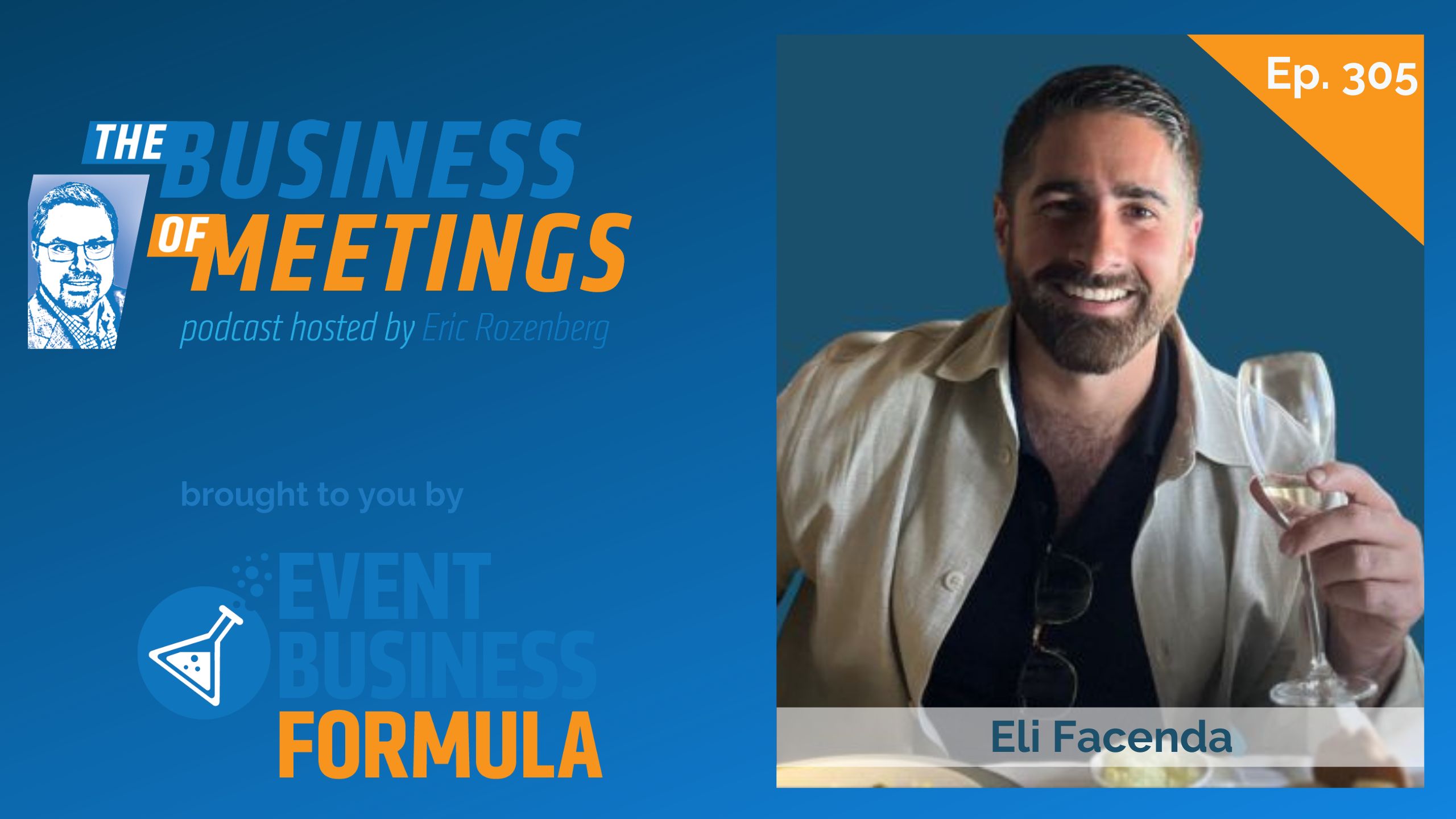
Today, we’re thrilled to welcome Eli Facenda, founder and CEO of Freedom Travel Systems. Known as The Travel Guy, Eli helps entrepreneurs turn everyday spending into first-class travel experiences.
Join us as Eli breaks down what to do with the points you earn, how upgrades really work, and how first-class flights and luxury suites around the world are far more attainable than most people think.
Eli’s Journey
Eli’s career began in 2015 after graduating with a degree in finance and joining the travel industry through an international sports tour company. A trip to the Dominican Republic when he was 16 sparked his passion for travel and shaped his desire to build a life driven by curiosity rather than convention. Over time, he developed skills in group travel, logistics, and credit card points. That eventually evolved into a business helping entrepreneurs travel better by leveraging the systems they already have in place.
Why Uncertainty Matters
Eli believes uncertainty is essential for passion and fulfillment. Playing it safe may feel comfortable, but it often limits growth and experience. The willingness to take risks, follow curiosity, and act before everything feels certain has been a consistent driver in both his life and business.
Turning Crisis into Opportunity
When COVID disrupted the travel industry, it forced Eli’s tour business into survival mode. Rather than freezing, he pivoted by launching a points-based consulting business that offered more control and scalability.
How Points Unlock Disproportionate Value
Eli discovered the power of points when he flew business class on a ticket worth thousands of dollars for only a few dollars in taxes. That experience revealed how strategic point redemptions could create massive leverage, turning ordinary spending into extraordinary travel experiences.
Why Loyalty Isn’t Always Logical
Airline loyalty and elite status often come with high opportunity costs. Transferable bank points typically provide more flexibility, higher redemption value, and better travel outcomes than committing to a single airline, especially for globally mobile travelers.
Experience vs. Redemption Strategy
The best airline experience does not always align with the best points value. Some airlines offer superior products but poor redemption efficiency. Understanding alliances, partner transfers, and award availability allows travelers to optimize both comfort and value.
Redeeming Points the Right Way
The biggest mistake most people make is redeeming points through bank travel portals. Transferring points to airline partners can multiply their value several times over, but availability must always be confirmed before transferring, as transfers are irreversible.
Cards, Hotels, and Priorities
For business owners, Eli recommends prioritizing international premium flights for personal and family travel due to the quality and tax advantages. Hotel points usually offer lower value than airline redemptions, but elite hotel status can still deliver meaningful perks when earned strategically. Base your card selection on spending patterns, travel goals, and location—not card prestige.
Experiential Wealth
Eli frames success around “experiential wealth”—the memories, relationships, and moments that create fulfillment. Business growth matters, but experiences, not just achievements measure a well-lived life.
Eli Facenda: Speaker Bio
Eli “The Travel Guy” Facenda is the Founder and CEO of Freedom Travel Systems. He and his team help entrepreneurs maximize the money they are already spending so they can unlock bucket-list travel experiences and an upgraded first-class travel lifestyle entirely on points. Almost every entrepreneur spends money and travels, yet very few know how to do so efficiently.
Eli has spent nine years in the travel industry, has traveled to 42 countries, and averages over $100,000 per year in free travel using points. His biggest passion is helping others come alive through travel and adventure while sharing strategies that make first-class travel easily attainable at a fraction of the cost.
His team works with hundreds of entrepreneurs across all industries, including world-renowned business leaders such as Dan Martell, Cameron Herold, Karlton Dennis, Amber Spears, Tai Lopez, and others.
Eli brings a unique perspective to business speaking engagements and podcasts. As an industry leader in a blue-ocean market, his talks, workshops, and interviews are highly engaging and actionable for entrepreneurial audiences.
Connect with Eric Rozenberg
On LinkedIn
Listen to The Business of Meetings podcast
Subscribe to The Business of Meetings newsletter
Connect with Eli Facenda
Freedom Travel SystemsOn Instagram (@ELITRAVELGUY)
Listen on: Apple Podcasts · Spotify · YouTube
“You just have to change the money you’re already spending.”
Eli Facenda
Full transcript of episode 305 of The Business of Meetings podcast, Eric Rozenberg with Eli Facenda. Lightly edited for readability.
Eric Rozenberg: Hello and welcome to the Business of Meetings podcast. I’m your host, Eric Rozenberg. Over the years, I’ve had the privilege of helping businesses in the meetings and events industry grow and succeed, and I’m excited to share that experience with you. If you feel alone and overwhelmed, and if you’re looking to take your business to the next level, improve your strategy and sales, and connect with like-minded professionals, you are in the right place. I invite you to visit eventbusinessformula.com and join our community of event business owners dedicated to exponential growth.
Now let’s dive into today’s episode.
Hello and welcome to a new episode of the Business of Meetings podcast. This is going to be a very interesting episode, and I know all people listening, you’re going to be using what my guest today is going to teach us, because I am speaking with none other than Eli Facenda, who is with Freedom Travel Systems and is known as the Travel Guy. We’re going to know what we need to do with all the points we’re getting, how to get upgrades, how to fly first class and live in suites all over the world, and much more. Eli, thank you so much for taking the time today.
Eli Facenda: Thanks for having me, Eric. I’m excited to be here and share hopefully some cool insights around how people can get better travel for much, much less and have some fun doing it.
Eric Rozenberg: I’m sure you’re going to do that. Thanks to our common friend Jayson Gaignard, I get to meet you, to listen to you, full of knowledge, and I can’t wait to dive in. But first thing first, what is your journey? What is Eli’s journey, man?
Eli Facenda: Yeah. So, kind of the story of it all is, I’ll take you back to 2015. So, at this point, I had just graduated from Lehigh University, near New York City, has a finance degree. And until then, I really wasn’t sure what I wanted to do with my career or my life. Like most people in college, I went to school for baseball and kind of majored in finance, but that was just because I thought it would give me the best options. I didn’t really know what I was doing.
And I had this opportunity to stumble across just my desk, I guess you could say. It wasn’t really a desk at that point, but I got the opportunity to build this international tour company. And so at 22 years old, I’m fresh out of college. I didn’t even ask how much I was going to get paid. That’s how excited I was at the opportunity. I was like, group travel, big events, international planning, sports. I was like, “This is the dream. I don’t even care about anything else. I will just hustle and make this thing work and add value.”
And so, the first real entry into my career was really through the travel industry, which was sparked through my own experience when I was in high school. I went to go play baseball down in the Dominican Republic at age 16. It was my first ever international trip. It blew my mind, the culture shock, the experience. So, I got hooked then, but I followed that bug and really followed that curiosity of, what is a life that feels really like mine? I wanted my life to feel like mine. I wanted it to feel unique to me and to not just follow the well-worn path.
And so I did that for several years, and that opened my eyes to the world of credit card points and travel hacking and group travel planning and all these different skill sets that really came full circle into what I do today. And so it’s just been kind of a cool unfolding of following my curiosity, my passions, and acquiring skills along the way, meeting amazing people throughout the adventure, and then all of a sudden stumbling into a pretty awesome brand, a business where we get to help thousands of really cool entrepreneurs do something I’m super passionate about, and have a lot of fun doing it. So I feel very lucky to get to do what I get to do. But that’s a little bit of the high level. Really it’s been driven by curiosity and passion and just maybe a little bit of the stupidity of being willing to take risks.
Eric Rozenberg: Well, I think that any entrepreneur will have this bug, but I also find out a lot of people will choose misery over uncertainty, and I certainly don’t want to regret not having tried at least. So, that’s the whole point of entrepreneurship, right?
Eli Facenda: Amen. And I mean, I do a lot of the Tony Robbins events, and he talks about how uncertainty is where, if you have that tight grip in life, it’s where you get fear, you get anxiety, but it’s also where passion comes from, like in a relationship. If it’s super certain, it’s boring. So taking the risks, I mean, that’s the thrill. That’s the adventure.
And I really love that old cliche. It’s like, no one’s going to get to the end of their life and be like, “I wish I played it safer.” No one says that. Everyone that is at 90, 100 years old is like, “Damn, I wish I followed my dreams more. I wish I enjoyed more of the opportunities I had. I wish I traveled more, had more experiences.” So, I’m like, I don’t want to have to wait till 90 to figure that out. So, yeah, that’s kind of always been a big driver for me as well, is following that uncertainty and really just stepping into it with a little bit of faith and enough of an idea of where we’re going to hopefully make it work, and then seeing what happens.
Eric Rozenberg: You say that you had the travel company and helping teams, and I think that to work in our industry, somehow we need to be driving as well when things are not going well, when there’s something unexpected. Some people will freeze, and we will go, “Okay, what are we going to do now?” So before we get into the points and using the miles and everything, do you remember, I’m sure you had plenty, but the story, the thing that went completely crazy and that you had to save the day?
Eli Facenda: Oh yeah. Well, I mean, COVID was the one. I think everyone in this industry felt the same thing. But it was a cool opportunity, because I had done a lot of personal growth around mindset, and I had learned from a lot of my mentors that the constraint on a business is never the business. It’s always the psychology of the founder or the founders.
And so when COVID hit, day one, it was kind of weird. From a humanitarian and global perspective, I was not excited. But from a “What’s going to happen? What are we going to make of this? How are we going to become resilient?” perspective, I was actually really excited during it. I knew our business was going to be just like, who knows where this thing goes. So it’s really going to test us to have to become more innovative and more creative.
And so with the tour company, there’s a lot of lessons of things we did wrong. Unfortunately, there were just some things we tried to do for the betterment of our clients and our team that ended up costing the company massively. So, that was a little bit of a mistake looking back. But some of the cool things we did: we were doing large-scale international group trips, and we were going from about 1.5 million to about 4 million between 2019 to 2020. It’s a big annual cycle trip. So, that was our year to make a big leap. And instead of going to 4 million, we went to about 150,000, because, yeah, exactly.
But we had to figure out, how are we going to transition this to some online education? How are we going to do more domestic events and still run them safely? How are we going to pivot the entire business just to keep the lights on? Because that was the only goal at that point, was survival. And so from a company standpoint, we really had to get innovative and figure out what we can do, and stay clear on the outcome of, we’re going to find a way through this and keep the lights on.
But for me personally, I immediately saw, I was like, “This thing may take a while, and this could really mess up an international tour company. I need to start to create something on my own that is just mine, that I have more control over, that I can leverage, that is a little bit safer of a play.” So, looking back, saying, “You launched a second travel company in the middle of the pandemic,” doesn’t sound like a good idea. And it did take a while to get it started, too. But that’s when I launched my points concierge or points consulting business, because I knew, okay, I need to have some diversification, things that are more online, things that don’t require in-person travel events, and things that I can leverage just myself.
So I seized that opportunity, and then that actually ended up being the ticket to really scaling and really growing something that’s even more significant than the tour company is, which has been very unexpected, because that was not the plan when I started it. So that was the whole make-lemonade-out-of-lemons moment. And it was a scary time for pretty much everyone in the industry. I mean, there were hotels, we would go to IMEX and IBTM World, we’d meet with vendors, and we’d be calling them up and the thing would just keep ringing, or they wouldn’t respond to emails, and we’d find out the hotel went out of business and we had a $20,000 deposit with them. We’re like, “Well, shoot.” Stuff like that was pretty hard to navigate. So it was certainly a time of uncertainty, as we mentioned, but one that, when I look back, was also the biggest opportunity that I was given to make some big pivots and to really seize that, and I feel really proud of how I did handle it. So it was an interesting period from that front for sure.
Eric Rozenberg: Wow, that’s an amazing original story, origin story rather, in English. Sometimes I need translation, but…
Eli Facenda: Well, it was cool because it’s an origin story, but it’s also an original story, so it’s actually both. So you got it right.
Eric Rozenberg: It’s the origin original story. I love it. So, how did you get that idea? Because all the people in this industry, we’ve all been using the miles, and we hate this airline XYZ, but we’re still flying them because of the points, which by the way, we rarely use, or we accumulate them. How did you say, “You know what, I’m going to create a business with that”? Why, where’s the ignition came?
Eli Facenda: Yeah. Well, it was partially, so I learned this skill kind of out of necessity, and that was basically when I graduated from college and I had a bunch of friends on Wall Street, and I was working four jobs trying to build this tour company, and our company was spending a lot on travel. And I wanted to travel personally, to the bachelor parties and the fun things and international trips when you’re in your 20s. I wanted to travel on my own, and I was like, “Okay, I’m not making enough money to do this. I’m already working a lot. I’m still not going to be able to cover it.” And our company is spending a lot. This credit card points thing, I had heard about it, and I was like, wait, this could really… I don’t know if there was one specific moment where I was like, “Aha.” But it really just over time landed. I was like, if I learn this, this is going to do a lot for both me and the company, and I can get equity because I could save us so much money. So, I was like, all right, I’m going to learn this stuff. So, I just got obsessed.
And then what happened is I got my first ever business class lay-flat seat to London to go to an event. And I remember getting on the plane, and at this point, I’m a year out of college. I’m making like $25,000 a year. But I get on a plane, a seat that was $6,000, and I paid $5.60 for it. Right. So I start doing the math. I’d come out of the lounge and had a couple glasses of champagne, so I’m feeling good, and I’m walking down the jet bridge, and for the first time I see a flight attendant be like, “Mr. Facenda, to your left,” and she points to her right, and it’s the business class section. I’m like, “I do not belong here. I’m so excited.” I’m doing the math, and I’m like, this ticket is worth 25% of my total income right now, and I got it for basically free. I was like, “I’ve cracked the code to the universe.”
I think that’s important because of the passion that ignited in me. That feeling I got of freedom, of like, “Holy crap, I just hacked life,” was something I was so excited about. I wanted to share it with anyone and everyone that I could. I just got obsessed. So for years I was just doing it as a hobby and helping my tour company. And then when the COVID thing hit, I had seen some other people that I knew online from previous businesses that were doing this online coaching thing. And this is a little embarrassing to admit, maybe a little funny to hear, but some of them I knew, and I was like, “That guy is not smart, and he’s making like 30,000 a month, like he’s doing this stupid like legion.” I was like, “Oh my god, I’m working so much harder. I’m so much more talented than this guy, and I’m making a fraction of what he’s making. This is pissing me off. I have to do something.”
So, it was actually a little bit of jealousy, plus a little bit of, as we say, and a little bit of just passion for the thing that made me want to start. But I didn’t have a vision of scaling a multi-seven to eight-figure business. Right now we’re doing multiple seven figures. I had no vision of that. I actually remember I got on a coaching call, because I was joining a coaching program about it, and they were like, “What are your goals?” And I was like, “I’d love to make an extra $10,000.” They were like, “A month?” And I was like, “I meant a year.” They were like, “I think we need to stretch your goals a little bit.” I was like, “Okay.” So, I didn’t really have a huge goal for it. I just wanted something. And I think that also was part of why it grew organically: I wasn’t really rushing it. And so maybe that was a benefit to it. But yeah, that was certainly kind of how I saw the opportunity.
And really, the last thing I’ll just say on that is, I looked at the industry, and I was operating kind of as a business owner. I was a number two, but I was really running the company. And I looked across the industry, and everyone else in my space, in the points space, was doing big blogs, because they were talking to consumers. And I was like, no one’s helping business owners, and they spend the most and have the most points and probably want the most luxurious stuff and have the least amount of time. I was like, that’s an opportunity to charge premium-level prices, deliver massive value, and just serve a market that’s underserved right now. So eventually I realized that too and was like, okay, there is a sizable opportunity in the space as well.
Eric Rozenberg: I love your story, because I always say, when you take an international flight, always take left.
Eli Facenda: Yes. Yes. Exactly.
Eric Rozenberg: And it’s like, if you can. And I used to travel a lot for business, going back and forth with Europe. I remember one day getting in the plane. I’m on the phone with my wife, and I look at the flight attendant, which I know by the first name and cannot remember the first name. I say, “Hi, Julie,” and I said, “Hi, you,” and my wife goes, “Who are you talking to?” I said, “The flight attendant.” And she goes, “You know her?” And also I’m thinking, “Oh my god, I’m traveling too much. This is insane.”
Eli Facenda: Yeah. Yeah. That’s a lot. That’s a lot. When you start to know them on a first-name basis, with the same route all the time, yeah, you probably realize, “I need to slow it down at that point.”
Eric Rozenberg: Well, yeah, but sometimes it depends on what you’re doing. And I was always looking, especially when I had my corporate events agency in Belgium, I was looking at what is the best airline or the best route for the client, for the incentive trip, for the sales meeting. So I never really focused on one airline specifically, which I tried to do later on. What is your recommendation for airlines? What is it giving you? What are the best airlines in general? What are the best airlines in the US for points or giving advantages to the individual?
Eli Facenda: It’s a great question, because it’s kind of a complicated one for a lot of people. So, let me share a couple common beliefs that I like to dismiss, because there are some myths out here, and there’s always nuance to this. So, everything I say has nuance. It’s not a blanket generalization for everybody; it’s impossible to say there’s one overall strategy for everyone.
So that said, generally speaking, for most people, airline elite status is not worth pursuing unless you fall into a certain bucket where you’re someone who’s traveling enough on a specific airline where you’re actually going to hit the highest levels and get meaningful upgrades that you otherwise would not pay for. That’s the caveat. Because we have a lot of business owner clients, they’re already paying for first class. So what’s the point of being loyal to American if you’re already getting the main benefit just through paying for it, because you don’t want to risk not getting the upgrade? So that’s number one.
And number two is because the opportunity cost of loyalty is very high. Right? If you’re spending on an American Airlines co-branded card when you could be earning Amex points, those Amex points or Chase points or other bank points have on average around a 2 to 4x value compared to what American miles would have as a base value. So diversifying your spending is really beneficial. And sometimes loyalty means you’re on a one-stop when there was a direct with Delta, for example. And so for me, that’s always frustrating, because I am optimizing for the highest level of comfort and convenience and ease and savings, and status doesn’t always fall into that bucket.
Now, if you’re traveling Charlotte to London once a month for the whole year, of course getting status on American or oneworld status or BA would make sense, because that’s just a lot of travel on the same route. It’s always those two airlines. That’s going to make a lot of sense. But if you’re traveling like me, you’re a global traveler, it’s a different airline each time, there’s not a lot of consistency. Going for status and staying loyal is not really a great place. That’s kind of that bucket.
The second bucket, which airlines are the best? I mean, there are two ways to look at this. Which programs are going to get you the best value, and then which airlines have the best experiences? Those can be two very different things. For example, within domestic travel, my favorite domestic product is actually JetBlue Mint, but they fly on so few routes that it’s not even worth really putting in the top. Out of the major carriers, Delta is my favorite domestic product. Whether it’s their first class, economy, narrow-body, wide-body jets, they’re just, in my opinion, the best experience. However, their points program is terrible. In the points world, instead of SkyMiles, we call them SkyPesos, because they’re so low value to get you places. You want to fly to Europe in business class on Delta One? From New York to Amsterdam is oftentimes 300,000 to 400,000 miles. You could book that same ticket with 60,000 American miles to fly on American business class. So, in that case, yeah, maybe Delta One’s a little better than American Airlines Flagship Business class, but is it 240,000 miles better, or is it just a little bit better? So, there are always these trade-offs, right?
And then obviously there are the big flagship international carriers, and pretty much the major Asian and major Middle Eastern airlines are dominating the market in terms of quality of experience. I mean, Emirates, Etihad, Qatar, just unbelievable experiences, especially when you get into business, or really the first class experiences are just out of this world. The Asian carriers, ANA, Japan Airlines, Korean Air, stuff like that. Singapore Airlines is fantastic. And they each kind of have a different benefit. Some have cool features, for some it’s about the hard product, some it’s about the service, some it’s about the staff. So, it’s fun to experience these exquisite offerings and just notice the different kinds of flavors that they bring to the table. So, that’s kind of my global take on airlines as a whole.
Eric Rozenberg: Yeah, to your point, I don’t remember the last time that I bought a non-business class ticket and got an upgrade, where I still have like 50, 60 in the account. Singapore Airlines, that’s actually where my eldest one started walking. We were on our way to Sydney for a trade show, and then we flew back, and that’s when she started walking. So imagine holding the two little hands, back and forth and back and forth and back and forth and back and forth in the plane, until I found out there were stairs. So I put her at the bottom and brought her back up and down all the time. But the service was absolutely phenomenal.
The other thing is, I used to fly a lot from Belgium, and what I hate is those announcements in English and then in French and then in Dutch, and it’s always, “Don’t do this, don’t do this, don’t do this, don’t do that, don’t do that, regulation, don’t. Oh, and welcome on board.” And when you go on non-US airlines, it’s little about that, and it’s just, “Welcome, it’ll be a great flight.”
Eli Facenda: That’s funny. Yeah, or if you’re flying Emirates or something, maybe Middle Eastern, it might be in Arabic, but you can’t understand it anyway. So, if you know all three languages, you’re like, “I got it.” That’s funny.
Eric Rozenberg: Exactly. Now, talking about that, I brought my family to Africa last year. It was phenomenal. And we flew with Emirates, which was phenomenal as well. And I used all the points that I had saved on American Express to be able to pay for the upgrade and everything. And then I was listening to your presentation with Jayson, and I thought, “Eric, you’re stupid. You should have done something else.” So for people that have so many points on their credit card, what is the right way to use them?
Eli Facenda: Yeah, it’s a great, great question and a key point, because this is the make-or-break. And just high level, there are really three segments to the game. There’s earning points effectively, so it’s getting the right points and the most of them. Then there’s maximizing the value of those points. So, how do you actually leverage them to get two, three, four, five, 10x the value? And then there’s, how do you maximize your upgrades and perks and just the benefits, the TSA PreCheck and CLEAR and status and hotel suite upgrades. So, those are the three.
The most important difference-maker for most people listening to this, that they’re probably not optimizing, is maximizing the value. And that’s what you’re talking about. And so the first thing is, we have to have the right type of points, because if you have, let’s say, Bank of America points, those are not transferable to airline or hotel programs, right? And if you have Southwest miles, you can’t transfer those or use partner airlines. So you need the right points that have conversions from the bank into the airline or hotel loyalty programs. And then you’re really going to be using those airline miles within the alliances in most cases. Emirates doesn’t count for that. But if you’re flying Lufthansa, you’re going to probably book that by converting Amex points into an airline like Avianca or maybe Air Canada to get the best value on that Lufthansa ticket. So when you do this, we call this points…
Eric Rozenberg: Hold on, hold on. Because I understand quickly if you explain to me a long time. Can you just repeat what you said?
Eli Facenda: Yes. Yeah. So if you wanted to book, let’s just use a Lufthansa business class ticket. There are really three or four ways to book this. Number one, you just pay cash. Let’s call it $7,000. No one wants to do that. Number two is, let’s say you had Amex points. You’d go directly to the Amex bank site and redeem your points through American Express Travel. It’s not like an intentional trap, like “gotcha,” but this is kind of the trap the bank wants you to fall into, where you waste your points for what I would call low value, or they would call standard value, by going through the travel portal. When you do this, each point is worth a penny. So, a $7,000 ticket is 700,000 points. Okay.
The third option would be, if you had a bunch of Lufthansa miles, you could just book directly through Lufthansa, but very few people have that unless you live in Germany. And then the fourth option, this is the one you want: you’re going to transfer those points from Amex into a Star Alliance partner to book a Lufthansa ticket. And when you do this… So I flew Lufthansa first class, and it’s amazing out of Frankfurt. You get a private first class terminal. They have a cigar lounge, a bubble bath, they have a private Porsche.
Eric Rozenberg: You’ve done the whole thing?
Eli Facenda: Yeah. The Porsche drives you on the tarmac. It’s amazing. The food and wine’s great. I booked that by converting Amex points into Avianca. And instead of paying around 700,000 points, I paid around 80,000 points and about $100 in taxes by converting the points. So that’s the key, these conversions.
Eric Rozenberg: If I have Amex points, I transfer them to Avianca in that case.
Eli Facenda: Yep.
Eric Rozenberg: I go to the Avianca website.
Eli Facenda: Yep.
Eric Rozenberg: And I book a flight from Miami to Frankfurt on Lufthansa.
Eli Facenda: Correct. Yes. So, think of it this way. When you go to a sporting event, let’s say you were going to go watch a Miami Dolphins game or something, I don’t know, you may book the ticket through SeatGeek or through Ticketmaster. They’re the third-party agency giving you the ticket, but it’s still a ticket to the Dolphins game. Similarly, you’re booking through Avianca. They’re issuing the ticket through their mileage program, but it’s still Lufthansa’s metal. So when you do the conversions, you’re looking at what we call an award chart and finding the best award chart for specific routes.
Now, where the complexity in this lies is, it’s not cut and dry every single time that you can just find the deal on Avianca. There’s something called award availability, and then there’s something called partner award availability. So on that Lufthansa aircraft, if there are 400 seats, maybe Lufthansa would offer 200 of them to be available for Miles & More, Lufthansa’s program, where you could book directly through Lufthansa, and maybe 70 of those 400 seats would be available through Star Alliance partners like Avianca. So it’s a smaller class of inventory. So what can happen is, you could go to Google Flights and see that flight available and see it’s $7,000. Then you go to the Avianca site and you see that it’s not available there. Well, it’s because there’s no partner availability on that specific flight. So that’s where the game is: you have to be able to find the right award chart with availability on the route you want to fly. But when you do it, and it’s very viable to do it consistently, like we did around 120 million points redeemed last year for clients…
Eric Rozenberg: Okay, 120 million.
Eli Facenda: We got on average almost 5x the value.
Eric Rozenberg: Okay.
Eli Facenda: So when you do this right, you’re getting five times the amount of business class trips compared to what most people would be getting on one trip. So it’s a huge leverage point if you can do it right.
Eric Rozenberg: Wow. That’s amazing. Now, just to finish on that example, before transferring the points from Amex to Avianca, how do you know that you can book your Lufthansa ticket through Avianca?
Eli Facenda: Yeah, it’s a really important step. So you always have to check the availability first and then transfer, because once you convert those points from the bank to the airline, it’s a one-way transfer. You cannot transfer them back. So that’s really important, because if you transfer them and the ticket’s gone, then you’re kind of screwed. So you just go to the site and you check. And there are points aggregator sites that can help: point.me, seats.aero, Roam travel, ExpertFlyer. There are a bunch, and they’re all good for different things. There’s not a one-size-fits-all, but they’ll help you see some of the inventory.
But the actual way to check, to make sure… Sometimes there’s something called phantom award space on some of these tools, where the tool will say that it’s available, and then you go to check and it’s not. So you need to double-check that. So you always go to the site, confirm it’s there, and then you transfer the points in. With some airlines, not all, you can put an award ticket on hold, because usually the points transfer is pretty quick, but in certain cases it could take a few hours or even 24 hours. In rare cases, it’s longer. But with certain airlines, you can put an award ticket hold on, where you’d be like, “Hey, I’m transferring the points in. Hold that seat for me or for my family.” And they hold it, and then when the points hit, you can book it.
Eric Rozenberg: Can you do that even if you have to then create an account with Avianca?
Eli Facenda: You do have to have a loyalty account with them. Yeah. But those are free. It takes three minutes to set it up. It’s just a loyalty number. You don’t have to do anything else.
Eric Rozenberg: Amazing. So, you’re talking as well… Let’s transition now to hotels. You’re talking about banks, airlines, hotels. First of all, I have no clue about the system and the changes and the loyalty points and this and that. So, what is your recommendation in terms of credit cards, airlines, and hotels, and how they link with each other?
Eli Facenda: Yeah, totally. So, for max value, we want to think, where are we going to get the most value first? And if we’re speaking to business owners, the first thing you need to think about is the tax benefit. That’s a strategic financial move, because points are tax-free even if they’re generated from your business. So we always want to prioritize our family and personal travel first, and particularly those international business and first class flights. So let’s say you’re going to Africa with your family. That’s going to be your first place to use your points, because you’re going to get the biggest value savings and the biggest quality difference on your travel, and the tax benefit. Okay? So that’s the first thing you need to think about.
The second thing you need to be thinking about is, okay, if I cover that bucket and I still have points left over, where am I looking next? So that’s where your domestic travel would come up, your business travel would come up, and your hotel stays come up. And so overall, getting value from hotel points: for most programs, hotel points are worth less than bank points. So what you need to kind of understand is that there’s a different inherent value for each currency, right? So a Marriott point is generally worth about half of one penny, whereas an Amex point is worth on average around two pennies. So if you were to convert Amex points directly into Marriott, you’re pretty much always going to be a little bit screwed, except for rare cases where it’s a super nice hotel, like the Ritz-Carlton Maldives for a week or something like that.
So in most cases, if you’re earning hotel points through organic spend at hotels and organic stays, I do recommend going for hotel elite status, because the status there is more meaningful. It’s easier to get. The upgrades are more consistent. So, that’s actually a play I do recommend. You’re going to earn a lot more points, and then when you earn those points, you just use them back on your personal vacation stays in hotels. So, that’s kind of the hotel playbook.
But each program is different. For me, there are three major programs: Hilton, Hyatt, and Marriott. IHG is kind of in there, too. Accor also a little bit. But really those are the three big players when it comes to points and being able to transfer points. Hyatt has by far the best overall value from the points but the smallest footprint. Marriott’s got the biggest footprint, and I’d say it’s kind of the middle option. And then Hilton has the easiest way to get to elite status, but it has the most inflated overall points. I mean, the Waldorf Astoria in Cabo, you’ll see that hotel go for 90,000 to 100,000 points a night, and then the next night it might be a million points a night. Hyatt, you’ll never see that. Hyatt will be like 30,000 points a night or 40,000 points a night for a five-star property.
So it is important to think about how much of your spend and points you want to allocate towards flights and international business class travel, how much you need for hotels, and then you can kind of optimize and reverse-engineer from there. We do this for clients. We’re always looking at all these kinds of if-then equations based on their spend, their travel goals, where they live, what they’re purchasing, what actually matters to them, and we create what we call someone’s travel DNA, and then we create a custom card plan for them. But you can really do the same steps on your own by reverse-engineering all the things I’m talking about and then looking at the card stack that’s going to work for you.
Eric Rozenberg: Well, in theory, yes. Practically speaking, it’s another story to be able to do that.
Eli Facenda: Sure.
Eric Rozenberg: My last question about the credit cards now: which one do you recommend? Because there are a lot of programs. And again, on the airlines, that’s another thing that is really, really, really getting on my nerves every time I fly: suddenly there’s a great promotion to get 6,000 points today, and they have to repeat it all the time. But what is the best credit card for that?
Eli Facenda: Well, actually, it’s really interesting. If you look at most airlines financially, many of them are making more on their loyalty programs than on actually selling seats. So they’re hawking credit cards; they’re super high commission for them, and they make quite a good amount of money from that. So that’s why we’ve seen that. It’s also why we’ve seen a big shift, if you do look at the loyalty programs and the benefits. We’ve also seen a shift from favoring the frequent travelers to favoring the high spenders. With American, it used to be you had to fly a certain amount. Now we have clients that spend $500,000 a month. They’re going to hit Executive Platinum in two weeks with that card, and they don’t have to fly a single mile. Whereas there might be a corporate consultant who’s on an American flight every weekend the whole year and might barely get there. And so it’s really unfair in that way, but it is how the industry works.
But overall, speaking of which cards to get. The points currencies that I like the most: there are a few major transferable points currencies, and I’ll cover the specific cards. Chase, Amex, Citi, Capital One are the big ones. There’s also Bilt now, and technically Wells Fargo has some partners too, but the two big players are Chase and Amex. Those are my favorites. Capital One would be the third.
So overall, I like Chase points the most personally, for where I live. I’m out in Colorado. Denver’s a United hub. Chase transfers one-to-one to United. Chase also transfers one-to-one to Hyatt, which is where I have Globalist status, and it’s my favorite hotel program. And they also have a lot of the other key transfer partners: Air Canada, you can transfer to Emirates, Air France, British Airways, a lot of the big players. So for me, Chase points are the best.
So then what I do is I look, okay, within the Chase stack, where do I spend the most money, and which card aligns with that? So I run social media ads. The Chase Ink Preferred is a great card for me, because it covers three points per dollar on the first 150K spend per year on ads. So for me, that makes a lot of sense. For my personal dining and travel, if I do have those things that I’m paying for, then the Chase Sapphire Reserve is good, because it’s also three or 5x points on those things. So that’s how I like to stack it up. But I also do carry the Amex Platinum and the Amex Gold stack, as well as the Capital One Venture X, because I look at the different categories of spend and align it that way.
So, it’s always going to be a little bit custom, but those are some of the top cards I just mentioned right there: Chase Sapphire Reserve Personal and Reserve for Business. Chase Ink Preferred is really good. Capital One Venture X for business is amazing for people that have high spend on non-category bonuses. The Amex Platinum is more of a lifestyle card. You get the perks and benefits, and it’s good for travel. And the Amex Gold is great for everyday, like groceries and dining spend, too. So, it’s a bit of a mix, but those are some of my top favorites.
Eric Rozenberg: Amazing. And I remember you said something about the Amex Gold being better than the Amex Platinum. In which cases?
Eli Facenda: Yeah. So the example I think I used was, if someone was running a business and spent 20,000 a month on software and advertising. I just picked that example. You would think the Platinum has a higher annual fee, it’s a more expensive card, it must be better. It’s not, in that case. It has a lot of perks, but it’s not great for earning in that case. So on that specific category of spend on the Platinum, you would earn 240,000 points in a year, which at my value is enough to go round trip to Europe in business class twice. Okay, so two business class trips, let’s call that $15,000. Okay. With the Gold, however, you’d be earning 4x that. So I can’t do the math. I think it’s almost a million points. Like 960,000 points.
Eric Rozenberg: And for which case again? For which category?
Eli Facenda: So that’d be for software and advertising.
Eric Rozenberg: Okay.
Eli Facenda: If you had to. But you can look, this is one example of many where you’d look at it and think, “Oh, I thought the Platinum would be better.” The Platinum earns one on those categories. The Gold and Business Gold earn four. So you’d be earning nearly a million points. Instead of two round-trip business class tickets, you’d get eight. So that’s going to be closer to $60,000 in return versus $15,000 back. And that’s a huge difference from what? Think about how easy it is. You take your fingers, you type on a keyboard to do an application for 30 seconds, you switch one card, and then you’re getting trips to Europe. I mean, that’s why I love this stuff, because the leverage is so high, because it doesn’t require an additional crazy marketing strategy. You don’t have to close a big deal to do it. You just have to change the money you’re already spending. So, that’s why it’s so easy and why it’s so powerful, in my opinion.
Eric Rozenberg: Listen, I could listen to you for hours, and I’d probably need a double just to understand what you’re saying, because obviously you play with that every day.
Eli Facenda: Yeah. Yeah. I’m also from the Northeast as well, so I talk fast and I’m high energy. So can I…
Eric Rozenberg: It’s okay. That’s… No, so I have two last questions. The first one is, how do people get in touch with you?
Eli Facenda: Yeah. So the easiest way: there’s my free stuff online. So Eli Travel Guy on Instagram. I share a lot of behind the scenes, how I’m doing stuff, give tips, updates, stuff like that. We do a newsletter and stuff too, so you could check that out, and a little bit on YouTube.
But if you just want help, there are two levels that we help with. We have a full concierge level, so all done for you. White-glove solution, custom card plan, we plan the trips, we’ll help maximize the points. We even have travel advisors for the experience. And so that’s just freedomtravelsystems.com. There’s a short explainer video about it to see if it makes sense for you, and you can set up a call with our team to learn more. So that’d be one option. The second option is we have our community, which is more done-with-you, where we’re advising. You’re getting access to a team of experts to ask quick questions. And that’s for someone that’s like, “I’m already good enough to be dangerous. I just want some quick expert help, some quick recommendations.” It’s a much lower investment, obviously more on your side, less done for you, but just quicker access. And you get to get huge value out of what you’re getting there, too. So, those are the two different tiers that we have.
And ultimately, for people that are in the event space, depending on how you’re set up, there could be a lot of spend on different events and team travel and all those things. And that’s one last thing I’ll share. It’s a little nugget: if you have high spend, we could be talking about putting things that are not typically on a card on a card. Payroll, inventory, other events or venues that typically don’t allow cards, you can pay on a card. Yes, there’s a fee, but when you do it right, you get a huge return. I’m planning an event in Austria right now in the Alps. We’re doing something with a venue up in Sölden, the ice Q venue from James Bond. Venues like that oftentimes don’t accept cards, or they charge a fee. Well, I’m putting that thing on a card, because yes, it’s a 2.9% fee, but I’m getting 8% back.
So, when you’re doing this, we want to look at those things to optimize your points. And then if you’ve got enough points for your personal travel, what you could start to look at is, “Hey, do you have a key team member or employee that, when you’re doing events, you want to upgrade to business or first class, or you want to gift an incentive bonus on your team?” We’re in the industry of incentives here.
Eric Rozenberg: Brilliant.
Eli Facenda: You want to give them a vacation to the Maldives with their family worth $40,000 that costs you nothing? That’s a huge asset for you. So, you want to be looking at how you maximize it personally, but also how you extract the most value out of this opportunity for you as a business owner. Those are kind of the two frames I’d like to put on this.
Eric Rozenberg: Thank you. And my last question for today, and of course because of Jayson, it’s my favorite question: when we celebrate a year from now with a bottle of champagne, what are we going to celebrate?
Eli Facenda: We’re going to celebrate a life well-lived. For me, I’m writing a book right now about a topic that I call experiential wealth. And so that’s really the moments that make you come alive, that really give you the sense of fulfillment in life, deeper connection to the people, places, the things. Travel is just full of that. That’s why I love it, because I really just believe that when we look back, no one’s going to be thinking about the amount of money they made. We all know the cliches. You look back on the memories. And so the problem is, for us as business owners, it’s so easy to get caught up in the next goal, the next milestone, all of this achievement, that we think, “Ah, yeah, we’ll enjoy it later.” People in this industry, which I love, tend to embrace that more and faster. But to me, yeah, sure, we have the business goals, and I’m growing, and I’m sure you are too, and we have our targets. But to me, what’s more important than that is to see a founder or an entrepreneur who’s leaving a legacy in how well they lived, not just how big their business grew. So, that’d be a celebration for me. Taking a bucket list trip, taking on a new life challenge outside of work that really made you come alive, making an impact, and doing something that connects you deeply with others. That’s worth celebration for me.
Eric Rozenberg: Amen to that, Eli. Thank you so much for your time today.
Eli Facenda: Thank you, Eric. Appreciate you having me on.
Eric Rozenberg: Thank you for tuning in to the Business of Meetings podcast. I hope you found today’s episode valuable. If you enjoy the show, the most important thing you can do is leave a review and share it with your colleagues. It really helps spread the word. I truly appreciate your support. And if you’re ready to take your business to the next level, don’t forget to visit eventbusinessformula.com to learn more about how we are helping event business owners like you. Thanks again for listening, and I’ll see you next time.