
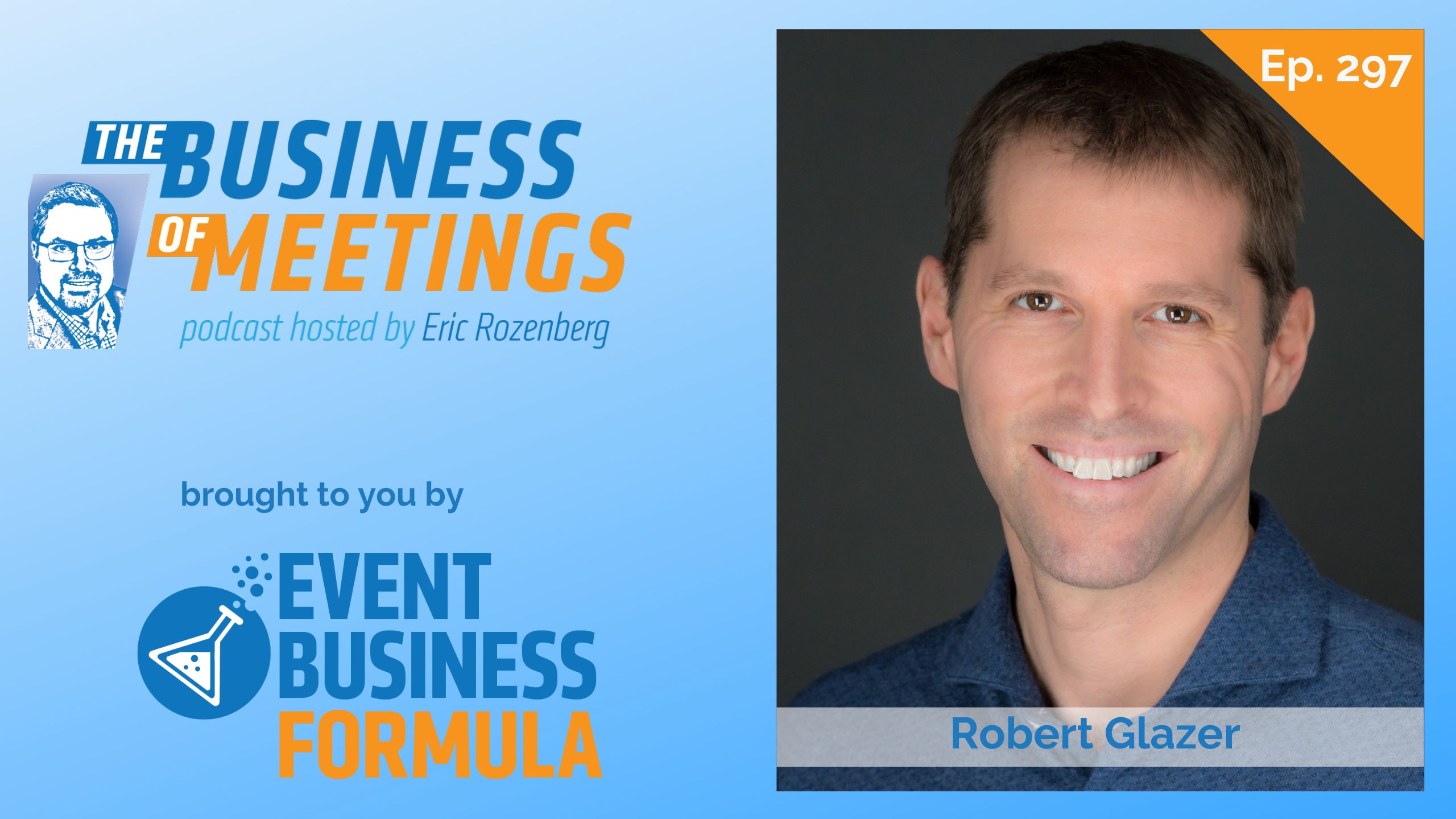
Today, we are thrilled to welcome entrepreneur, philosopher, writer, podcaster, and author Robert Glazer as our guest.
Robert truly understands how values shape company culture. In his latest book, The Compass Within, he explores how values guide both personal and organizational success.
Join us to discover how strong values lay the groundwork for long-term prosperity.
Robert’s Journey
Robert founded Acceleration Partners, a global partner marketing agency that became one of the first fully remote companies long before remote work became common. What began as an internal email to his team evolved into Friday Forward, a leadership newsletter with more than 120,000 readers. Writing became a parallel career for him, leading to several bestselling books, including his latest, a parable on personal and company values.
As he stepped back from day-to-day business operations, Robert focused on helping people and organizations build capacity, lead better, and live by their core values. His mission now centers on leadership as the most powerful lever for meaningful change in companies and society.
Core Values
Robert developed a framework to help people identify personal core values. His philosophy is that people lead from their values consciously or unconsciously, so awareness is essential. The framework grew into a course and then a book, designed to make the process engaging and practical. Values are actionable principles, not one-word ideals, and their opposites should trigger discomfort to confirm their importance.
Teaching Leadership Through Fiction
Robert notes that leadership problems often arise from misaligned incentives rather than malice. In his latest book, The Compass Within, he combines fiction and nonfiction to make lessons relatable. Through the story, readers can see how misaligned values create frustration at work and in relationships. The main character embarks on a journey of self-discovery to reveal how value alignment influences experiences.
Alignment in Work and Relationships
Shared values need not be identical, but they must be harmonious. Misaligned value systems create constant conflict. Early life experiences shape our core beliefs, which can later clash with or harmonize with those of others. In any setting, alignment drives trust and long-term success. Without it, relationships and organizations often fracture.
Competition and External Validation
Robert understands how some cultures pressure people into constant competition and comparison. Many people never stop to ask why they do what they do. True contentment begins when people stop chasing external approval and start to define success by their own standards.
Building The Compass Within
The Compass Within offers a step-by-step approach for discovering actionable values. It begins with six reflective questions that explore life’s highs and lows. Patterns in those answers form value statements that guide decisions. The opposite test (if the opposite of a value makes you cringe, it’s genuine) ensures the values are real.
Creating a Values-Based Company Culture
The company culture of entrepreneurs should evolve from the founder’s authentic values, and must be collective. Effective values are actionable and measurable, not vague statements like “Integrity” or “Diversity.” They should naturally arise in conversation and be evident in daily organizational behavior.
Writing, Leadership, and Legacy
Robert believes that leadership lies at the root of organizational change. Companies do not act. People do. When leaders understand and embody their values, their organizations thrive. His writing reflects his mission, offering practical tools to help people lead with authenticity and purpose.
Bio: Robert Glazer:
Robert Glazer is the founder and chairman of the board of Acceleration Partners, a global leader in partnership marketing. He also cofounded and chaired BrandCycle, which was acquired by Stack Commerce/TPG in 2021. A serial entrepreneur and award-winning executive, Robert is passionate about helping individuals and organizations elevate their performance.
Robert shares his insights through Friday Forward, a weekly inspirational newsletter reaching over two hundred thousand readers in more than one hundred countries. He is also the #1 Wall Street Journal, USA Today, and international bestselling author of seven books, including Elevate, Friday Forward, Elevate Your Team, and How to Thrive In The Virtual Workplace. Additionally, Robert hosts the Elevate Podcast, a top 1 percent show on business, performance, and leadership with over three million downloads globally. Robert speaks to audiences around the world on topics of leadership, culture, and personal and professional development, and has also spoken on the TEDx stage.
Connect with Eric Rozenberg
On LinkedIn
Listen to The Business of Meetings podcast
Subscribe to The Business of Meetings newsletter
Connect with Robert Glazer
On his website
Listen on: Apple Podcasts · Spotify · YouTube
“You lead from these things whether you know them or not.”
Robert Glazer
Full transcript of episode 297 of The Business of Meetings podcast, Eric Rozenberg with Robert Glazer. Lightly edited for readability.
Eric Rosenberg: Hello and welcome to the Business of Meeting podcast. I’m your host, Eric Rosenberg.
Over the years, I’ve had the privilege of helping businesses in the meetings and event industry grow and succeed, and I’m excited to share that experience with you. If you feel alone and overwhelmed, and if you’re looking to take your business to the next level, improve your strategy and sales, and connect with like-minded professionals, you are in the right place. I invite you to visit eventbusinessformula.com and join our community of event business owners dedicated to exponential growth.
Now let’s dive into today’s episode.
Hello and welcome to a new episode of the Business of Meeting podcast. We often say that culture is what helps companies to be successful, and the values that are building that culture are very important, and then of course we’re talking about our own values. But I don’t know anyone that can speak about this better than my guest today, especially as he just wrote the book on values called The Compass Within. Ladies and gentlemen, entrepreneur, philosopher, writer, podcaster, author, Mr. Robert Glazer. Robert, so great to see you again today. How are you?
Robert Glazer: Mr. Rosenberg, my friend. It’s good to see you.
Eric Rosenberg: It’s wonderful to see you. And I have to tell you, I’ve read your previous books. I love reading Friday Forward. I have listened to your podcast. And so when the new book came out, I said, “Okay, I’m going to buy it because it’s my friend.” And oh my goodness, I love it so much. I like the parable. I don’t say it in English. In French it’s “parabole.”
Robert Glazer: Same parable. Yeah.
Eric Rosenberg: But more importantly, it goes deep into defining our core values. I know we’re going to talk about this today, but before we get there, for those who’ve been living in a cave for the last 100 years, who are you and what is your journey?
Robert Glazer: Yeah, my journey is sort of these two roads that cross. I have that disease called serial entrepreneurship. I built a few different businesses, the largest of which is a global partner marketing agency called Acceleration Partners. As we started building that company, I realized that I was writing some stuff about the industry and leaning into my writing and was making an impact with that. We were a fully remote company when we had to hide it because we were working with Fortune 500 companies. As we started to build the company and think about the culture and things that we wanted to do differently, I started trying some different things and writing about those things. I started a little note to my team that people started sharing, which is now the Friday Forward newsletter that you mentioned, which has 120,000 people globally, different leaders, that get it each week. That just started as an internal thing that led to more writing, and I started writing about these concepts of building capacity both in individuals and organizations. One of the things in my capacity building framework I talked a lot about was how to understand your personal core values, in addition to the company core value stuff that we’ve done. In fact, I’ve been recommended I could do a prequel to this book on how Jack’s company figured out its values, which has gotten me thinking.
Eric Rosenberg: But you would be like Star Wars Episode 1, 2, 3 after Episode 4, 5, 6.
Robert Glazer: Yeah. So there’s a or Jamie gets older. It could be one of the two. Maybe Jamie’s kids or something. Although the thought of writing right now is exhausting, getting through the launch. So yeah, then my world started to be, as I got less involved in the day-to-day of that business, I’ve taken a lot of the things that we’ve learned and things that we’ve shared in terms of how to build better leaders and better organizations, because I think, like people say we get the politicians that mimic where society is, I think we get the leaders that mimic where society is as well. And I think companies aren’t, they’re an inanimate object, right? People say the company’s doing this or the company’s doing that. No, we’re not. People are doing these things. And so we either help people become better at this, and for me the solution is going to come from leadership. So that’s where I’m spending a lot of my time.
Eric Rosenberg: So it’s your eighth book, if I’m not mistaken.
Robert Glazer: Yeah, you got that right. Somehow we’ve been sending out an old bio. But I like to say what I lack in quality, I make up in quantity. But this one was the hardest and the most fun. And like you said, it was a departure for me to basically have to write fiction and nonfiction.
Eric Rosenberg: Well, and you just hit USA Today bestseller.
Robert Glazer: Yeah, we just did, the second time.
Eric Rosenberg: So that was a big win. That’s wonderful. Congratulations. With all the previous books you’ve written and obviously the newsletter Friday Forward, what triggered the fact that now I’m going to use a parable and I’m going to talk about how to define the values? Is there something special? I know that your daughter Chloe was also a good sounding board, but what really triggered the fact that you wanted to write this book?
Robert Glazer: I like when French people say Chloe. It’s said correctly, and we have no French context. We just always loved that name. Yeah, it was a confluence of things. I had written Elevate. I had talked about this core values piece of it and finding your core values. I had really figured it out for myself after this EO event I went to, and it was life-changing, and people would ask me, “Okay, so how do I do it?” and I was like, “I don’t really have anything.” But I’ve been practicing this curriculum with our company where we’ve been teaching our leaders core values, helping them figure out their personal core values, because my philosophy is you lead from these things whether you know them or not, so you might as well have awareness of them. Eventually I felt really good about that curriculum. I turned it into a course. A couple thousand people have taken that course, and they’ve had amazing feedback. But a lot of people won’t go into a course, and I really wanted to take this framework and share it with more people. I had this vision, Eric, of this book on values in Barnes & Noble that no one would pick up, because it’s an often talked about subject, people are annoyed by it in the corporate sense because the companies make it up and it seems very abstract, or in the personal sense. But anyone I had shared this framework with or had done it with said, “It’s different. This is different, and I get it.” I love and I had gotten one of his favorite books, and Bob is a friend of mine, and we’ve all read probably The Goal, the famous book on operations, and I was like, “I wonder if I could show this.” What I’m hearing from people, and where the hypothesis, I guess, is being proven out, is that Jamie’s this vehicle. He’s a mirror, this guy going through these core values, and everyone who’s reading it is reflecting on some moment where they’ve been Jamie, with a boss or a boyfriend or a girlfriend or a community. Once they’re able to see what it looks like, then they’re able to understand that message. And I just thought a book on core values would be boring, and I was like, “I’ve got to make this not boring.”
Eric Rosenberg: I have to tell you that when I was reading it, and again I had no expectation, just reading a book because it’s you, I was so into it that at some moment, when you’re describing the situation with his boss, Matt, Ambers, I had a flashback. No, more than a flashback. I had pain in my butt. I was getting nervous, because of course it reminds me of a situation like that. But it’s weird to me how come that people can behave like that and still expect others to continue to be under their not so great leadership, but never change.
Robert Glazer: Matt’s not even, I’ve actually toned down Matt from feedback from the first version, because Matt was more of an overt a-hole, and I think it made it harder to make the distinction, right? If someone’s just obviously bad and a pain in the ass versus, you like Matt, and then Matt comes, and Matt seems like he’s trying to be a good guy. I think that mimics a lot of the people that we’ve worked for. In fact, we’ve all probably worked for people that are much worse than Matt, right? And it’s just understanding that nuance of why the person frustrates us and the organization. And look, people follow incentives. I think at the end of the day, behavior follows incentives, and Matt’s following incentives and then he’s putting out incentives. But what’s interesting is a lot of people have gotten emotionally invested in the characters, and they didn’t know how it was going to end. I’ve gotten people texting me about the relationship. We won’t give anything away, but I tried to hold that a little close to the vest so people wouldn’t guess how it went.
Eric Rosenberg: I think somewhere in the beginning of the book, you mentioned that one of the three was working well. I should have bet on it, because I was correct on the one that was working well. Now, when you look also at how people are behaving like that, take the example of Matt, the boss who’s basically an a-hole, as you say.
Robert Glazer: He’s like a light ale. Again, his first version was a lot worse. But Matt’s like your typical over-metrically oriented executive, right?
Eric Rosenberg: Well, that’s an understatement. Sadly, I think there are a lot of Matts in the world.
Robert Glazer: Yeah, agree.
Eric Rosenberg: That’s what I’m getting at. My dad used to say the proportion of stupid people is the same at every level in every organization.
Robert Glazer: Yeah.
Eric Rosenberg: But sometimes it’s fascinating to me how, in a large organization, you can have those people that are still in place, and as we all know, you join a company but you leave because of a bad boss that you cannot stand anymore. The question for me becomes, is there any other opportunity, and especially if you’re an entrepreneur, is there any opportunity to be in an environment where you share the same values that you’re not creating yourself?
Robert Glazer: Yeah. I think what you need, and this comes up a lot, this goes to the relationship part, is that you don’t need them to be identical or to be a perfect match. They just need to be in harmony. There needs to be rhyming. As I say, my wife’s values are not the same as mine, but she’s not a list of the opposites, right? I think what you can see in this book is that if you’re in environments, whether they’re relationships or leadership or community or personal relationships, and you have a lot of opposites, one is a danger zone, three or four is hard. And these things run deep. So the example I give, and this isn’t a real couple but these are two examples of real people, imagine if they were married. Let’s imagine Sarah. Sarah’s mom was diagnosed with cancer when she was 10 and she was told she had a year to live, and she lived seven years. So during Sarah’s teenage years she developed a philosophy: there is no tomorrow. You do everything today. There is no tomorrow. And that became her self-orienting. I don’t make plans, because her whole formative years she couldn’t even think about the future. That has some good parts and some bad parts. And so Sarah meets Eric, and we’ll go with Eric in this case just so I can remember. Eric grew up super poor with a dad who was a gambler and was always wasting away everything. So Eric’s orientation became you need to save and you need to plan ahead, because in his family there just was no future, but in a different way, right? Just squandering it. So Eric and Sarah get married, and this is going to be complicated, because Sarah believes you live for the day, you spend the money, there is no tomorrow. And Eric is like, “No, you save, you plan for tomorrow.” So I call this a danger zone, right? And Sarah and Eric are going to have to navigate this in their relationship. They might have a deal that if we save this amount per month, you can do whatever you want, and we take one impulsive vacation a year and we take one planned vacation a year. But imagine if I invented three more opposites like that and I said these people are in a relationship. If you are spending all day dancing around danger zones, that is a mad. My only sadness is I hope this book will create more appreciation of what people have in common. I’m sure there’ll be some breakups from it. Please don’t blame me for that. But I’ve continued to talk to people who’ve gotten divorced or been in acrimonious breakups, and what they see is that they never shared values. And actually, if they did, the people who shared values, it’s not that people who shared values don’t get divorced, but they tend to be civil or focus on their kids or they stay focused on the North Star things. And the ones that just go nuclear, it’s just clear that they never valued the same things, right? Because they just can’t even work together for some of the greater good. They don’t agree on what they want for their kids. They don’t agree on a bunch of these things, where they should live and all this stuff. Those are surface-level things that we can get around, but I think these deep ones are really hard if you’re not in alignment. And that’s true for work or personal relationship or, look, you’ve had experience, community. Your whole book is essentially about what happens when the community doesn’t share your values and how do you find one where it does, or else that’s really hard.
Eric Rosenberg: Yeah, absolutely. I always say lead, follow, or get out of the way. Coming to America as an immigrant and now being a proud American, I’m looking at everything as competition. I was speaking with a friend this weekend telling me that his young daughters were doing 13 to 14 hours of dance per week, and club sports has become an epidemic. Everything, the sports, I don’t see something that is not somehow becoming a competition. So my question is the following. When you are in an environment like that, when you are trained into competing from a young age, and it goes on with school, and then it goes on to applying to colleges, and then you get to these elite colleges and it just continues in the college.
Robert Glazer: Right. I know you’ve seen it. You haven’t even arrived and you’re on to the next thing.
Eric Rosenberg: Yeah, absolutely. But when are you finally thinking about why am I doing this? Is this really something that I want, or is it something that I’ve been raised to do, or because the people in my environment are like that? When are you actually starting to really think about what matters to you?
Robert Glazer: Well, probably when you’re given a copy of this book, maybe in college. I’m seeing 20-year-olds and late-40-year-olds as the biggest demographics of the book so far. It’s like, I’m reaching the midstage and I need to rethink a lot of things, or I’m starting out. Look, this is why it’s this whole cycle, right? The parents in theory pick the community that shares their values. I live probably in a similar community to you, and I have struggled a little bit in that there’s pressure on my kids and there’s communal value pressure on things where I’m trying to give them the opposite message, but it’s powerful. So this is why these things are important. And look, there are different communities that value different things, and yeah, we are in one of these club sport meccas. It’s gross. The whole thing’s gross. The kids are losing their love for these things. It’s seven days a week. It’s specialized. My kids are all teenagers or out of the house now, but I’d be rethinking that, I think, if they were younger, and I have a different perspective now on having traveled and seen communities and how you have it match, right? Because it’s really hard if you’re telling your kids one thing and then the teachers and the norms of the community are telling them something else. So I think it’s not that everyone has to move. I think community is defined in a few different ways. It can be where you live, where you spend your time, what are the social and religious groups, and who do you interact with. But yeah, those are powerful forces, right? Culture is powerful. We’re all like the little puppy that we’re training right now. We respond to the treats for the things that we should do because they’re rewarded, and then there’s some things that get us the bad boy, bad girl, and some time in the crate, and then we don’t do those things. So yeah, that’s the trick.
Eric Rosenberg: And I think the expression in English is also “keeping up with the Jones.”
Robert Glazer: Joneses. Yeah. With the Joneses.
Eric Rosenberg: Joneses. The question I have for you is, do you actually begin to be happy the day you start not caring about what others think of you?
Robert Glazer: Yeah. I think that the day that you figure out what’s important to you, we all have these core values. They’re mostly formulated in our early life experiences, for things that really resonated with us or, more often, things that did not or were painful. We’re doing the opposite. And the more you identify that and start to say these are the things that I want to do, and I want to turn off the outside influences, like I was just having a talk with my daughter in college who’s being pulled into these. You have a kid in college and it’s amazing too. Everything’s consulting and banking. I don’t think anyone knows what consulting or banking is, but this pull of “that’s the thing I should be doing” when it’s 5% of the jobs is amazing to me. And I was talking with her about, look, these competitive pulls. What if you went to these other areas that gave you more flexibility and matched the work that you love to do? I can see the tension between trying to get her to understand what she wants to do and what everyone else is saying that they should do. So yeah, I think once you understand who you are and what your values are and you are willing to tune out the outside noise, look, I wish I could have done that, and it probably took me till my 40s to figure that out. So I’m on a mission to give people the tools to do that earlier, because I think a lot of us figured that out much later than we wanted to.
Eric Rosenberg: Absolutely. I totally agree with that. And what I love as well in the book, The Compass Within, is you have a methodology, a process to follow. Can you talk about it?
Robert Glazer: Yeah. The book has a very specific methodology. I focus on actionable core values, ones that you can make decisions on that are consistent, that aren’t these one-word core values. It starts with answering these six questions. I always say I put them at robertglazer.com/6, because people are always trying to write them down. They get you to think about different highs and lows in your life and things that resonated and things that didn’t, and they’re designed to pull out some patterns. Then you take those lists and you start combining a lot of the themes, and then you run it through a methodology I have in there. Again, the methodology is explicit, or you can watch the character go through it, right? And sometimes it’s helpful to do one or more or both. There’s this core validator, which gets a lot of the fluff out of it, in terms of it’s a phrase or a sentence. If you’re doing a good job at it, it helps you make a decision. It’s actionable. And the opposite of it strikes discomfort. So you know something’s a core value when your core value is violated and it feels horrible. In fact, we could play this test, Eric, and figure out one of your core values. It’s been fun on calls. The test is, all right, let’s invent an opposite avatar of this value. Does it make you cringe? Because that’s the test. If you value something, the opposite should be super frustrating. When I’ve done that with a lot of people, I’m like, “Oh, so Eric, tell me something you really don’t like or behavior,” and they’ll start with, “Well, I kind of don’t like when,” no, “I hate that.” You’ll see it triggers the visceral reaction. So that’s the methodology. It starts pulling out these things, and again, what’s interesting about this format is, I have the course, you can watch it and see it unfold with a character, or you can just read it at the end and also do it yourself.
Eric Rosenberg: What I like as well is, one of the aspects, when you start defining, where you answered the six questions, and then you have, by the way, the one with the eulogy, that one’s hard.
Robert Glazer: Yeah, that’s a gut punch. You’ve done that before.
Eric Rosenberg: It’s a gut punch.
Robert Glazer: But actually, the first time I did that exercise in EO, like 12 years ago, those words were all very tied to values of mine. So it gets right to it. But the opposite one’s super interesting. So, here, I’ll test it with you. I don’t want to know a person or whatever, but think about what’s a behavior that drives you crazy or something you can’t stand when people do it.
Eric Rosenberg: When they are saying that they’re miserable and don’t do anything about it.
Robert Glazer: So people that have a lack of agency or victimhood or whatever, that’s your sort of kryptonite.
Eric Rosenberg: Yeah. It’s just like when we left Belgium, I always say that to my wife, people will choose misery over uncertainty. And you know what? Then don’t complain. It’s sad, but do something about it.
Robert Glazer: Right. So when I think about the book behind you, again, your core value is probably about agency. Again, not one word. It’s about agency or action or do something or solve the problem or be the solution or something in there. And therefore the people who just complain all day and don’t do anything about it, and knowing you, are probably the kryptonite. Yeah. See the smirk that you just gave, or the smile? That’s the test. When you say people, it’s very funny. There’s a visceral reaction. When I say to people, “Okay, Eric, you’re at a cocktail party and this guy comes over to you and he just starts talking about how he can’t do anything and he’s a victim,” you can see the person get tense, and that’s how you know you’re on the right track.
Eric Rosenberg: Absolutely. And also the fact that I like not one word but what it means. I just want to talk a little bit about that for entrepreneurs that are defining culture of the company.
Robert Glazer: Yeah. By the way, the process of individual core values in this book and company are different. But I will say this validator is the same for both. You should not have one-word company core values. They should follow the same rubric, where the opposite’s a real problem. You could rate someone on them, right? You could definitively say someone’s doing a good job on this. You could hire on it. I had an argument with a nonprofit a couple of years ago, because I’m like, look, these things have to come up in conversation naturally. We had core values of Own It and Embrace Relationship as two of our core values. There could be conversations like, “Eric, we definitely could have owned that more,” or “We could have owned our piece,” or “They’re asking for credit. Let’s embrace the relationship and let’s go for the long run,” or whatever. So this nonprofit wanted “celebrate diversity” as a core value. And I was like, you’re never going to say, “Eric, on that sales call yesterday, you just didn’t celebrate diversity,” right? It’s awkward. It’s not ever going to happen. Or “Tell me about a time when you celebrated diversity.” There’s an action behind that, right? There’s probably “include all perspectives” or “make people feel welcome,” or there’s some important aspect behind that that is deeper and that you could carry, and you could say, “Look, you didn’t meet that. We had a new employee yesterday and you didn’t make them feel welcome.” I feel like in order for it to be a real core value in an organization, you have to believe that it could come up organically in a conversation.
Eric Rosenberg: Yeah, it’s like integrity. Who would not agree with integrity? But the definition will be different from one person to another. What I like when you say don’t use a word but several words, I’ve seen it, and I’ve taken it for my own company. It’s not integrity. It’s “make Mama proud.”
Robert Glazer: Right. The two most common core values that I don’t like are family and integrity. Family to me should be a priority, but family doesn’t help you figure out how to show up in the workplace. If you said family, Eric, well, what does family mean to you, right?
Eric Rosenberg: You say that in the book and I love it. It’s team. We’re a team, right?
Robert Glazer: So you would say something like you take care of your people or you always show up. And that’s probably consistent for how you act in other areas. But they mean different things. I always say some people do mean, in family, that it’s absolute and you can do no wrong. I don’t believe in that. I don’t believe in the drunk uncle acting inappropriately at the thing and everyone goes, “Oh, that’s family.” That violates more of my core values. So people mean that in different ways. Integrity, there’s an example in the book. I’ve heard eight different definitions. For some, it’s your words match your actions. For some, it’s honesty. Frankly, the problem with integrity is it has different meanings in different cultures. The example I always give is that in some cultures, turning in your brother who committed a crime is unintegral, and in other cultures it’s integral, right? So you have to be really clear on what you mean. In that case, it’s you take care of your people no matter what, the people that are loyal to you. That has some pros and cons, but it’s more honest that that’s your core value.
Eric Rosenberg: Absolutely. Going back to the entrepreneurs, any entrepreneur, obviously any human being, should discover their own values. From the moment that you know your own values, as an entrepreneur, how do you create a culture in your company that fits your values? Because you’re the person starting the company or leading the company. You just want to make sure that you like going there every day and that you can also have the right people, not necessarily the same, but at least there is something that is shared, and with which you’re going to recruit, with which you’re going to fire people, including clients, as you mentioned in the book as well. How do you create that for your company?
Robert Glazer: So when you’re starting, I think you’re naturally, whether you realize it or not, going to try to find people that match your values, right? Again, people ask about clones or “too much like.” We’re not going for identical. We’re going for harmony, right? So if learning and growing are really important, you’re probably going to find people that are excited about learning and growing. We have this Excel and Improve core value at AP, which is really about learning and growing, and a whole bunch of people have personal core values that align to that. They’re not identical, but they align to that. So you’re going to start with that, but you’re going to need to get to about five or 10 people where you then say, “Okay, let’s look around and what are the pieces of DNA that we all value?” The individual is really unique to the individual. The company has to be collective to the company, and I think around five to 10 is when you can start to codify some values. It shouldn’t be a surprise if you founded the company. Why would you start a company that wasn’t aligned with your values? They’re going to be in harmony, but they shouldn’t be identical. They shouldn’t be the same words, because then you’re saying, look, you should actually pick things, because it’s also a little bit that the core values of the business matter for the type of business and how you work, right? I always said our core value of Own It, I believe in accountability, but accountability isn’t a direct part of any of my personal core values, although it’s woven throughout them. But we work in a fast-moving agency. You have to be willing to take it, own it, run with it. Part of that is the type of culture and company and industry that we’re in. If you work in a nuclear plant, you probably value loyalty and safety and carefulness. That’s probably part of the value set more than a place where you just break things constantly.
Eric Rosenberg: Now, if it’s not your company, and you are in an environment, just like the example with Jamie and Matt, what are the options? Because again, lead, follow, get out of the way. Is there any other option? And what’s your recommendation? By the way, back to your core, that ties to your core value, whatever it is. It’s like solve the problem or stop whining, whatever it is.
Robert Glazer: Be the solution or stop complaining is probably your core value. So I’ve had people come up to me after speaking at conferences, quietly in the corner, and say, “Hey, what happens when you believe in all this stuff and you want all this stuff, but the leadership team doesn’t?” And in one case, the leadership team was the father. That was an awkward discussion. And the answer is, you could have this little counterculture in your team and you could do these opposite things and you could have the values, but it’s probably never going to change in the organization. So you have to decide whether you’re okay with that. Are you living in congruence? Are you living like, “I’m not fully aligned, or these things are really the opposite of me”? Because what I found is that when you really have all those danger zones, there’s two things you can do. One, you feel crappy every day because you’re constantly doing something you don’t want to do. Or two, you subjugate it and you’re like, “I need to work here. I need the paycheck. So I’m just going to suppress this and go along with Matt’s behavior.” And then eventually that’s like pushing a volcano down. I find the explosion probably is worse when it happens. So it’s funny, when I’m talking about how to build great cultures, I would encourage the opposite of this. I feel a little dirty encouraging this to employees. But my answer, because I always say the most dangerous people in your company are the people that quit and stay, not the people that quit and leave. If you realize your company is not a fit for your values and it’s not going to change, but you have obligations and we all can’t be Jerry Maguire and drop the mic and walk out, what I would do is quit and stay. I’d say, “Look, I made the decision. I know this place doesn’t fit, so I now feel better, but I’m still going to work here while I find the right thing.” In that way, you’ve already solved it, like, I can get through it because I’m not trying to convince myself it’s good. I just know that I need to look the other way when Eric walks down the hall every day because he’s an a-hole and that’s not going to change, but I’m working on a new job.
Eric Rosenberg: Got it. And then if after three years you’re still there, then it’s probably a problem.
Robert Glazer: Yeah, that’s a different problem. Exactly. That’s going to wear you down. But any of us can do something for six to 12 months.
Eric Rosenberg: Yeah, that’s right. Absolutely. I would love to spend more hours listening to you and asking questions, which I’m sure a lot of people would, but obviously with a podcast format, it’s a different story. You mentioned, for those who want to reach out to you, robertglazer.com/6.
Robert Glazer: RobertGlazer.com is the site you can contact me through. There’s a button. We respond to any note that people send. I always say that until that becomes unfeasible, but I’ve been going for a long time now. But slash six is those questions. And obviously the book is The Compass Within, compass-within.com, if you want to get a copy. If you want to play around with those six questions, you can see them for free at robertglazer.com/6.
Eric Rosenberg: Wonderful. Robert, we also share an amazing community together, and that’s MMT with Jayson Gaignard. And you always have this question which I love to end our conversation with. When we meet again in a year with a bottle of champagne, what are we going to celebrate?
Robert Glazer: Well, look, I have some bottles of champagne out. I’ve been hoping to make this book a bestseller, but I realized in doing that, and whether or not that happens, I’ve forced a lot of copies into the world. What I hope is I’ve made a big dent in this. Can I help a million people figure out their core values in the next five years? This is actually my core value aligned goal that I’ve set. I had a lot of goals that were financial or just growth oriented, and this is like, you know what would really align to my values, and so I’m trying to practice what I preach here.
Eric Rosenberg: Wonderful. Robert Glazer, The Compass Within. Thank you so much, my friend.
Robert Glazer: Eric, thank you, sir.
Eric Rosenberg: Thank you for tuning in to the Business of Meeting podcast. I hope you found today’s episode valuable. If you enjoy the show, the most important thing you can do is leave a review and share it with your colleagues. It really helps spread the word. I truly appreciate your support. And if you’re ready to take your business to the next level, don’t forget to visit eventbusinessformula.com to learn more about how we are helping event business owners like you. Thanks again for listening, and I’ll see you next time.