
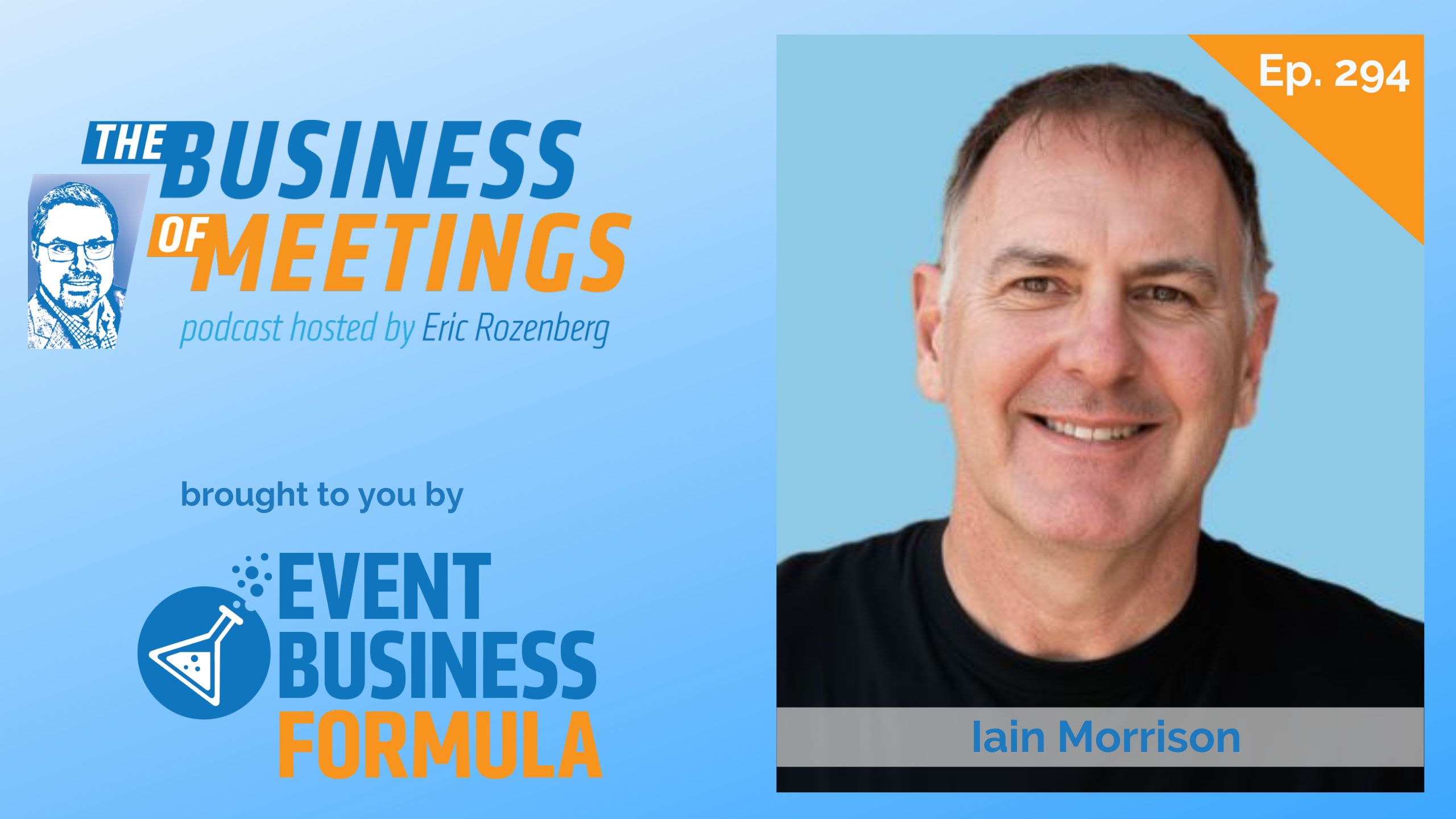
We are absolutely thrilled to welcome the incredible Iain Morrison today!
Iain has spent years working behind the scenes to help global superstars bring their spectacular shows to Australian audiences. Several years ago, he launched his company, The Imagination Collaborative. He joins us today to share his journey and insights from his remarkable career in the events industry.
Iain’s Journey
Iain built his career behind the scenes of the world’s biggest concerts, working with global stars like Pink, the Foo Fighters, U2, Taylor Swift, and Adele. After decades of running large-scale productions and managing hundreds of people, he founded The Imagination Collaborative, a company that uses advanced digital technology to plan and visualize major events. His shift from being constantly on the road to leading a remote, tech-driven business reflects both the evolution of the events industry and his own desire for a balanced, meaningful lifestyle.
Precision and Planning with Digital Technology
Iain’s company uses 3D modeling and digital twins to map out event infrastructure with extreme accuracy, reducing costs, saving labor, and improving efficiency, especially for large outdoor venues where terrains vary.
Shifting from Onsite Chaos to Remote Work
After years of managing massive productions, Iain now relies on digital connectivity, operating primarily from his home. While he appreciates the quiet and flexibility, he sometimes misses the high-energy, in-person collaboration of event sites. To stay connected, he plans to visit more live events this year and reconnect with the colleagues who have been part of his professional life for decades.
Balancing Work and Lifestyle
Iain designed his business around the life he chose to live, not the other way around. He and his wife have embraced remote work, even traveling across Australia in their caravan while managing operations. For them, success means sustainability, freedom, and presence rather than building the biggest company possible.
Life Lessons and Priorities
The sudden passing of a colleague prompted Iain to reassess his priorities. He realized that waiting to enjoy life after years of overwork is a dangerous gamble. He now focuses on being fully present, spending time with family —especially his new grandchild —and creating a business that supports a fulfilling life rather than consuming it.
Defining Success on His Own Terms
The Imagination Collaborative is thriving financially and creatively, but Iain measures his success by its alignment with his values. His goal for the next decade is to collaborate with people who are passionate about technology and purpose-driven event creation. For him, growth is secondary to quality of life, enjoyment, and meaningful relationships.
Lessons from a Year of Growth
Iain admits that the first year of running his company was exhausting due to global clients and time zone challenges. Yet it taught him valuable lessons about boundaries, clarity, and vision. He and his wife now focus on refining their goals and using what they have learned to make their second year more balanced and efficient.
Technology and a Changing Industry
Iain credits modern connectivity, particularly innovations like Starlink, for making his lifestyle possible. With advanced processing power, cloud rendering, and real-time visualization tools, remote collaboration has become seamless. Iain believes his generation has been fortunate to witness and adapt to technological revolutions that continually open new opportunities.
The Future of The Imagination Collaborative
Looking ahead, Iain intends to continue working with top venues and event teams worldwide, helping them visualize and deliver world-class experiences. His priority is helping the right people create the right events while maintaining integrity and staying true to his values of balance and authenticity.
Bio: Iain Morrison
Iain Morrison is the straight-talking CEO of The Imagination Collaborative and one of the most trusted voices in the global event industry. With over 35 years of experience leading large-scale productions, Iain is known for his humor, honesty, and no-nonsense insights on creativity, leadership, and burnout. Ranked in the Top 1% of LinkedIn creators worldwide, his posts reach thousands who appreciate his blend of real talk, empathy, and practical wisdom. Iain’s influence spans brands like Adobe, Canva, and Zoom, making him a leading advocate for authentic, human-centered innovation in event management.
Connect with Eric Rozenberg
On LinkedIn
Listen to The Business of Meetings podcast
Subscribe to The Business of Meetings newsletter
Connect with Iain Morrison
On LinkedIn
Listen on: Apple Podcasts · Spotify · YouTube
“Think of it as a video game. Your event is a video game.”
Iain Morrison
Full transcript of episode 294 of The Business of Meetings podcast, Eric Rozenberg with Iain Morrison. Lightly edited for readability.
Eric Rozenberg: Hello and welcome to the Business of Meetings podcast. I’m your host, Eric Rozenberg. Over the years, I’ve had the privilege of helping businesses in the meetings and events industry grow and succeed. And I’m excited to share that experience with you. If you feel alone and overwhelmed, and if you’re looking to take your business to the next level, improve your strategy and sales, and connect with like-minded professionals, you are in the right place. I invite you to visit eventbusinessformula.com and join our community of event business owners dedicated to exponential growth. Now let’s dive into today’s episode.
Hello and welcome to a new episode of the Business of Meetings podcast, and today I have the great pleasure speaking with someone. When you go to a concert of Pink or the Foo Fighters or U2 or Teles or Adele, you don’t know what’s happening behind the scenes. You don’t know the people that are actually allowing the artist and us in the audience to benefit from the concert. My guest today was taking care of all the names I just mentioned in Australia, as well as the Sydney Olympics. He’s had an amazing journey in our industry that we’re going to talk about. He’s also just created a few years ago a new company which is called The Imagination Collaborative. Ladies and gentlemen, the one and only Iain Morrison. Iain, thank you so much for taking the time to speak with me today. What time is it in Australia right now?
Iain Morrison: It’s just turned over 6 a.m., Eric. So, it’s a pleasure to be here. Really great to be on your podcast. Thank you very much.
Eric Rozenberg: So, I’d rather say good morning.
Iain Morrison: Good morning. Yes.
Eric Rozenberg: My god, you’re up early. That’s wonderful.
Iain Morrison: I am an early riser. I’d normally be out walking the dog at this time. So happy to be in your show.
Eric Rozenberg: Thank you. My first question, which I always like to ask my guests, but what is your journey? How did you come to this industry and doing what you’re doing?
Iain Morrison: My journey started back in high school. I had to select an extracurricular activity in the high school, and one of them was, I had to select three, and one of the ones I chose was to be backstage in the school theater. I thought, well, that sounds fun. I wasn’t really big on sport and already had chosen a couple of sports, so I was like, well, this will balance it out. And I got into the theater and I absolutely loved it and didn’t look back.
So there are a few kids there, bit older than me, working in the industry already, and I got an introduction through them to be a part of the industry greater, pushing some black boxes at shows back in the mid-’80s. And here I am, 30-something years later, 36, 38 years later, still here, still loving it, and it’s been a great career.
From high school I went to university, studied theater production, and then got a job straight out of there at the Sydney Opera House building sets and moving sets around, and sort of moved into outdoor events. I did a few at the Opera House and really loved outdoor events, and progressed in the late ’90s into outdoor events and outdoor event production and management. So really honed my skills from there on, and as you say, was very fortunate to do some great shows over my career. And now we’ve got The Imagination Collaborative, which is a whole new venture, which I’m sure we’re going to talk about some more in the next few minutes.
Eric Rozenberg: Absolutely. I had the opportunity a few years ago to visit the Arsht Center here in Miami, and they do, it’s a theater, but they do opera, they do concert, and the amount of technology behind and the speed at which they could change sets in, working non-stop, I mean, it’s just crazy, ’cause everyone in this industry, it’s a, you have to have somehow one of those DNA that when something’s happening, you get a kick out of it and say, “Okay, we’re going to find a solution.” But I’m sure you have plenty of horror stories, and you remember one or two that keep you up at night and said, “Okay, we need to fix this now.”
Iain Morrison: Yeah. Look, I mean, I’ve got some horror stories of stages not being built in time and trying to get the stage finished, working through the night with massive rain events where we thought we’d never be able to open the show, and you just work tirelessly to get the production open. Over the span of my career, what I can guarantee everyone will happen at an outdoor event is something is going to go wrong. It’s almost guaranteed. And especially nowadays with climate change and major weather events, there’s always that chance that you’re going to get hit by weather or extremes, and you just try and find a way through. But yeah, no, over my career, I’ve had some pretty harrowing experiences where you just make it by the skin of your teeth, and it’s like, well, but that becomes Friday, right? It’s just another day of the week when you choose to do these major events.
Eric Rozenberg: Absolutely. I recently saw what happened at Tomorrowland in Belgium, that the stage burned the day before, and if I’m not mistaken, it was Metallica who was finishing their tour. I don’t know if it went in Spain or somewhere in Europe, where they actually brought all the equipment overnight and just build the stage there, which people don’t see. All of us in this industry, and anybody’s listening, I’m sure had the question from the friends or the family, what is exactly you’re doing? And actually without us nothing is happening, right?
Iain Morrison: It’s the beauty of our industry, is it’s incredibly small and tight-knit, but still being huge. I mean, what we do around the world globally is a massive industry. But there is always that camaraderie where if something’s going to go wrong, there are people there that will help you out and work tirelessly.
And I think Tomorrowland’s the perfect example of that, where just huge unforeseen disaster that in any other business people would have shut shop for 6 months and gone, “Oh, we’re really sorry. We’re devastated.” But literally overnight, here’s a new stage. We’ll just destroy the old one in the background to make it safe. We’ll bring in this new stage, put it in front, and we’ll still do a show. And I think people enjoy that almost more because you have a story to tell about it as a patron. “Well, remember that Tomorrowland where the stage burnt down and they put this little stage in front, and it was the best day ever.” It’s something. It’s part of the story. It’s part of the journey.
And yeah, I think that just goes to show how great our industry is at coming together and solving problems. And that’s been my experience through my career, and I was giving somebody advice the other day to say, look, if you find yourself in a situation where you are rained out or your show can’t go on, because they were very time-sensitive, so go and talk to people with shows on around that period to see if they’ve got a quiet night where, if you did have a cancellation, if you could reschedule for a few days later at a different venue and use their infrastructure, because that’s the sort of thing we do. And that’s my experience over the industry, over my career, is we just help each other out, and the show must go on, and it’s what we’ve…
Eric Rozenberg: Yeah, absolutely. And the show has gone. It depends where. I remember being at the Hard Rock, what’s the name of it now, in London, in Hyde Park. Oh yeah, the name’s escaping me now, but a fabulous event, several days, at Hard Rock Calling in London. And it was, I think, was it Bruce Springsteen and Paul McCartney, something like that? Both of them. 11 p.m., boop, they pulled the plug because they cannot do it later. And I was just like, really? Is that how you were organizing this? It was just insane. But anyway, it was just an anecdote there.
Iain Morrison: Yeah. [laughter] And I think that’s, I mean, that’s been the downside of events, outdoor events, over the last 10 years. It’s becoming very difficult to find homes for outdoor events because of noise regulations and council rules. You’re a lot more restricted in what you can do, when you can do it, how you can do it nowadays. And so a lot of these big stadiums and shows have very strict curfews, and literally will pull the pin on the power if you go a minute over. And we’ve had that situation where we had to have awkward conversations with artists going, “This is the rules. This is what we’ve signed up for. You’re part of this journey as well. You’ve got to comply.” And obviously, yeah, you found that out with that show.
Eric Rozenberg: Yeah, absolutely. Is there anything with all the major events, those concerts that I mentioned, the Olympics, is there an event that you always thought, “Ah, I wish one day I could do that”?
Iain Morrison: I think there’s a lot of events I look at and go, “Wow, that’s incredible. I’d love to be involved with that.” I did a show on a small island in Sydney Harbour probably 15 years ago now for the Foo Fighters. And we built this tiny little stage that was about the size of their normal drum riser, just to give you some idea of scale. And there were 300 competition winners that won tickets to this show, and it’s called Wasting Light on Sydney Harbour, and I think it’s still on YouTube if people want to have a look. And literally the band went up on stage and played requests pretty well for 3 hours, and it was just the most incredible show of my career. You just don’t get these sort of opportunities very often.
I have done a few unique shows like that. We did a show with Bon Jovi in Darling Harbour. I think it was in, God, it would have maybe been in 2001, where we put them on a barge and literally just announced Bon Jovi busking in Darling Harbour and got 20,000 people to this show. But this Foo Fighters one was just incredible because for me, I’ve never had that experience again in my career where such a huge band has played to such a unique environment.
Everything on this island had to be hand carried across the island. There was no forklifts. We had to barge it out and every piece of equipment had to be hand carried. We used little lead ingots for the stage and the guys moved them with little hand trolley across the island. There was no machinery, nothing. It was back to basics, and it just made that show so incredible for me because it was the work that went into it, the environment, the band that was involved. The band was so incredibly good about it. They just played requests. And I remember at one stage Dave Grohl got his, almost his doppelganger, up on stage and drank beer with this guy, and the guy lay across the monitors as Dave serenaded him, and it was just a really relaxed show, and you’ll never see shows like that from these sort of bands very often. Was pretty unique.
Eric Rozenberg: That’s amazing. Do you have the opportunity to really enjoy the concert when you’re there, or are you always like looking what’s going on? Is there anything happening?
Iain Morrison: Yeah, look, I think the majority of the time you’re either doing one of two things during the show. You’re putting out fires that inevitably always happen when you have huge numbers of people in a confined space. They will find the pressure points and they will find out how to break the event somehow. That’s just what humans do. Or everything’s going really well and you have a minute to have a rest, and so [laughter] you try and take that moment of silence and go and have some food or relax.
But I have always tried to take some time during the event to enjoy it. I think that’s been really important for me over the years, is to appreciate what we’ve done, because you work so hard and it goes by in an instant, the actual event. It’s very hard to take it all in and just enjoy it. So I made it a practice to take all the staff out of the office and get all the crew together and go and find somewhere to just spend 5, 10 minutes watching the show as a team, to enjoy what we’ve built, what we’ve created. And I think that’s important because you can sometimes lose sight of what it’s about.
Eric Rozenberg: Yeah, absolutely. And then you did that for many, many years, and then the pandemic hit, and I know that Australia was extremely strict. How did you survive that?
Iain Morrison: Well, the truth be told, our industry struggled to survive, especially in Australia, I think, and that’s something I’ve talked about a lot recently on LinkedIn, is the challenges of COVID and the challenges of the comeback from COVID, the pandemic. Our industry was the first to shut down. I remember we were building a show. We had a heap of events on that period of time and we’re really, really busy. It was one of our busiest summers ever, and we had a couple of K-pop shows, and they were the first to cancel, and they cancelled really early, and we were typical Australian attitude. “What are you doing? This is not going to come here. You’re being crazy cancelling.” And the promoters were like, “No, no, you don’t realize how bad this thing is. This is coming to Australia. It is bad.” And we were like, “Surely, you’re cancelling weeks out from the show.”
And these promoters were very adamant, and they were Asian K-pop promoters. So they sort of were getting the information from their community on how bad this was, and that a lot of their community wasn’t able to return to Australia for these shows because they were students, and we were just in the summer break, and a lot of the students had gone home for the break.
And I remember standing on the Sydney Opera House forecourt. We were building a show, and the promoter calls and says, “Look, the artists have just turned the plane around. They were halfway across the Pacific Ocean. They had just enough fuel to get home to America. They made the decision to turn the plane around. Show’s over. Pack up.” And we were sitting there at Circular Quay in disbelief, looking at this cruise ship that had docked in Circular Quay in Sydney. And it turns out that the majority of COVID cases that came into Australia were on that boat. Yeah.
So it was a tough time. My business partner and I had done a deal just before COVID to actually sell our business. We had done a handshake, but nobody had signed contracts. So we were lucky that that sale went through probably mid-December for us, but as a business and as an industry, we’d been struggling. We sold that business, went to work for the new people for a while, and then went back out and started doing other events, and probably a year and a half ago now, just about 15 months ago, we started The Imagination Collaborative, which is a complete pivot for us.
So I started, when I left the business we sold, I started doing some work with a colleague in the States and some other people around design, a lot more around the design and the CAD planning, and I realized that the technology was advancing so quickly, and what we were doing in the entertainment industry wasn’t really keeping up with that technology advancement and in design and previsualization. So we started The Imagination Collaborative, and we specialize in previsualization of major events. So showing people exactly what the event will look like in the environment before you step on site, and…
Eric Rozenberg: Absolutely. I have a question just before we get into that, which…
Iain Morrison: Yeah, go for it.
Eric Rozenberg: Very interested as an entrepreneur. So you’ve been on the road, you know the industry from A to Z, and you identify a problem, and if I’m not mistaken, you identify the problems that sometimes people are starting to build something and realize that it’s not working. What is exactly the problem that you identify? And then I’d love to know what was going on in your mind in terms of should we do this business or should we not?
Iain Morrison: This is an interesting one, and it’s been, I think, the wildest ride of my career so far. So the problem we identified is that for most of my career I have stood on site with clients who have gone, “Oh, I don’t like that stage there. Can we move it over here?” or “I didn’t think it would look like this. Are we able to change that?” And these, they’re not small changes, right? I have literally moved stages. I’ve moved huge, huge amounts of infrastructure. We’ve built more infrastructure overnight. We’ve spent ridiculous amounts of money changing things on site because clients had a very limited visual capacity to understand 2D site plans, or renders just didn’t look like they were going to look, or didn’t look like it would look once it was built.
There is a huge gap between the design process in a lot of events and what happens on site and the reality, let’s call it. And we plug that gap. So, we model the venue and the infrastructure and show people exactly what it’s going to look like months ahead. So, think of it as a video game. Your event is a video game. You can walk around in first person and you can see it from every seat in the house, and we can show you what it’s going to look like in the rain or the fog, or what cameras.
So, if we’re doing a golfing event, we can show you exactly what the camera will look like down the 18th fairway before a camera tower’s built, before the infrastructure’s in place, all the sponsor signage. We can show you what it’s going to look like at the Formula 1 from turn six from the corporate marquee when there’s no course, there’s no track built. It might be a street circuit, for example. So, that’s really what we’re doing. We’re showing people exactly what it will look like in an immersive environment.
The majority of what we do is pixel streamed over the internet. So people can access it from anywhere. Don’t need anything apart from an internet browser. But we can do it in virtual reality as well. We just find people don’t have access to virtual reality equipment. So for us, it’s been important to stream that from the internet.
Eric Rozenberg: Amazing. So you’re identifying this gap. You obviously know extremely well the industry. You see the technology. How did you find your first client?
Iain Morrison: Well, that’s where we started, with the client, and we started developing the technology to solve a problem with them. So, I was very fortunate that we were doing events at the time, and I’d just left the other business, and a client came to me and said, “Look, can you help with this project?” I said, “Yeah, no problem.” So, we started working on the project and we kept running into problems, and I’m like, we need to show you more what it’s going to look like.
So, the problems we were running into, we were modeling structures on a golf course, but nobody knew how much scaffolding they needed to take, and nobody knew how much branding there was going to be, and they were ending up with all these trucks full of scaffolding and infrastructure traveling around the United States that they didn’t need, but they were taking just in case. So, they’re spending hundreds of thousands of dollars on infrastructure and trucking. And we realized that we could model the golf course in high-resolution 3D with drones and then model the infrastructure in 3D CAD and give them a lot more accurate quantities.
But from there we also realized that we could do a lot more with that technology. So we could really start creating these high-resolution 3D models that people could navigate. And then we started creating digital twins. And the difference between a digital twin and a 3D model is really, a 3D model is just there and you navigate it. Whereas a digital twin, you can interact with it. You can move things, you can change things, you can show. So, we can show people not only what it looks like, but they can go in and they can move furniture around, or they can change the signage, or from that camera tower I was talking about, you can change the cameras and you can change the lenses and you can interact with the model in real time and get real feedback from it as to what those changes will look like, or the effect of those changes.
So we went through this process with the golf and with a number of other clients, where we’ve just iterated and iterated and worked with the technology, and we’re now at a point where we can create pretty well any event in any environment. And for us, we now look at how we can use that for big events to educate operations teams and security teams and people.
So, new venues, you might have a venue that’s going to open in a year or two and you want to train your teams and have them understand, because when somebody builds a new venue nowadays, there’s a very short window of time between the completion of the building and when people want to open it. Nobody wants to chew up time training and onboarding and within the environment. That’s a very expensive way to do it. And often builders will run late and clients have bookings. So you need to get those teams to understand how to move around the venue, how to interact with it, what the kitchens will look like, what the storage areas will be, how you’re going to move infrastructure around the building, how every room’s going to be laid out. And we can do that.
So we take those models, create digital twins from them, and then people can use them for training, for education, for sales, to show clients what the space will look like finished 2 years ahead of time, but not from an architect’s point of view, from an operational point of view. So we can change it from a theater seated layout to a ballroom to a conference, and really give those people that interactive ability to be able to feel and see the venue in an immersive environment.
Eric Rozenberg: That’s fascinating. Absolutely fascinating. And you can apply this to any big events or sales meeting or product launch or whatever it is. You’re mentioning about the golf, so I suppose you have to do the digital twins, they have all the dimension or picture or something like the Google car going in all the streets. And how do you duplicate that with any venue in the world? What do you need? If, I don’t know, Madison Square Garden in New York wants to do something, they need to give you a certain number of information, measurement. How does that work?
Iain Morrison: Yeah. So, we work fully remotely. Our business, we employ people all around the world. We don’t go to sites. I mean, we will if you really need us to, but we don’t need to go to sites. We work with clients. They either have plans or models that exist of their building or environment, or we need to create them. So, we’re working with a client at the moment who is building a new building, and the builder has pretty detailed BIM models and plans that we’re able to use. If it’s an older venue, then we’ll need to scan it somehow. Outdoors we scan with drones. Indoors we scan with backpack scanners and tripod scanners. Just depends on the environment. Or you might have CAD models already existing of the space that we can use. And we then turn those models into digital twins where people can interact with them.
And the digital twin technology is still advancing incredibly quickly. And we’re working on technology at the moment where we’ll be able to accurately model crowds and understand how people move around events, and really be able to use these digital twins as tools for advancement of events, to be safer, to be better, to be designed more with the human in mind, from past experience versus my opinion of how it should be designed, because at the moment there’s very little user experience goes into designing events.
It’s a lot of how people might move around the event as a heat map, but not as an individual. So the movement studies at the moment show people moving, but it doesn’t show individuals moving, the individual journey. It shows where that group of people might have come. They might have dwelled for a period of time. They might have moved on, which does help to inform design, but not as much as individual journeys do. And that’s where we’re looking at the technology advancements at the moment.
Eric Rozenberg: Yeah, it’s mind-blowing. I remember a few years ago seeing the heat map, and I thought, oh, this brilliant. But now, no later than last night, I had the dinner in Fort Lauderdale, get out of the parking, push the button, and didn’t touch anything until I was home. It’s fascinating technology, what you can do today and the speed at which it’s analyzing the data. But in your case, what I think is amazing is that you also are able to give like production sheet and telling people how much they should be having or producing, the resrve, that it’s everything for the execution of the plan with more data.
Iain Morrison: Yeah. Look, and we’re, especially in outdoor environments where there are huge topography changes, and golf courses are a great example, but any outdoor site where there’s undulation, slopes, we’re able to accurately plan infrastructure within an inch or two in the vertical, and in the horizontal plane looking straight down, we’re pretty well millimeter accurate. So, we can tell people very accurately how much scaffolding they’re going to need, or how high the tent legs need to be, or how much flooring they’re going to need, which nowadays, with the cost of labor and transport and infrastructure, being able to reduce those costs on major events more than enough a lot of the time pays our bill. Plus, you get a lot of savings out of it.
But you’re able to use this as so much more than an operations tool. It can be a sales tool. It can be a training tool. It’s a risk management tool. There’s so many hats that digital twins can wear, all from the one space, because you’re creating an accurate environment of the event. So many teams can use it in so many different ways to be able to execute their job.
Eric Rozenberg: I’m listening to you and I was thinking, here is someone that was on the road all the time, that was going to different site all the time, and who basically can work from his garden, from his patio, from living room. How does that feel as an entrepreneur, in terms of, you were interacting with a lot of people, you’re traveling, and now your life has completely changed?
Iain Morrison: It has. And it’s a little bit of a weird sensation some days. I’ve gone from running major events two years ago to now sitting here talking to people through a screen a lot of the day, and we would have teams of hundreds and hundreds of people I would deal with on a daily basis. Some days the silence is very nice. That’s it, but on other days you really do miss it. It’s one of those, where’s the chaos?
So Eric, we’ve done a lot of traveling this year, in the last sort of 15 months. So that’s been great. We’ve just spent 10 weeks on the road in our caravan traveling around Australia. I couldn’t have done that previously. Well, I could have, but not to the extent that we do. I would have always had to have been on site visits or somewhere for in-person meetings. So I would have been very sort of back and forth. We get to, because we work remotely, get to enjoy life a lot more. We can work from anywhere. So, it’s a balance, right? You miss part of the lifestyle, but you enjoy the other part.
And actually, last summer I didn’t go to a lot of events. I didn’t do a lot, to be honest. I mean, I worked a lot, but I didn’t get out of the house a lot. This year I’m being a lot more purposeful, and I’m going to go visit more people doing events and really immerse myself back into that environment a little bit more, just to have that connection with my friends and colleagues that I’ve spent 35 years, 38 years, however long it’s been, living my life with, because they’re a huge part of my life, even though I’m not in it day in, day out anymore.
Eric Rozenberg: Yeah, thank you for sharing that. And that’s to me the positive side of, even all the technology, the AI, everything you want, people want to come in person. And for any solopreneur or small business owner listening, Iain and I, we’ve been there. It’s great to have some silence. It’s great to be managing the time you want, or I have the impression you’re doing it, and we’re all human. So make sure you’re blocking two, three times a week to get out to see other people. Which leads me now to the future, and mainly the last question I’d like to ask you today. You have now somehow come together with all your experience and merging the technology, the future, the industry. You’ve identified a problem, a gap, and you’re solving that. How do you see your business in the next 10 years?
Iain Morrison: That’s a great question, Eric, because we’re in this stage, sort of transition phase now, where we hit the ground running and we sort of created all this momentum, and we’re keeping the momentum going. But 15 months in, and we’ve just, for this last 10 weeks, been, as I say, just traveling, and my wife and I have sort of reflected a bit on the last 15 months and what we’ve done well and what we haven’t and where we can improve, and it’s been an interesting time to just take that time out and reflect and sort of work out where we now want to go.
And I think for us, our business is about our lifestyle. And it’s not about having the biggest and the best and the most amazing business in the world. It’s about a business that can sustain how we want to live and how we want to show up every day. And that is what is really important to us at the moment, is we’re in our 50s, and had a very sobering experience with a contractor who we actually only started working with recently, and she unfortunately was diagnosed with cancer. She was my age, and 3 weeks after her diagnosis, she passed.
Eric Rozenberg: Sorry.
Iain Morrison: No, it’s okay. You realize it’s like, well, hang on. If I work my ass off for 10 years and then I want to retire, what happens if that happens in the meantime? I want to live my life now, for where I am and where I want to be present. We’ve just got our first grandchild. So, our business is there, thank you, is there to sustain our lifestyle and to make sure we live our best life. And we want to have a fully remote business. We want people to work with us that enjoy what they’re doing and are in it for the right reasons. And I think of Greta and that experience where she passed so quickly, and yeah, we just want to make sure we’re making the most of it. So we’re focusing our vision around that, and our vision for the business, and that’s what’s important for us.
And this business is, we’ve done really, really well in the first year as a startup. We’ve just, in Australia our financial year is June to July, and we actually sat down with the accountant two days ago and went through all the financials, and for a startup in its first year with a new product, we’re really, really proud of what we’ve achieved, and we’ve learned a lot of lessons. It’s been a huge roller coaster ride. It’s been absolutely crazy. But we’ve done really well, and for us, we can’t ask for any more than that. We’ve got some amazing people that work with us. We’ve got some amazing clients. We’re really proud to be a part of their events.
And yeah, so for us, I think the next 10 years is really about working with people that get excited about the technology, get excited about how they can apply it to their events, and are happy to work with people like us that are here to deliver an amazing job, but in the way we want to do it, and we want to live our life and own a business.
Eric Rozenberg: I totally resonate with what you’re saying, and I have a lot of friends that, “Oh, I’m building the next unicorn,” a company valued a billion dollars, and you know what? I’m happy for you. I couldn’t care less. I think for me, it’s, first of all, thinking about your business in 10 years is always helpful to make decision today, or in the next three years, does it fit or not. And this for me is the balance between people that are telling me, “I don’t want to grow. I don’t want to have additional employees because I like the life I had and the time that I’m managing myself.” I said, “Yes, but what if you can hire a little bit of people that can do the things that you don’t like to do, or that you can focus on what you like?” And the other opposite, which is like profit and grow at any cost and having no life. It’s always for me, at least, is always a difficult balance between the two, but that’s what makes life interesting.
Iain Morrison: It is a huge thing to get right. And Eric, over this last year I have definitely not got it right. We’ve worked really hard and there’s been some huge hours. But I know from my previous businesses and 20-something years of owning business that the first year is very hard to get right at any point, especially where new business, new technology, had no idea how things were going to pan out. And we went global from the start, because our first clients were in the United States, and then we had interest in the UK and the Middle East. We were global. And so there’s been a lot of travel. There’s been a lot of working with incredibly varied time zones. Being in Australia, really, that’s tough.
And so there’s been a lot of lessons over the last year, and for us now it’s just about taking those lessons and applying them in our second year and hoping we do better at the end. But it’s like a roller coaster that you keep finding that middle spot and go, “Oh, that was great. I want to get back there.” So, yeah, I think it is, but you’ve got to be clear on what you want. And my wife Tristan, she’s fantastic with this. She’s like, “But you’re not being clear on what you want. So, how do you know how to get it?” And so, we’re getting very clear on what we want at the moment. And yeah.
Eric Rozenberg: That’s awesome.
Iain Morrison: I think that’s the most important.
Eric Rozenberg: I agree. I totally agree. And I’m somehow in the same situation, that after developing and exiting several small businesses, I did something last year that I swore I was never going to do again, which was starting from scratch. So, I get it. And this week now, I’m actually launching my own AI, which is insane based on everything I’ve done. But again, those are opportunities with technology that were not existing before, just like your business would not have been possible the way you’re doing it 10 years ago, even 5 years ago.
Iain Morrison: No, not at all. I mean, love him or hate him, Elon Musk and Starlink has changed the way a lot of us work everywhere. And for us to be able to travel remotely around Australia and the world and still be connected the way we are right now. I mean, I’m in rural Australia. We live on acreage, and if we didn’t have Starlink, I wouldn’t have a business. It’s pretty well that simple. Or certainly not a business doing what we’re doing with the technology we’re doing it. And that rolls across so many, the visualization, the servers and the processing power that we have nowadays, and the video cards, and all of that technology is just falling into place. Pixel streaming, and the list goes on, of, in the last four years, 5 years, these pieces have just fallen into place.
And Eric, I hope we’re not going on too long, but I’m sure you’ve experienced this. So I always say to people, I feel like our generation has been very fortunate that we grew up in the ’80s, where you could ride your bikes and there was no mobile phones or Facebook or videos. You could be young and have fun and disconnected. But then we grew up with the advent of the personal computing, and just as we needed it, computers became powerful and allowed us to do great business. And then mobile phones came in, and then the internet came along, and we’ve just been on this crest of technology development, and here we are now in AI, and you as a 30-year-old are releasing your own AI, and that’s fantastic. Never before have we in our generation been able to sort of, well, I say never as a generation before, been able to take advantage of technology advances and hiring people all over the world.
Eric Rozenberg: Yeah. Yeah. I think two things now. The first thing is, you mentioned the ’80s, we have to be honest with that, is the best decade for music ever. There’s no debate.
Iain Morrison: Absolutely.
Eric Rozenberg: But the second thing is, we’re talking about Elon, Starlink in Australia, and I was thinking he’s just missing something. So, how to get rid of spiders and snakes. So, that’s another story for that.
Iain Morrison: I got to tell you, though, I mean, we’ve got snakes on our property and they keep the rats and the mice away. So, I don’t mind them. [laughter] I hate rats more than I hate snakes.
Eric Rozenberg: So, that’s true. That’s true. Iain, before I ask my last question, how can people get in touch with you and The Imagination Collaborative?
Iain Morrison: They can probably Google The Imagination Collaborative or go to theimaginationcollaborative.com. I am on LinkedIn, so they can look, Iain Morrison one, number one. Iain Morrison number one on LinkedIn. And they can probably, hopefully, get a link off your bio, podcast, or something through you if they really get stuck. So yeah, they’re happy to talk to anyone and see how we can help them.
Eric Rozenberg: My last question. In one year, if we sit down together with a bottle of champagne or a can of Foster’s or Stella, what are we going…
Iain Morrison: Is that still around?
Eric Rozenberg: What’s that? Sorry. What are we going to celebrate in one year?
Iain Morrison: Ah, that’s a great question. I think what we’re going to celebrate, I’ve got a couple of things coming up which I can’t yet announce, but stay tuned. Watch this space, because I think that we’re, my wife and I are also doing a couple of other things in the background. So, there’s going to be a couple of huge things we’re going to celebrate.
But I think in terms of The Imagination Collaborative, I think what we’re going to celebrate is a huge second year. I think we’re going to really have helped people deliver some great events. We’re working with some fantastic venues now around the world in helping them show people better their venues before you get to site. So I think for us, what we’ve realized in the last 10 weeks is it’s not about growth. It’s about helping the right people deliver the right events or the right environments. And for us, that’s really what we’re here to do, is to help people deliver amazing events. And I think if we can do more of that, we’ll be super happy.
Eric Rozenberg: Wonderful. Iain, thank you so much for taking the time so early in Australia, and I look forward to seeing you in person at one of the industry show.
Iain Morrison: Yeah, Eric, it’s been such a pleasure. Thank you so much for having me on, and all the best. I’ll stay in touch for sure.
Eric Rozenberg: Thank you for tuning in to the Business of Meetings podcast. I hope you found today’s episode valuable. If you enjoyed the show, the most important thing you can do is leave a review and share it with your colleagues. It really helps spread the word. I truly appreciate your support. And if you’re ready to take your business to the next level, don’t forget to visit eventbusinessformula.com to learn more about how we are helping event business owners like you. Thanks again for listening, and I’ll see you next time.