
Have you ever felt that a client was not the right fit for you, yet you ignored your gut feeling and worked with them anyway?
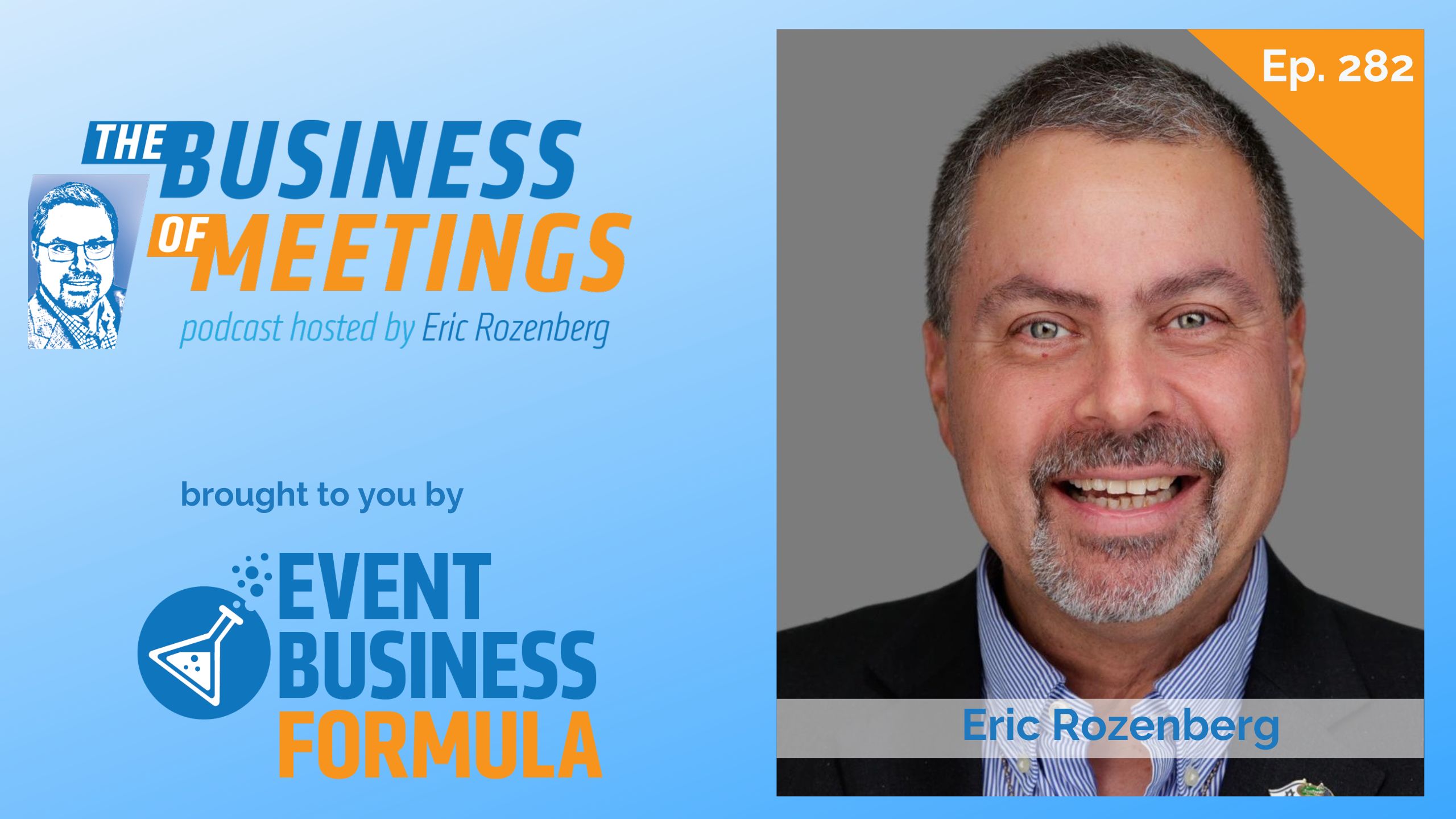
In this episode, Eric shares two examples of similar situations he experienced in his professional journey, explaining how he handled them and what he learned along the way.
Trust Your Instincts
It is essential to recognize when a potential client or project does not align with your values, standards, or business model. Ignoring your instincts when your gut tells you a client is not the right fit will likely lead to lots of frustration down the line.
Know Your Worth
Never compromise your pricing just to win business. If a client pressures you to reduce your fees, always stand firm when you know your pricing is fair and reflects the quality of your work.
Let Go When Respect Isn’t Mutual
Walk away from clients who fail to respect your work. Even though it may feel risky, it will protect your integrity and lead to better opportunities.
Set Clear Boundaries
Define the kind of clients you want to work with and the fees you need to sustain your business. By filtering out unsuitable clients, you ensure your business remains profitable and focused.
Deliver Exceptional Work
When you commit to a client, always over-deliver as your excellence will earn trust and repeat business.
Long-Term Thinking
Prioritize sustainable relationships over quick wins. You may miss some deals that way, but you will build a stronger and more respected business over time.
Understand Your Clients
Take the time to understand your client’s needs, goals, and expectations. Always ask the right questions upfront to ensure your offer aligns with their objectives and avoid future misunderstandings.
Communicate Your Values
Be clear about how you work, your expectations, and what your clients can count on. Transparency helps to establish trust and discourages potential clients unaligned with your approach.
There Are Always Better Clients
Do not hold on to difficult or undervaluing clients out of fear. There are many respectful and collaborative clients out there who are willing to pay fair rates. When you are clear about the type of clients you want to attract and learn to say no to those who are not the right fit, you create space to find partners who truly support your values.
Bio: Eric Rozenberg
Eric is a business builder and the founder of Event Business Formula, the only platform exclusively dedicated to helping and supporting business owners in the Meetings & Events Industry. He has helped thousands of entrepreneurs grow and manage their businesses better.
For two decades in a previous life, Eric has consulted with Fortune 500 companies and produced award-winning sales meetings, incentive trips, product launches, and conferences in more than 50 countries across diverse industries.
His podcast “The Business of Meetings” is the first podcast in the Meetings & Events Industry dedicated to business owners and the largest source of free information, with over 240 episodes and fabulous guests.
His first book, Meeting at C-Level, is the first book on the Why of a meeting. Twenty of the most influential leaders from the corporate and association worlds endorse this book.
His second book, Before It’s Too Late, A Love Letter to My Daughters and America, is a story of grit, perseverance, and courage. It describes why and how he and his wife brought their daughters to America and why it is the greatest country on Earth.
Eric was the first European to serve as Chairman of the International Board of Meeting Professionals International (MPI).
Connect with Eric Rozenberg
On LinkedIn
Listen to The Business of Meetings podcast
Subscribe to The Business of Meetings newsletter
Listen on: Apple Podcasts · Spotify · YouTube
“It has to be sustainable. It has to be profitable, because if there’s no business, then that’s it. Game over.”
Eric Rozenberg
Full transcript of episode 282 of The Business of Meetings podcast, a solo episode with Eric Rozenberg. Lightly edited for readability.
Eric Rozenberg: Hello and welcome to the Business of Meetings podcast. I’m your host, Eric Rozenberg.
Over the years, I’ve had the privilege of helping businesses in the meetings and events industry grow and succeed. And I’m excited to share that experience with you. If you feel alone and overwhelmed, and if you’re looking to take your business to the next level, improve your strategy and sales, and connect with like-minded professionals, you are in the right place. I invite you to visit eventbusinessformula.com and join our community of event business owners dedicated to exponential growth. Now, let’s dive into today’s episode.
Hi there. Have you ever been in a position where you hated working for a client or you were thinking, “I should not be working with this client anymore,” or “I should not start working with this client at all”? Basically, your guts were telling you not to do it. And nevertheless, you went on, and what happened afterwards? Well, let me share with you two concrete examples that I’ve lived through my professional life and what I did about it.
The first one is about a pharmaceutical company put out a huge bid for all their conference, trade show attendance, meetings, incentive trips, sales meeting, and everything. And there was a huge, huge, huge mega bid that unfortunately we didn’t win. So as you can imagine, mad, or at least very disappointed, and just want to understand why. And I was even more mad when I was told by a lady working in the team that her boss had decided that one of the quote we gave for a senior project manager for a specific project was much too high, and she gave me the average price. And my reaction was, “But that is the quote for a junior project manager, which you see in other part of the bid. So if you do require a senior project manager, it’s obviously a different price. Now, if you decide you don’t need one, then this is the real quote.” And basically, long story short, the answer I get were not convincing at all, to say the least. So be it. I know I was not going to kill the messenger, but nevertheless, a bit of bitter taste in my mouth.
And about 2 months later, as I was in Barcelona at the airport coming back from EIBTM, she called me and she said, “Eric, I know you’re disappointed, didn’t win the bid, blah blah blah. We do have some issues with the agency who won everything when it comes to preparing the sales meeting, upcoming sales meeting, and we are wondering if you don’t want to make an offer for that.” And I was like, “Okay.” And then she proceeded and told me, “Well, it is due for tomorrow, 4 p.m.” And I said, “Are you seriously? Are you kidding me?” And she said, “Listen, I cannot go into the details. This is not just to ask you for a quote. It’s a serious one. You really have serious chances to win, but we need to be able to present something to the executive committee tomorrow night. And so, we have to have everything by tomorrow at 4:00 p.m.” So, I said, “Okay, give me some time to think about it.” And I reached out to my partners, the DMC. And they were still in Barcelona. They told me, “Okay, we have the bandwidth to work on it tonight.” And the whole night actually, we were working to do that. So, I called her back and I said, “Okay, we’ll put an offer.” Next day I put an offer and they decided to work with us. So it was a fantastic news, obviously, and we ended up doing one of their most successful sales meeting according to the same criteria they had to measure in the last six or seven years. We did that in Marrakesh. It was absolutely phenomenal.
6 months later, I’m going back to that company and I have a meeting with her boss. So the guy in charge of all the meetings and events for the company, and we’re sitting down and he is telling me about the next sales meeting. I’m taking some notes. I’m asking some questions, and before we end the meeting, he said, “By the way, you’ll have to reduce your fee of 30%.” And I said, “Excuse me?” “Yeah, you need to reduce.” I said, “Listen, last year you called me at the last minute. I didn’t took advantage of it. I deliver an amazing program based on your own criteria. It was the most successful sales meeting in the last six, seven years. Why would I even think about reducing the fees, which is very fair?” And then he looked at me, “Because if you want to get the business, that’s how it goes.” And I went, “But if I run at that rate, it’s not sustainable. It’s not profitable. And what are you going to do if the company goes belly up?” And he looked at me, said, “Well, I’ll find another provider on the internet.” And I was like, “Okay.” So, I stood up, shake his hand, say, “Thank you very much. The meeting’s over.” He said, “What do you mean?” I said, “I’m done. You obviously don’t realize or don’t appreciate the value we’re bringing. I’m done. Goodbye.” And long story short, a few months later, the guy was fired, and there was some unethical thing on his side that provoke him being fired.
So yes, it was extremely disappointing, and in the meantime, that allows us to have more time and to start more prospecting and basically land new clients that we work with for many, many years. So bad thing, good thing, you never know. It happened to be a very interesting and very profitable situation.
So that was one. The second example I want to share with you, it’s a specific company that was doing incentive trips every year, and I’m talking several hundred people, and I always refused to make a bid for them. And one day at the trade show, I saw the head of the events, and he knew about everything we were doing. Obviously, we’re one of the best, if not the best, agency in Belgium and in Europe. And so he said, “But why are you never bidding with us?” And I said, “Listen, you have a game. You are enjoying reducing the fee of your agency every year, and it’s a game you’re playing that I don’t want to play.” And say, look at me with a big smile. I said, “Okay, I get it.”
And I learned during that trade show that actually a friend of mine had won the bid for that year. And I went to congratulate him. And then I said, “But I also heard that you accepted to work for such a minimal fee, giving the percentage, which was absolutely ridiculous.” And he said, “Yeah, I accepted to do that.” And I said, “Why?” I said, “My year is done.” And I look at him completely baffled, say, “So you telling me that next year, if your year is not done, you’re going to tell the client that you’re going back to a normal fee structure and you’re not going to win the game and with the business?” And we’ll see next year. Well, sure enough, two or three years later, he went belly up. But the point is, it’s clearly a lack of valuing what we doing in this industry and the value we’re bringing for them.
So I’m sharing with you those two example, which are obviously extreme, and thank God it’s exception more than the rule, but to tell you that at the end of the day, you need to decide for your own business the type of client you want to work with, but also the type of fee you want to be applying. And at the end of the day, you have a business, you have your time, you have your team, and so it has to be sustainable. It has to be profitable, because if there’s no business, then that’s it. Game over.
And in order to do that, I will always try to, first of all, know my values, explain the values and how we’re working with the client, making sure we understand their needs, asking all those questions. And by the way, I always said I have a list of the 35 questions in which I was always taking some question to get the briefing and to win the business. And if you want to get this list, I’m more than happy to send it to you. Just let me know. But so know your values, understand the needs for the client, understand what they trying to achieve. Making sure that you can deliver and over-deliver, and making sure that with all the people you’re working with, whether it is your own team, whether it’s the DMC, the vendors, whoever you working with, they understand the why the client is putting the meeting together. And that is absolutely essential in the long term. You can win one business even if it’s not profitable. That’s your choice. At the end of the day, you’re not helping anyone in the industry, and you’re certainly not helping yourself.
So when you decide the type of business you want to build, but also the type of clients you want to work with, trust me, there’s enough clients, that’s good people in this world for you to find the right clients, to find the right people, and also to find the right business so that you are profitable, you can grow your own business while serving your client. It’s a long-term game, and at the end of the day, if you want to play the game to the long term, you better enjoy working with the people you’re working with, including your clients.
I hope it’s helpful. If you have any question, let me know. If you want to join the program, the group coaching where I’m helping the solopreneur and the small business owner in our industry, reach out as well. And I look forward to seeing you on the next episode or at the next industry conference. Thank you. Have a great day.
Thank you for tuning in to the Business of Meetings podcast. I hope you found today’s episode valuable. If you enjoyed the show, the most important thing you can do is leave a review and share it with your colleagues. It really helps spread the word. I truly appreciate your support. And if you’re ready to take your business to the next level, don’t forget to visit eventbusinessformula.com to learn more about how we are helping event business owners like you. Thanks again for listening, and I’ll see you next time.