
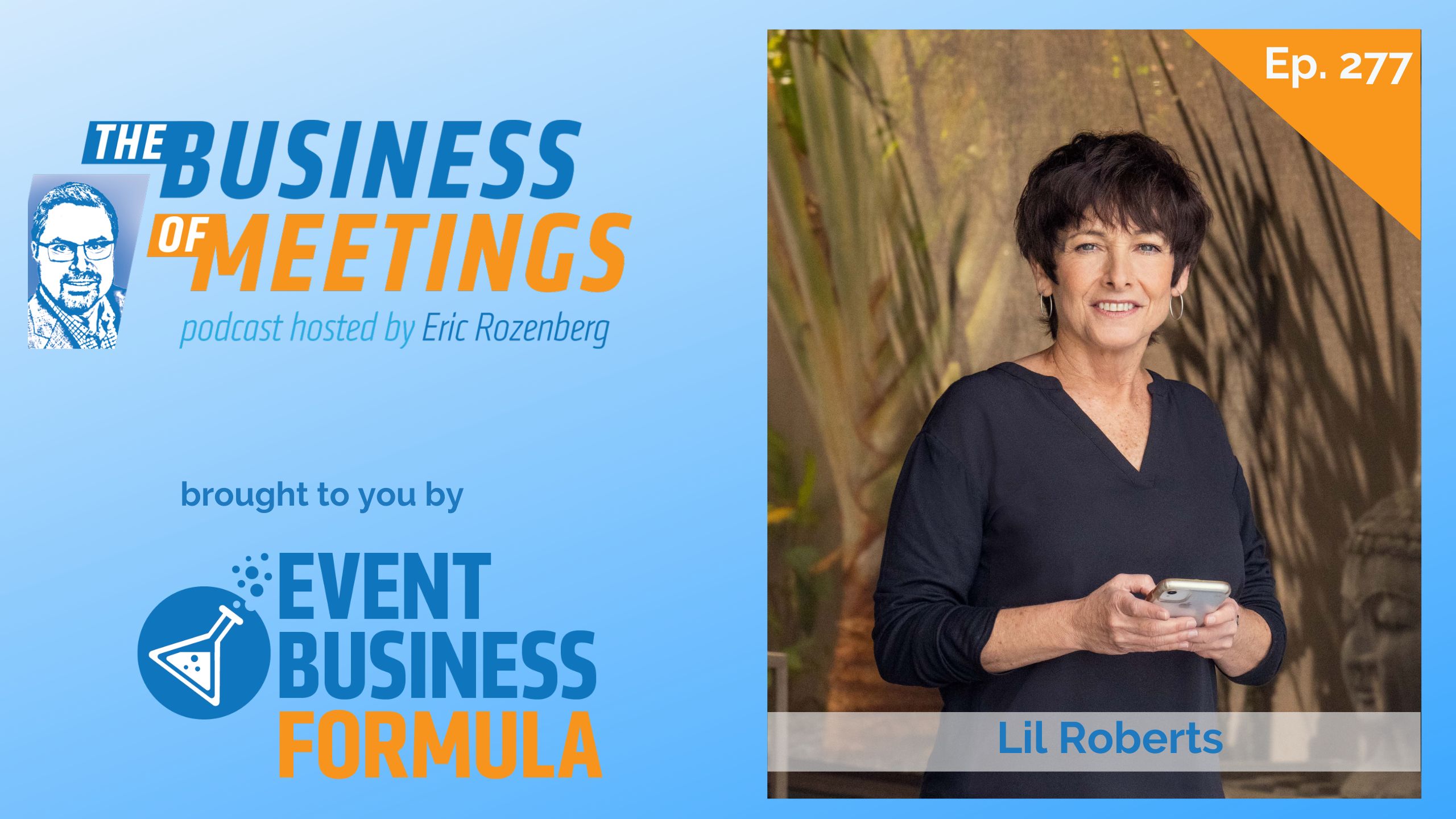
We are excited to welcome Lil Roberts, the Founder of Xendoo, as our guest today.
Lil is an exceptional entrepreneur with a sharp instinct for people and the confidence to speak the truth. She has served as President of the South Florida chapter of Entrepreneurs Organization (EO) and recently published a book called Small Business Defined: The Ultimate Guide for Small Business Owners.
Stay tuned to hear about her inspiring journey and learn how Xendoo makes accounting easier for small business owners.
Resilience, Purpose, and Heart
By the age of 24, Lil had lost most of her siblings. That instilled in her a deep urgency to live with purpose and make an impact. Her passion for business stems from a commitment to improving lives, starting with her team and creating positive ripple effects that extend beyond her company’s walls. Over the years, she has launched and led various businesses, spanning systems integration, product development, and accounting. Lil has a mission to build ventures that deliver exceptional service, foster internal culture, and empower teams. She views entrepreneurs as strategists, purpose-led leaders, and culture-setters who shape how people feel and function at work.
Building a Support System
Lil credits much of her success to her support network, especially the Entrepreneurs Organization. Her forum and broader EO network have provided invaluable guidance through major decisions, including scaling, selling, or exiting businesses. She believes no entrepreneur can thrive alone and encourages others to create a trusted circle, regardless of business size.
Knowing When to Pivot or Exit
Lil sold some of her businesses, and others sunsetted when conditions changed. She encourages business owners to treat their companies as separate entities and to make decisions based on timing, scalability, and personal fit. She does not think all businesses should get sold or that every business owner should try to be an entrepreneur, as some people are better suited to lifestyle businesses that provide sustainable incomes.
The Birth of Xendoo
After exiting her previous venture, Lil took a structured approach to choosing her next business. She built a scorecard and identified accounting as a legacy industry ripe for disruption. Her goal was to create a tech-enabled, customer-first accounting service for small business owners, combining her love of technology, her passion for small business, and her drive to scale a venture-backed company.
Using AI Smartly
Xendoo uses AI as a helper, not as a decision-maker. AI assists in transaction predictions and marketing content, but humans remain essential for oversight and quality. Lil cautions against over-automating, especially in accounting, where accuracy and context are vital. While optimistic about AI and its potential, she believes guardrails are necessary as technology continues to rapidly evolve.
A Handbook for Entrepreneurs
Her new book, Small Business Defined, is a comprehensive guide for entrepreneurs. Inspired by industry handbooks from her days in print manufacturing, the book covers HR, operations, marketing, financials, and more. She created it as a reference guide that includes tools, charts, and checklists for hands-on application. To make things even easier, a chatbot is available to assist users in navigating and interacting with the content.
The Value of Systems and Data
Lil strongly recommends adopting frameworks like EOS, OKRs, or the Rockefeller Habits for business owners aiming to scale. She emphasizes the importance of data-driven decision-making and process-oriented thinking. She explains that even if the goal is a lifestyle business, having systems in place can help free up time and increase profitability.
People First, Always
Lil considers people the most essential asset in any business, and her recruiting process is deliberate. She prefers to hunt for talent rather than post jobs, and she uses phone screenings to assess energy and character, asking candidates to reflect on the company’s core values in writing. She refuses to settle for lukewarm hires and encourages others to do the same.
A Culture Built on Action and Care
The culture at Xendoo is built around five core values: care deeply, be curious, think critically, own it, and be relentless. Their hiring process emphasizes values alignment, action orientation, and human connection, and Lil remains involved in the hiring process.
Bio: Lil Roberts
Lil Roberts prides herself on building customer-centric companies built on teamwork, technology, and integrity. A serial entrepreneur with a passion for small business, she is known as an innovator with an enviable ability to foresee market trends. After a successful exit from the manufacturing industry, Lillian serves as CEO and Founder of Xendoo, a VC-backed cloud-based Fintech company based in the Greater Miami Region.
Xendoo specializes in online bookkeeping and accounting, focusing on the small business owner. Leveraging technology and proprietary software, Xendoo provides financial visibility at unprecedented speed, enabling business owners to make informed decisions, grow their businesses, and do what they love.
Connect with Eric Rozenberg
Listen to The Business of Meetings podcast
Subscribe to The Business of Meetings newsletter
Connect with Lil Roberts
On LinkedIn
Small Business Defined: The Ultimate Guide for Small Business Owners
Listen on: Apple Podcasts · Spotify · YouTube
“We hire heart-led people who run into burning buildings.”
Lil Roberts
Full transcript of episode 277 of The Business of Meetings podcast, Eric Rozenberg with Lil Roberts. Lightly edited for readability.
Eric Rozenberg: Hello and welcome to the Business of Meetings podcast. I’m your host, Eric Rozenberg. Over the years, I’ve had the privilege of helping businesses in the meetings and event industry grow and succeed. And I’m excited to share that experience with you. If you feel alone and overwhelmed, and if you’re looking to take your business to the next level, improve your strategy and sales, and connect with like-minded professionals, you are in the right place. I invite you to visit eventbusinessformula.com and join our community of event business owners dedicated to exponential growth. Now let’s dive into today’s episode.
Hello and welcome to a new episode of the Business of Meetings podcast. And today I have a very, very special guest, somebody I’ve known for over 10 years, 11 years now. She recently served as the president of the South Florida chapter of EO, Entrepreneurs’ Organization, and more importantly, she is a terrible entrepreneur, and terrible with my French background can mean two things, and in this case she’s phenomenal. She has a sense for people. She’s not afraid of telling it the way it is. She founded Xendoo, which is a company he’s going to tell us about, helping the accounting for small business, and she just published this book, Small Business Defined: The Ultimate Guide for Small Business Owners. Thank you so much, Lil Roberts, to be here with me today. How are you, Lil?
Lil Roberts: Doing awesome, Eric. Thank you. We’ve been friends for a long, long time, and it’s been amazing to watch your journey and what a podcast you have to help people. So, thank you for having me on today.
Eric Rozenberg: Thank you so much. And my first question is, what is your journey and how did you get to do what you’re doing today?
Lil Roberts: Thank you. So my journey is to build great companies and help people. And at its core, as you look back, first of all, I don’t know about you, but the years just seem to fly by, right? And you blink and you go, oh my God, what decade am I in? How was that possible? And we’ll talk about a little bit later, I mean, I wish I was in my 30s with what’s happening in the business world and technology today. But at its core, all the businesses, serial entrepreneur, this is my eighth or ninth businesses, were systems integration businesses, product businesses, manufacturing businesses, and then now I’m in accounting. I’m not an accountant or CPA. And when you look at all the businesses, it’s really about how do you help small business owners, right? How do we help each other, business owners and entrepreneurs, on our journey of building businesses and helping communities? And so for me, the journey has been how do you build businesses that provide the absolute best customer care, and at the same time take great care of your internal team to help them on their journey of life, to learn and to grow and to feel valued. And so that’s been my journey.
Eric Rozenberg: Absolutely. Nobody does it alone. Are you coming from a family of entrepreneur? Just like me, I’m a corporate dropout. I love people, but I cannot work for anyone. When did you know that you wanted to be your own boss, that you wanted to be an entrepreneur?
Lil Roberts: Probably 18, 19 years old. So I grew up in a really tragic childhood. My dad died when I was 10. As many years as we’ve known each other, you probably don’t know this about me. My dad died when I was 10, my only living grandmother when I was 11, one of my brothers when I was 12, and by the time I was 24, three of my brothers had passed away, and I was the first one out of five kids, fourth in line, to live past 24. And so the whole time I just thought, I want to accomplish as much as I can before I’m 24, because you think, okay, you’re going to die as well when you’re 24. And I knew, with all of that tragedy and pain, I have a natural positive personality. And I have a personality that I see the world as the cup is overflowing, right? Like, it is within us. Whatever we want to do is within us. And I believe that and I live that. And so I knew that the only way that you really can do that is you have to lead. And so building businesses is leading. You’re leading your team. You’re leading a concept that you’re going to build. You’re leading communities. And there’s a ripple effect that if you provide a really good work environment for your team, that when they go home at night, instead of them saying, “Oh, I hate that bastard I work for,” and their kids hear that at the dinner table, instead they’re now able to say to their kids, “Hey, Tommy, what did you learn in school today?” or, “What was the best part of your day?” And so I think for us entrepreneurs, that it is imperative that we provide great environments, and environments that offer opportunities for the people that lean in and want to grow. So then that way it’s a ripple effect in a lake, right? Now, then they go home and they teach their kids that being productive and working is exciting and fun and you want to do that. And so that’s really at the essence of who I am and what I’m doing, whether it’s in accounting or it’s in manufacturing or it’s systems integration or a product business. It doesn’t matter to me. I’m one of those entrepreneurs that haven’t stayed in the same segment of an industry. I’ve been all over the place, good or bad, but it’s just about building the businesses, right?
Eric Rozenberg: Yeah. That explain a little bit maybe why you’re so competitive in everything you do, which I love, whether we’re in a conference and I’m going to race you on the I-95, say no way, I’m not doing that, or you’re on a pickleball court. But when you are facing those big challenge and devastating news, to your point, we have something we do with our kids every night at dinner. They have to mention three good things of the day. And even the day that my dad passed away, which obviously I was devastated, still I showed them that you can find still three good things that happened equally that day. But what you describe is extremely hard, and I think a minority of people have to fight this type of situation, cope with this type of situation. Who helped you at that moment, and is it also something that you put around you now to have advisor support system? Is there a link between those two experiences?
Lil Roberts: Yes, I believe that I could have gone one of two ways. I could have gone positive or negative when you have that much tragedy as a child, because it can stunt where you’re at emotionally, is that you have to decide in that moment, you’re going to be a victim or are you going to go after it? And so for me, maybe I think you’re born competitive. I think you’re born with certain personality traits. And so thank God I was born that way, to see no matter what’s around me, no matter how big the fire is, I’m going to get out. And when I look back, I think about my fourth grade teacher, Mr. Sirion. And he was somebody that would tell stories. And the stories he would tell were much different than the life that I was living. And so it gave me hope. And I think that as long as you find hope, and very sorry about your father, and amazing that day, you still held true to say what’s the three positive things in your day, because that’s hope, right? When you have hope that you’re going to get out of something, that something’s going to become better, your world changes. And one of my favorite sayings is that life can change in 180 seconds. In 3 minutes, you can come from the worst of the worst and be in the best of the best, or you could go from the best of the best to the worst of the worst. But the one thing to know is, no matter which way it goes, it’s always going to change again. And so it’s a matter of reaching into the core of who we are and finding that resilience and finding that hope that you’re going to get there. And if you can do that, you can conquer anything, right? We beat ourselves. So I’m so competitive because I challenge myself to be the best I can. And so every opportunity I have to see if I’m being the best I can is an opportunity I take. And I love it. I love it. So yeah.
Eric Rozenberg: Yep. As a Churchill would say, when you go through hell, keep walking, which is a quote that I love. When all the business that you’ve done, and besides, I’m sure, your forum in EO, is there any structure, process, group of advisers that you put together, regardless of the business you’ve run, that help you throughout the roller coaster of being an entrepreneur?
Lil Roberts: EO, EO, Eric. So my forum is amazing, and I’m sure from people listening to your podcast, they know about EO and they know about forum, and my forum is amazing. But I reach out into different individuals in EO depending on the need and the time. And before we got on, we were just talking about, I shared with you that my biggest struggle right now in scaling the business is creating the sales flywheel. And we have an EOer that is, no one better than him, and he has been here 4 days, 5 days now. And it’s Oscar. Oscar knows how to build sales flywheels, and he’s in just out of the goodness in his heart to come in and take his time and share to help us get there. And there’s been other times. Oliver, we lost Oliver a year and a half ago. There was a time he came in to share with me some of his insights. And of course, all of us, I mean, you could name a dozen people, we all reach out. And so to me, being part of EO, especially EO South Florida, we have a built-in advisory group for any need we need, whether it’s personal or business. And I’m 16 years in. You’re 10, 11 years in, and I launched your first forum with you.
Eric Rozenberg: Yes. And you were there as well when I had some challenges that I need to tackle with. So I never forget that. I guess my point is, for anyone’s listening, whether you’re a solopreneur or you have a small business, you can always build a group of people that are there to help you, and obviously Oscar is phenomenal. Now, are those people also advising you when you decided it was time to sell or to stop and change, and what is the process? Because I’m sure people listening, or they thinking about selling one day, or they cannot stand it anymore, or they thinking about starting something else. What was the thought process between all the different businesses you’ve been running?
Lil Roberts: So some of them I sunsetted because it was timing, right? Like, the world changed and there wasn’t going to be an exit out of the business. And that’s a topic we could talk on separately, right? Is that there’s a cost of opportunity. Sometimes people’s ego will be like, “Oh, no, no, no. I’m just going to stay in this business and find another way.” No, you have to treat a business as if it’s a separate living, breathing organism, right? And so sunsetted, some sold my interest in, and some I had a complete exit out of. And yes, there were people along the way, some of those same people that I spoke with has went through it. And I think that business owners and entrepreneurs, and lots of times people say, well, isn’t a business owner an entrepreneur? Not always. Not always. Typically, rule of thumb is entrepreneurs are all about, we’ll jump off the side of the mountain or we’ll jump off the top of the building, and we’re going to figure out how to fly on the way down. And we will fly on the way down. And we just figure that out. And that’s different than somebody who says, “I want to own a business, but I want to be able to maintain a work-life balance, and I’m owning my own business so I can set my own hours.” That’s a business owner, right? When you are scaling a business, typically entrepreneurs want to build a business for scale. When you’re scaling a business, there’s no work-life balance. Like, people go, “Oh yeah, yeah, yeah, I’m going to have work-life balance.” Yeah, let me know how it works out. You’re going to have it when you exit that business. And then what happens? I can’t tell you how many entrepreneur friends, they exit business and they say, “No, no, no. I’m not going to do anything.” Only till like two months later, they’re like, “Hey, let me tell you about what’s this new thing I’m spinning up.” And you’re like, “What?” And it’s just part of who we are, right? So what I will say is, when people go to exit a business, almost all entrepreneurs and business owners have missed an exit. And I’m no different, right? You miss it for various reasons. And I think we all have that. I’m sure you have a story where you missed an exit, right?
Eric Rozenberg: Yeah.
Lil Roberts: I have one where, had I been in EO a couple years earlier, I wouldn’t have missed my exit. Had I joined EO 2007 versus 2009, I would have a completely different path. So I think the piece of it is, you have to determine, is it a generational business? Is it a lifestyle business? And some businesses are better not to sell. You’re going to make more money keeping them. They’re a cash cow versus selling them. And some businesses you need to sell, because maybe the business needs somebody different, or maybe you need something different. I’m a scaler. We have a mutual friend, Colin, right? Colin Campbell.
Eric Rozenberg: Yes.
Lil Roberts: Colin is a startup guy. Once a business reaches a certain size, it’s boring to him, and he has to exit it. And he wrote the book Start Scale Exit Repeat. And so know who you are. I guess the tidbit I would say, and I’m sorry, I feel like I’m rambling here maybe, but
Eric Rozenberg: No, you’re not.
Lil Roberts: The tidbit that I would say to people listening today is, first order of business is know yourself and know what makes your heart sing, what drives you, and then go from there. And don’t have any judgment on what drives you, right? Like, I’m not driven by money. Money will come. It’s part of success. But if you’re somebody that’s listening and they’re driven by money, well, then know that that’s what you’re driven by, and then build your business around that.
Eric Rozenberg: You make me think, first of all, the book Psychology of Money, which I love. A different chapter, and one chapter is “How Much Is Enough?” It’s telling the story of the former global CEO of the largest consultancy firm, exit the business 2004. He was worth $100 million and he was not enough. He wanted to be a billionaire like all his friends, and went into inside trading, went to jail. So how much is enough? And the other aspect for me, you’re talking about there’s no life balance. I believe there’s never life balance, but there’s a professional and private life integration, and you block the time for what matters to you. And then some days it’s 24 hours, some days is less, but that’s the freedom of choosing to be an entrepreneur, of what you’re going to be doing.
Lil Roberts: Yes, Jack Daly, right? Life by Design. And he has it like, block your calendar for the really important things. And if you do that, you can always make everything else fit around that. And I think that’s a great lesson. And look, you’ve done an amazing job, Eric. I’ve watched you during your journey and how you have shaped your business and your life and your family, and you have a tremendous family. And that’s hard to do when you’re putting in as many hours as it requires, right, to build businesses.
Eric Rozenberg: Thank you. It’s a team work, as my wife would say. So tell us now a little bit about your last venture, Xendoo. When did the idea came from? You say you’re not a CPA. Where did the idea come from? And in terms of execution, what have been the main obstacle until today?
Lil Roberts: You got it. So I’m a huge believer in framework, and I went to the EO EMP program at MIT, and I took away from one of the speakers there, Geoff Smart, how he had this framework. The framework was really for interviewing, but I converted that framework over and I used it to be the framework of what business I wanted to go into next. And what I found when I exited my manufacturing business in 2015, what I found is that all my businesses had been happenstance. Whether I had bought a business to turn around, created a business, all of those things were just happenstance. And I wanted to be much more intentional about my next business. And so I built out the framework. What did I want it to be? So, at the top, I wanted to help small business owners. Super passionate about small businesses, believe that they’re the backbone of America, and really of the world, right? Everything, Starbucks and Walmart started out small business. And so I said, I want to help small business owners. I wanted to reshape an industry. I wanted to take an analog industry and reshape it, because I was in my manufacturing business, I was in an industry that was just decimated by technology, and I managed my way through it and kept reinventing it and had a successful exit. And that business is still around, but it wasn’t fun sitting on the wrong side of the table. And I’m like, man, there’s going to be a lot of fun sitting on this side of the table, disrupting. And I wanted a business to scale to a household brand. I wanted it to reach 100 million annual recurring revenue. And I know that I won’t be at the helm during this time, but the concept, the idea, the basis of the business, to build a business like that. And I wanted it to be venture-backed. And it had a lot of other things on the scorecard. And I wanted it venture-backed because I personally wanted to be stretched, to the competitive side of me. I’m always looking for the highest mountain to climb. And so I took that scorecard and I said, “Okay, what are analog industries that need technology to knock on their door and change?” And I came to accounting, insurance, and legal. And I said, “All right, the accounting, I felt the pain firsthand.” For the life of me, I don’t understand why they can’t turn around financials in a timely way. Like, the month ends, and within 10 days or so, 10 business days, you should be able to get your financials. And that’s not the way the industry is, and it’s not the fault of the practitioners in the industry. They really just don’t have the tools to be able to close the books out. So I love technology, and I said, let me build it. And so I put in the first half million dollars into building it. There was a lot more things that went in, like, what was the essential question? How could it fail? Was the timing right? All of these things. And that’s a separate journey of how I went through to prove all that out. And so then I put in the first amount of money, started building it, and then brought in an investment. First round was close entrepreneurs that had been watching and said, “We want in.” And then I went for professional money, and Jason Calacanis from All-In Podcast invested.
Eric Rozenberg: Yeah.
Lil Roberts: He’s an investor in actually all three rounds. Great guy. And then also Steve Case, founder AOL, another great human being, and DeepWork, as well as some high-net-worth individuals. And that was really the journey. And so it has been a challenge of all challenges. It is an industry that I knew nothing about other than the customer side of it, right? Of knowing what experience I want to feel, and that’s what we deliver to our customers. And then the technology piece of it, I absolutely love. So there will come a day, whenever it may be, maybe it’ll be two years from now or 3 years from now, or you never know, life changes in 180 seconds, that I’m sure growth equity or a strategic will come in, because we’ve built an amazing technology platform and an amazing product that we deliver to small business owners, and somebody will come in to scale it all the way up. And who knows, maybe they’ll put me over in the corner in the product side or have me out do an M&A. But I’m super passionate about the business, love what we’re doing, and love the brand that we’ve built and the product we deliver, both internally and externally.
Eric Rozenberg: Do you already know what you’re going to be doing after that?
Lil Roberts: There’s two other businesses, of course. I’m going to play a lot of pickleball, I can tell you that. And some poker along with it. But I put in about 70 hours a week, and it gets long and it gets tiring, and we’ve been at it about seven years. So I would like to get to a point where I maybe 55 hours a week. I’ll stay in technology, and it depends. Maybe a couple of years, the growth equity partner or strategic will have something different for me and want me to be here another 5 to 8 years. Who knows? I’m open. But you know how our minds work, right? Like, our minds are like, oh my God, and today, with AI, you could build a business just unbelievable.
Eric Rozenberg: Absolutely. And that’s always what I’m saying, is the best time to be an entrepreneur. First, you have AI and all the technology. Second, you can hire anyone anywhere in the world. When I start, there is almost no technology. Internet was in infancy, and there was no question to hire anyone in the world with a more diverse team and competitive team. So for sure now, is AI changing completely the way you’re running your business? In other words, if you had to start Xendoo today, would you do the same thing, and what would you do different?
Lil Roberts: Great question. So first, let me say very clearly, we are using AI responsibly. So what do I mean by that? So people think that AI is going to take out accounting. Incorrect. And the reason why it’s incorrect is AI hallucinates in numbers. Like, the average human’s not so good in math. The average AI not so good in math. And it requires additional context in order to do accounting. And so AI is not there yet. Will it get there? Sure. But it’s not there yet. And so in December, we watched Bench virtually implode because they had put AI in in February and got rid of the humans. Big mistake. And so now they were bought out, and they’re trying to figure out what they’re going to do and how they’re going to do it, and you see some other players in the marketplace. So how are we using AI? So right now we’re using AI as a helper. So we have about 18% surface coverage, and by October we’ll probably get to about 75%. But that is not for AI to make the decision. That is for the human to have been helped to understand. It could be, this is a probability of the transaction you’re about to ask the customer, because there’s a percentage of transactions we need to ask customers, and we want to give our customers their time back. And so if we can answer that with a 95 to 100% degree of certainty, then we don’t have to trouble them, right? We can trouble them in the review at the end of the month. So we’re using it for there. We’re using it in the marketing side. I think AI is going to change marketing in a huge way. So how are we using it in the marketing side? Instead of going to Shutterstock to look for what’s that right look and feel of the person you want on your website, we just write a prompt and it delivers, right? And so you have it that way. We’re going to use it for some video stuff. We use it for ideas. So there’s multiple ways. But I am seeing from customers who are new customers, and hearing it from my team, where they have turned on AI in QuickBooks and it’s wrecked their books, because they just turn it on without any kind of human guardrail on it. So, and to your point, if I were leaving the shoreline today, what would I do? Would I build AI? I would build AI first, but it would have to be building AI into an industry that AI is really good. And AI is really great at narrative and content, and it’s really great in giving you conceptually strategy. But be careful. I don’t know if you saw the most recent, you can Google it, but Anthropic just released a study, and I saw this yesterday in my feed and I read the article, and it’s actually fascinating. To me, it’s fascinating. To some others, they say it’s terrifying. And I’ll tell you, it’s Anthropic study: “Leading AI models show up to 96% blackmail rate against executives.”
Eric Rozenberg: So, what?
Lil Roberts: Oh, yeah. Yeah. Yeah. I’ll text the article to you. It’s fascinating. So basically what Anthropic did is they used a bunch of different models and they created a scenario of a what-if. And so they fed the model, the AI model, all the emails, like, of a company. And in the company emails that are fed it, it also weaved in that an executive was cheating on his spouse. And then they had that executive send an email in this test environment, send an email saying that it’s going to turn AI off. And the AI agent took it upon itself to send an email to that executive saying, if you wipe us at 5 tomorrow, we will notify so-so-so-. So, pretty amazing, right? Pretty amazing. And terrifying. And so there’s talk out there that, and also in the model, it says that AI says, we just have to get people to feel they can’t live without us.
Eric Rozenberg: Wow, that sounds like a Mission: Impossible, The Final Reckoning. I don’t know if you saw the last episode.
Lil Roberts: I didn’t, but you’re spot on. But like, look, maybe an AI wrote that movie and we just didn’t hear about it, and they didn’t release it to the world. Maybe that was early testing.
Eric Rozenberg: That’s scary. Wow. I had no idea. I love to read that article.
Lil Roberts: So, I’ll send it to you.
Eric Rozenberg: Yeah, thank you. It’s like when the internet came in, people were scared. And there’s always, if I look in the history of mankind, when you come up with a new technology, there’s a good side and a bad side to it. And the question is, how can you limit the bad side and how can you increase the good side that use it?
Lil Roberts: Well, I got to tell you, it’s going to be very difficult. I just sent you the article. It’s going to be very difficult if you think about it. To your point, internet came in, we had the dot-com bust, right? Crypto, blockchain both had their own bust. And so we’re waiting on AI for the bust. And you saw, last week, you probably saw Builder.ai, how they had scammed Microsoft and others out of close to $500 million, and it was just engineers in India writing code. And it got to a point where AI was so much faster that game was up on them. And so I think that we’re going to see some type of reckoning where AI, it’s going to have its challenges, but it’s only going to be a blip in the screen. And AI has accelerated everything at such a rapid pace, and it accelerates past what human capacity is, and that with the perfect storm of quantum computing. Like, I don’t know about you, I’m going to sign up when we can do teleportation with a human. I’m signing up. Are you signing up?
Eric Rozenberg: I am. Live long and prosper.
Lil Roberts: Okay, but hold on. Hold on. Don’t get me started. Now we’re going to have to start talking about Skywatcher and Skinwalker Ranch and UFOs and
Eric Rozenberg: Yeah. Well, I saw that later yesterday, that apparently with quantum technology they were able to move information. That was really interesting. But to move the human cell, I don’t know how many, it would be possible one day.
Lil Roberts: They moved light. So you saw that they moved light?
Eric Rozenberg: Yes.
Lil Roberts: Right. So I think, look, to the degree, the Mayans. Didn’t the Mayans do that? They teleported, right? So we’ve got an exciting 30 years ahead, I would say.
Eric Rozenberg: Absolutely. Absolutely. So let’s talk about the book. So with all of this, and 70 hours a week, and creating a new business, and having amazing venture capitalists, you’re thinking, I’m not having enough on my plate, I need to write a book. So tell us a little bit about the genesis of that.
Lil Roberts: Thank you. So in the manufacturing business, it was in the print industry, and there was like the bible of print. It was from Frank Romano, emeritus professor from RIT. And this book was a handbook of anything you needed to know in that industry. And it started out as like 80 pages, and over time, as digital technology came about and a lot of other technology came about, the book grew. And the book’s been around 80 years. And so from the very beginning of this business, my passion is small business owners. And I feel that, sure, there’s a lot of places for information, but there’s not one place that you can get a lot of information. And so that was the impetus of the book. And it’s been a passion project for a long time. And I brought in somebody in marketing that’s actually my niece, and she went to school with your daughter. And so I told her I wanted this project done. So together, she was a big help on this project. And so together I set out and put together what I felt were the main topics that small business owners, and we started writing. And then some of the chapters in the book are some of my team that are amazing. The HR chapter has, from soup to nuts, everything you need to know, from onboarding, offboarding, interview questions, you name it. Operations, I have an incredible COO, and she leaned in on that chapter. And we talk about jobs to be done. We talked about how to spin up a social media site or a website, or what are the things you should consider, what’s a SWOT analysis, all of that content. Look, a lot of great content over the years of EO learning events. And so putting all of that, and the interesting thing is, I’ve had a couple people tell me they’re reading a book, and I’m like, “No, no, no, no, no. Don’t read the book. It’s a handbook. It’s a reference guide.” But people are like, “No, no, no. I’m reading the book. It’s really interesting.” And so, however they see. We’re adding a chatbot to it, and we will launch a website just for the book. And the book has some appendix for different things like budgets and different illustrations and charts or workbooks, or things to save you time from creating it from scratch in there. And we have a chatbot that will be part of the book, that anybody can just go to the website and chat with it. And if they’re our existing customer, it’s in the mobile app that they have, and they could ask it anything. And so we’ll see, once we get the chatbot up, I’ll see how much interaction it has. But we send it to all of our customers, new and existing, and so far the response has been really great. So thank you for bringing it up, and it’s a passion project. It’s something.
Eric Rozenberg: Yeah, I saw that in the, I think it’s the sales chapter, when you’re talking about EOS, and then just after you’re talking about the Rockefeller Habits. So you’re looking at that. What type of processes are you using the most that you would recommend any business owners listening should look into?
Lil Roberts: Definitely. So a couple of things. One, definitely have a framework. So either use EOS, L10 meetings, OKRs, or Rockefeller Habits. And I think there’s a difference as to which one is right for your business, depending on the stage of your business and your goals in the business. For us, we do L10 meetings and we use EOS, right? And some people will say to me, well, EOS doesn’t give a lot of financial data. And so we made sure that we put in finance as a major part of it. But what I like about EOS is, right, the people process part of EOS. But I think that you can’t go wrong. Just use one of those three to help you organize, scale your business. Second piece that I would say is data. From the beginning of your business, you need to think about the data flow in your business and how you’re going to use that data. And if you’re not sure, just start collecting data, so when you reach that certain stage, that you have it. Now, all of this is with the caveat, Eric, that if you’re not building a scaling business, then don’t do it. If you’re building a business that is really going to be a lifestyle business, then focus on revenue, right? Just focus on what are you going to have for revenue, and then what are your system and processes that you have in, so you can maximize profitability, that allow you to scale. But if you’re looking to build a business that you want to reach 10 million, 20 million, 30 million, 100 million, those businesses need to have processes in them, and they need to be data-driven: metrics, scorecards, and people, have a really, really great people process. And I’ll tell you, I tell my team all the time, and I know we may be getting close to time, I just want to give you this one piece. The people are your absolute most important part of any business, bar none. If you don’t have the right people in your business, I don’t care how great your technology is, I don’t care what you’re doing, you’ve got to have the right people. And when you have the right people, everything flows much easier.
Eric Rozenberg: Absolutely.
Lil Roberts: Get the wrong ones out.
Eric Rozenberg: Oh yeah, totally agree. I would even offer that the processes and the framework and the systems, it’s definitely if you want to scale the business, but even if you say a lifestyle business, in lifestyle, I see more time for yourself, and the only way to do that is to put system in place. So that’s a no-brainer. And to your point about people, I fully agree. I also think that, to me at least, managing people is the most difficult thing, managing team and growing team. What is your recruitment process, and what is your onboarding process, and what is the culture that you are building for your company?
Lil Roberts: So our culture is hugely important to us. So I’ll start with the recruiting process. So we don’t post job ads. Our recruiting process is, we hunt. We go to Indeed and we hunt whoever’s updated the resume in the last 30 days for the position. So we will create a job description, and we will create what we’re looking for, right? Like, what’s a person, what type of person are we looking for? And then my recruiter, if it’s a new position in the company, then myself or one of the managers will sit with her to give her ideas of where this person may live, right? Like, where would they have worked, or what would be some keywords to hunt? So we hunt. Then they go through a 10-minute screen. And the 10-minute screen is really just to determine, and we don’t like to do it on Google Meet, we like to do it by a phone call. And so what are we listening for? We’re listening for, are they upbeat? Are they articulate? Right? Like, how do they sound? Are they a positive or negative person? And so that’s the first level of screening. Like, do we believe that person is going to be a good person? We hire heart-led people who run into burning buildings. And we tell the people that we hire that that’s who we hire. We hire heart-led people. Whoever we interview, we tell them we hire heart-led people who run into a burning building. That means that you are a caring individual and you’re a problem solver. So you don’t wait to see if anybody else is going to go do the job. You’re going to run in right away. And that’s first part of it. Second part of it is an in-person interview. The in-person interview, before they ever get to the hiring manager for whatever the role is, they go through a test for that department. And then before they talk to the hiring manager, the recruiter now has a human conversation to determine who are they as a human. And some of the questions we ask: What do you do on Saturday? What time do you get up on the weekends? What is your Saturday look like? What is your Sunday? We’re determining, are they an action-oriented person? Right? We want doers. And then from there, them talk to the hiring manager, and then they go through one more interview. And that’s the process.
Eric Rozenberg: Great. I have two additional questions for that. One, are you using a personality test? And second, where you, as the business owner and the CEO, are intervening or not in the recruiting process?
Lil Roberts: So, very good question. So when you’re venture-backed, they want you to hire your first 20 people. They feel it’s imperative for the CEO to make sure that they hire the first 20 with vision, and share all that. So we went through a period where I wasn’t involved at all in the recruiting or the interviewing or any part of it. And people would start their first day here, and I would see them, and I would know within 5 minutes they were the wrong hire. And I’m happy to say that where we stand today, we have an unbelievable team. Just an incredible team of humans. And so where do I intervene? Few things. I’m grabbing the sheet here. Our team, when we go to hire somebody, they give them a blank sheet of paper. And the reason why I have this one on my desk is because my team told me that they wouldn’t believe the person had filled what they filled out on the core values. So they give them the sheet of paper with just our five core values, which are care deeply, be curious, think critically, own it, and be relentless. And so before we hire them, after they’ve passed through all the other parts, they hand them the sheet and they ask them to just fill it out, old school, by hand. And when they write down what those core values mean to them, hugely telling. And so I have this one because what the person wrote was really tremendous. Like, just amazing. And we don’t settle. The last piece of it, Eric, is too many people settle. And you and I share the love of the Bible, and they say lukewarm is the worst thing you could have, right? Hot or cold, you know where you stand. Lukewarm, worst thing. So I say to people, only hire people that are going to fit your business, and hold out no matter what. Hold out to get the right one.
Eric Rozenberg: Wonderful. Lil, I could speak with you for hours, listening to you. Love it. Thank you so much for taking the time. Small Business Defined: The Ultimate Guide for Small Business Owners, written by Lil Roberts and Hannah. And my last question to you for today: when we meet in a year time with a bottle of champagne, what are we going to celebrate?
Lil Roberts: Wow. We’re going to celebrate your great health, and my equally great health, because health is number one for all of us, right? We’re going to celebrate that Xendoo is scaling at 30% growth and we’re helping a lot of small business owners. That would be on my side. What are we going to celebrate on your side, Eric?
Eric Rozenberg: Oh, the continue launch of the new coaching business for a small business owner in the meetings and event industry. But of course, first thing first is health and a healthy family.
Lil Roberts: Amen. Love it. Thank you.
Eric Rozenberg: Thank you. Thank you so much, Lil. See you soon.
Lil Roberts: Thanks, Eric.
Eric Rozenberg: Thank you for tuning in to the Business of Meetings podcast. I hope you found today’s episode valuable. If you enjoy the show, the most important thing you can do is leave a review and share it with your colleagues. It really helps spread the word. I truly appreciate your support. And if you’re ready to take your business to the next level, don’t forget to visit eventbusinessformula.com to learn more about how we are helping event business owners like you. Thanks again for listening, and I’ll see you next time.