
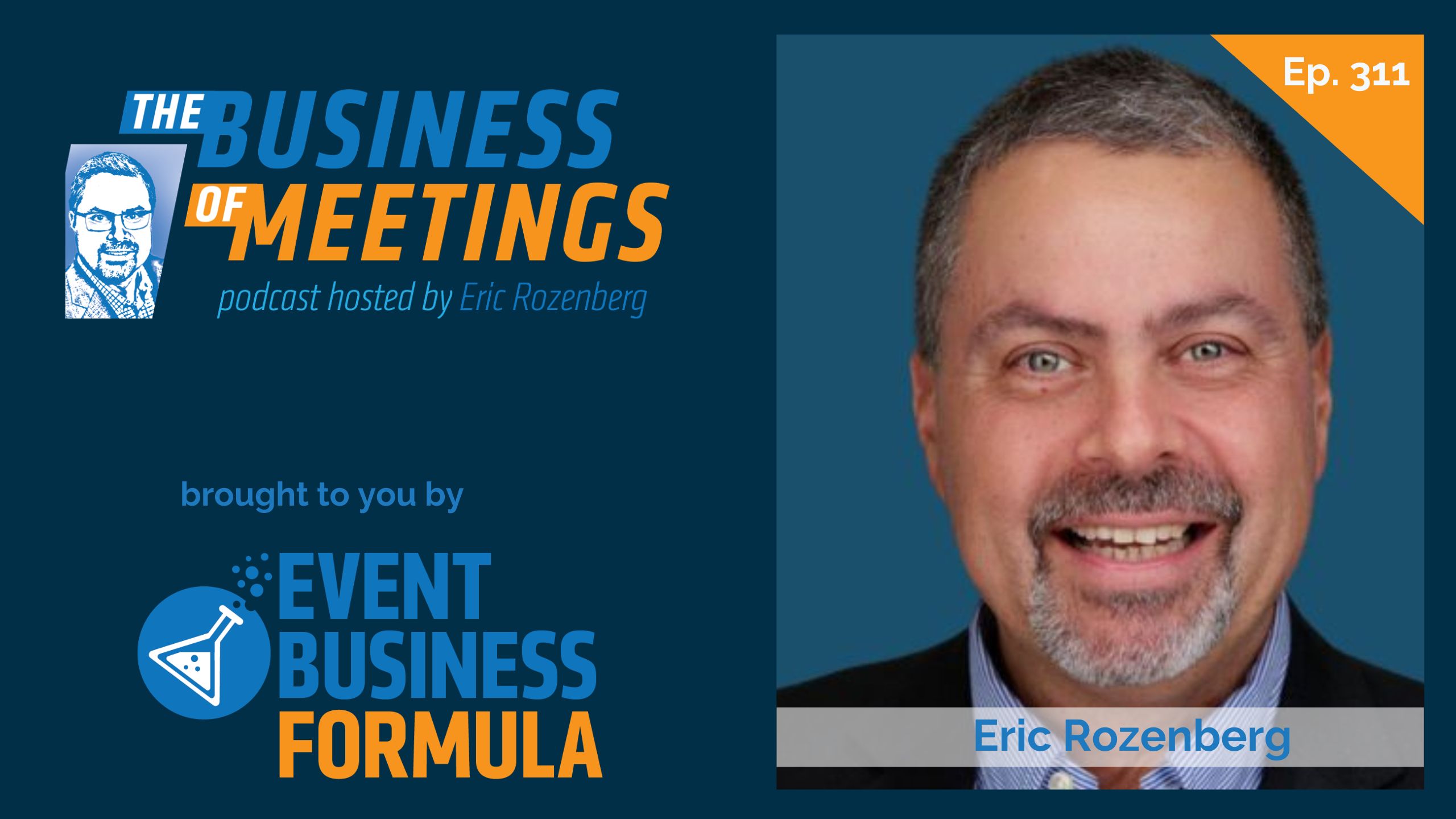
As a business owner, are you feeling overwhelmed?
Eric believes that overwhelm is seldom about having too much to do. It happens when business owners fail to structure their time as a CEO should and instead react emotionally rather than lead strategically.
Overwhelm
Overwhelm often comes from reacting instead of leading. Jumping in to fix problems, answer clients, and put out fires feels productive, but it keeps you stuck working in the business instead of on it. Responsiveness is often mistaken for leadership, but constant firefighting is not a strategic approach to leading a team.
Role Confusion
As a business owner, you wear multiple hats. Without clearly defining which role you are playing at any given time, your brain never switches off. Constant mental switching is unsustainable. Blocking time for specific responsibilities will reduce mental clutter and restore focus.
Decisions Not Made
Unmade decisions accumulate over time. Niche, service scope, pricing, team expectations, and client expectations all require clarity. When they are not addressed at the right time, they pile up. Constantly facing all the decisions that need to be made saps your energy and heightens overwhelm.
Doubt Amplification
Revenue is a rollercoaster, not a straight line. When challenges arise, doubt surfaces. Questions like “Am I good enough?” or “What if this doesn’t work?” begin to amplify. Every entrepreneur faces doubt, but it becomes dangerous when it takes over and paralyses you.
Priority Integrity
The issue is not time management but priority integrity. Without clear priorities, confusion grows. Business owners have three levels of work: survival work for their clients, stability work on their systems and financial clarity, and growth work on their marketing, sales pipelines, team development, and scalability. Most business owners tend to get stuck at the survival level.
Building Value and Freedom
Long-term value is created by focusing on growth and building a scalable model. The less involved you are in daily activities, the higher the value of your business. A transferable business must be structured and team-based, rather than relying on a single person to manage all the chaos.
Time Blocking
Decide what truly matters over the next 90 days, choose one objective that will make your revenue more predictable, and focus on it. Then, create some non-negotiable CEO time- at least two 90-minute blocks per week, with no interruptions. Use that time to strategize, review your pipeline, refine your pricing, design systems, and prepare playbooks. And every night, define three meaningful outcomes for the next day. Remember to focus on the outcomes, not the tasks.
Creating Clarity
Doubt often shows up when you raise prices, invest in support, delegate responsibility, or start saying no. Growth is uncomfortable, and that discomfort can easily be misinterpreted as a sign that something is wrong. The key is to separate emotion from evidence. Instead of relying on how things feel, look at the data: the size of your pipeline, your conversion rate, your margins, client retention, and your key performance indicators. Build a dashboard, review it consistently, and let the facts guide you. Clarity comes from evidence, not emotion.
Energy and Leadership
Overwhelm is often a sign that your energy is depleted. Sleep, training, learning, and setting aside uninterrupted focus time are essential. Constant accessibility destroys your ability to think strategically. If you do not have time to think, you will not have time to lead.
Practical Actions to Reduce Overwhelm
Block your time and focus on priorities. Create a list with five activities to eliminate and three to delegate within 30 days. Build systems for predictable revenue across sales and execution. Focus on what you should delegate so that you can focus on representing the business and maintaining client relationships. Create accountability with your peers through coaching or with a structured review. Overwhelm is often the byproduct of avoiding leadership.
Always remember that high performers don’t do it alone.
Connect with Eric Rozenberg
On LinkedIn
Listen to The Business of Meetings podcast
Subscribe to The Business of Meetings newsletter
Listen on: Apple Podcasts · Spotify · YouTube
“If you don’t have time to think, you don’t have time to lead.”
Eric Rozenberg
Full transcript of episode 311 of The Business of Meetings podcast, a solo episode with Eric Rozenberg. Lightly edited for readability.
Eric Rozenberg: Hello and welcome to the Business of Meetings podcast. I’m your host, Eric Rozenberg. Over the years, I’ve had the privilege of helping businesses in the meetings and events industry grow and succeed, and I’m excited to share that experience with you. If you feel alone and overwhelmed, and if you’re looking to take your business to the next level, improve your strategy and sales, and connect with like-minded professionals, you are in the right place. I invite you to visit eventbusinessformula.com and join our community of event business owners dedicated to exponential growth. Now let’s dive into today’s episode.
Hello and welcome to a new episode of the Business of Meetings podcast. Today I’d like to discuss the fact that all business owners in general are overwhelmed, and I know that feeling for sure. But it was triggered by a conversation with a group of entrepreneurs that I’m coaching right now, and one of the people said, “Well, I don’t have time to think about my business. I don’t have time to work on my business because I have too much to do. I’m overwhelmed.”
And I know it’s going to sound a little bit controversial, but I believe that if you are overwhelmed, it’s not because you have too much to do. It’s because you have not decided what not to do, or because you have not structured your time like a CEO, and you are emotionally reacting instead of strategically leading. And trust me, I know the feeling: when something’s happening, we jump on it. We are trying to solve the issues. We are answering the client, but we’re not taking the time to reflect and to really think about our business, to be able, as the saying goes, to work on our business instead of in our business.
And my challenge to you is that most of us, even business owners, are operators pretending to be CEOs, especially in our industry. In the meetings and events industry, chaos is normalized. Every year you have this survey that comes out, what are the most stressing jobs in the world, and we’ll always make top five, and we kind of take it as a badge of honor, where quite frankly it is not. It’s the chaos. We love the firefighting aspect, which is highly praised, and quite frankly responsiveness is often mistaken for leadership. That’s the trap. That’s what I want to talk about today.
I see basically three main reasons why business owners in the meetings and events industry feel completely overwhelmed. First of all, it’s the role confusion. Second of all is the fact that decisions are not made yet. And third of all is the doubt, which is amplified. So let me get into those three.
The role confusion is, as a business owner in the meetings and events industry, you’re dealing with sales, with marketing, with operations, with finance, with HR, with being the visionary looking at what’s changing with AI, with dealing with the client, dealing with the team, making sure that at home you’re also tackling all your responsibilities. And the thing is, if you don’t define which hat you’re wearing, your brain is never going to rest. It’s non-stop, non-stop, non-stop. Again, being in that case, and having the ADHD of many entrepreneurs, I know the feeling, and this is not sustainable. So the first reason I think that we feel overwhelmed is that we are not really defining which hat we are wearing and really isolating the time when we’re working on specific issues.
The second one is the fact that we are having a lot of decisions that are not made yet, and it’s accumulating. You need to discuss and to think about the niche in which you’re working. You need to define your service scope. You need to set your pricing properly. You need to clarify the team expectations. You need to deal with the client expectations. There are so many aspects of the business, and of owning a business, that you’re not really making the decisions all the time when they should be made, and it’s just accumulating. And at the end of the day, you look at all the decisions that need to be tackled and all the things that need to be done, and it’s draining your energy.
And the third reason, it’s really the doubt amplification. Revenue is not a straight line. It’s not constant. It’s not going from zero to selling the business. It’s a true roller coaster. And it’s very tempting, when we have issues that are coming up, or where there’s a client that is leaving, or where we have a margin that is not as expected, to start doubting ourselves and asking questions like, am I good enough? What if that client leaves? What if that doesn’t work? So you take the doubt and you take the responsibility altogether, and you get paralysis and you get doubt amplification. And quite frankly, anybody that has owned a business, that has started a business, any entrepreneur will face that doubt, has faced that doubt, and will again face that doubt in the future. And if you’re not aware of it, and if you are being taken over by those doubts, that is when it’s becoming dangerous. And that’s when you are feeling overwhelmed. So it’s very important to be able to focus.
And I would offer you that most of us business owners don’t have a time management problem, we have a priority integrity problem. The bottom line is that if everything is urgent, nothing is strategic, and if everything is urgent, then there are no priorities, and there’s a lot of confusion.
And that’s where it’s really important to take the time to reflect on what you’re doing and what are the priorities. And it’s really on three levels that we should be working. First of all is the work, as the business owner you are facing the client. So it’s really the client work, you need to deliver to the client. You need to put out fires for the client, or at least have somebody in your team doing it, and it’s what I call the survival work that needs to be done.
The second level of work, if you want, is the stability work. You need to work on your systems. You need to work on the documentation. You need to have financial clarity. You need to look at the dashboard. You need to make sure that the accountant has provided all the information. So you have the survival work, you have the stability work, and then you have the growth work. What about the marketing? What about the sales pipeline? Is it full as it should be? What about the team that’s leading your company? It’s really growing the business and making sure that you have a scalable model. In other words, to grow, you can remove yourself as much as possible from the daily operations.
And I’ve already mentioned that in a previous podcast, but the bottom line of the value of your business is the following: the less you are involved in the daily activities of your business, the higher the value of your business. And the problem is that if you look at the work for the client and putting out fires, if you look at the stability work and thinking about the business, and if you think about the scalability work of growing the business, most of us in the meetings and events industry, business owners, we’re stuck on the first level, the first level of putting out fires.
I think that to work in this industry, somehow you need to drive on the unexpected, that something’s happening and okay, it’s time for me to start working on it and find a solution, right? That’s not the work that needs to be done to develop the business in the long term. Where you’re really creating value, and where you’re really creating freedom for yourself and your family, is when you focus on the third level, which is putting a machine in place for marketing, for sales, for a team, and you’re really building an asset and removing yourself from the daily operations as much as possible. And so if you want to build a business that is transferable, it needs to be structured. It has, as much as possible, to be based on the team rather than just you driving with the chaos around you. Make sense?
So how do you block time like a CEO? How do you make sure that you are lowering the level of overwhelm that you can be facing? And that’s really different steps for me, but the first one is to decide what actually matters, the second one is to have your non-negotiable time, and the third one is really to focus on the three outcomes rule that you want to have every day.
So the first step is to decide what actually matters. What if you could only fix one thing in the next 90 days? What would you move? What would you do to move revenue in a more predictable manner?
And we say 90 days, depending on the operating system you’re using, some will call it a quarterly goal, others will call it rocks. The goal is the following: you have 90 days, what is one thing you’re going to focus on in the next 90 days that would actually help you have more predictable revenue? Is it consistent outbound sales? Is it redefining an offer or creating a new offer? Is it cleaning your financial dashboard and defining your KPIs and putting them in your dashboard? Also having a rhythm of looking at those numbers. Is it focusing on delegation and how you’re going to structure that? Whatever it is, when you pick one objective for the next 90 days that is going to impact the predictability of your revenue, you need to focus on that one thing. The rest becomes secondary.
The second step is to have your non-negotiable time. And in order to have your non-negotiable CEO time, you need a minimum of two blocks of 90 minutes per week. It means what? It means that for 90 minutes, you switch off everything. There is no notification. There is no call. There is no Slack or Voxer or email or somebody interrupting you. You have two blocks of 90 minutes when you are reflecting on your business. You work on your strategy. You work on reviewing your sales pipeline. You work on refining your pricing, on designing the systems, on working on the SOPs, on preparing playbooks, whether it’s the sales playbook, the VA playbook, or the playbook of the company, whatever it is, you are working on that, not being disturbed by anything. And trust me, if it’s not scheduled, it’s not going to happen.
I always love asking a question when I’m speaking with our colleagues in the industry. I say, “Okay, you’re telling me that sales is important for you. How many hours have you blocked in your calendar?” “Oh, I don’t have hours blocked.” Really? “You’re telling me that family is important for you? How many hours per week have you blocked for the family?” “None.” Well, then I call BS. In other words, if it’s important, it has to be scheduled. It has to be in your calendar. And once again, you need to have blocks of time to work on your business and reflect on what matters for your business.
So we have one, deciding what actually matters, two, the non-negotiable CEO time, and three, the three outcomes rule. What are the three outcomes rule? Every day, every night you’re looking for the next day, what are the three meaningful outcomes you are going to work on? Not tasks, but outcomes. For instance, it’s not “I have to send emails,” but it is “I need to book two sales calls.” It’s not “I need to work on marketing,” it is “I need to publish a thought leadership article.” And so being outcome driven is going to reduce the fact that you feel overwhelmed instantly, because you know what you’re working on and you know that it matters for your business.
Now, if you want to go deeper in talking about the doubt that we might have and managing those doubts, when are those doubts showing up? The doubts are showing up: I’m going to raise prices, oh my god, what’s going to happen, are my clients going to leave, did they accept it, what type of conversation am I going to have, I’m going to invest in coaching, is it something that I should be investing in? Well, you know my answer on that, obviously everybody, and anybody, needs coaching and mentoring, starting with me. But that’s also an investment. Am I correct to do that? Should I do this investment? That’s the doubt coming up.
And the other point is when you delegate. Well, I’m delegating this to this team member, but are they going to do it well? Are they going to do as good as I do? Of course they’re never going to do as well as you, but if they deliver 80% and the client is happy, everybody’s happy. But there are doubts when you have to delegate, and stress. Obviously, the thing is, when you start saying no, well, in other words, when you stop saying yes to everything, when you start saying no, there is some doubt about how people are going to take it. Am I correct not to do this or not to go there? So that’s where you are becoming uncontrollable, and guess what, that’s where we always grow. Unfortunately, human beings don’t grow when it’s easy and things are going the way it’s planned.
But what is very important is to separate the emotion from the evidence. For instance, you might have the feeling, you might have the emotion that, you know what, it’s not working what I’m doing, I’m spending all my time and the business is not growing. Well, you know what the evidence is? It’s to look at the size of your pipeline. It’s to look at your conversion rate. It’s to look at the NPS score that you might have. It’s to look at the margin you have in the business. It’s to look at the clients that have been working with you for so long, and the client retention rate, it’s really also a good indicator. But not “I don’t feel it’s working,” “I don’t know if it’s growing.” Those are the KPIs that are important to measure and to really realize how good you are doing and how your business is growing.
And the challenge is that if we pay too much attention to our feelings instead of looking at the data, that’s where the problem comes. So they say facts don’t care about your feelings. That’s one of my favorite sentences. So if you look at the facts, you’re not looking at the feelings, you’re looking really at the data. And that’s very important.
And in order to be able to do that, you need to build a dashboard, even a simple one. So you look at all the indicators that you need to measure. What are your key performance indicators? What are the leading indicators? What are the lagging indicators? And you create your dashboard and decide how often you’re going to look at that dashboard. The same way that when you’re thinking about something, writing it down is lowering your anxiety, the same way here, when you have some clarity, and you’re looking at your dashboard, it is basically lowering completely your anxiety.
That means as well, talking about anxiety, that you need to manage your energy more than you need to manage your time. Energy management is much more important than time management, because to be overwhelmed is often because you have less and less and less energy. And so you need to ask yourself, am I sleeping enough? Am I being trained enough? Am I learning enough? Am I protecting my time enough? Am I constantly reacting on WhatsApp and Slack, or am I being intentional about how I use my time? Because being accessible all the time, whether it’s for your team or for your client, is completely destroying your capacity to think strategically.
And if you keep your day answering all day instantly to the team’s questions, to the client’s questions, not only will you not have the time to think, but you’re going to end the day thinking, “Oh gosh, I didn’t stop, I worked so hard, and I feel I didn’t do anything.” And that’s the main idea. If you don’t have time to think, you don’t have time to lead. So you really need to change the way that you’re looking at your role and stop saying, “I don’t have the time,” or “I don’t find the time.” You are the one who’s deciding who you are. Are you a busy planner, or are you a business owner building an asset? And that’s absolutely crucial that you ask yourself that question, because busy planners get overwhelmed, but asset builders allocate their time, and there is much less overwhelm. I’m not saying there’s no overwhelm, of course there is, but when you’re building an asset and you’re allocating the time, you are better at growing the business and you feel much less overwhelmed. And again, if it’s not in your calendar, then it doesn’t mean that it’s important.
In conclusion, I would say that you need to ask yourself the tough questions. What are you avoiding to decide? What is it that you don’t want to decide about? What are your fears? Where are you saying yes because you’re afraid? And if someone would come and buy your business tomorrow, what would scare them to see that you are involved in everything, and that without you nothing is moving? And what would happen for you if you were able to block three to four hours per week for CEO thinking, which is why I strongly believe that being overwhelmed is often the byproduct of avoiding leadership.
And so in closing, I’m going to give you three ideas that you can work on so that it’s going to lower your anxiety and lower the fact that you feel overwhelmed. The first one is the stop doing list. I want you to write down five things that you are going to stop doing immediately, and three tasks that you’re going to delegate in the next 30 days. So, stop doing list: five things that you’re going to stop doing immediately, and three things that you’re going to delegate in the next 30 days.
The second trick is looking at your revenue for the future and trying to look at a system to have predictable revenue. How do you do that? If it’s in your head, it is not going to be done. You’re going to feel overwhelmed and you’re not going to grow the business. So look at all the different elements, from your sales process to the execution, the different touch points with the customer, and what is it that you can delegate so that you focus on what you do best and what you should be doing, which is representing the business first and foremost and having the relationship with your client, and then putting a sales team in place.
And third, and the most important thing, that’s really where the rubber hits the road, is to have accountability. Whether it’s a peer group, whether it’s coaching, whether it’s having a structure, make sure that you are focusing on accountability and you’re putting the system around you to be accountable. I have my accountability buddy, Greg. Every Monday we meet, we have to show what we’ve done, what we’ve worked on the previous week, what we’re going to be working on in the following week. And then I use software to look at all my KPIs and measure them and see every week if I’ve been working on what is important for my business.
Knowing one thing: even the highest athlete, the best athlete in the world, they don’t do it alone. So the high performers never, never, never do it alone.
So overwhelm doesn’t mean you’re failing. Overwhelm means that you are at the beginning of the growth, that there’s a lot of things to do, which is great, it means you’re having a business, a lot of things to do, but you need to have structure. You need to have the structure to grow. That means you need to show up, show up leadership, to work on your business, to delegate. And that means that it starts with how you’re going to block your time tomorrow morning. Don’t procrastinate on that. If you want to lower the level of anxiety and being overwhelmed, the first thing you need to do tomorrow morning is start blocking your time and focusing on the priorities.
Thanks for listening, and I’ll see you on the next episode.
Thank you for tuning in to the Business of Meetings podcast. I hope you found today’s episode valuable. If you enjoy the show, the most important thing you can do is leave a review and share it with your colleagues. It really helps spread the word. I truly appreciate your support. And if you’re ready to take your business to the next level, don’t forget to visit eventbusinessformula.com to learn more about how we are helping event business owners like you. Thanks again for listening, and I’ll see you next time.