
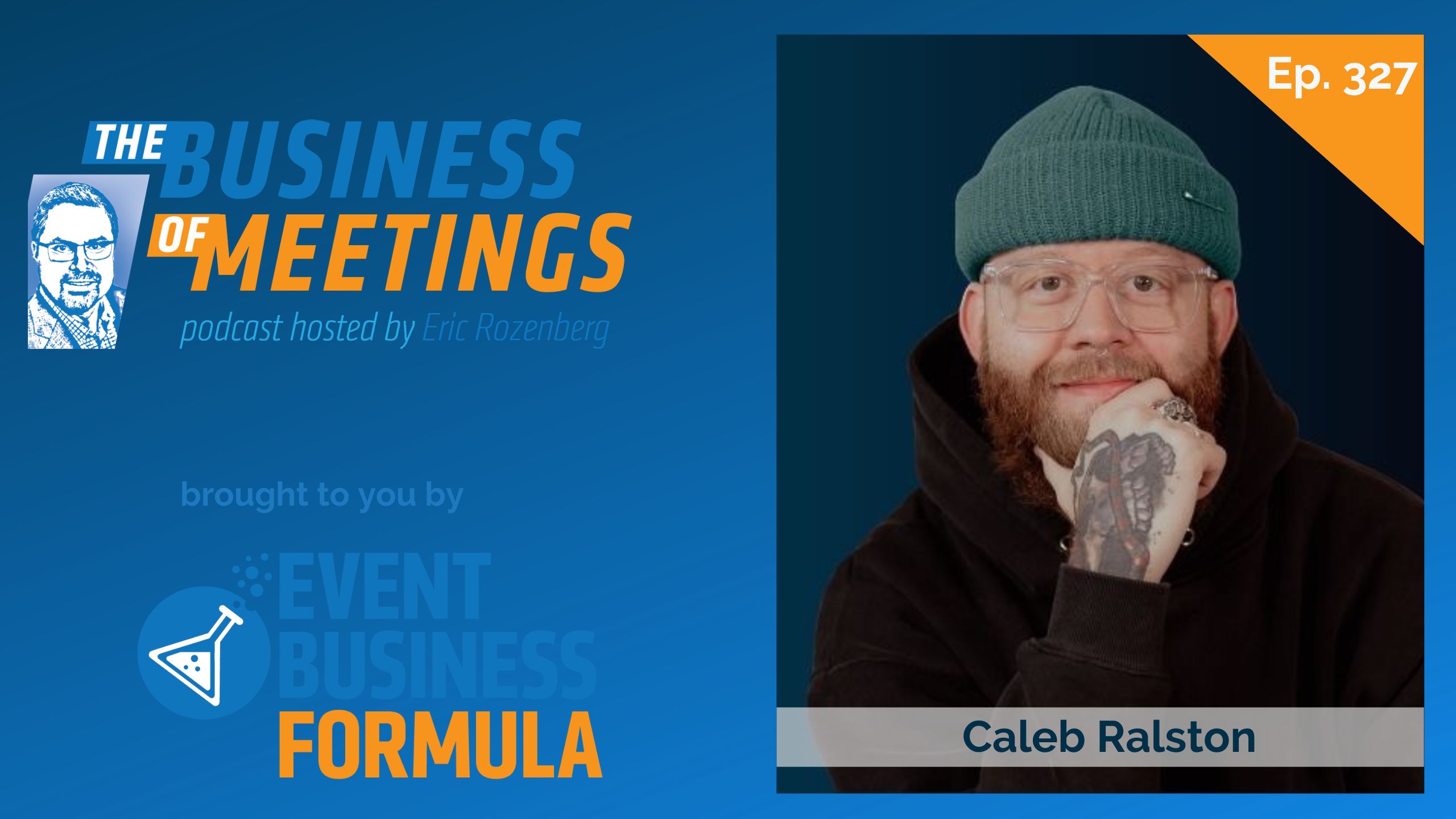
In this episode, we sit down with Caleb Ralston, brand strategist and former content lead for Gary Vaynerchuk, Alex Hormozi, and Leila Hormozi. Caleb shares how he went from making videos as a kid to building an 18-person media team at Acquisition.com, where he helped scale the Hormozis' audience from 1.2 million to over 11.5 million followers. He breaks down his approach to personal branding, explains why creators should optimize for trust instead of virality, and offers practical advice for solopreneurs on choosing platforms, staying consistent, and letting your unique story set your content apart.
We are delighted to welcome Caleb Ralston as today’s guest.
Caleb’s journey has been remarkable, and he is currently one of the most prominent voices in our industry in building brands and creating content people can actually apply. In 2025, he released a YouTube video that attracted more than 1.1 million views!
Stay tuned as Caleb shares what he learned from working with people like Gary Vaynerchuk, Alex Hormozi, and Leila Hormozi, explains his approach to personal branding, and offers practical advice for creators, solopreneurs, and business owners looking to build trust through content.
Caleb’s Journey
Caleb’s interest in video started when he was a child, making videos with his sister using his mom’s camera. In high school, he volunteered on his church’s media team, where he met Sean Cannell, who introduced him to Gary Vaynerchuk’s work. After reading Gary’s book, Caleb decided to pursue video full-time. He started creating content in the powerlifting and bodybuilding world, worked with top athletes, then joined a software company before eventually moving to New York to work for Gary Vaynerchuk. After several years working across Team Gary, VaynerMedia, and Constellation Brands, he moved to Las Vegas. Shortly after arriving, he began working with Alex and Leila Hormozi to help build their content and personal brands. In November 2024, Caleb launched his own business to help founders build personal brands that optimize for trust.
Lessons from Gary Vaynerchuk
One of Caleb’s biggest lessons from Gary was that empathy and kindness are strengths rather than weaknesses. Gary demonstrated that treating people well can create meaningful impact and lasting relationships.
The Cost of High Performance
Working with Gary required intense commitment and long hours. Caleb pushed himself extremely hard and eventually learned his limits. While he does not glorify working yourself into the ground, he acknowledges that many of the opportunities he has today came from years of sustained effort, sacrifice, and focused work.
Las Vegas
After years of working in large organizations, Caleb reached a point where he needed new experiences and different challenges. So, he moved to Las Vegas because he wanted a change of environment and believed new opportunities would emerge. An opportunity soon arose for him to work with Alex and Leila Hormozi.
Personal Branding
Caleb’s approach to personal branding starts with identifying what makes a founder different. Rather than copying successful creators, he focuses on uncovering the unique ways a person thinks, communicates, solves problems, and approaches their work. He believes the strongest personal brands amplify what is already unique rather than imitating someone else’s formula.
Starting His Own Business
Although Caleb had considered starting his own business for years, he waited until the timing felt right. Opportunities began appearing through interviews, content, and industry relationships.
Self-Doubt
Despite his success, Caleb still experiences self-doubt and frequently questions whether he is the right person for the opportunities presented to him. What has helped him throughout his career is taking action before feeling fully qualified. He believes progress comes from moving forward despite uncertainty rather than waiting until all doubts disappear.
Bad Advice
Caleb disagrees with the notion of “fake it till you make it.” He believes the phrase has encouraged people to exaggerate their expertise, misrepresent themselves, and sell advice without credibility. Instead, he advocates being honest about who you are, gaining real experience, and allowing your work to speak for itself.
Caleb’s Personal Branding Course
After receiving repeated questions about personal branding, Caleb decided to create a comprehensive free course and publish it on YouTube, rather than selling the information behind a paywall. The course significantly exceeded his expectations and reached a much larger audience than he anticipated.
Advice for Solopreneurs and Small Business Owners
If you are building a personal brand on your own, focus on one primary platform and one secondary platform. Put most of your effort into the primary platform and repurpose content for the second. Choose a publishing schedule that feels realistic rather than overwhelming. Once you establish consistency, you can gradually increase your output over time.
Optimize for Trust, Not Virality
Caleb believes creators should stop optimizing content for virality and start optimizing for trust. Build content around real problems your audience faces and help them solve their problems. Every time you set an expectation and meet it, you build trust. Consistently doing that creates stronger relationships and better long-term results than chasing views.
Show Who You Are
People connect with people, not generic content. Caleb encourages creators to show who they really are, including their interests, personality, experiences, and perspectives. The goal is not to appeal to everyone. A strong personal brand attracts the right people while naturally repelling the wrong ones.
AI-Generated Content
Caleb believes much of today’s AI-generated content sounds generic because it draws from the same sources and averages everything toward the middle. Audiences do not want generic advice. They want lessons filtered through your unique experiences, failures, successes, and perspective. Your personal story is what makes your content valuable.
Attract the Right Clients
A strong personal brand attracts the right people and repels the wrong people. Caleb believes many creators focus only on attracting audiences, but successful brands also create clear boundaries. When you show your real personality and values, you naturally attract clients who are a better fit.
Free Resources
Caleb encourages people to consume his free content. He recommends watching his six-and-a-half-hour YouTube course, downloading the workbook, completing the exercises, and applying the lessons. Only after acting on his free resources should people consider working with him directly.
A Future Dream
Although Caleb enjoys building businesses and personal brands, he imagines working hard for many years, reaching his financial goals, and eventually living a quieter life bartending at a small dive bar where he knows the regular customers and enjoys a slower pace.
Bio: Caleb Ralston
Building Personal Brands that Optimize for Trust, Not Virality
Brand executive with 17 years of experience building brands, leading creative teams, and scaling content strategies for some of the most recognized names in business, including Alex Hormozi, Leila Hormozi, and Gary Vaynerchuk.
At Acquisition.com, I built an 18-person media team from the ground up. Together, we scaled Alex and Leila’s audience from 1.2 million to more than 11.5 million followers, generated over 3 billion impressions in 2024 alone, and drove 70% of the leads for their Scaling Workshop through organic content.
Before that, I served as Gary Vaynerchuk’s videographer and TikTok Lead. In just three months, we grew his TikTok following from 300,000 to 3.5 million. I also edited his hit series, Trash Talk, helping spread Gary’s message about how to get started in business with no money.
What I’ve learned along the way is that building a brand isn’t about chasing trends or trying to go viral. It’s about creating trust and consistency, scaling your impact, and delivering real results. Whether it’s building a team, developing a strategy, or leading a campaign, I’m focused on what moves the needle.
What I Believe
What Drives Me:
Real Impact
I’m obsessed with measurable results. Whether it’s taking a brand from under-the-radar to top-of-mind or building a team that crushes its goals, I care about outcomes that matter.
Building People Up
Developing talent and helping others level up are some of the most rewarding parts of what I do. I love giving people the tools and frameworks to thrive.
Excellence in Execution
I don’t settle for “good enough.” I set high standards for myself and others because that’s what it takes to create exceptional work.
Authentic Relationships
Business success is about people. Trust, connection, and real value are the foundations of everything I do.
Creating Legacy
It’s about more than today. I want to build systems, teams, and ideas that outlive me—things that redefine how people approach personal branding and content creation.
Connect with Eric Rozenberg
On LinkedIn
Listen to The Business of Meetings podcast
Subscribe to The Business of Meetings newsletter
Connect with Caleb Ralston
On his website
Listen on: Apple Podcasts · Spotify · YouTube
“If you optimize your content for trust and soul, views will take care of themselves.”
Caleb Ralston
Full transcript of episode 332 of The Business of Meetings podcast, Eric Rozenberg with Caleb Ralston. Lightly edited for readability.
Eric Rozenberg: Hello and welcome to a new episode of the Business of Meeting podcast. And today I am delighted to speak with someone I have spent I don’t know how many hours with the last weeks listening to all the content he’s put together. This is for me the most important person in our industry today when it comes to branding, when it comes to giving content that you can apply. His journey is phenomenal. He was the person behind people like Gary Vee, behind Alex and Leila Hormozi, and he’s now going on his own. He put together a YouTube video of more than six hours last year that at last count is over a million 100,000 views. But more importantly, he’s the most genuine person that I’ve met in years. I just met him at a conference. I like him very much. Ladies and gentlemen, the one and only Caleb Ralston. Caleb, thank you so much for taking the time today.
Caleb Ralston: Wow. Thank you for the very kind and generous introduction, Eric. Thank you. Well, that’s everybody who knows me knows, if I may say so. I’ve always spoken my mind and that’s absolutely what I’m thinking and much more.
Eric Rozenberg: But Caleb, let’s start with what is your journey? How did you get to do what you’re doing today? Because I think it’s absolutely fascinating, inspiring, and as an immigrant now from Belgium who’s now American, for me, you are the poster child of the true American success story. So let’s hear about you.
Caleb Ralston: Oh, wow. Well, thank you. I am that kind of typical story of the kid who took my mom’s video camera. I stole my mom’s Canon PowerShot as a kid and I would just make videos in the backyard with my sister and I. We would make funny little sketch videos and stuff like that, little skits for YouTube. And I just always had a passion around video. And in high school, I was volunteering at my church for the media team, making videos for announcements and recap videos and all this. And the director of video and media at the church, crazy enough, was Sean Cannell. And if anybody listening or watching is not familiar with who Sean Cannell is, he is massive on YouTube and he teaches people how to rank their videos on YouTube to make a full-time living. He’s blown up. He’s become huge. But at the time, nobody knew who he was. Nobody knew who I was or anything of that nature. And he introduced me to this crazy, wacky character named Gary Vaynerchuk. And he gave me his book. And I was 15 or 16 at the time. And it was the only book that I read in high school. I worked in high school. And so I would do things like pay other people to do my assignments while I was working because I just knew that I was not cut out for school and that work was my thing, and pursuing video was going to be my direction that I was going to go. And Gary’s book kind of gave me permission to do that.
And so I started in the powerlifting and bodybuilding world, making content on YouTube there, working with the top bodybuilders and powerlifters of all time. I got to work with the Mr. Olympias. I got to work with anyone who’s listening who knows powerlifting at all. I worked with Fred Hatfield, who is the greatest squatter of all time. So I just had a lot of really cool opportunities at a young age. I was in high school, and then I realized that I was going to move out and be my own man. And I didn’t want to have my own business. I wanted to have a steady paycheck because it was crazy and volatile. So I went and worked for a software company, worked there for a couple years, then did my own thing for one year before moving to New York City and actually working for the man who gave me permission for all of this, which was Gary. I had the opportunity to actually work for the man on his team. That was crazy. I was a traveling videographer for him. We did a lot there. That was incredible. That was the biggest growth period in my life for sure. I pushed myself more than I ever have. I was also in a city that I didn’t know anybody in, so I was kind of forced to work all the time, which was a good thing for me.
And then during COVID, I wanted to come back out west for just like a week or two. I grew up on the West Coast and everything, and I wanted to come back and visit friends and family. And what started as a one-week adventure turned into two weeks, into a month, then into three months, into six months, and nine months later I was living in Oregon. And I lived in Portland for about a year, year and a half, before moving to Las Vegas, Nevada, because I wanted to ride my Harley-Davidson more. And when I moved there, about a month and a half, two months in, some crazy characters reached out to me – Alex and Leila, that you mentioned and they wanted to start taking this content game and this personal branding thing more seriously. And so we built up the media team, built up a very strong presence online. And then in November of 2024, I decided to see, okay, I’ve worked for some gangster entrepreneurs. I’ve seen a lot, learned a lot. Have I actually learned a lot? Can I actually apply this? Do I got it like that? And so I started my own business, and I’m about 18 months into it now. It’s been awesome, Eric. So there is my life story for you, in a little longer than I wanted.
Eric Rozenberg: Well, you know, you make it look so simple. In summary, you volunteer at your church and then you read a book and then you work for the guy who wrote the book, which sounds very easy when we’re listening to you. But I’m very curious how did you get, when you were in New York, to work for Gary, and what was the big learning that you had? Because the way he is, it’s very intense, and so in terms of working, so many entrepreneurs, so many learnings.
Caleb Ralston: First off, the interesting thing is actually the way I found out about the opportunity. I didn’t see it because I was listening to Gary I had watched his content for long enough, and he was saying at the time, “Stop watching my and go do.” And so I was doing, and I wasn’t watching his content for like probably a year leading up to me applying to that role, maybe six months. And my best friend Jordan Villmore texted me and was like, “Yo, dude, Gary just posted on his story saying that he’s hiring videographers. You should apply.” And when I tell this story, I always flag this thing because it was super interesting – Jordan never once, and to this day he’s never done it again, he never has been that friend that says, “You should do this thing.” He doesn’t give advice unsolicited. And so this was such a unique moment for me. I was like, “Oh, this is weird. This is different than normal. Yeah, it, I’m just going to go for it.” And I was in the middle of editing a project, literally eating chicken nuggets and editing a video for a client. I recorded a quick video for D-Rock, David Rock, his videographer – Gary’s videographer at the time and I just started basically respectfully, kindly harassing him over email to get an interview, because the dude is incredibly busy. And so it’s not like he responded to every email that I sent. And so with each follow-up, I was adding more value. And what is value? Value is usefulness. And what’s useful in the hiring process? Being able to figure out why I’m going to hire Sarah over Suzie, right? If Sarah and Susie have the same skills, well, what are the things that we’re going to look for? What are their soft skills? What’s their personality like? Like all of these different things. When you’re hiring a videographer, these are very important things. And so each follow-up email, I was sending a video, not talking about my skills that was in the email copy but the video was just showing who I was as a person, to make it an easier decision for them of whether they liked me or didn’t like me. And so I did that over and over, and then eventually was able to land an interview. I was given two opportunities either Vayner Talent or PureWow. Vayner Talent was basically taking what Team Gary was, Gary’s personal brand team, and it was an offering for other people to be able to tap into that. So it was basically an agency version of Team Gary. Or PureWow, which was a women’s lifestyle publisher that made content sponsored by brands for women, roughly 35 to 55, typically in the Midwest at the time. And that was a demographic that I had never made content or communicated to on a mass scale. But I also understood that was the demographic that makes the majority of purchasing decisions in America. And so what an amazing audience to learn how to communicate to, right? I had worked in bodybuilding and powerlifting, in Bible software, in cannabis I had worked in all of these different industries. This is going to be just another one that’s going to add to my well-rounded experience. And I decided to go that route. Did that for nine months. And after nine months, Andy Kraak and David Rock from Team Gary, they tapped my shoulder, asked me to come upstairs, because floor 24 was PureWow and floor 25 was VaynerMedia. And so they asked me to come upstairs to Vayner and said, “If you’re interested, we’d like to pull you onto the team.” And, you know, my answer was like, “yes.” Ten days ago, I’m ready to start whenever. So yeah, that was crazy. But that’s how the opportunity came about.
Eric Rozenberg: That’s amazing. And by the way, as a side note, I have a little picture here in my office that my wife forbid me to put in the house. It’s a picture of Gary Vee and it says, “Nobody gives a [ _ ] about your feelings.” And then the day I’m a little down, I look at it and say, “Yeah, let’s continue,” and doing our passion. And you’re so successful with him, you’re traveling with him how do you cope physically speaking? Because I guess it must be exhausting being there.
Caleb Ralston: Yeah, I remember, like the first probably two months of traveling with him, I turned to some of the more veteran members of the team and I was like, “What the [ __ ]? This man’s like 12, 13 years older than me, 15 years older than me, and has way more energy.” It was absurd. Yeah, it was hard. There’s just no way around it other than it was hard. It was exhausting. Everyone who is listening or watching should have 20 times the amount of respect that they currently hold for any videographer on that team, because it is a very demanding role. What people don’t realize is a lot of creators in the same space as Gary, the business creator space – they are creators. They allocate time to make content. Gary does not. Everything that you see out there is the team being able to capture that amidst his crazy schedule. He literally does five-minute meetings. There’d be two-minute slots on his calendar. It was absurd. And so, yeah, it was very demanding, very exhausting. I would say I don’t think I did a great job of managing energy and stuff. I just kind of pushed, for lack of a better term. I ended up getting fairly sick – and this is all self-imposed, to be very clear – I ended up pushing myself way too far and I ended up in the hospital and everything like that. I learned what my limit was. The interesting thing is I’m not one of those characters that is ever going to go around glorifying working yourself to the hospital. I’m not the guy that’s like, “You need to work your face off no matter what.” That’s not me. But what I will say is the thing that I did learn from that season, that I am trying to be very careful about in this new season that I’m in, is I would not have the opportunities that I have right now if I wouldn’t have grinded my face off then, right? I now have to change. I can’t keep operating that way. I won’t be able to stick with it for much longer if I were to do that. So I’ve had to change how I operate. But in no way can I discount the fact that I’m only able to do what I’m doing right now because of those 14, 15 hour days, seven days a week, for two years straight. That is why I have these opportunities. So yeah, it was a crazy time. People do not realize how much energy that man has, how crazy that man’s memory is. He remembers people from an event that he met for 30 seconds five years ago, and we’d roll through the airport, they’d come up and be like, “Gary, six years ago,” and he’d be like, “Yeah, Brian, I remember you.” And I would lose my mind. It was just insane. So that was incredible.
The other question that you asked that I didn’t answer earlier that I will hit real quick is you asked me what I learned from him. We could do an entire four-hour podcast just on that. But I think the thing that I will share – I sometimes get asked this all the time and I share different things the thing that’s been top of mind for me, that I think was most impactful, is Gary showed me I knew this to be true, but I didn’t have a good example that gave me permission to be empathetic and kind. He showed me that it’s not weak for a man to be empathetic and kind. It’s not a weakness. It’s not a vulnerability. It’s a strength. It’s an asset. And it’s something that not only can cause good vibes, good feelings around you, good things for you, but it can genuinely impact and change people’s lives around you. And if you operate from that place versus a place of anger or pain, it is a significantly different level of impact that you can have on people. And so I’d say that’s probably the most important thing that I learned from him.
Eric Rozenberg: I love it. Thank you for sharing that. Yeah, I was listening to you and said, you know, it’s because you’ve done that in the past that you can do what you’re doing today. When I started my first business almost 30 years ago the first two years, it’s a corporate event agency, and I said, “These are my clients, nobody’s going to do it better, it’s my brand” and I was burned out, which allowed me to realize how important it is to delegate and build a team around oneself. Now you’re so successful, you’re there with the guy who’s all over the place on social media. What makes you decide, “You know what, I’m going to Vegas, I’m going to ride my bike”? I’m sure a lot of people would tell you, “Are you nuts? Why are you doing this?”
Caleb Ralston: Yeah. So honestly, the very, very real answer here is I started getting to a point where I felt like I was not given what we were doing with Team Gary and what Gary was willing to do time-wise, allocated to content. I felt like I had reached a ceiling on what I was going to be able to do and learn. We had gotten to a point where I was like, “Okay, cool, I’ve not only been a creative, I’ve also been a channel manager.” I ran TikTok. I understand strategy on this. To get to the next level, I’m going to need different inputs. And not that there was anything wrong again, Gary is doing this, in my opinion, in one of the best ways to do this but I wanted to work with somebody or work on something that was going to be more focused on the actual content creation rather than purely just documenting and having to reconfigure the content. And so I actually met with Gary and I told him, I said, “G, I think I’m wanting to explore more of the agency side.” And so I actually transferred over to VaynerMedia and started working on client side for a while. And I say “a while” because very quickly after that transfer, this little thing called COVID hit, and all major organizations, all Fortune 100s and 500s, put a pause on their marketing. So I actually had gone over to the agency side to join this incredible Navy Seal-like team. We were working with a very large brand and we were going to execute this huge campaign. I was so excited, and then that got shut down. And so I started working on some of the initiatives that we were doing at Vayner. Gary being who he is, everyone started freaking out and was like pulling back. He was like, “Cool, we’re creating a show, a VaynerMedia show called Marketing for the Now, and we’re going to bring on all the top marketing executives and CEOs of all these massive companies and talk about how they’re navigating this.” It ended up being a very successful show, and it was really just classic G. But I was doing that, and right before all of this maybe three to six months before the shutdown happened. Gary had actually sold Empathy Wines, a wine brand that he had built, to a company called Constellation Brands. They own a bunch of big liquor and beer and wine brands — Svedka, Modelo, Corona, Kim Crawford, Robert Mondavi, all of them. He sold Empathy Wines to them, and they were building a direct-to-consumer division within Constellation Brands. They’re a massive Fortune 500, they have like 11,000 employees around the world they’re huge. But within this massive company, there was this startup division. And the co-founders of Empathy, Nate and John, they started it with Gary. They went over to Constellation. And John asked Gary, “Hey, would you be okay if I reached out to Caleb to see if he’d be interested?” And so I actually have a roughly two-year window where I worked at Constellation Brands not on any personal brand, nothing like that. I was selling wine. I was making content and advertisements around wine. So that was a wild little season of my life. So I did that. That was when I was living in Portland and for a little bit in Vegas. And then I literally just chose to move to Vegas. I wanted to move to LA, but it was just too expensive. And so I was like, well, Vegas seems like a good alternative. It’s sunny all the time. I can ride my Harley 24/7.
Eric Rozenberg: Amazing. So you’re in Vegas did you have in mind what you wanted to do next, or is it just serendipity that they reached out to you?
Caleb Ralston: Yeah, this is the craziest thing. I had no idea what it was going to be, but I told my girlfriend because when I was talking to her about moving to Vegas, she’s like, “Vegas? What the [ __ ]? Why Vegas?” Understandably so that’s pretty much everyone’s reaction, even to this day, when I tell people I live in Vegas, they’re like, “Wow, that’s wild.” And I told her, I was like, “I know it’s crazy, I just have this weird feeling like something big is going to come up within a couple of months of moving there,” because I have just found historically that every time I’ve made a really big decision like that and put myself in a new environment or a new position, big things happen for me. I’m not a woo-woo guy – I think there’s a little bit of woo-woo stuff to it, but I think for me, the way that I look at it is: when I’m doing [ __ ] I’m proud of, I get more momentum, and when I have more momentum, I just believe opportunities I don’t know why, but they start showing up. And when I had moved to Vegas, there was somebody that was working for one of their previous companies. They had told him they were wanting to take personal branding and their content more seriously. He had been the mentor to one of my best friends that I worked with on Team Gary, named Jason Marina. And so he mentioned it to Jason, was like, “Do you know anybody?” And Jason goes, “What the [ __ ]? Caleb just moved to Vegas a month ago.” And that’s how it came about.
Eric Rozenberg: It is just crazy serendipity. I love what you’re sharing now, because when we moved with my family, three daughters, to America in 2013, I just knew that we had to do it, for reasons that we can discuss another time. And people said, “But you’re nuts, you have no business, no project.” I have a network, and I know something will happen. Fast forward, last Valentine’s weekend, we had our three daughters at home, which obviously now is rare. And one of them looked at us and said, “Thank you for bringing us to America, this is the greatest gift you could have done.” I said, “You know what, that’s so cool, I can [unclear]. That’s cool.”
Now, just to finish on the journey working for others you’re working with, or Alex and Leila, which quite frankly, just like Gary Vee, they are the poster child of what needs to be done. The blueprint is just insane what they were able to do. And I know that’s maybe where we differ a little bit, but Alex is really on hustling, hustling, hustling another environment like that. The two of them, for me, are absolutely geniuses in what they’re doing. How do you interact with – with your background with Gary Vee and going there – how do you interact with them? Do you advise them, or are you listening to what they want? How is that operating for you?
Caleb Ralston: The way that I always try to operate is – there’s a cartoon character, I think it was originated here in the States, called Curious George. And I resonated with that character a lot when I was a kid. He’s a little monkey that is always asking questions. And I got labeled by adults in my life as a kid as “Curious Caleb” because I was always asking questions. And I think the thing that I am uniquely capable of doing, for whatever reason because I’ve been doing this since I was a little kid, this isn’t like a personal branding strategy I’m able to find things that make individuals unique, and what makes them stand out, and what it is that they do that is different than what other people do in a seemingly similar task, right? So what are people’s unique approaches, and I’m able to identify those, help them become aware of the fact that it’s unique, and then create a system where we amplify that. I think what a lot of people make the mistake of they could have easily made this mistake they could have been like, “I want to do exactly what Gary did.” But it’s like, you’re not Gary, not even close. So it’s like we need a completely different system and methodology here. What most people make the mistake of doing is they aspire to be like the characters that we’re talking about here, and they just try to copy what they have done. And what makes different people unique is different. And so I think the thing that I am able to do is I’m able to sit down and speak with these founders and understand, okay, that is the unique thing that you do you think it’s basic because you’re an expert, you’ve been doing it so long, but actually that is fundamentally different than what anybody else is doing, or the way they’re thinking, right? Or how Alex defines terms that was a wild thing that we very quickly were like, “Okay, people don’t do this, this is something that you have a massive competitive advantage with.” And so I think that’s really the main thing that I’m doing I’m trying to figure out, okay, what are these different unique mechanisms, ways of operating, ways of thinking, and how do we pull this out in a way that is accessible for the audience? How do we translate things from your mind into a language that the audience can understand? So I think it’s that, and then also just understanding the elements of branding that branding is not only what you are choosing to pair yourself with, but what you’re choosing to not pair yourself with. And so I think those are really the elements. But the thing that’s really cool that I’m proud of is I’m not the reason. I am the gasoline on an already sizzling fire, right? And so that’s the thing that I think I have had the fortune of when I talk to other people who have occupied my role, I think I have done a fairly decent job of picking people to work for and work with to be able to amplify that, because I see that they have this unique element that I am able to extract out and amplify on an extreme level. There’s a client that we’re working with right now that I have the exact same feeling with, that I’m unbelievably excited about, because I see these things and ways that his mind works and that he operates that’s different than what other people do. And that’s what my whole goal is to amplify that, right? There’s the basics of, okay, we need to make sure that the packaging looks good, let’s get your hook styled, all of that [ __ ]. But that is not the variable of success. It’s the unique ways that you go about doing what you do, or think about the things that you’re thinking about, that is what causes these brands to blow up the way they do. And it takes a lot of time, sometimes a lot of time, to have to be persistent in what you do it takes what it requires. The thing that I’ve learned now that I have my own business and we work with one to two, maybe even sometimes three clients at a time, is the ones that I spend more time with upfront, in a short window but a lot of time, we get more results with, because I’m able to get those learnings and extract those nuggets out of them quicker, versus the clients that aren’t willing to invest as much time into their personal brand and into spending time with me, talking with me, we don’t get that out of them as quickly.
Eric Rozenberg: Caleb, yeah, I’m listening to what you’re doing today and I see all the videos and the views you have. I guess it’s another example of an overnight success that took 17 years in the making.
Caleb Ralston: Yes, sir.
Eric Rozenberg: A lot of my friends are always saying, they work for other organizations, they say, “One day I’ll have my business, one day, one day, one day.” You are working now for you’ve been working for the two main, the most successful people online. When did you decide, “You know what, I think I can do that for myself now, I’m going to take this leap of faith”?
Caleb Ralston: I mean, Eric, I’ve been debating it forever. It’s kind of the inside baseball joke for all of the heads of these personal brands and the second and third in commands on these teams, it’s, “When do I go out and do my own thing?” And the talking point that nobody shares publicly, but every one of us behind the scenes is all thinking, is timing. I don’t want to leave too early and miss out on something big, but I also don’t want to stick around too long to where a lot of times what you do see is it’s very hard like Gary, I would say Gary is an anomaly. It’s very hard to still be at the top of the conversation in your industry four years in, five years in, which is crazy. That was not a thing back in the ’90s and early 2000s, right? Tony Robbins, as an example that man has somehow been top of mind and relevant forever. Gary’s done a great job with that. A lot of times, though, these brands will pop and they’ll have like a three-to-seven-year window, and then they start to fall off for various reasons. And I think that window is starting to collapse. It’s not that the rule can’t be broken it can, it’s not even really a rule, it’s more an observation. But that’s the debate for so many people it’s, “When do I do this?” So I had that debate running in my head I had this running when I was on Team Gary, it’s been in the back of my mind. But then you also have this other contrast, which is I’m working really closely with these high-level entrepreneurs and realizing that’s great for them, but I don’t want that life, that’s not what I want. And so then I went through a season where I made the silly blanket statement, or thought, in my mind, which is, “It’s either be an employee or build a business like they are.” And there was no middle ground in my mind, for whatever reason, which is obviously not the truth, but it was the truth to me at the time. So I was like, “I never want to go do that, that sounds awful.” But then I started meeting other small business owners that were doing really well. They had a great life, they enjoyed it. Sure, there’s stress if you have a business, it’s impossible to avoid stress but they seemed really happy. And I started seeing, like, “Oh, there’s this thing called a lifestyle business, wow, that’s really interesting, that’s [ __ ] cool.” And you can probably tell from how I talk and stuff, my lifestyle, I still work my face off, but I’m able to be in St. Louis on a trip with my girlfriend and my puppy, right, I can do these things. And so I started seeing those examples, that was interesting to me. And at the same time, I had an interview that I decided to do, a podcast on YouTube, with a man by the name of Jeremy [unclear]. At the time, his YouTube channel had less than a thousand subscribers. So I said yes to the interview because I was like, “Nobody will see it, I get to get all my thoughts out and I have no fear around anyone seeing it.” And it blew up for a little unknown character like myself it got 200,000 views, and I had executives and CEOs from massive organizations, like luxury brands that we all aspire to and think are so cool and maybe want to buy a bag for our lady friend from they were reaching out to me and DMing me. People that have shows on Netflix I’m pointing to the TV over here, were DMing me, wanting to work with me. And I kept saying no because I was focused on the opportunity at hand. But it just started getting to a point where I was like, “Okay, I’ve had years of my life now where there’s this crazy Russian character named Gary pounding into my head to optimize against regret.” And I have all these opportunities coming through that I’m saying no to what if 80-year-old Caleb’s like, “What would have happened if I tried?” So I just wanted to eliminate the ability for old man Caleb to regret not trying. And so eventually I just got to a point where I was like, “The opportunities are too crazy, and I don’t know if these opportunities will keep coming, and so while they’re still here, I need to take advantage.”
Eric Rozenberg: I love it, beautiful story. You started 18 months ago, after 30 years, I’m still having doubts sometimes, and I’m still sometimes having the imposter syndrome. How about you?
Caleb Ralston: Oh, all the time. Anyone who knows me really well would not describe me as cocky. I’m not a cocky, arrogant character. And I actually think I don’t need cockiness or arrogance, but the thing that I’m trying to work on is confidence, a little bit more. I second-guess all the time. I’m constantly thinking that I’m not the right guy for this, literally 24/7. I think for whatever reason, at a young age I was the same way, and I don’t know what the mechanism was, but I got reinforced for taking action despite not being qualified. I think what it was is I was raised in a home where my parents were pastors, and so I was always talking to adults, not kids, and I was always having to level up even though I couldn’t. I remember talking about Bush versus Kerry, George Bush versus John Kerry, when the election was going on, and I wasn’t even in junior high, with all these adults. And so I think at a young age I got reinforced for doing things that I shouldn’t be doing. And so even though I’m incredibly insecure and constantly second-guessing, overthinking everything, since I was like a [ __ ] child I have developed this reinforcement loop in my life where I’m continually reminded and served by pushing past that insecurity and that fear. And so right now we’re doing [ __ ] as a business that we probably should not be trying to do this early on like, I hired, I mean, even just my payroll, I have a pretty wild. I don’t like to talk numbers and stuff publicly, because once you do that you can’t take it back, but I have a payroll that is [ __ ] absurd and wild for my first year of business. But I’ve had the fortune of working for all of these characters, and their number one piece of advice is hire in the beginning, right? And the big mistake that everyone that would come to them made was they didn’t hire and delegate out. So I know it to be true, I’m terrified of it, I don’t feel like I’m qualified, but I’m doing it regardless.
Eric Rozenberg: Love it. And that’s actually the precise mistake I made when I had my first business. So, absolutely, you’re right. Now you are you say you’re the same today as you were before. And when we met, thanks to Jayson Gaignard at MMT, I was looking I know this guy but I don’t know from where and you were so genuine, not saying, “Come on, dude, I’m Caleb,” you were so nice, so kind. I heard many times people say, and I actually personally hate that point of view, it says “fake it until you make it,” and for me it’s just be yourself and work hard, but don’t try to pretend something that you’re not I hate that statement.
Caleb Ralston: I couldn’t agree with you more. It’s my least favorite thing, because I think it had great intent I think the intention behind the statement is wonderful, but I think what it has caused is a lot of very, very bad behaviors, both online and offline. I speak to online, I think it has caused a lot of people to be a charlatan and to lie and sell [ __ ] to people that is not useful or valuable and has no credibility behind it whatsoever. So yeah, “fake it till you make it” is horrible.
Eric Rozenberg: So back to you starting your business. When did you come up with this idea of the six hours and 22 minutes video, or is it just, “I’m going to put a course out, and by the way, we don’t know how long it’s going to be”? And it’s been seen. I’m sure that at the beginning people said you’re crazy, nobody’s going to ever watch it. A million and 100,000 people later, obviously you did, right? But take us through the process of doing that and putting it out there.
Caleb Ralston: I had this idea about a year before we actually made it. I was thinking about it because I did that podcast that I had mentioned that blew up, and I was getting a ton of DMs being like, “Do you have any content online that goes further into your philosophies around building a personal brand?” And I’d be like, “No.” And then they’d be like, “Well, do you have any creators that talk about it that you recommend?” And I’d be like, “No, I don’t, I now dabble and I’ll look at what people are saying just to get a pulse on what I agree with in the market, what I disagree with, and how I can comment on it.” But historically, I have not really consumed content around branding or personal brand or content strategy. I’ve learned more from doing and from meeting with people one-on-one to learn from what they’re doing. And so I didn’t have anybody that I could send people to. And it just started getting to a point where I was getting tired of sending that DM of, “No, I got nothing for you.” And then I start my own business, I decide I’m going to make content. We make a video introducing me and my background to the audience. And I thought, “[ __ ], what if for our second video I just do what everybody in our space does” – they make a course on personal branding and they sell it “and instead of selling it, what if we put it on YouTube for free?” I’ve been in organizations in the past where we had free courses, but we would host them on our website, and I was always an advocate of testing the idea of putting it on YouTube, because I believed that it would actually go further and we would get more in return, because it was discoverable on YouTube versus being hosted on a website. So I was like, “Cool, why don’t I use myself as a guinea pig here?” And Trevor and I decided to do that. It was wildly audacious every content strategist friend of mine said, “This is a stupid idea, you should do a 13-video series, not one mega video.” And I told them that I think they’re wrong, and we’ll see. And it ended up playing out way better than I could have ever expected. I want to be very clear here I never could have predicted this. I told Trevor my goal is 10,000 views one day. One day not even in the first year, like, one day maybe we get to 10,000 views on it. So I would have been blown away I would have thought that I just hit the lotto and went viral there, because 10,000 views on a six-hour video is [ __ ] absurd. A million, I never could have imagined.
Eric Rozenberg: Amazing, I love it. And as I told you, I was watching that, the content is so great, and it’s filmed I feel that I’m listening to you in the same room, where you see it on the chair, and then you have your white Harley-Davidson in the back. It’s basically your personality. And based on that, what is your advice for a lot of the people that I’m helping in my industry, solopreneurs, small business owners, they don’t necessarily have the opportunity to have a videographer traveling with them. What can they learn from you that they can apply? And then that will lead me as well to asking you to give the information how to reach you and how people can work with you. But yeah, what is your advice for them to do when there’s a small team?
Caleb Ralston: If they’re a solo creator, then the thing that I would encourage them to do is not try to be everywhere all at once. I encourage solo creators to pick one primary platform and one secondary platform. Don’t try to optimize for everything you’ll optimize for nothing. So pick one that you’re going to focus on and you’re going to put all of your resources and innovation towards that platform, and you’re just going to repurpose content for the second one. Okay, so that right there immediately takes this crazy objective and makes it more realistic. Then on that primary platform, I want you to pick a cadence of output that doesn’t make you want to vomit. And so if I say one YouTube video a week, you’re like, “Okay.” “What about one every other week?” “Oh, that still feels like a lot.” “What about once a month?” “Feels doable.” Okay, let’s start there. My first year on YouTube, brother, I only posted one video a month – one. We got to, I think it was like 92,000 subscribers off of one video a month for 10 months, 10 videos. And so my point here is, one, you can get good results off of lower volume if you know what you need to talk about. Most people starting out don’t, and so you do need more reps, more volume to understand what your audience is [ __ ] with. But the more important part here is, if you pick a realistic cadence and you stick with it and you build the habit, you can do this magical, crazy, complicated thing, which is you can increase that cadence. Year two on YouTube, by the end of this year we will have averaged two videos a month we doubled our output. And then maybe next year we’ll double it, or maybe we’ll allocate that towards increasing volume on another platform, maybe we’ll launch a podcast, something of that nature, right? But this is how people need to be thinking, they need to be thinking more realistic. We need to not be looking at the people that I’ve worked for or we’re currently working with, seeing how much, Gary is now posting, like a thousand pieces of content a day, it’s crazy, that’s not realistic for us, right? And so we need to not, it’s the same method of, you know, the kid wanting to get into baseball probably shouldn’t follow Aaron Judge’s routine on day one. Aaron Judge is a great baseball player for the New York Yankees I think he plays on the Yankees, I don’t follow baseball that well, I shouldn’t have used a baseball example, I should have used a football one, but we’re rolling with it. You don’t day-one do the top dog’s routine, but for some reason so many of us think that we need to do that with content, and it’s just not true. And so I would encourage people, pick a realistic cadence that you can create off of, and then increase that over time.
The second thing is stop optimizing your content for going viral. Optimize your content for building trust and establishing and showing your soul. Okay? We need to build trust with our audience and show that we’re a real [ __ ] human, not another robot regurgitating the same generic advice that everybody else in your space is giving. We’re tired of it. We don’t need you saying the same five-step morning routine that everybody else in your space is saying – that’s not novel, it’s not new. And so the two things that I would say here is, if you look at that course, that is my most quote-unquote viral piece of content I’ve ever made for myself, by a long shot. Guess what we did not do? We did not optimize it for that. We optimized it for trust. I labeled the most common problems that owners, like business owners, were having with their personal brands, and I try to solve as many of those [ __ ] problems for you in those six hours. And by setting an expectation of a problem and then helping you solve it, I build trust, because all trust is, is someone’s measure in which they believe that you are going to meet or exceed expectations in the future based on what you’ve done in the past. I’m setting expectations of a problem, I’m helping you solve it, repeat for six and a half hours. The other thing that we optimize for is soul. I wanted to show me as a human, you said it felt like I was sitting in there and I saw my Harley’s in the background, the vibe, the aesthetic is me, right? And so by optimizing for these things, views took care of themselves. It’s like what Phil Jackson talks about the coach of, or the former coach of, the Chicago Bulls and LA Lakers, he coached Michael Jordan and Kobe Bryant, probably the three greatest basketball players of all time, right? Phil Jackson would talk about how he did not optimize his teams for championships, they didn’t optimize for winning, they optimized for brotherhood, and brotherhood took care of winning. If you optimize your content for trust and soul, views will take care of themselves.
Eric Rozenberg: Absolutely. I have to be honest with you, I’m panicking when I see the time, because I know we have limited time, and that’s again what I wish I could spend hours discussing with you. Something that resonated a lot with me that you just said is about building trust and showing your soul. I am sick and tired of people posting on LinkedIn, for instance, where I spend a lot of time, it’s created by AI. Even the comments I’m getting on my post, it’s so AI, it’s annoying. It’s almost like a computer speaking to another computer. It’s [ __ ]. What is your take on all this content?
Caleb Ralston: It’s [ __ ] horseshit, that’s my take. Eric, I couldn’t agree with you more, I’m so tired of it. It’s like – we have all these people that are showing up to a convention where everybody wears all white, and they’re saying things like, “How do I stand out?” Meanwhile they’re showing up wearing all white. And it’s like, the answer is right in front of you, [ __ ]. For those that are listening, I’m smiling with a big smile on my face, I’m not being intense and mean, I’m just getting riled up because it’s [ __ ] ridiculous, it’s so obvious. If you want to stand out, don’t have the thing that generalizes and averages everything out to the average make your content. Guess what – one thing that’s really fun for people that always blows their mind, there is no such thing as average. Nobody hits average. You’re either above or below it, right? So for one, you’re making content written and optimized for no one. Two, you’re getting it from the same source as everyone, so you look and sound the exact same. Nobody gives a [ __ ] about your generic advice. They want your advice through your unique lens. What have you done? What are the failures you’ve had in your life? What are the successes you’ve had in your life? What are the lessons you’ve learned from those failures and successes, and how can your audience apply those to their life, their business, their pursuit? That’s what we need to be making, that’s what differentiates us. There’s a lot of things, there’s things I talk about that are novel and different in personal branding than other people, but the thing that actually differentiates me is the things that I have accomplished, right? It’s me sharing this advice through the lens of my credibility, my backstory, my legends and lore, right? It’s the fact that I reference getting punched in the face at a metal show rather than a generic reference that everybody gets from Claude or ChatGPT.
Eric Rozenberg: Yes, absolutely.
Caleb Ralston: And so people need to integrate themselves. Our fear, and it’s a reasonable fear, is that if we show up as the real us, we talk about our interests, we show our silly little quirks and isms, people won’t take us seriously anymore. But guess what — if I’m hiding that in the content, my clients eventually see that. So if they’re not going to take me seriously, I’d rather find out they’re not going to take me seriously before we start working with them than after.
Eric Rozenberg: Yeah.
Caleb Ralston: If people aren’t going to want to work with me because I curse, well, good, I don’t want to work with them. I mean, you can tell I curse like crazy, right? If they’re not going to be into me because maybe I like to play black metal in the background – okay, cool, that’s fine, this is who I am. And so I would argue people need to be more magnets, and they only think about magnets from one side, which is attracting, but a strong magnet both attracts and repels for good reason.
Eric Rozenberg: Yep. And you’ll attract the right clients for you.
Caleb Ralston: Exactly.
Eric Rozenberg: You know, it’s very interesting for me – again, not being born in the US – I think there’s this cultural thing that goes a little bit against what you just said, because when you ask someone how you’re doing, they might be dying, and they will tell you, “Great, everything’s fine,” and it’s not.
Caleb Ralston: Yes, absolutely, 100%, 100%.
Eric Rozenberg: So, Caleb, again, I would spend hours speaking with you, and I know our time is limited today, how do people work with you, how can they find more information, besides the six-hour course, on YouTube?
Caleb Ralston: That’s where they should go, brother. Anybody listening or watching, don’t bother applying to work with us 101. Don’t bother trying to enroll in Select before you consume the six-and-a-half-hour free course. You need to watch that, download the workbook, go through and actually fill out the [ __ ] exercises. It’s free. I worked my face off on that for people to be able to grow their personal brand without ever working with me. If you go through that entire thing and you fill out the workbook and you’re like, “I still want more from this guy,” then you can go to calebralston.com/select. That is probably going to be the best location for people. We have a community where we teach people how to make educational content. We’ve been at it now for two months and we’re already seeing insane results. I’m talking people going from like two to 300 view jail to like 70,000 views. We had one guy just make like a hundred grand off of a tip that we gave him for LinkedIn. It’s just crazy, it’s cool. But don’t even bother going there before you consume my free sheet. We’re putting a ton of effort into the YouTube content for free. We’ve paired the majority of the videos with a free workbook that walks you through exercises that I work on with our 101 clients, and we’re giving it away for free. So I would encourage people, please do that first, if you want more, we can talk. But go to the YouTube channel, consume the free sheet, take action on it, it’ll be worth it.
Eric Rozenberg: Thank you. And then now I have my last two questions for today.
Caleb Ralston: Let’s hit them.
Eric Rozenberg: Thank you. The first one, what is something that you’re passionate about, or you always wanted to do, something that, we’re in the meetings and events industry, we’re creating experiences for people, which by the way gives us a lot of hope for the future, because the more people use AI the more they will want to come in person, so we’re in a great industry. What is something that you’re passionate about, you always wanted to do one day, that if somebody’s listening and wants to help you with, what would that be?
Caleb Ralston: I’m going to give you the weirdest answer here, Eric. I have this fantasy, I probably will never actually do it, because it’s probably just a fun fantasy and not a reality but I have this fantasy that I’m going to work my face off for the next 10 to 15, 20 years, hit a financial goal that I have, and then go live in the middle of nowhere and bartend at a small little dive bar where I know the seven regulars that come in every day, and I just have a chill life. So that’s the weird thing that I’ve had ambitions around for a long time is just living a wildly simple, off-internet life. Probably won’t ever end up happening, because I will probably keep having further goals or whatever, but that is the fantasy that I have in the back of my head.
Eric Rozenberg: I know a lot of people in Vegas, so I can get you bartending in. Awesome. And my last question, which I’ve learned from Jayson, which I love, when we meet again in one year with a bottle of champagne, what are we going to celebrate?
Caleb Ralston: That I am engaged.
Eric Rozenberg: Mazel tov, that’s the best I can wish for you.
Caleb Ralston: I guess that depends on you and truly does.
Caleb Ralston: It’s completely controllable.
Eric Rozenberg: Well, half of it.
Caleb Ralston: Well, yeah, good point as long as she says yes.
Eric Rozenberg: Exactly.
Eric Rozenberg: Caleb Ralston, thank you so much, my friend, for spending this hour with me. I wish you the best of luck. I know we’ll meet again, and I will keep consuming your content and join your group when I finish the whole workbook. Truly appreciate it.
Caleb Ralston: Eric. It means the world. Thank you for the opportunity, brother.
Eric Rozenberg: Thank you for tuning in to the Business of Meeting podcast. I hope you found today’s episode valuable. If you enjoy the show, the most important thing you can do is leave a review and share it with your colleagues. It really helps spread the word. I truly appreciate your support. And if you’re ready to take your business to the next level, don’t forget to visit eventbusinessformula.com to learn more about how we are helping event business owners like you. Thanks again for listening, and I’ll see you next time.