
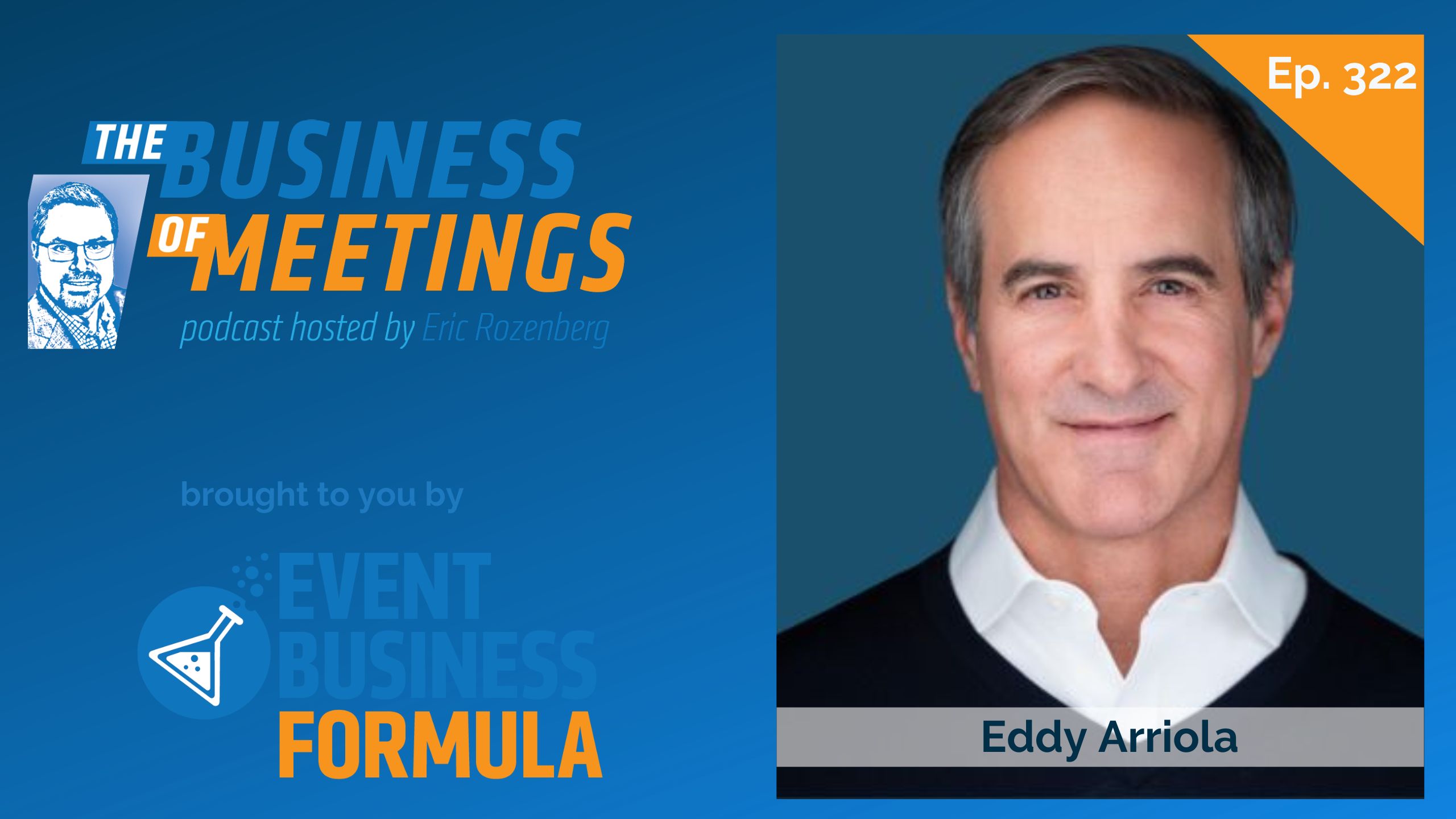
We are delighted to welcome Eddy Arriola, a rock-star entrepreneur from South Florida, as today’s guest.
Eddy has tons of experience building and scaling businesses, including founding Apollo Bank, and he recently published a book on relationships and the art of relational leadership.
Stay tuned for Eddy’s expert insights on how relationships shape leadership, business growth, and long-term success.
Eddy’s Journey
Born and raised in Miami, Eddy is the son of Cuban immigrants who arrived in the USA after the 1960 revolution. Entrepreneurship is part of Eddy’s DNA, shaped by his father, grandfathers, and community. He never even considered working for anyone else, and he has never experienced a traditional job interview. In 1997, Eddy co-founded Inktel with his brothers. He started Apollo Bank in 2008 by relying on his relationships and persistence, and learning as he went.
Entrepreneurial Mindset
Eddy explains that your mindset is built by what you see early in life. Eddy grew up surrounded by entrepreneurs, so starting a business felt natural. He believes that you improve the world by creating jobs, building a good work environment, and setting an example as a leader.
Starting Apollo Bank
Eddy launched Apollo Bank without fully understanding the challenges, which helped him move forward. He started just before the 2008 financial crisis, thinking it would be a short recession. His approach was simple- he just kept on going, and through his persistence, he built credibility and trust with investors, regulators, and clients.
Relationships
Your biggest wins and biggest problems always come down to relationships. Leadership is about getting things done through other people- by managing relationships within your team, building relationships with customers, and within the industry, your community, and your personal life.
Building Teams
Teams are built through trust and relationships. Eddy reached out to people who believed in him and shared his vision. He focused on finding the right mix, including an integrator to complement his visionary role.
Customer Selection
Be very specific about the customers you select. By focusing on the right customers, you can deliver an A-plus product. If you try to serve everyone, your quality will drop. Eddy focused on entrepreneurs and built strong relationships through one-on-one conversations.
Communities
Actively seek out the right communities. Joining EO was one of the most important decisions Eddy ever made. For over 24 years, he has been connecting daily with other members, building meaningful relationships that have shaped his growth- both as a leader and an individual.
Writing a Book
After selling Apollo Bank, writing a book became Eddy’s goal. He wrote his book for his younger self (as a CEO of a growing business). The lessons he shares can be broadly applied, especially in a time when people tend to underestimate the value of relationships.
Relational Leadership Framework
Many leaders tend to focus solely on their customers or teams. However, long-term success comes from understanding and working across all your relationship areas, including your relationship with yourself.
The CARPE Framework
By structuring your approach to relationships using Eddy’s CARPE framework- Connect, Align, Respond, Prioritize, and Evaluate- you will be able to manage your relationships intentionally instead of reacting to situations.
Respond vs React
Do not react immediately. Instead, take a moment to think about the right response. Quick reactions can create long-term problems, whereas a thoughtful response will help you scale.
Evaluating Relationships
Step back often and assess your relationships. Loyalty matters, but it can slow you down if it is misplaced. So, make sure your relationships support your goals.
Empathy and Understanding
Understanding what is going on with the other person helps you respond better. Empathy allows you to align with the other person’s perspective and move forward more effectively.
Misaligned Relationships
You need to recognize when a relationship cannot be fixed. Some people have patterns or issues that will never change. You may even need to let someone who performs well go to protect the organization.
Allocating Time Effectively
Spend your time where it has the most impact. Holding on to low-value relationships out of habit or loyalty can slow your growth. Focus your time on relationships that can move your business forward.
Building Relationships
The best time to build relationships is when you do not need them. Waiting until a critical moment leads to poor decisions. Build connections early so they are in place when you need them.
BIO: Eddy Arriola
EDDY ARRIOLA is a seasoned entrepreneur, CEO, board member, and advisor to CEOs, known for building successful companies and guiding leaders through moments of growth, transition, and transformation. He is the founder and former chairman and CEO of Apollo Bank, which launched during the great financial crisis and grew into one of the most respected banks in the Southeast, ultimately completing a successful exit to a publicly traded company. Under his leadership, Apollo Bank earned national recognition for innovation, corporate culture, and service to the community.
In addition to founding multiple companies and advising high- growth startups, Eddy has served on the boards of private and public companies across sectors—from fintech and healthcare to banking and real estate. His experience includes board service with gMed (acquired by Modernizing Medicine), TotalBank (acquired by Banco Popular de España), and two SEC-registered institutions: Seacoast Bank (NASDAQ: SBCF) and the Federal Home Loan Bank of Atlanta, as well as Linkvest and Plug&Lend. He also served two terms on the board of the Federal Reserve Bank of Atlanta (Miami Branch) and was appointed by President Barack Obama—confirmed by the US Senate—as chairman of the Inter-American Foundation, a position he continued to hold under the Trump and Biden administrations.
Eddy is a nationally recognized speaker, author, a longtime member of YPO and EO, and a trusted advisor to private equity firms and executive teams. His leadership reflects a lifelong commitment to learning, integrity, and helping others grow.
Today, he is an active advisor to companies and CEOs who want to become better leaders, scale their businesses, and lead with greater clarity and confidence. Through his firm, Arriola & Co., he advises CEOs and executive teams on leadership, strategy, and culture. He also serves as a trusted coach, helping leaders navigate complex decisions and high-stakes relationships.
He was born and raised in Miami, Florida, and is a graduate of Boston College and Christopher Columbus High School.
Connect with Eric Rozenberg
On LinkedIn
Listen to The Business of Meetings podcast
Subscribe to The Business of Meetings newsletter
Connect with Eddy Arriola
On his website
Listen on: Apple Podcasts · Spotify · YouTube
“Every breakthrough I ever had in my professional career, and every problem I ever had in my professional career, came down to a relationship.”
— Eddy Arriola
Full transcript of episode 322 of The Business of Meetings podcast, Eric Rozenberg with Eddy Arriola. Lightly edited for readability.
Eric: Hello and welcome to a new episode of the Business of Meetings podcast. Today I am delighted to speak with someone I’ve known now for over ten years. He’s a true entrepreneur. He has so much experience. He started a bank, believe it or not, amongst all the things that he’s done. But the reason I reached out to him right now is that he’s just published a book. It’s all about relationships, mastering the art of relational leadership. Ladies and gentlemen, the rock star from South Florida, Eddy Arriola. Eddy, thank you so much for taking the time to speak with me today.
Eddy: Oh, thank you. That’s such an incredible welcome. I should have you at every party I go to. You should be the MC and hype me up. That’s awesome.
Eric: Well, that’s very nice. But I just touched the surface of everything you’ve done in your life. So that’s my first question really: can you share with us a little bit about your journey, and then we’ll talk about Apollo Bank and obviously about the book. But who is Eddy Arriola? And if I’m not mistaken, everybody’s talking about Fernando Mendoza. You went to the same high school, and I believe you know the family.
Eddy: Well, I’m very proud that I went to Christopher Columbus High School, and it’s certainly a big part of my life. I have three other brothers, and all four of us went there. I’m still very much involved with the school, and it’s been a big part of my life. They call it sort of the brotherhood. Fernando Mendoza and his extended family, he has quite the extended family, went there, so I’m very proud, and thank you for mentioning that. And then one of the things in the book, in my bio, I have all the professional things I’ve accomplished, and then I list that I went to Christopher Columbus High School, and the publisher was like, “With all the things you’ve done in your life, why are you listing your high school?” I said, “You don’t understand how big a deal that is to me and the community I come from.” So, very proud of that, and thank you for mentioning it.
Eric: Well, full disclosure, my daughter is a Hoosier.
Eddy: Oh, wow. Wonderful. This has been a good year for her then.
Eric: Yes, absolutely. So, you went there?
Eddy: I was at Christopher Columbus High School, but I’m born and raised in Miami. I’m the product of Cuban immigrants, and they came after the revolution in 1960. So I think a lot of my DNA comes from being an immigrant, and that specific community coming to America and thinking, “We have to be entrepreneurs because we have to make it on our own.” Growing up, I wasn’t someone who thought, “I’m going to go to college and work for Goldman Sachs or McKinsey.” I thought, “I’m going to start a business.” Not because I was super ambitious, but those were the role models I saw. Both of my grandfathers were entrepreneurs, and when I say entrepreneurs, I mean small business, like I work for myself, I have a handful of employees, and that’s what I saw. My father was an entrepreneur, and the people he hung out with were entrepreneurs, and that was celebrated in our community. So I think that’s in my DNA, always wanting to start something, create something. The best way you can improve the world around you is by creating jobs, creating a good work environment, setting an example, and just being a leader. So that’s a big part of who I am and what I do. I started several businesses, and I’m sure we’ll get into it, but that’s what I’m very passionate about.
Eric: That’s amazing. What you say about being an immigrant and entrepreneurship obviously resonates a lot with me, and there’s no better country in the world to do that, for sure.
Eddy: Yeah, we have a lot of issues, but number one for entrepreneurship, and having that opportunity to really create something and do something special.
Eric: Absolutely. When did you know that you wanted to have your own business?
Eddy: I was just sort of programmed for that. I remember being in high school, and they had these business courses, and people talking like, “I’m going to be an engineer,” or “I’m going to be an architect.” I couldn’t understand that. I thought, that’s like saying you’re going to be an NFL football player or an NBA player. Those aren’t real things, are they? Again, it’s just sort of the example I saw. I never thought about working for someone. I never thought about getting a job. To this day, I’ve never had a real job interview. It’s just really programmed, and I didn’t realize that till much later in life, when I’m like, “Wow, I really never had a boss and never had to realize those things.” I’ve talked to my kids about that, who have bosses now and are frustrated with their bosses, and again, that’s just always been in me. I’m unemployable.
I was asked a question the other day. I was being interviewed for something, and I was talking about leadership, and the final question was, “What would Eddy Arriola the employee say about Eddy Arriola the boss, the leader?” I said, “Eddy Arriola the employee would quit because he couldn’t work for anybody.” I really couldn’t come up with an answer. I just couldn’t understand working for someone. And I’m not saying that in a proud way, I’m just saying that’s the way I’m wired.
Eric: And if I’m not mistaken, on your LinkedIn profile there’s Inktel, you had a big run with that.
Eddy: Yeah, so that business still exists. We founded that company with my brothers in 1997, and it’s still a major call center, data, and marketing company with operations across Latin America. Now my brother’s opened an operation in Africa, and it’s been an incredible business, an incredible run. But we started that business in 1997, and I left it to start Apollo Bank in 2008. They still run that business, and it’s super successful.
Eric: Wonderful. And you know, when you start a business, we always say you have two different profiles: the person who’s out there representing the company, and the person who’s basically making things work internally. Could you have been so successful if it wasn’t for starting with somebody from your family who you obviously trusted from day one?
Eddy: Yeah, so that’s a longer question. I’m forgetting the term, you know, it’s big in the EOS world. Yeah, it’s EOS: the visionary and the integrator. I totally believe in that, and I think with my brothers, all three of us were visionaries, and that was one of the issues, having to find the integrators, because we all wanted to be the starting quarterback. So as I started other businesses, I realized, well, specifically with Apollo Bank, I knew what I wanted to do. I had a strategy, I had a game plan, I had the right relationships, but I knew I needed to bring in an integrator. I hired a gentleman who was older than me, who’d been in banking for many decades, and he came on, and I mention a brief story about him in the book. Um, yeah, is it… Richard Bradley?
Eric: Richard Daly.
Eddy: Exactly. Good memory. Yeah, Richard, and he was incredible. But yeah, I think, again, there have been books about it, and the more I work with companies as a board member, adviser, or coach, I truly believe that you need to have that integrator if you’re the visionary.
Eric: Absolutely. And now you’re talking about starting a bank. First of all, I don’t know many people who decided in their life they were going to start a bank. Second, you were very successful with that. And third, you started the bank, if I’m not mistaken, just at the beginning of, or just before, the subprime crisis. Can you tell us a little bit about that environment, doing that?
Eddy: So yes, a couple of things. One, I really didn’t have a banking background. Like I said, I was a partner in this business, and founded Inktel from scratch with my brothers. We had some bank clients, so I thought I knew about banking and marketing, and I would interact with big banks and see what they did, and really what they did wrong. So I thought I knew a lot about banking, but two key things helped fuel my takeoff with launching a bank. One is that because I was so young and so inexperienced, I didn’t know all the obstacles that were going to be in my way. I didn’t know how hard the regulation was going to be, how hard it was to raise capital, how hard it is to get bankers to think entrepreneurially. Again, because I was so young, I just thought I could do it. Now people approach me like, “Do you want to start another bank?” and I say, “No way, I know how hard it is.”
So that was one, and the second: the financial crisis, you referred to it as the subprime debacle, and I didn’t know it was a financial crisis. I thought it was a recession, you know, recessions last six months, and when you come out of it, things are stronger, and by the time businesses come out, they’ll be doing even better. Again, if I had known how long it would take and how deep and dark the problems were, I never would have gotten into it. But I was so far in the journey that I said the only way out is through. Again, in hindsight, the people that were backing us, whether it be people who wanted to work on our team, or investors, or clients, or even regulators, they saw this guy and his team that he put together, they won’t stop. They really have perseverance. I think people admired us more for that. Once we really came out of the gates to open up and operate as Apollo Bank, we had so much built-in credibility and trust because of the journey we took, and it was that hard.
Eric: How did the name come about? Is it because failure is not an option?
Eddy: Well, part of it. So the true story: I’ve always been motivated by the Apollo mission to the moon. When I was first starting the process of starting a bank, I didn’t really know what I was doing, so I went around the country. I talked to forty different people who had started a bank and said, “Here’s what I’m thinking about doing, what are your thoughts, who else should I talk to?” And as you know, entrepreneurs are very generous with telling their story and their time and their lessons. No one asked for anything in return. I’d ask for an hour, and they’d just keep talking until I said, “I think I have to go now.” People were so generous, and it came to a point where I really wanted to do this. I reached out to a handful of the leading banking attorneys in South Florida, and none of them would return my phone call. I said, “I want to start a bank, this is what I’m doing,” and this was right when the iPhone came out, so I was calling their offices, leaving voicemails. I came across an attorney in Austin, Texas, who was nationally regarded. I said, “Hey, I saw this article, I’d love to get your opinion,” and I sent him an email, and he said, “If you’re ever in Austin, Texas, I’d love to buy you a drink and talk to you more about this.” And I said, “Oh, I’m going to be in Austin, Texas next week.” Of course, I wasn’t really going to be in Austin. So we went, we met, he invited me to the Four Seasons bar, and we had a long conversation, and he said, “You have a really good game plan. I’m sure you’re going to find an attorney, but if you don’t, if you want to work with someone in Austin, Texas, I’d be glad to represent you.”
As weeks passed, I said, “I’m definitely going to do it.” I reached back out to this gentleman, his name is Chad Fenimore, a nationally known banking attorney. I said, “Hey Chad, I’m going to do it, I’m going to launch a bank, I’m going to move forward, and I’d love for you to represent me.” And he said, “Great, what are you going to name the bank?” I said, “I don’t know, I really just decided, I don’t have a team, I don’t even have investors.” And he said, “Well, for the last few months I’ve been giving you free advice. Starting Monday, the advice isn’t free anymore. What’s the name of the legal entity that is going to pay my legal bill?” I thought about it over the weekend, and I’ve always been motivated by the Apollo mission to the moon, that you get a bunch of really smart people focused on a common goal, and you can do anything. So I called him back and said, “The name of the entity that’s going to pay the legal bill is Apollo Organizers Inc., and we’re organizing, and this is my Apollo mission.” And he said, “Oh, I love that.” So I’d go out, I’d have to write, pay a bill, or meet with people, and they’d say, “What’s Apollo Organizers?” I’d say, “Well, this is my Apollo mission.” And then they’d say, “Oh, that’s what you should name the bank, Apollo Bank.” And it kept resonating with people, and they saw the passion I had. So that’s where the name came from. And then, as you’re probably well aware, most bank names are taken. Banking has been around since the inception of this country, and it’s either “the first this” or “the state that” or “national that.” So Apollo Bank was available.
Eric: Amazing. How do you recruit, especially for somebody who’s starting a business, whether it’s a bank or something else? How do you recruit your first employees, and how do you find your first customers?
Eddy: Yeah, so two different things. I think part of it, and that’s really part of the impetus of writing the book, to me it really came back to relationships. When I was starting to recruit, I didn’t have a banking team to put into place, but I reached out to people I felt believed in me, who trusted me, who I trusted, and said, “Here’s what I’m thinking about doing, what are your thoughts, who else should I talk to?” So I started to put together, through my relationships, a series of names and people, and I would meet with them and talk to them about my vision and my passion. Again, if you build a relationship and you build a reputation, it precedes you, and people start to feel that trust carry forward. So I would get out there and interview and talk to as many people as possible, and try to come up with the right profile: I knew I wanted an integrator, someone with a lot more experience than me, who really understood banking, and even though they had much more experience than me, was willing to be the number two person. That’s not easy for a lot of people, and with this gentleman Richard Daly, he was thirty-two years older than me, so it’s not everyone who wants to hop into that spot. I got super lucky, and then from there it started; Richard had his own relationships and people trusted him, so we just started building from there. It was about conveying our culture, conveying our values, and just being relentless and trying to surround ourselves with like-minded people.
Regarding customers, to me, and we were having a conversation offline, and you nailed it without even articulating it, is customer selection is so important. So when I talk to you about it, one opportunity, “no, no, no, no, no, here’s my customer,” and you’re very near, so I think you need to be the most successful people, especially starting off, are very specific on customer selection. They know, “I can deliver A+ service and a product to this particular person, and if I veer from it, I’m going to give a B+ or a B-.” Then you don’t really build a great company. So part of it was customer selection, and with us it was, one of our taglines was “by entrepreneurs, for entrepreneurs.” So we specifically targeted the EO and YPO world, entrepreneurs, people running a business. We knew how to speak to those customers, we knew their needs, and again, through our relationships and the trust we had built, we just met with people one-on-one, and as you know, the power of meetings and the power of one-on-one conversations. So it’s the customer selection, the power of relationships, and making sure you have a really good product and you deliver.
Eric: That’s awesome. Yeah, to your point, I’m focusing on being the voice of event entrepreneurship, and that’s it.
Eddy: You’re doing a great job.
Eric: Thank you. Besides the obvious prospect pool with EO and YPO, how does EO and YPO help you in your life and your career, and what would you say to any entrepreneur listening about joining such an organization?
Eddy: Yeah, so I joined EO twenty-four years ago, and aside from marrying my wife, and I’ve been married for thirty years, aside from marrying my wife, it was the single best decision I made in my entire life. For twenty-four years, there hasn’t been a day that goes by, counting Saturdays, Sundays, holidays, that I haven’t connected with someone from EO or YPO and had a hello, a meaningful conversation, a deep conversation. It’s had such an impact on me developing as a person, as a leader, as a husband, a father, and certainly as a business person. It’s made all the difference.
So I joined EO twenty-four years ago. I’m going to get the numbers wrong, maybe sixteen years ago, my whole forum transitioned to YPO for a variety of different reasons, but I’m still very connected to both organizations. It’s been the single best thing, and whenever I hear someone who’s sort of in the position I was in twenty-four years ago, or even if I know that EO or YPO can help them, I’m all over it, encouraging them, and as you know, in the book I even mention the power of EO and YPO, and a handful of people have read this and said, “Oh, I saw this, should I join?” I say, “Yeah, the answer is yes,” and I’m going to connect you via email today.
Eric: Awesome. I actually referred the son of friends who now qualify for the accelerator program, to go into that program, which is phenomenal.
So, Eddy, I bought the book to support you. It’s all about relationships, and every time I have friends writing a book, I want to support them. And I read it because I knew I was going to have you on the podcast. As I told you, honestly, I said, “Yeah, I knew it was going to be a good book because of who you are and because of your career.” I didn’t know it was going to be more than a good book. It is a book that anybody listening, if you know anyone in any organization, small or large, should be reading. It is, for me, a landmark book about relationships and how you grow a business. So first thing first, when did you decide, “You know what, I have this book in me, and now I’m going to do it”?
Eddy: I wrote the book because I wanted to write a book before my days are gone. That was a lifelong goal. After we sold Apollo Bank in October 2022, I’ve been involved in a bunch of things since then, but I said, “I’m going to write a book.” There was a handful of books I thought about, and sort of themes I knew I wanted to write about, and this is what I was going to do. It dates back to being a little kid, and I shared this story a few weeks ago. I did a book event at the independent bookstore in my community, Books and Books, which is a legendary bookstore down here. We did it on a Friday, and it was a sold-out event. The owner of the bookstore, Mitchell Kaplan, who’s an institution in Miami, said, “Hey, great, we sold out in one day, we can get you a bigger venue.” And I said, “No, no, I don’t want a bigger venue. I dreamed as a kid of being in that bookstore, and you being there, and my friends being there. I don’t want to be somewhere else, I want to be right there.” So I’ve always had this dream and this vision.
So that was number one. Number two, as I started to put together a book, as you know, especially for a first-time author, the advice is you write for one or two people. You had mentioned your book is for your daughters. My book was for the younger me, the Eddy who was CEO, and as you read the book, it’s meant to be for a great CEO, and it’s meant for a very specific target audience, which is a leader, a CEO of an emerging, growing business. As people have started to read the book, I’ve gotten feedback that, like you shared, it’s for more than just CEOs and entrepreneurs, it’s for anybody. I have friends who’ve said, “I want to give this to my kids, because in this day of remote work and AI, young people don’t appreciate the power of relationships.” Last week I got a call from an entrepreneur, a very successful entrepreneur, who’s a donor to the men’s lacrosse program at Cornell, and they’re going to be in the Ivy League championships next weekend, and he said, “I want you to order fifty books, I want you to sign them, ship them to me, because I want these young men to know that when they graduate and they finish, what’s going to matter in their life is not the trophy they get or the ring they get, it’s going to be the relationships they build in that room, in that locker room.” So the power of relationships really resonates with anyone who’s been there and understands that they want to pass that on to the next generation.
Eric: Absolutely. As I was saying, whether you own a business or not, all those elements you’re talking about, to me, I was reading it and I thought, “Oh, I’m obviously going to offer it to my eldest daughter, who’s a consultant at a large firm, and I’m going to give it as well to my second one, who’s studying at IU at the Kelley Business School, and I’m going to give it to the third one who’s in high school as well.” I think what you’ve done, and especially the way you’ve written it, is magnificent, and, thank you, obviously, very well deserved, to have this bestseller status. But more importantly, if you can give some examples now, first of all, you’re talking about six different relationships, and by the way, I won’t tell all the stories in the book, but I like that every chapter starts with a story, like, oh, I didn’t know about that, even one about Pulp Fiction and about The Godfather. I really like that. Can you tell us a little bit about the different types of relationships you’re looking at, in your advice for somebody who’s listening?
Eddy: Yeah, well, as you already shared, I wanted the book to be, well, I wanted someone to start and keep going, and as you know, there are a lot of books that have some great ideas, but they’re very hard to read. So in working with, we have the same publisher, and them coaching me and working with first-time authors, is on what works, especially for this more how-to sort of leadership book, and it’s, you’ve got to keep their attention, you’ve got to keep chapters short, and at the end you want to have quick takeaways and that sort of thing. I said, well, let me start off every chapter with a story, and not my story. Even though in each chapter there’s always a little story about a very practical thing I did, I wanted to start each chapter off with a story. So, as you saw, there are sports stories, real-life business stories, history stories, pop culture. Some of the references, there’s a story taken from the movie Pulp Fiction, another from The Godfather, there’s a story about Tom Holland and Spider-Man, there’s one about Mr. Rogers, JFK, RFK, and hopefully that keeps people going. Throughout the book there are various different stories.
But what I found was leaders, especially, get to a certain point of running an organization and they become overwhelmed, and they say, “I need to…” I don’t want to say strategy is easy, but strategy is kind of like a once-a-year thing, you come up with a strategy and you stick to it, you don’t overthink it, and product and service sort of take care of themselves. But what I found was every breakthrough I ever had in my professional career, and every problem I ever had in my professional career, came down to a relationship. It came down to working with this person, and they’re either helping me get this thing done, or they’re not, and I don’t have that relationship, and I can’t accomplish my goal because they’re either in the way or not providing a bridge for me. So I wanted to help leaders think about this in a different manner and give them a framework and some tools to get there.
I saw a lot of leaders who were really good, they’d say, “I’m a relationship person,” but what they were really talking about was they’re really good with customers, or they say, “I’m a relationship person,” they’re good with their team, but they weren’t involved in their industry or their community, or, as you know, in chapter six, their personal life was a disaster. So one of the arenas I call out is yourself, how you manage yourself. I tried to break down all the different areas, and you can’t do them all at the same time, but you do have to think about it and be aware of all the different components that are going to lead to your success. I was working with one CEO the other day who read the book, and he said, “This is great, I get it, there are too many relationships, I don’t want to do it.” I said, “But that’s the job, my man, that’s the job you’ve got. Managing relationships and getting things done through other people is how leaders get things done.”
Eric: Absolutely. I’m always, not judging, maybe I am judging, but I’m looking in general at people when I’m sitting at a table, how they are addressing the waitress, if they look in their eyes, if they say thank you, or if they just ignore them completely. Did you have a way of building your bench, when you were meeting people outside of the bank, of being impressed or not by their behavior, and then keeping in touch with them?
Eddy: Yeah, so, if I’m interviewing someone, and I’ll keep it professional, if I’m interviewing someone for a possible role, they might be my lawyer, my banker, someone who works on my team, or someone I might not work with but I might recommend to another friend, as a possible board member, so, who are the people I want to keep in my little universe, and even friends, I’m looking for pattern recognition, like you said, how are they treating others, are they present. I have a framework in the second part of the book called the CARPE framework, and one of the key things is how do they connect. So, you right away, we don’t have the exact same background, but right away you’re like, “Oh, this high school thing,” this weird high school thing that he has, he’s fifty-three years old and he’s still talking about his high school, that must be really important to him, let me connect. Right away, you’re like, “I didn’t go to that high school, but someone who’s important at that high school went to IU, and my daughter went to IU.” So those are the pattern recognitions, the types of people I want to connect with and have in my life. If I have a business development person, or a lawyer, whatever, I want to see how they connect with people, how do they treat people. So those are certainly some of the things I’m always on high alert for.
Eric: And talking about your CARPE acronym, which I love, because I had a group in Belgium of four friends called the CARPE DM, and we had one day blocked in our calendars, and all our teams knew you shouldn’t try to put any meeting there, and every three months we would meet and talk about some sort of forum, if you want. And because it’s Belgium, at that time we had a lot of Michelin star restaurants, so we had to finish the day with that. But that was great. When you’re talking about the CARPE acronym that you use, besides connecting there’s also the align and the values. Do you remember a moment where you thought you were completely misaligned, whether with a customer or somebody on the team, and this cannot continue, or did you always try to improve the relationship, thinking that it can get better?
Eddy: Yeah, so I’m certainly an optimist, in terms of, I think a trait I have, either I learned it or maybe it’s ingrained, or both, is if there’s a breakdown, I’m trying to figure out, what did I do, what am I missing? I literally ask myself this question: what’s going on with this other human being? If you’re at the airport and the person behind the counter at American Airlines is not helping you, instead of yelling, instead of screaming, take a beat and ask yourself, what’s going on with this human being? There are probably two hundred people behind you, everyone else is yelling, there are fifty more, they’ve had a long day. Try to be like, all right, how do I get my priority, let me try to understand their priorities and see if we can get some sort of alignment. You can carry that across almost any part of your life, and that’s where this framework comes in, because you say, now I see where I’m aligned, I know how to get this person aligned. One of the ways I can do it is by connecting with them, making an emotional connection, and even in the responding, not yelling, taking a beat, and trying to get them to really understand where you’re coming from, slow things down, maybe you apologize, if you’re asking for a big favor, realize, “I’m about to ask you for a really big favor, and this is going to be really hard, but this is what I need. I need to get upgraded because of this, this, and this.”
So, to go back, I really think empathy is a superpower. If you can really take a step back, what’s going on with this person, because there’s a whole other story on the other side, and if you can understand it, you say, “Ah, now I know how I can approach this.”
Eric: How much can you understand? I remember I had somebody on my team who was an excellent salesperson, an excellent project manager, but there I had really relationship issues with other people on the team, and I’ve always been like, to your point, being optimistic and trying, but for me it’s like three strikes and out, or two strikes and…
Eddy: Sorry, yeah, so, I’ll tell you. I was working with, I’ll say I’m working with some, I won’t say if I’m on the board or not, I don’t want to give the specifics away, but they had a really, I won’t say a superstar performer, but a really, really good performer in their company, but the person just had issues. My friend, the CEO, who asked me for advice, he’s like, “This guy’s really good, I really need him, but there’s some…” And I put myself in that person’s position, and I said, “This guy’s just messed up. There’s never anything you’re going to do with the relationship. This guy just has, it’s kind of like the crazy girlfriend, this is the crazy girl, you’ll never figure it out, you need to let him go.” And he said, “But he’s a superstar performer, he hasn’t done anything wrong.” Yeah, but he’s always, and with this particular person, it was just super erratic behavior, and you can’t fix that. So, again, to go back, where is this person coming from, what’s going on with this person? In this particular person’s case, it was, they had a lot of mental issues and issues at home that my friend could never fix, and he had to let him go.
Eric: And there’s a story, as you mentioned, I won’t say all the story, but that one in particular was with Michael Corleone.
Eddy: Yeah.
Eric: The Godfather, and I believe it was in Cuba before.
Eddy: Yeah, that’s right, that’s right. Okay, yeah, with Hyman Roth.
Eric: Yes. But when you mention that story, and then you get to illustrate the point about the relationship, and the timing of a relationship, and sometimes the relationship evolves, the time you have to dedicate evolves. I believe you gave an example of one of your first supporters, a client that wasn’t growing and was taking a lot of your time, and it made me think, because I had one of my first clients, when I had a corporate agency, they would only do small meetings, board meetings, but I always wanted to be present, because they were one of my first clients. And then it makes me think that maybe I should have thought about it in a different way, and been there once in a while. Can you elaborate on that? Especially, we have a lot of small business owners listening to you right now. What is it, then, how you allocate your time in terms of your clients?
Eddy: Yeah, so that last piece, again, sort of, there’s this framework, and I’ll call it the last piece just because I use the framework, it’s called CARPE, because it sees the relationship, and the last part is evaluate, but it’s never really the last part, you’re just in a constant motion, and sometimes you start at the R and you end up somewhere else, but the evaluate is very important, because your business is always moving, your priorities are always changing, and the other party is changing too. So, without knowing the specifics of who you were talking about, but it sounds like situations I was in, you’re probably like me, in that you pride yourself in being a very loyal person, loyal to your clients, loyal to your friends, and loyalty can blind you sometimes, because you identify as being a loyal person, but that may be hurting your business. That certainly hurt me a lot, where, this is my first client, and this is the guy I went to college with, and this is the guy who believed in me, but then you have to really pull yourself back, and think, what is the big mission of the company, the best use of my time is to be on the road, prospecting and meeting with new clients, and spending time with legacy clients isn’t so useful, and it sets a bad example within my organization. So, I think you need to evaluate and really assess, you pull yourself back, up, at forty thousand feet above the air, and say, is this getting me to where I really want to go, or am I just slowing down the organization?
But again, one of the things I found in my own evaluation was, I liked saying I was a loyal person, and even now, if you said, “Eddy, you’re a loyal person,” I would view that as a compliment. But it can slow down your organization, because there are different ways of addressing the loyalty. The example I gave in the book was, not dropping the phone, dropping everything I do to take this customer’s phone call, was coaching them to say, “You’re always going to call this other person, they’re better at handling the situation than me, because I’m too far away from the situation.” Or, “You know what, we’re just going to have one really nice dinner a year, we’re not going to have lunch every week, I’m not going to always be responding to your text to try to get on the calendar. We’re going to do this one time, and I’m going to be present, and we’re going to have a great experience. But that’s all I can do at this point.”
Eric: And again, I like your concept, your CARPE, is the relationship, the connecting, the alignment, respond, priorities, and evaluation. So we’ve touched on the two first and the last one. Can you say some words, and maybe give an example, about the respond part, and about the priority part?
Eddy: Yeah, so the counter to respond is sort of react, and I find, especially entrepreneurs, small business owners, it’s react, react, react. The phone rings, the customer’s upset, I yell, I scream, I do something. But it’s really, again, sort of, if I could just give one tool, take a beat and really think about what’s the right thing for me to do. Maybe it’s not for me to call Eric back, it’s to meet with the account manager handling this account, give them all the tools, and be like, “Okay, now Sally, you call Eric, you tell him we talked, you tell him I made this a priority, but now you have all the tools to resolve it. Eric’s not always calling me because I’m probably not the best person to solve your problem.”
Eric: And so you’re actually becoming the bottleneck.
Eddy: You becoming the bottleneck is right. So it’s really to take a beat and really understand, I don’t want to fix this short-term problem and put out the fire, I want to have a solution that can help me scale this business. I use several examples to really think about having the proper response, and it’s more about really being thoughtful about it, because too often we are rewarded for quick reactions, and being like, “Oh, that guy moved quick.” Well, if you move quick too many times, you may be setting a bad example within your organization and your culture, and training your customer wrong.
And the priority, I think, arguably the most important part of it, is really prioritizing your relationships, because you have all these relationships in your life, and even if you just take an example of your personal life, you have cousins and uncles and brothers and sisters and friends, but there are times when certain friends need your time more than others, maybe because something’s going on in their life. You talked about those three friends, you prioritize those people, and by giving them that, you’re probably putting someone else down on the list, and you have to be okay with that. For example, right before our call, I had a very good friend of mine, who used to be in one of my old forums, and he called me at, we were getting on the call at 10:00, he called me at 9:55, and I knew we were going to have this call, but I still picked up the phone and said, “Hey, Henry, what’s going on?” He said, “I’m about to go on a podcast, but I wanted to take your call.” He said, “No problem.” But to me, he’s on that very, very short list of prioritization, like, he calls, I’m picking up the phone.
It may be your kids, and so there are different seasons in your life where you have to evaluate and reprioritize. It may be clients, for example, I’m on the board of Seacoast Bank, which bought our bank, a publicly traded company, and we’re building a really big headquarters in Stuart, Florida, and in order to do that required, not me, the leadership team at Seacoast meeting with the town commissioners and the local people who are against development. All of a sudden these little conversations became a priority for the entire organization, we have to go out to the town hall, we have to develop these relationships with the commissioners. Now, next year, that’s probably not going to be a priority, I’m not going to be meeting with those commissioners, but during those three months, the priority was those particular people. So it’s again always going back and evaluating, where do I need to be, where do I want to be, and what are the relationships that I need to develop and focus on right now, or in the next few months, in order to accomplish this goal.
Eric: It’s like getting a loan from a bank, the best moment to build a relationship is when you don’t need it.
Eddy: A great example. If you’re thinking about, I talk to a lot of, especially EO and YPO guys, they’re like, “I’m selling my company, I just signed an LOI.” What? Wait, wait, have you talked to a lawyer, have you talked to an accountant? Put me in touch. I have a very good friend who was in EO for a while, and he says, “I’m selling my company.” Congratulations. He says, “I need your help finding an investment banker, an accountant, and a lawyer.” I said, “Oh, okay, let’s talk.” He said, “No, no, I already signed the LOI.” I said, “What are you talking about, you were supposed to…” And needless to say, that deal fell apart, and it was a disaster. He got in a fight with the accountant, he got in a fight with the lawyer. I said, “Okay, now that that’s behind us, you’re probably going to want to sell your company again, let’s say two years from now, start meeting with lawyers, start meeting with accountants, start meeting with investment bankers.” And he did eventually, and he found a great trifecta of consultants. But you really need to think about where you want to be down the road.
For example, one of the things I tell people our age is, you should be developing, whether you’re playing pickleball, or golf, or, people like us need to develop a relationship with a physical therapist, because you may not need them today, but you will need them at some point, and you’d better know, “Okay, I hurt my shoulder, I’m calling this guy, he’s going to take me in at 8 o’clock on a Monday,” because those things are going to happen.
Eric: Well, talking about those things going to happen, maybe I should call already a funeral home. You know what, those are arrangements you want to handle ahead of time, so that your kids, heaven forbid something happens…
Eddy: I know plenty of people who have a very good relationship with a rabbi or a priest, and when bad things happen, when life happens, they’re like, “Ah, the rabbi picks up my phone call right away, the priest picks up my phone call right away, and they help me through these difficult situations.” So it’s actually a very good example.
Eric: No, that’s true. Eddy, I love your book, it’s all about relationships, I really recommend everyone buy it, and I’m very appreciative of your time. But I know, you know, I have also, it’s great to see you, and I appreciate our friendship, and you and I connected from the day we met years ago, and I’m glad we’ve kept the friendship.
Eddy: Yes, me too, absolutely.
Eric: So, if you allow me, I have two quick last questions for today. The first one is, how do people get in touch with you if they want you to come and speak and talk to them?
Eddy: Yeah, great, thank you. So, the best way is on my LinkedIn page, it’s Eddy Arriola, A-R-R-I-O-L-A, and I’m pretty active on LinkedIn, they can message me there. On my website it’s arriola.co, A-R-R-I-O-L-A-C-O dot com. And then you can go on Amazon and buy my book, and if you buy the book, leave a review.
Eric: Absolutely, which I have to do. I always do that, but first I need to finish reading it, which I did.
Eddy: Thank you.
Eric: So I’m going to do that. And my last question: when we meet again in one year with a bottle of champagne, what are we going to celebrate?
Eddy: Ooh, good question. I don’t know exactly, all the things going well, I think we celebrate relationships. Maybe that’s what we’ll do, we’ll talk about the relationships that were the most important over the past year, that helped us get through hard times or the good times. It’s, right now I’m in a season where good things are happening to me, and it’s great to see relationships like ours bubble up to the top. So maybe that’s what we’ll celebrate.
Eric: Wonderful, Eddy Arriola, thank you very much. It’s all about relationships.
Eddy: Thank you, my friend.
Eric: Thank you for tuning in to the Business of Meetings podcast. I hope you found today’s episode valuable. If you enjoy the show, the most important thing you can do is leave a review and share it with your colleagues, it really helps spread the word. I truly appreciate your support. And if you’re ready to take your business to the next level, don’t forget to visit eventbusinessformula.com to learn more about how we are helping event business owners like you. Thanks again for listening, and I’ll see you next time.