
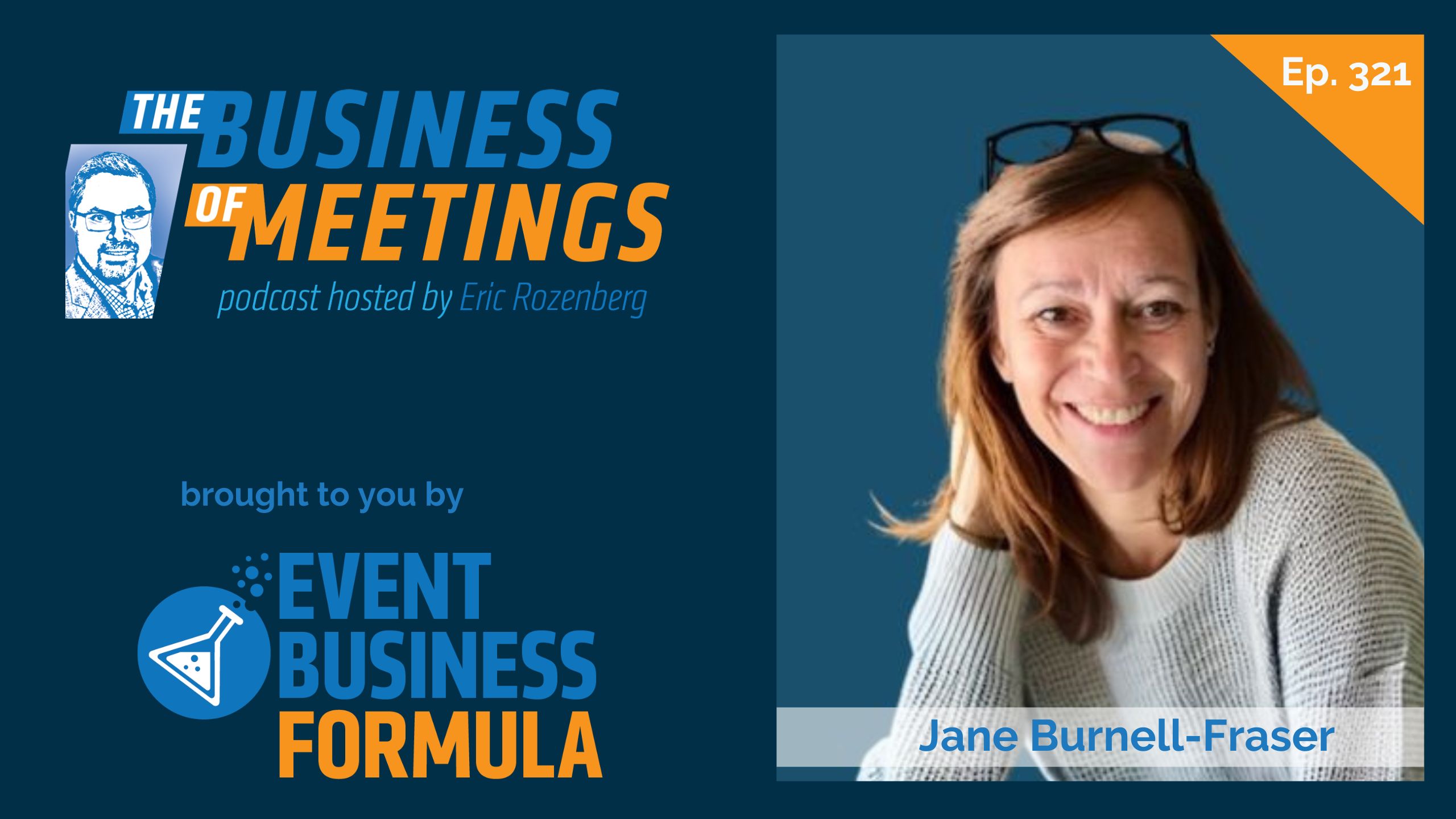
We’re delighted to welcome Jane Burnell-Fraser, a seasoned leader in the global hospitality industry and the founder of Enhance Lux, as our guest today.
With a career spanning multiple countries and senior roles across luxury brands, Jane brings practical insight, bold thinking, and a fresh perspective on the future of meetings, incentives, and luxury experiences.
Jane’s Journey
Jane began her career as a banqueting events coordinator in London, where she developed a deep connection with people and learned the mechanics of running a hotel. She progressed to regional commercial sales and joined Four Seasons early in her career, spending 18 years in senior roles worldwide and contributing to hotel and regional openings. She later moved to Hilton, where she helped create a global luxury sales organization.
After years in corporate leadership, driven by a desire to pursue new ideas and create something of her own, she decided to launch Enhance Lux, a consultancy.
Entrepreneurship
Moving from the corporate world to entrepreneurship allowed Jane to pursue ideas more quickly and with greater flexibility. She highlights the importance of leaving on good terms through open, honest conversations. Her early success came through LinkedIn, where she made several new connections that led directly to her first clients, reinforcing the value of visibility and consistent engagement.
Staying Connected
Her experience with remote work supported Jane’s transition to working independently. She relies on self-motivation and discipline, applying the same principles she used when leading teams.
Luxury Industry Shifts
Although luxury, supported by high-net-worth individuals who prioritize travel and experiences, continues to perform strongly, Jane insists that this resilience should not be taken for granted, as changing demographics and expectations are reshaping the landscape.
Next Generation of Luxury Consumers
The next generation of consumers is redefining luxury. They prefer authenticity, inclusivity, and sustainability rather than traditional, formal experiences. They still expect high-quality service but want to feel comfortable, express themselves, and engage in experiences that reflect their values.
Changes within the Meetings Industry
A risk those in the meetings and incentive industry face is becoming too comfortable with the current model. While the current model was built on strong relationships, expertise, and logistics, hotels and suppliers are increasingly developing their own capabilities.
Technology and AI
Technology and AI are changing how services are delivered, giving clients more direct access to tools and suppliers and reducing their reliance on intermediaries. Jane emphasizes that this shift cannot be addressed with small adjustments, as it requires clear repositioning of the value being offered.
The Human Experience
Jane highlights the opportunity to move beyond logistics and focus instead on the human experience. That requires understanding clients’ businesses, culture, and challenges, and designing experiences that support measurable outcomes, such as engagement and performance.
Opportunities for Advisors
There is now an opportunity for meeting planners and agencies to move beyond a purely logistical role and position themselves as strategic advisors. By engaging more deeply with leadership and organizational goals, they can deliver greater value and demonstrate clear ROI.
Balancing AI and Human Connection
AI can enhance efficiency and support service delivery, but it cannot replace the human connection. In hospitality, the ability to anticipate needs and create meaningful interactions remains essential, and technology should be used to support that rather than replace it.
Future Vision
Jane focuses on helping businesses refine and elevate what they already do well. She works with clients globally and is actively involved in mentoring. She aims to make a practical, measurable impact, particularly with smaller businesses where they can implement change quickly and effectively.
BIO: Jane Burnell-Fraser
Jane Burnell-Fraser is a global luxury & lifestyle hospitality leader with over 25 years of experience driving growth, building high-performing teams, and cultivating strategic partnerships across international markets.
Most recently, she served as Vice President of Global Luxury Sales and Executive Director of Global Luxury Partnerships for Hilton’s luxury brands, in which, in addition to building a global luxury sales organization, she led the launch of an innovative global B2B travel-industry loyalty program, delivering increased engagement and measurable revenue growth.
She previously held senior strategic commercial roles at Four Seasons Hotels & Resorts, leading regional commercial sales strategy, supporting international expansion, and strengthening customer engagement across key global markets.
Jane is the Founder & Principal of Enhance Lux, a partnership-driven consultancy helping hospitality, travel, lifestyle, and experience-led brands grow and evolve. She works with businesses to accelerate growth through strategic partnerships, build global ecosystems, and refine commercial strategies and brand positioning, delivering meaningful results.
Connect with Eric Rozenberg
On LinkedIn
Listen to The Business of Meetings podcast
Subscribe to The Business of Meetings newsletter
Connect with Jane Burnell-Fraser
On LinkedIn
Email: jane@enhancelux.com
Listen on: Apple Podcasts · Spotify · YouTube
“Don’t let the AI lead the human, let the human lead the AI.”
Jane Burnell-Fraser
Full transcript of episode 321 of The Business of Meetings podcast, Eric Rozenberg with Jane Burnell-Fraser. Lightly edited for readability.
Eric: Hello, and welcome to a new episode of the Business of Meetings podcast. Today I’m delighted to speak with someone who has a lot of experience in our industry, having worked for Four Seasons, for Hilton, all about luxury, but has also created her own business, her own consultancy. She has very interesting ideas and insights we’re going to share today. It’s my pleasure to welcome Jane Burnell-Fraser from EnhanceLux. Jane, thank you so much for being with me today.
Jane: Thank you for having me, Eric. It’s wonderful.
Eric: We were just talking before that I sense a British accent coming from, of course, somebody who has no accent for me. [laughter] And I thought, first of all, I wanted to ask you, what is your journey and how did you join our industry?
Jane: Well, it’s a great question, and I’m quite complicated in many ways. I’ve lived and worked in six different countries throughout my career. I’m married to a Canadian. I’ve got dual Canadian British citizenship. All that to say, that wraps around a really incredible journey that I’ve been lucky to share in the global hospitality industry, which started out actually, I was a banqueting events coordinator on property in London, and that’s really where I got the bug. I really loved the connection with people. I really learned the mechanics of a hotel. When you’re working in a hotel and you get the operational buzz and the feel of how a hotel actually works, and I think that’s been really, those early days have really helped me as I’ve progressed through my career into more of a regional commercial sales area, where I progressed into Four Seasons very early on in my career. I was very lucky to start with one of the most incredible hotel companies in the world, and I was blessed with 18 years with them, and during those 18 years I held senior positions in most parts of the world and was lucky enough to be at the beginning of very many of the openings of hotels, and in fact regions. I was one of the first senior female executives to go to Saudi Arabia, for example. And then a little bit later, I always wanted a global role, and Hilton came after me, and I had a fantastic boss at Hilton, and we worked together very early on to create a global luxury sales organization for Hilton, which was about seven, eight years ago now. And then I made the jump about a year ago. I’d always had an itch to kind of do my own thing, and I created my consultancy, EnhanceLux, at the end of 2024. And it’s actually amazing when you do something like that, you’re never really sure how it’s going to go, but it’s given me a pathway to these kind of conversations, which I’m loving.
Eric: That’s awesome. All the friends that I know that made the switch from corporate America to being an entrepreneur, obviously there’s different reasons for that. When you get into it, when you cross the Rubicon, what is happening in your mind at that moment in terms of questions that you have, clients that you’re looking for? If you can explain a little bit, I’m sure it would be helpful for people listening.
Jane: You mean from Europe to America, or from America to my new company?
Eric: From corporate America to your own company.
Jane: Okay. I think it was because I was getting, if I’m honest, a bit frustrated. I’d kind of had big ideas, and that’s kind of like a bit of an itch as well. And things, when you’re in a big organization, things take a lot of time to happen. So I was getting a little bit frustrated. I wanted to do some different pieces to my career. I had other ideas I wanted to pursue. I had a really great relationship with my boss at Hilton, and his name is Frank Passanante. He won’t mind me saying that because he’s so great.
Eric: Oh, Frank. Yeah. He’s an amazing guy, and he was a guest on the podcast as well.
Jane: Well, how lucky was I? Okay, he gets this luxury girl from Four Seasons that comes to Hilton, and we’re kind of learning with each other, because it was a huge jump from a single luxury brand to Hilton, which has got over 20-odd brands around the world, 7,000 hotels, and it’s just a very different organization. But Frank was great, and we kind of really built this kind of unique little bubble of luxury, first of all to get Hilton started with those luxury brands that they had. There’s now five or six luxury brands under the Hilton umbrella, and we had a lot of fun doing it. It was very entrepreneurial, in that, believe it or not, in a huge organization it was very entrepreneurial, which I really loved. And then I kind of felt that I’d kind of done my bit, and then it started to get, in my world I sometimes refer to being grown up, and it got a little bit grown up, and I thought, well, I want to go and play, I want to do other things. And Frank and I had a really grown-up conversation, but we worked together on my exit, which I’d recommend anybody actually who’s thinking about making a jump like that, to have a really honest conversation. Don’t just leave people in the lurch and do things behind the scenes, it’s just not good, right? Nobody benefits from that. And in our industry, as you know, it’s a very small industry, right? Everybody knows each other, and you’ve got to be really, if you’re going to close the door, that you leave it open, and that you’re not kind of leaving a bad taste in anyone’s mouth. So I felt very committed to doing that when I made that decision.
Eric: That’s awesome. And yeah, as I was saying, he was a guest on my podcast as well, as recently as an amazing lady by the name of Kim Napolitano, which was a fascinating conversation.
Jane: Oh yeah, again I had no idea about that, but how amazing is that? Wow.
Eric: Yeah, absolutely. So you’re starting your own business. How are you finding your first client? That’s my first question.
Jane: Yeah, so interestingly enough, it’s all been through LinkedIn. And even more interesting to that, it’s not been through anyone I know on LinkedIn. It’s all been new connections that I’ve made through my initial post when I launched my company, which obviously I didn’t know that was going to happen. I was kind of thinking, well, I’ll let the world that knows me know what I’m doing, and I’m hoping that somebody’s going to come back and say, “Oh, Jane, we worked together five years ago, let’s do this.” And that wasn’t what happened. I’ve had some amazing new connections. I’ve currently got two or three clients now that have come purely through LinkedIn, and none of them are in Canada. One is in Italy, one is in the United States, and one is in India. So it was incredible how it all landed. And the post I made on LinkedIn, I had over 160,000 impressions on that post.
Eric: Wow.
Jane: No, I actually got a little thing from LinkedIn saying I was one of the top posters, or whatever they call it. So it was purely through LinkedIn. I did a post a few weeks ago actually about the learnings I’d had from making that jump, and one of them was, make sure you keep connected. Make sure you’re active on LinkedIn and you’re reaching out to not just the people that know you, but in my case, people that I’d never really knew, and made connection with me.
Eric: Well, 160,000 impressions, that’s a nice way of remaining connected to people.
Jane: Yeah, I know. I took a screenshot of it actually. I’ll send it to you. [laughter]
Eric: No, I believe you. It’s very impressive. So you’re getting your first clients, and that’s also, I’m focusing first and foremost on business owners, which for the majority of us is small business owners. So you are now going from an environment where you have thousands of colleagues, when I’m sure when you get into the office you always have, like, five, ten, fifteen people interacting every day, up to, it’s you in your office in front of your computer. How do you live through that, and what did you put in place in order to remain, or to not feel too isolated?
Jane: I really think the experience we all had at COVID, when we were all of us on our own working in front of a screen, really helped me. I didn’t realize at the time it was going to be helpful, but I think when I made that transition from Hilton to my own business and I was on my own, and I’ve worked remotely most of my career anyway, even before COVID, so I’ve been very used to being on my own, which doesn’t really bother me at all. I’m very self-motivated, I think, because of that reason, and I also practice what I preach. I remember sitting down on my first day in the office thinking, well, you’ve been managing teams and mentoring and educating teams for all of your career, now put your money where your mouth is and actually do what you’ve been preaching. Get on with it, pull your big girl pants up, and let’s just make this happen. So that was really my attitude, but I really think, ironically, COVID really helped with the isolation piece for me.
Eric: Awesome. You’ve worked all your life in luxury brands. I feel sometimes that that’s the only part of our industry that will never dry up. It seems to me that there are always new luxury properties that are opening, that obviously there’s a lot of people with major means that can use that. You seem to know it, so tell us a little bit about that.
Jane: We shouldn’t take it for granted, but we’ve been proven again and again, particularly during recessions and the situation we’re all dealing with around the world right now, luxury seems to be more resilient, and that’s because of the customer base. These are high net worth individuals, which I am not, but people that travel and operate in that area of the world, and within those organizations they travel. During COVID again, commercial airlines were grounded, but high net worth individuals were jumping on a private jet and traveling to the Maldives. So it is resilient to a point. I get concerned sometimes because I think we’ve got to keep a closer eye in the industry on the changing demographics and generational areas of luxury that are moving very quickly now. There was a time where luxury was, you could rely on it continuing to be that sort of glitzy, silver service and all that kind of stuff, but we’ve got different generations coming up now, and they’re growing up, I wouldn’t say they’re growing up more quickly, but they’re growing up with a lot more insight into the world. There’s a lot more technology that’s allowing them to think about where they want to go and what they want to do. So I think the luxury industry, and I see a lot of brands doing that, really need to get into the mindset of those generations that are coming up. The alpha generation, for example, we talk a lot about Gen Z, but the alpha generation and the beta generation, I just became a grandma. Would you believe, my, I worked it out the other day, my grandson’s a beta, or beta, I don’t know if it’s an English or an American term, but he’s going to be that generation. You think, wow, what’s it going to be like for him when he’s traveling around and wanting to go on holiday, and it’s going to be very different. And I think we’ve got to do a better job at really thinking about that, and not take so much of it for granted.
Eric: First of all, congratulations on becoming a young grandma. What do you see in that next generation of high net worth individuals that is different in the type of experience they are searching for?
Jane: First of all, I don’t think they want what their parents had, I think that’s a big no-no, right? And I know when I first started in Four Seasons, there was a lot of generational copycat going on. If you didn’t get what your dad, your mom and dad had, then well, you weren’t succeeding. So there was a lot of that going on, that’s kind of my generation. Clearly, I think now there’s a lot more focus in that generation on sustainability, the green and the planet and environment, that area, although we’ve got to be really careful how we message that through luxury, it’s just got to be balanced, right? It can’t be contrived. I believe that the next generation, the boomer generation, they’re starting to die off now, right? And they’re leaving exponential wealth. That generation, typically, there were more of them, but they were the last generation that sort of had a job for life and had the good pensions and everything else, the investments, and that’s all being passed down now to the next two generations. So there’s a lot of wealth out there that’s got to be thought through. Interestingly, one of my clients, I’m going to divert a little bit, one of my new clients who I’m going to be working with very soon is a financial services company, and they help, obviously, with investments and private wealth and all that good stuff, and they’re talking to me because they want somebody who can help educate on wealth that is earned through, when you get left in your will, or what have you. So they want to educate people for legacy wealth, that’s the word I’m looking for, legacy wealth, as opposed to, I’m going to invest this in a load of bonds. The mindset now is, I don’t want to invest it in bonds, I want to invest it in an experience that my family can have every year or every two years, that’s going to be a legacy for me, so that when they’ve got their generation, then they’re always going to do that biannual trip to wherever they decide to go. And that’s something that’s becoming more important to that generation that are inheriting exponential wealth and looking more at legacy wealth options for them, which I thought was quite interesting, because the financial services industry, obviously, they don’t know about travel and experiences and all that good stuff, and they want to provide that as a service, as an additional service, to offer any potential clients that they’re helping with in other areas.
Eric: Interesting. And you say that they’re looking at, that this generation of the high net worth individual doesn’t necessarily want to have what the parents had, and they’re looking for experience. I think that in our industry, we are creating experience all the time, so that’s our focus. What type of experience, if you can share one or two examples, is the next generation looking for, compared to what you or I would consider being a luxury experience?
Jane: I think we probably call it luxury, they would call it something else. I think they still want that very high-touch, beautiful experience with the best wine and champagne and an amazing culinary experience. I think they just want to see it through a different lens and feel differently about it. I do believe that the next generation, they want more authenticity, so less of the silver service, for want of a better word, less of the black coat and tails. Not that we don’t really do that much more, I’m just using that to emphasize, we’ve got to do a very subtle transition to really get into the mindset of what the next generation are looking for, because it’s still going to be high value, but I never forget when I was at Four Seasons, we very much transitioned into, if someone walks into the lobby, we don’t care if they’re wearing their shorts and their sneakers, right? We’re still a luxury hotel, but we want people to feel themselves, we want them to feel comfortable. So that was kind of a big shift, I’m talking like ten, fifteen years ago, we’ve already kind of made that shift, and I think at a Four Seasons hotel, very much you do feel yourself and you feel comfortable in whatever you wear. I don’t think all luxury brands have necessarily got that yet, that’s kind of coming, but if we haven’t got it now, for sure you’re going to need it with the next generation coming up, in terms of what they want to feel. They want to feel that they’re being themselves, they want to feel inclusive, they need some exclusivity, they want to have their friends around them, they want to have fun, but they also want to feel like they’re doing the right thing for the earth and the world. And again, it goes back to what I was saying about, don’t take it for granted, right? It’s a very subtle transition that we’re making.
Eric: So no dress code.
Jane: No dress code.
Eric: So you’ve been interacting, I’m sure, with a lot of meeting planners, people that are organizing incentive trips, sales meetings. What would be your advice to meeting planners today, to people that own their business, in terms of creating experiences, in terms of what they are offering in their portfolio of services? And I know, when we were preparing this conversation, you mentioned the Kodak moment, can you explain a little bit more about that?
Jane: Yeah, I guess first of all, what’s interesting about this to me is, it’s not a secret, it’s been in plain sight for decades. I’ve got some really good colleagues and friends in the meetings and incentive industry, I actually worry about this industry, and the Kodak piece is really just a bit of an analogy, because Kodak, it didn’t fail because it missed the future, it failed because it was happy to be stable, right? There wasn’t any sense of urgency. Everything’s going well, why do we want to change everything when we’re doing so well, everybody loves what we’re doing. Even though they had the technology, and I think everybody knows that story, right? They had the digital technology, they just didn’t move on it because they were very comfortable where they were, and assumed, and we’ve talked about some assumptions earlier in this conversation, that everything was going to stay the same or be as good as it is. So I’m a bit worried about my friends in the M&I business, because I think they’re, and they’re in the middle, right? So when I talk about things being in plain sight, the sort of three areas that the meetings incentive industry do really well right now is, they have, they’re the gateway to information. They’ve got all the information about location, the best hotels, the best time of year, rates, and all that good stuff. They’re gatekeepers to relationships, so they have amazing relationships with hotels, my good friend Kim Napolitano, they have amazing relationships with people like that and across the industry, and not just in hotels, in every area and aspect that they need for their business. And logistically, they have all the components that they need to up their sleeve to operate a program and bring those extra components to the table. But I think we’re in that situation, as Kodak was, where we’re a bit too comfortable thinking that’s always going to be the case, right? They’ve always had that, so that’s the way it’s going to continue. And in the hotel industry particularly, we’ve done a very good job at nurturing that feeling, right? We feel like they’re our best, when they are our best clients, they are, but the hotel industry has also been quietly developing themselves to be able to just creep into what the M&I industry do. Many hotel brands now have on-site conference services departments, they’ve got people now who are experts in execution on property, they’re doing partnerships with AV companies, they’re kind of quietly creeping in there and just taking some of these components that the M&I industry have taken for granted and done so well over the years. And hotel companies, bigger companies like Hyatt just launched a big promotion with Asia Pacific actually, for a new meetings and incentive product. They’re developing technology themselves, which will enable corporate clients to book themselves directly with the hotel, and the technology is phenomenal, right? You can go online and you can do what a meeting planner does, and they make it very easy for you to do that. They can price it up, you can build, you can pull an RFP and a contract. And then let’s not forget the loyalty programs, right? The loyalty programs are always big business and are always looking at getting more of that, influencing that direct business. And that’s no secret, I’m not giving any secrets away, this has been going on in the industry forever and a day. It’s no secret to the M&I industry that hotels want their business direct. I guess what I’m flagging now is, can they afford to just continue to believe that’s going to be okay, right? Is this the time, and this leans in very much to AI and technology as well, because I think with AI now, the way that’s all developing, that’s going to really be a game changer. I’ve seen hotels building their own AI meeting events coordinator that they can go in and do everything by AI. They’re educating their clients, they’re kind of again nipping away at what the meeting incentive industry is doing. So I think it might be a bit of a step back for the meetings industry, and think about, can we continue to just rely on how it’s worked, for, I mean certainly in my career it’s all… and then I think it’s a case of, what do you do if you’re going to change it, right? Or are you going to actually make that leap? I see a few of the big players in the industry who have done restructuring to try and adapt and face that situation, and restructuring is good, and that when I say restructuring, it’s investment in technology, experts, and that kind of thing, bringing them into the organization, obviously recognizing that’s going to be an important piece for their clients, but I don’t see any of them repositioning. I think restructuring is good to a point, but I believe that repositioning, and I know that’s like, gosh, this is like me, a little mouse, saying restructure, reposition the industry, but I think you’ve got to have those big bold conversations, it’s the elephant in the room, and just discuss that and understand what that might mean. And if you think about Kodak, who really did think that they didn’t need to do anything, they were happy with the way it was, and then before they knew it, it was gone.
Eric: That’s fascinating what you’re saying. I’m listening to what you say, which makes sense, which on one hand might be frightening, on the other hand I think there’s also opportunities, and I want to have your opinion on that. It’s like, for instance, I’ve created my own AI with amazing people in tech that are really the best in the world in cybersecurity and data and everything, and it’s a mentor, Eric AI, is meant to be a mentor, a coach, so it’s not going to give you the traditional generic knowledge, and it’s really going to ask you questions, like you would do with a coach. And whether I have friends or a CEO that are using it, and young graduates as well, which is kind of very interesting. So if I’m listening to what you’re saying, maybe it’s also an opportunity for meeting planners to position themselves differently, in terms of services, and not only on the logistics, but on understanding the business of their client and becoming an advisor instead of a pure logistical master. What do you think of that?
Jane: I think we’re on the same page, because when I went through this process of this conversation in my head, I’m like, well, that’s all very well you saying that, but what’s the next step, what’s the solution to it? And I think you’re right, I think the M&I industry is in a really good position of being able to offer more, in a different way, than, I think the hotel industry is trying to do, right? To kind of sneak into their business. I think there’s three choices the M&I industry have right now. They can defend the model that they’ve got, and they can defend that to the hilt because it’s been extremely successful, slightly enhanced services incrementally change, or they can reframe the category, and really think about, what is the meetings and incentive industry? Is it just purely about delivering a great experience at the meeting, or, to your point, is it about more of a behavioral science kind of attitude towards the client from the first get-go? One of the first meetings a client will have with an M&I agent is with their procurement people, they’ll be talking about what’s the budget, and then the hotels, of course, hotels just want to fill their rooms and their meeting space, it’s all very budget, financially orientated. I think the first conversation I would perhaps suggest, in the future, would be with your HR, head of HR, understand the client’s business, understand their culture, understand what their pain points are, totally, areas of the organization that can actually help change, lean more into being able to provide ROI and business solutions through what you’re doing, rather than, we’ve entertained everybody really well, it was a great event. I simplify it because I know there’s some great stuff going on, and I don’t want to offend anybody, but I’m just simplifying it to really understand, help understand the enormity of what potentially could happen, but the enormity of the potential that could evolve. I think there’s some opportunity to do that, and I think there are corporations out there as well, so the clients, they’re also changing, right? It’s not just the suppliers. I saw a post on LinkedIn the other day for a new VP of Meetings and Experience for a large Canadian bank. This was a bank that wants to employ someone to virtually be an M&I agent in-house, and I know that’s not new, but the job description for it was very new, in terms of the areas that they were looking at this person eventually being able to do for them. So I think, again, M&I have got a really good, they’re in the middle, they’ve got both sides of the fence that they see, and they have the opportunity, I think, to really think and disrupt their positioning, reposition, and not just restructure.
Eric: Absolutely. I couldn’t help but smile when we were speaking, because it’s exactly how we developed, and my cooperative agency in Belgium at that time was very successful, because we were not going there with questions about logistics, but about their business, about what they’re trying to achieve, the profile of the people. So you have that behavioral science aspect, but you also have the business and strategy aspect. Now, I personally think, and I would like to have your opinion on that, it is that there’s two important points for me for business owners. First of all, it is the greatest moment to start your own business, you can have the cheapest access to everything, to technology, to support, to team, and there’s also the moment where, because of that technology, because of the fact that you can hire anyone anywhere in the world, I’m actually now looking for growth, an operation integrator, that person can be anywhere in the world, so that’s one thing. But the other thing is, because of AI, because of tech, I 150 percent believe that the more people use AI, the more they will want to come in person, to see if this is really you, but also because of what you were saying at the beginning, to have those unique experiences that cannot be lived in a computer. So this is those two elements together, it’s an exciting moment actually for meetings and incentive in general. What do you think?
Jane: I agree, and I think there’s a lot of things we need to educate ourselves around AI, and I know a lot of people are frightened of it, a lot of people dismiss it, it’s already here, if you’re already just discovering it, then you’re a little bit behind. And embrace it, understand it, make sure you’re using it to work for you in terms of human connection. I think this is exactly where the M&I space can fall into, right? I don’t know if it’s out there yet, but I’m kind of terming it as HX, human experience industry. Let’s move from M&I industry to human experience industry, which is completely in their wheelhouse, it’s more or less what they’ve been doing, they just need to think about doing it differently and monetizing it in a way that supports a company, justifying the ROI and the experience, actually creating behavioral changes that impact revenue or market share or whatever it might be. And that’s where the M&I industry can really dig into that. I can’t tell you now what that experience looks like, but I’m sure there are people who could come up with an amazing experience that’s actually going to help a company. You’ve met with your HR director to begin with, there’s a problem, because of the employee annual report, lots of them are thinking now, well, I’m going to maybe leave, or whatever, I’m not very happy. Well, give them that, give them the data to understand what’s going on in your organization, so that then they can create a process and an experience to help you move the dial on that. That’s something the people and the bread of the sandwich, the hotel suppliers and the clients, they can’t do that, but I really think the M&I industry can.
Eric: I totally agree with you. Now, moving forward, looking at the future, I don’t understand people that are dismissing AI and just thinking that it’s not a fad, it’s completely changed, it’s the biggest change in mankind in our lifetime, I believe. And for me, it’s having this mindset of, okay, what am I doing that I have to do twice or three times, or what am I doing that I can automate no later than yesterday. I have a friend who has a marketing agency, who explained to me that they used to have an offer for clients to go on their website, to analyze the website, to tell them what needs to be done, then to reach out to it, to look at the code, and he doesn’t do almost anything now, and it’s all automated with AI, that is doing the analysis, you just give the website, he gives you the analysis of the website telling you what needs to be done, reaching out to the people in the company automatically to start improving, and basically do in 30 minutes what would have taken weeks before. How is that not something that is going to impact us? Of course it is. Now, how do you advise your clients, especially in luxury, when they want to have this experience, when they want to remain this human aspect? How do you combine using technology, to simplify your work and process and everything, but also making sure that you’re creating unique experiences, and people want to come to you because of that?
Jane: I think you have to be really clever about how you use it. I personally believe, in luxury, and not even luxury, I think any kind of hotel, travel experience, people still need people. That’s the whole point sometimes of traveling, isn’t it? So you see different cultures and you immerse yourself into something that, quite honestly, AI can’t do, like you can’t go on a real safari. I mean, at some point you’ll be able to see it through virtual, but it’s not, you’re going to need human connection. I think the human piece of AI is, don’t let the AI lead the human, let the human lead the AI. My experience with AI is, I have battles with it all the time, I’m like, no, you’re wrong, or whatever, I don’t agree, or whatever. So I think it’s honestly only as good as what you put into it, you’ve got to change the way you communicate, and you’ve got to be able to put in the right information to get what you need out of it. So you’ve still got to be really smart about how you use it, but I think in luxury particularly, it’s not going to replace the human connection that people crave and need. It will never replace the anticipative part of service. For example, when you’re in the lobby of a hotel and you see somebody looking at a map and they’re obviously lost, and the concierge will walk up to them and say, “Can I help you?” You might need AI then to say, look on my pad or whatever, there you go, or a little chip in your head by then, but you’re going to need to have humans to continue that service aspect of what people want and need in a hotel.
Eric: I love it, I love it. And you made me think of an example that was far before AI, but the impact that service can have that you cannot replace in person. I was still living in Belgium, flying for an MPI meeting in Chicago, and we’re staying at the Peninsula. I arrived there, and at check-in, the lady asked me, “How was your flight?” I said, “Yeah, it was good, I’m sad they don’t play Everybody Loves Raymond in the plane anymore.” And, first of all, why should she care? Second of all, she said, “Oh, I’m sorry,” blah blah blah. Next morning, I’m having my breakfast, and I ask for the check, and the person comes and gives me the check, and there’s another paper inside that says, “Dear Mr. Rozenberg, Everybody Loves Raymond is playing on channel 56 every day at 4:00.” You see, that’s the combination of a human being with a service mindset, and using the technology to help.
Jane: I agree, I agree. I mean, I think there’s definitely a place for AI, but I do believe that human connection is going to always be the priority. As I say, you use AI, don’t let AI use you.
Eric: Absolutely, no, I love that. Jane, what does the future look like? What is the dream in the next five years for you, for EnhanceLux?
Jane: Well, thanks for asking. I mean, I’m actually really enjoying what I’m doing. I’ve got some great clients I’m working with right now, I’m really enjoying their company, we’re making things happen. With EnhanceLux, I just wanted to make people’s businesses just that little bit better. I didn’t want to insult anybody, to say, “Oh, you’re doing it wrong,” I could make you, I’d see so many great businesses out there and so many successful people, but I always think you can just make something a little bit better, which is going to make all the difference to what you’re doing. So I’d just love to do more of that, I’d love to just get my teeth into something and just make something a little bit different, and make it better for the industry and for the smaller businesses. Actually, I’m finding that’s where I’m really able to make more of an impact. I’m also doing a lot of mentoring, I’ve had a lot of people reach out to me, “Can I just have half an hour with you?” So I’m doing a lot of that as well, which I love doing, that’s great to be able to do.
Eric: Wonderful. How do people get in touch with you?
Jane: Through LinkedIn, [laughter] of course. My email address is jane@enhancelux.com, but most people find me through LinkedIn, and that’s where I’ve got to meet some great new clients, and continue to post and enjoy being in this amazing industry, Eric. Aren’t we lucky? I mean, this is just an incredible industry, right? The fact you can have these kind of conversations, no one’s going to be offended, everybody likes to hear and understand and come up with different ideas and think about things. I think it’s just such a great environment, such a great industry.
Eric: Absolutely. And my last question for today, when we meet in one year, whether at the Waldorf Astoria or the Four Seasons, with a bottle of Dom Pérignon, of course, what are we going to celebrate?
Jane: We are going to celebrate HXI, human experience industry. That’s what we’re going to celebrate, because it’ll be a thing. And you heard it here first, Eric, on your podcast. [laughter]
Eric: Wonderful. Jane, thank you so much for your time, and I look forward to meeting you in the future.
Jane: Yeah, me too, me too. Safe travels.
Eric: Thank you for tuning in to the Business of Meetings podcast. I hope you found today’s episode valuable. If you enjoyed the show, the most important thing you can do is leave a review and share it with your colleagues, it really helps spread the word, I truly appreciate your support. And if you’re ready to take your business to the next level, don’t forget to visit eventbusinessformula.com to learn more about how we are helping event business owners like you. Thanks again for listening, and I’ll see you next time.